Paul
Cluver, Elgin
South
Africa revisited part 16

Paul Cluver
Paul
Cluver is the pioneer of the Elgin wine region. ‘It’s amazing how
this valley has developed over the last 10 years,’ says Paul Cluver
Jr, who I met with winemaker Andries Burger to taste through some of
their wines. Technically, Oak Valley were the first to plant here with
experimental vineyards in 1985, but Cluver planted the first
commercial vineyards in 1986, and released the first wine: a 1990
Riesling.
‘When
interest in South African wines exploded in the 1990s, various players
began to recognize the potential of the valley,’ says Cluver. ‘All
these big names from traditional wine growing areas began investing in
this Valley,’ he says, naming Thelema, Tokara, Rust en Vrede,
Vergelegen, Simonsig and Nederberg. ‘The average age of an Elgin
brand today is 3 years.’
Cluver
is one of South Africa’s few Riesling specialists, making three
different styles: dry, ‘kabinett’ and noble late harvest. There
are fewer than 200 hectares of Riesling in the whole country, though.
‘We almost pulled Riesling out,’ says Cluver. ‘It was hard to
sell in South Africa.’

Andries Burger
Among
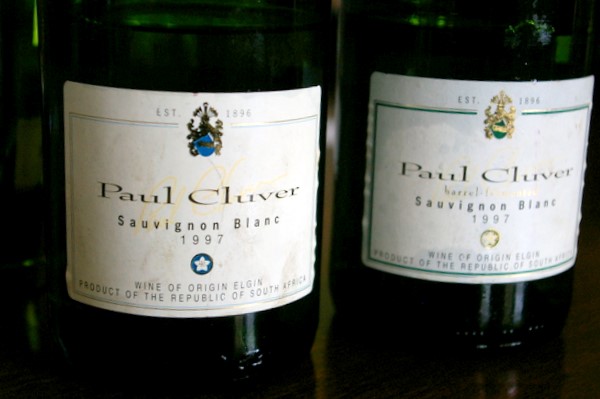
the wines tried, the highlight was a pair of wines served blind. These
proved to be two Sauvignons from 1997, both of which had aged really
well. It was a remarkable demonstration of the special nature of the
Elgin region.
For
reds, the focus is on Pinot Noir, although it wasn’t always. ‘We
had a dream of producing a Bordeaux blend from our property,’ says
Cluver. ‘Paul Pontallier visited and at the end of the tasting he
said that the red wine is the Pinot Noir, and so this changed our
focus, back in 2002.’
Added later: I
had a chance to revisit these wines in September 2012, and my notes
are below. They're really impressive across the board, with lovely
purity and focus. Elgin seems to have a talent for lots of varieties.
With the Pinot Noir, Martin Prieur from Domaine Jacques Prieur in
Burgundy has been consulting since July 2012, so it will be
interesting to see how this progresses.
Paul Cluver Sauvignon Blanc 2011 Elgin, South Africa
Pure and exotic, with grassy, citrussy nose. The palate is crisp
and precise with nice purity and minerality. Textured and fine. 91/100
Paul Cluver Riesling 2011
Elgin, South Africa
Assertive and aromatic with a fine, expressive limey nose. Lovely
fresh appley, citrussy palate. Rounded but dry. Very fine. 92/100
Paul Cluver Riesling Close
Encounter 2012 Elgin, South Africa
8.5% alcohol and 35 g/litre sugar. Very appley, lemony and fine
with expressive floral notes and a lovely texture.
Brilliantly precise and pure. 92/100
Paul Cluver Gewürztraminer
2012 Elgin, South Africa
Lovely aromatic, Turkish delight and lychee nose leads to a fresh,
textured palate with attractive, pretty fruit. Dry and crisp with
lovely balance. 90/100
Paul Cluver Chardonnay 2011
Elgin, South Africa
From 25 year old vines. Lovely intense toasty nose, bold, full,
fresh and spicy. The palate is fresh and toasty with apple and pear
fruit, and really fresh acidity. Fabulous. 92/100
Paul Cluver Pinot Noir 2010
Elgin, South Africa
18% new oak. Fresh, assertive cherryish nose with some spice and
clove notes. Juicy and bright in the mouth with a round texture and
pure cherry fruit. Attractive, round and supple. 93/100
Paul Cluver Seven Flags Pinot
Noir 2009 Elgin, South Africa
Elegant, fine and expressive. Spicy with some herbal notes and
supple cherry fruit. Silky and fine with real elegance and freshness,
as well as a savoury side. 93/100
Paul Cluver Noble Late Harvest
2011 Elgin, South Africa
Concenttrated, powerful, viscous and intense, showing lovely intensity
of apricot, spice, lime and honey characters. Amazing wine with
brilliant acidity and spicy complexity. 94/100
Earlier
notes from October 2010:
Paul
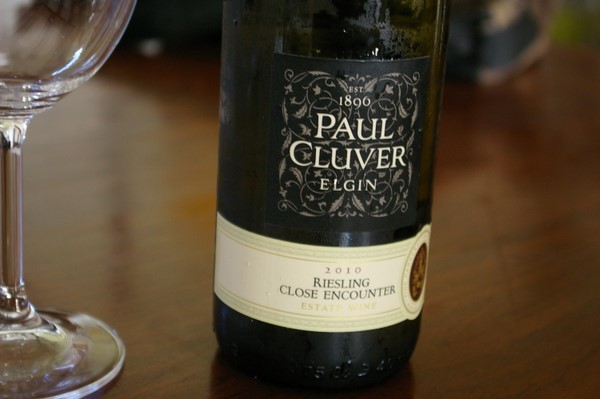
Cluver Close Encounter Riesling 2010 Elgin
Just 500 cases of this kabinett style were made. It’s 9% alcohol
and has 35 g/litre residual sugar, from a vineyard next to a railway
track. Lovely, precise limey nose. Fresh with lovely minerality. The
palate is precise with lovely off-dry, lemony fruit and precise
minerality. Lovely purity and focus with high acidity. 92/100
Paul
Cluver Sauvignon Blanc 1997 Elgin
A bit of toast with some herby notes on the nose. Lovely fresh
fruit still. The palate is rich and herby with some toast notes and
lovely citrussy freshness. Really impressive. 90/100
Paul
Cluver Barrel Fermented Sauvignon Blanc 1997 Elgin
Wonderfully pure fruit: melon, herbs, citrus. Very fruity and
aromatic, and even fresher than the regular Sauvignon Blanc. The
palate is fresh and limey with subtly herbal notes, as well as white
peach and a hint of cream. The oak merely adds texture, and is hardly
noticeable. There’s life in this wine yet. 93/100
Paul
Cluver Chardonnay 2009 Elgin
38% new oak, natural ferment. Tight and fresh with citrussy fruit
and subtly toasty oak. Very restrained. The palate is fresh and tight
with lovely focused citrus fruit and a hint of minerality. Tight wound
with lovely potential. 92/100
Paul
Cluver Seven Flags Pinot Noir 2008 Elgin
A barrel selection from a 4.5 hectare vineyard. It’s from a
section that’s more rocky, and which gives more flavour and
minerality. Sweet aromatic cherry fruit nose with some warmer spicy
notes, as well as a bit of wood. The palate has lovely sweet, quite
dense spicy cherry and berry fruit with some undergrowth and herb
notes. Nice minerality and texture. There’s a savoury dimension
here: it’s not a fruit bomb. 92/100
SOUTH
AFRICA REVISITED
 Part
1, Tulbagh
Mountain Vineyards Part
1, Tulbagh
Mountain Vineyards
Part 2, Cape
Point Vineyards
Part 3, AA
Badenhorst Family Wines
Part 4, Eben
Sadie: Sadie Family Wines and Sequillo Cellars
Part 5, Paul
Kretzel of Lammershoek
Part 6, Mullineux
Family Wines
Part 7, Vondeling
Part 8, Scali
Part 9, Sterhuis
Part 10, Raats
Part 11, Migliarina
Part 12, Charles
Back and Fairview
Part 13, Hermit
on the Hill
Part 14, Klein
Constantia
Part 15, Iona,
Elgin
Part 16, Paul Cluver, Elgin
Wines
tasted 10/10
Find these wines with wine-searcher.com
An
older report, from 2004:
Paul Cluver is a pioneer in the Elgin region, a cool-climate
area at altitude, east of Stellenbosch. They were the first to grow
grapes in this area that is traditionally known for its apple
orchards. Now there are 12 grape growers in the region. According to
managing director, Paul Cluver, the key differences between here and
Stellenbosch are the rainfall and the temperature. Elgin is typically
a few degrees cooler: when it’s 35 °C in Stellenbosch it might be
28–29 °C in Elgin. Rainfall patterns differ, too. Elgin gets winter
rain but is drier in summer, and so irrigation is needed. Cluver’s
estate has a reservoir that stores 2 million cubic metres of water.
For me the whites were clean and commercial, but it was the red wines
that really hit the mark.
Paul Cluver Riesling 2002 Elgin
Very fruity and rich. Modern and bright with a spicy edge to the
limey palate. Crisp and modern in a commercial style. Very good
Paul Cluver Sauvignon Blanc 2002 Elgin
Crisp grassy nose is bright and fruity. Modern fruity style with a
crisp, grassy palate. Very good+
Paul Cluver Chardonnay 2001 Elgin
Very rich fruit with distinct toasty oak notes on the nose. Quite
a rich oak-dominated palate which is savoury with good concentration.
Nice but oaky. Very good
Paul Cluver Cabernet Sauvignon 1999 Elgin
Nice appealing savoury nose with ripe, spicy berry fruit. Good
concentration of juicy, spicy berry fruit on the palate. Nicely poised
in a savoury intense style. Very good/excellent
Paul Cluver Pinot Noir 2001 Elgin
Lovely cherryish nose with savoury, slightly medicinal edge. Herby
and rich. Nice juicy savoury palate which is savoury and herby, spicy
and with good balance. Very good/excellent
Paul Cluver Riesling Noble Harvest 2001 Elgin
Intense, limey nose is very ripe and full, in a honeyed style.
Rich, thick-textured palate shows citrus fruits with a spicy
marmaladey edge. Good acidity. Very good/excellent
Back
to top
|