
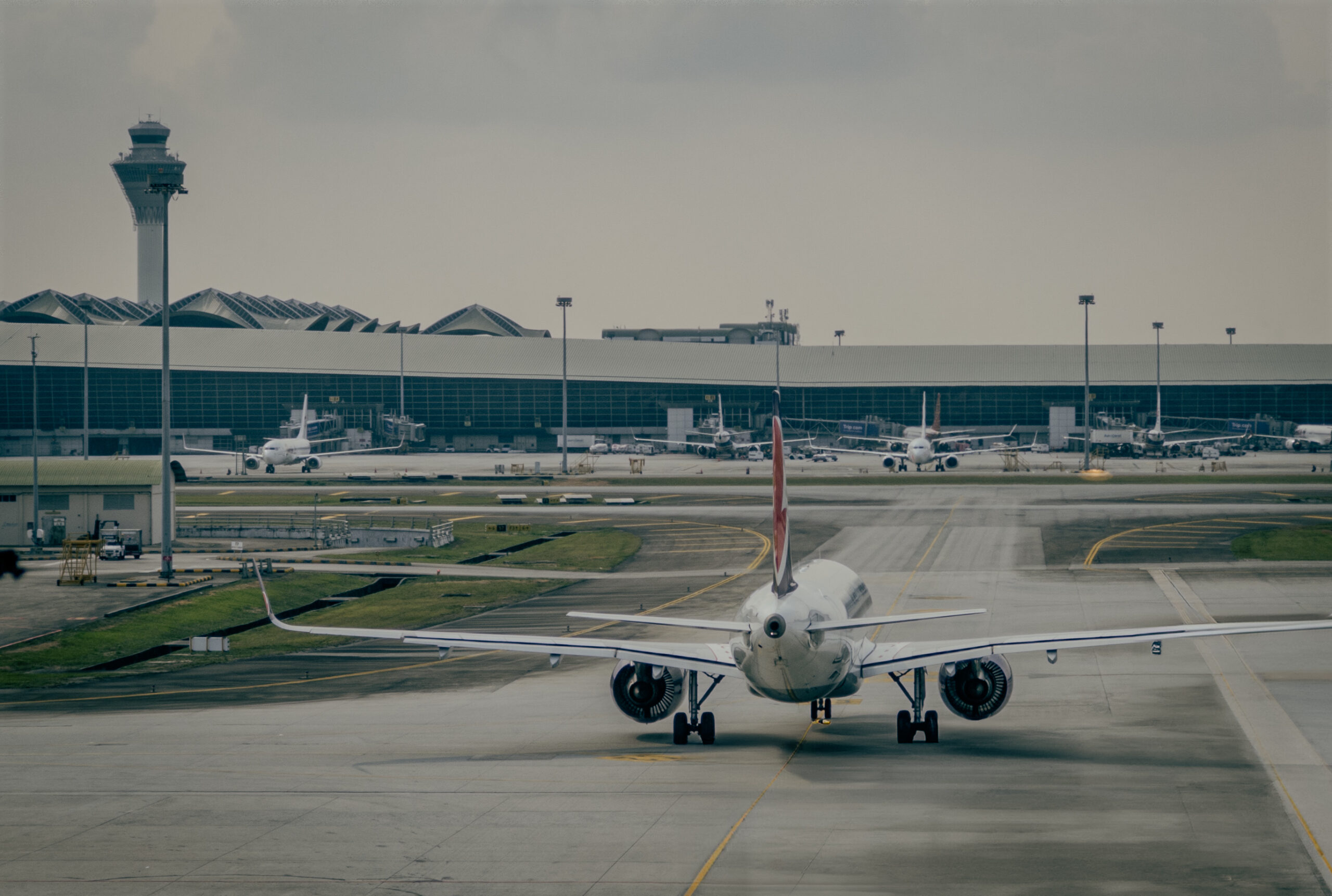
Some travel tips from someone who travels too much
I travel a lot. Far too much. I quite enjoy it, though. There’s something about travelling that opens your mind to the world and others. Airports and train stations have their own particular energy. And with smartphones and mapping apps, travel is easier than ever. I can’t imagine how I managed to travel in the days of paper maps and no mobile phones.
Here are some of my travel tips.
Always leave plenty of time. Exactly how much depends, but it’s never a problem arriving earlier than needed at airports. A good safety margin depends on your journey to the airport. If it involves roads, leave a bigger margin because traffic is unpredictable. If you use public transport, then you can leave less time as long as the transport you use is reliable.
Personally, I get the train to the various airports I use, and for short haul get there 2 hours early, and long haul 3 hours early. With UK airports, which are now quite efficient and rarely involve long queues at security, this is quite conservative, especially because I never check luggage. If you check luggage and don’t have status, this isn’t all that conservative. [Just over a year ago I got to the airport 1 h before departure for a flight to New York and caught it comfortably, but I’d never do this deliberately.]
My logic? I’ll aim to get there early and then do some work in the lounge. It’s not time wasted. But if something does go wrong, I’ve got a comfortable time margin. Running to catch a flight is a stressful experience, and often it’s avoidable.
Travel light. Even if I’m doing long haul for an extended trip, I’ll do anything to avoid checking a bag. Checking a bag brings potential for something to go wrong, and can cause delays.
And I refuse to use hard-shelled wheeled cabin bags. One of the major causes of stress or annoyance for travellers is the shortage of overhead locker space. If you don’t have a hard-shelled bag, you can usually fit your hand luggage anywhere: there will be space for it, even if you board late.
I pack a messenger bag with laptop, camera, lenses (geeky aside: I use micro 4/3 system which is much more portable than full frame gear – another strong recommendation for travelling light) and notebooks and charger. And then a lightweight shoulder bag for clothes and gym kit. I’ve worked out just how little I need to pack for a trip, and the few compromises travelling really light involves are weighed out by how much easier it is to get around.
For ease of travel, travelling light is my strongest recommendation. You are so much more mobile. Regular people always over-pack. Experienced travellers know exactly what they can get away with.
Always put things in the same place. I have a rule, and it’s that my passport always goes in the same compartment of my bag. When it’s on my person, it’s always in my right pocket. My phone also goes there. Wallet is always left pocket. [Aside: never use back pockets for anything of any value, ever. Same goes for jacket pockets.] This way, I know where everything is, and never need to hunt. It saves a lot of time and a lot of anxiety. When you travel frequently, knowing where everything is in your luggage or on your person is a massive time saver.
Get status. If you can, get status with one of the airline alliances. I’m with One World (British Airways, American Airlines, Quantas, Cathay Pacific), because I’m travelling out of London, and British Airways is the default airline for anyone travelling out of London. It makes no sense to go with any other alliance. For a while I had Gold status with Star Alliance (Singapore/Air New Zealand/United) and Silver with One World, but that’s because I was flying a lot to New Zealand. Now I’m just with One World. Status makes flying long haul economy a lot easier, and short haul a bit easier. You get to choose seats for free, you get to board earlier, you get lounge access, you get fast track security (sometimes quicker, sometimes not). You also get to book reward flights, which have got me out of travel tangles a few times (booking a reward flight on the same day costs no more, if there’s availability, but booking regular flights on the same day comes with a premium).
If you are flying long haul with two legs, make the first leg the long one. You don’t want to start a long haul flight with a short haul flight if you can avoid it. This is because short haul flights are much more prone to cancellation and delay than long haul ones, and if you miss your connection, you’ll probably miss a day of your trip. Clearly, coming back the short haul leg will be the first, but then if there’s a problem, you aren’t losing time on your trip with all the knock-on implications.
It’s for this reason that I’d caution against getting status with an alliance where your local airport isn’t a hub for one of the airlines involved. This is because to fly long haul, you’ll usually need to start with a short haul flight; it will be next to impossible to fly direct. So if you are London-based, don’t choose SkyTeam (Air France/Delta/KLM) because your long haul flight (unless you are flying Delta to the USA) will involve flying to Paris or Amsterdam.
Avoid short connection times, and avoid connecting in airports notorious for being difficult to connect in. A connection time shorter than 2 hours is a no-no. 3 hours is ideal, and 4 hours isn’t bad. Short connections cause more stress than any other aspect of air travel. Avoid connecting in Madrid, or any US airport unless you are flying to the USA (you need to go through US border control even if you are connecting to a flight out of the USA).
If you are flying short-haul (less than 4 hours) it doesn’t matter who you fly with. A colleague once cost a client a lot of money because at short notice he refused to fly with EasyJet and they had to buy a new ticket for him. This is daft, and very entitled. Low cost short haul carriers are perfectly fine. The flight experience is just the same. You are just as likely to be delayed with a scheduled airline. So book the cheapest ticket. If you pay a little more you can take your bag on board and sit up front, which is a great advantage. If you are travelling for leisure and don’t need to take much with you, just get the cheapest RyanAir ticket, sit where they put you, and you’ll save a fortune. When you check out they’ll make it hard just to get away with the base fare, but you can do it. You’ll probably spend more getting from the airport to your accommodation than you will flying there.
If you travel a lot, sometimes things will go wrong. Stay peaceful. It’s not personal. With the assistance of a smart phone and some common sense and ingenuity, you will be able to find a solution. If you can, put yourself in a position where delays (which happen from time to time) don’t make your life very difficult. And when things go wrong, don’t take it out on airport or airline staff. Be polite and don’t be entitled.
If your flight is cancelled and it looks like you will need overnight accommodation, don’t stand in a queue hoping the airline will sort this out for you. Even if they do, local accommodation will book up quickly and the queue time could see you missing out. Get online and book your own local accommodation; you will be refunded. Often this is the only option that will be offered to you. As with many things related to air travel, act fast.
I fly long haul a lot, and these days long haul economy isn’t that bad. The seats are comfortable enough, there’s entertainment (bring your own headphones, but be aware that there are still a few airlines where you’ll need the two pronged headphone adapter, although not that many anymore), and often it’s possible to get some work done. It’s often about your state of mind: some people think that, for some reason, there is no way they can survive a 10 hour flight at the back of the plane. Yes, business class is nicer, but if you are spending your own money, then there’s no way it is worth the difference in price. Unless you are extremely tall (I have great sympathy for some of my taller friends because they simply don’t fit in an economy seat), then it’s possible to fly well in economy. The main drawback with most long haul travel – jetlag – is something shared by classes of passenger. It’s down to your circadian rhythms and a lie flat can’t alter this.
Finally, most of this article has been about air travel. But I must acknowledge that trains are a great way to travel, and don’t overlook buses either for shorter journeys.