Inside Burgundy: a tasting with Jasper Morris, one of the top experts of the region
Website: https://insideburgundy.com/
Jasper Morris is one of the most well-known commentators on Burgundy. [He is also one of the nicest people in wine.] He set up his own import business in 1981 – Morris & Verdin – with the region as a speciality. Ten years later he moved to Burgundy, and became a neighbour to Becky Wassermann. He lives there today, still, and is the author of Inside Burgundy. Initially this book was published in conjunction with Berry Bros & Rudd (he was working for them at the time; they’d bought his company), and more recently it has been self-published. [He’s one of the few authors who have made significant money from selling a wine book.]
This seminar was part of the events surrounding the Wynn Signature Chinese Wine Awards in Macau.
Burgundy is the cradle of Pinot Noir, and there are references to it back in 1370. Chardonnay is a newcomer, with the first references in the 18th century, and it was only the 20th century that it became dominant for whites in the region, which many find surprising.
Jasper started in the wine trade in 1979, and at that stage he recalls that it was a struggle to sell Burgundy, especially reds. The fine wine trade of the time was all about Bordeaux. During the 1980s not much changed in the market, but lots was changing in the region. The power went from the big merchant companies towards growers who had begun bottling their own wines. The key figures in this new field took the unusual step of going to wine school, and they started to taste together. 1985 was a beautiful vintage in that transition period.
Jasper first visited Burgundy in the year that the started his wine import company, 1981, and he met the legendary Becky Wassermann who was helping drive this transition from merchant to grower. In the 1990s the changes began to be known more widely, and suddenly it became easier to sell good Burgundy.
In the early 2000s suddenly everyone woke up to this transition and Burgundy became cool. Low supply and high demand conspired to push up prices, as well as the transparency of pricing in the internet. It wasn’t the producers, necessarily, asking for more money, but the secondary markets.
The 2010s saw the real impact of climate chaos. Big hailstorms, rising temperatures (2015-2022, hot dry summers, no storms off the oceans) creating different challenges. Often it was important to pick Chardonnay early, but 2018 was a turning point where people had to pick Pinot before phenological maturity. 2022, the vintage we are looking at in this session, was the hottest vintage ever in Burgundy. It was also one of the driest. This ought to be a problem. Growers had a real challenge in the cellar.
Are the Burgundians going to be able to find their way through this? For Chardonnay it is not so much of a problem. For Pinot Noir, it’s not easy to see a way through. 2018 saw some wines at 14.5 or 15% alcohol; the same in some subsequent vintages such as 2019. Jasper recalls wines at 15.5%. Some grape varieties can cope with higher alcohol. But not Pinot Noir. It suffers once you go past 14%.
So everyone was nervous about 2022. But the grapes had more juice in them than people accepted, and yields were normal of 35-40 hl/ha which is 3-4 tons/acre. The sugar levels were not too high. And there’s a freshness to the wines.
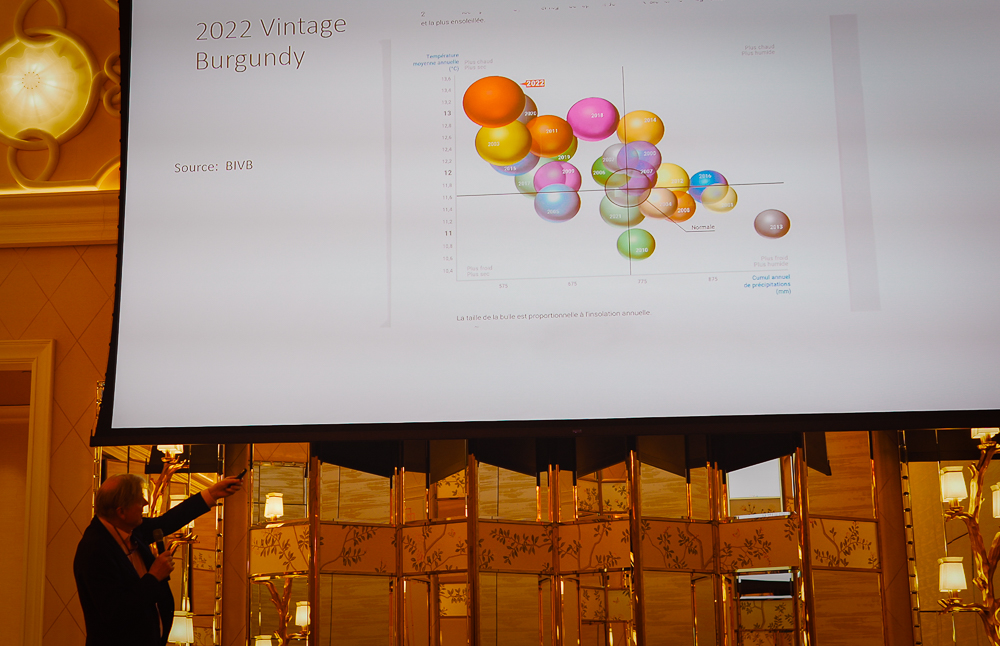
2023 was also hot but the wines are quite fresh. 2024 was a throwback cool wet vintage but the wines are surprisingly good. 2025 was a hot vintage with rain before the harvest. It’s too early to make a sensible tasting judgement.
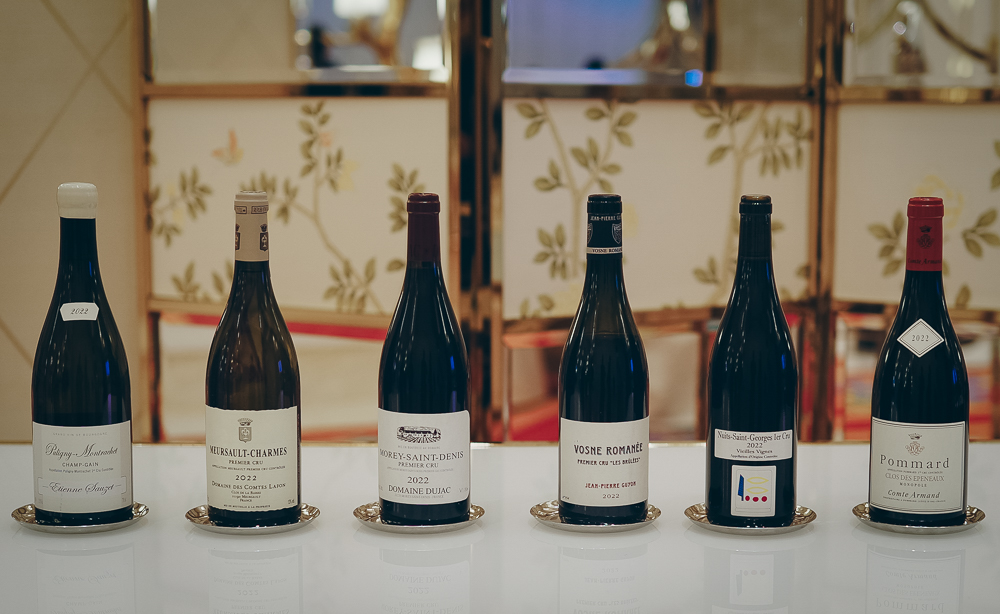
The selection here is well known producers from the main villages at premier cru level.
THE WINES
‘Puligny I see in the shape of having a backbone, a vertical column, out of which sprouts the more floral aspects,’ says Jasper. Champ Gain (recovered field) is higher up. It was lost after phylloxera and then only recovered in the late 1970s. It’s most the way up the hill, with lots of stones. It borders Saint-Aubin.
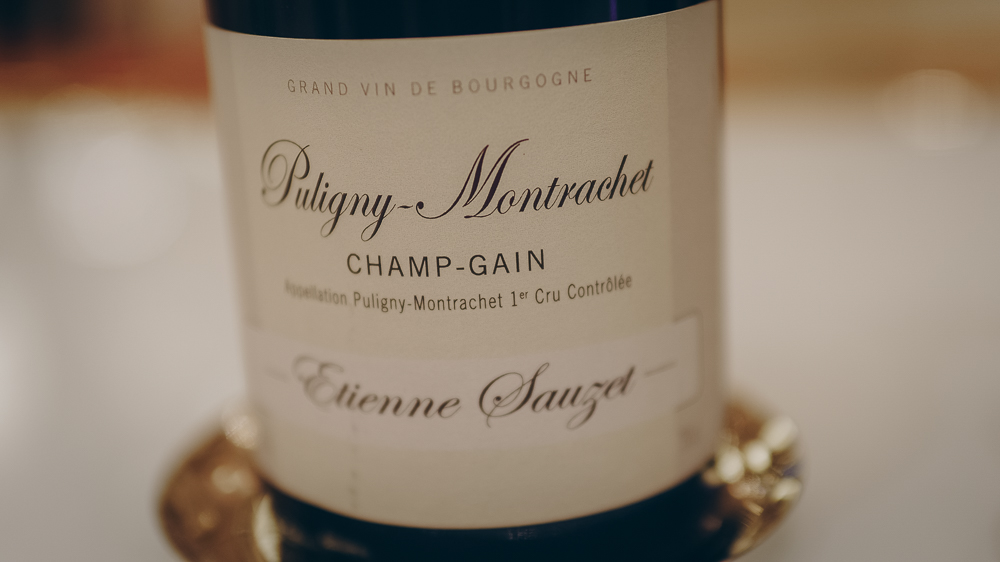
Etienne Sauzet Puligny-Montrachet 1er Cru Champ Gain 2022 Bourgogne, France
13.5% alcohol. Benoit Riffault is the winemaker here, the son in law of the previous winemaker who was grandson of Etienne Sauzet. He’s taken the vineyards into biodynamics. Harvested late August, barrel fermented with 25% new oak (approximate), then after 10 months goes into tank. No lees stirring in barrel; goes to tank with lees and he may stir the lees in tank, with no risk of oxidation. Classic nose of toast, spice and lively citrus, with very subtle flint. The palate is lively, concentrated and really fresh with fine spicy oak, real intensity, bold citrus fruit and beautiful stony, mineral intensity. This is quite beautiful. Youthful and taut with a long future ahead of it. 97/100
Meursault is supposed to be big rich and rounded with butter and hazelnuts, but it’s no longer like that, says Jasper. The grapes used to be golden in colour: if you waited for that now you’d have 16% alcohol. But in the mouth it still has a rounded shape. This fills the mouth and pushes on further.
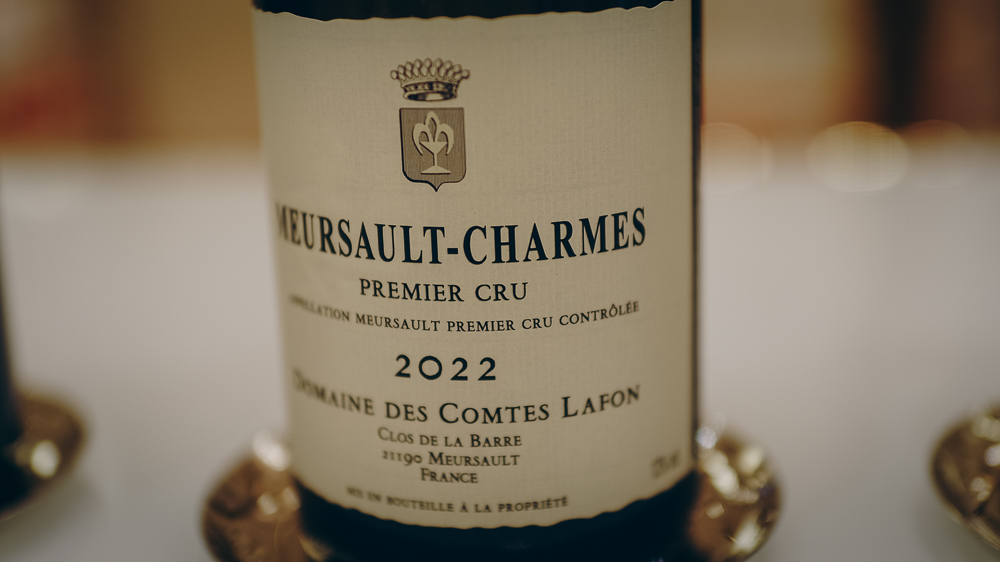
Domaine des Comtes Lafon Meursault 1er Cru Charmes 2022 Bourgogne, France
13% alcohol. Dominique has retired, and he got head hunters to choose the two family members to make the wine. They chose Leah and Pierre and this was their first full vintage. They have almost 2 ha of Charmes, with vines from 1930s, 1960s, 1990s and some more recently. They pick the youngest vines first and ended up declassifying most. This is bold and layered with nice spicy detail as well as pear and peach fruit. This has a beautiful nervy acid line that adds backbone to the textured fruit. Such a wide dynamic range here, finishing lively with a touch of spicy oak. There’s flesh on the bones here. 96/100
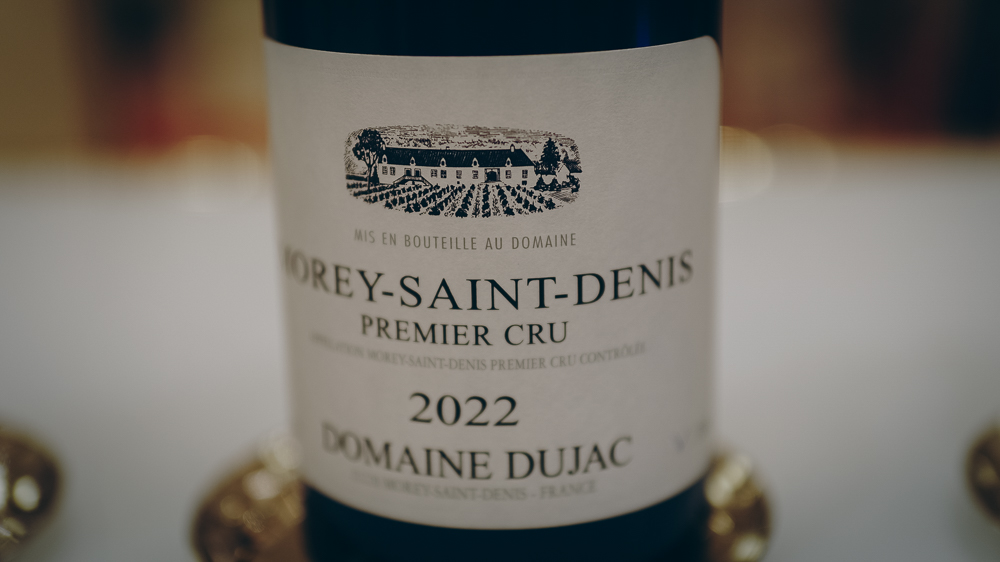
Domaine Dujac Morey-Saint Denis 1er Cru 2022 Bourgogne, France
Jacques Seysses created this domaine in 1968, a disastrous rainy vintage. He began with 1969. He married a California who’d worked with him in 1971. Jeremy Seysses has also married a California girl, Diana Snowden. Morey Saint Denis is a small village with many small vineyards, and this is a blend of four vineyards: Les Milandes, Clos Sorbe, Les Ruchots (70%), Les Chaffots. Dujac is whole-bunch style, and this is 85% whole cluster. This is around 50% new oak. Delicate, pure, floral aromatics of sweet red cherries. There’s a beautiful texture on the palate with lovely red cherries and strawberries with a fine spicy note around the fringes. It has structure, but also prettiness, with massive potential for development despite its elegance and delicacy. Remarkable, with a pure red fruit quality and a bit of stemmy dryness on the finish. 97/100
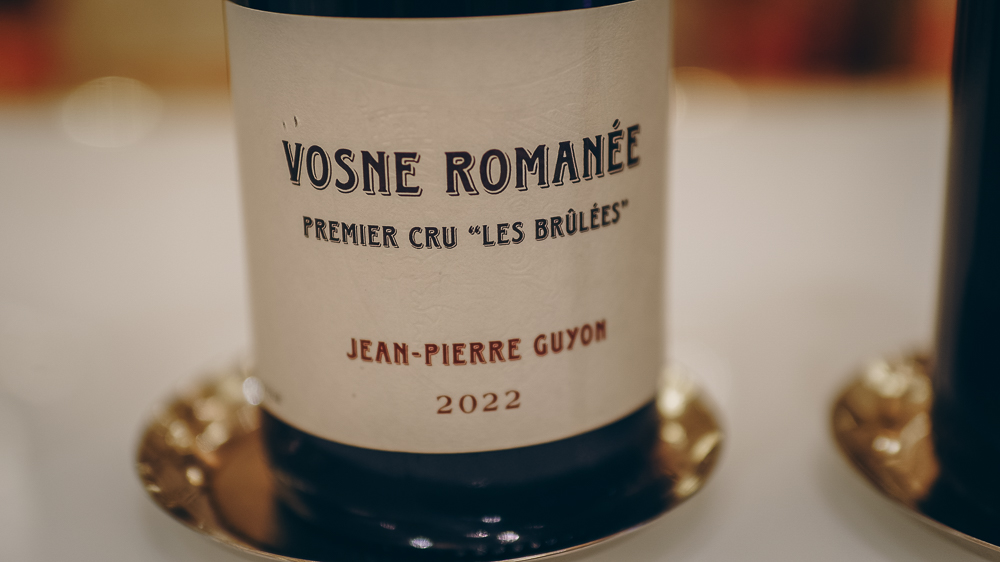
Domaine Jean-Pierre Guyon Vosne-Romanée 1er Cru Aux Brulées 2022 Bourgogne, France
14% alcohol. Jean-Pierre is a character. Jasper showed a picture of him in a Clayver cellar. In 2002 he’s started to move direction, and on the sorting table snips the clusters into five or six smaller clusters and then does whole bunch without the main stem. This is 100% new oak but you can’t taste it, for one year, then a year in Clayver which also helps calm volatile acidity. He’s fanatical about the vineyards, and he’s adopted the tressage technique, but hasn’t gone high up like Leroy and others. If you don’t trim the vines it doesn’t grow laterals and you don’t get secondary bunches. The apex is also an early warning system to the vine so it’s best not to hedge. This is concentrated, very mineral, relatively low acidity. No sulfites added but it is very pure and layered, with fine spiciness. Such power but also a soft texture. There’s a sweet spiciness on the finish from the low but detectable volatile acid (it’s more on the palate) with a long finish. This is singular and quite brilliant. 96/100
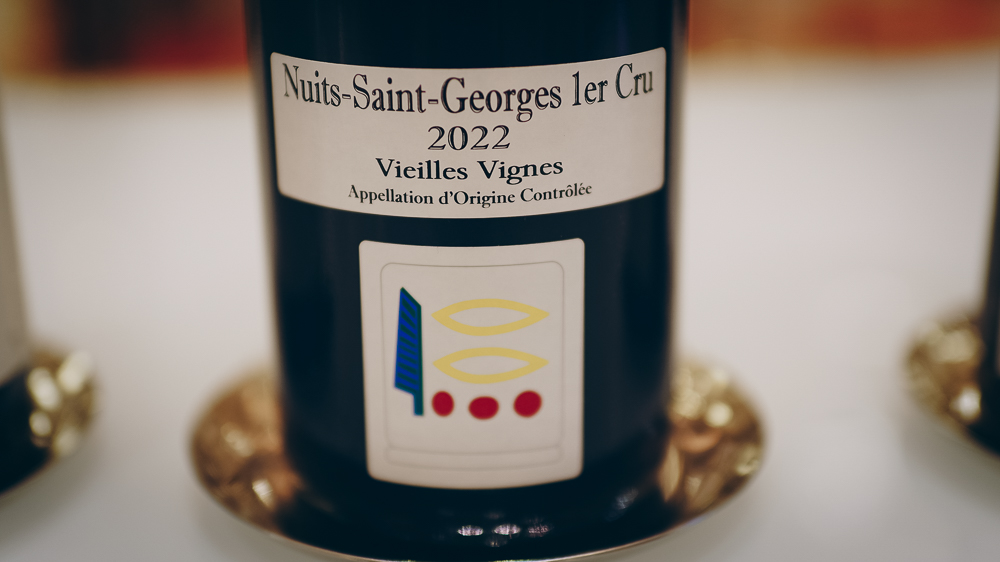
Domaine Prieuré-Roch Nuits Saint Georges 1er Cru Vieilles Vignes 2022 Bourgogne, France
This domaine doesn’t allow journalists. Henri-Frederic Roch invented the Prieuré part. He was the son of Lalou Bize-Leroy’s sister. They are 100% whole bunch. This comes from their Clos des Corvees Monopole, and they own all 5.21 hectares. This is powerful, lively and complex, with real intensity of raspberry and cherry fruit with high acidity, and dryness on the finish. This comes across as quite tannic and drying. There’s a freshness to the fruit, and a slight wildness, with pronounced acidity and then right at the end some spicy warmth. Distinctive and impressive, but not an elegant style. 93/100
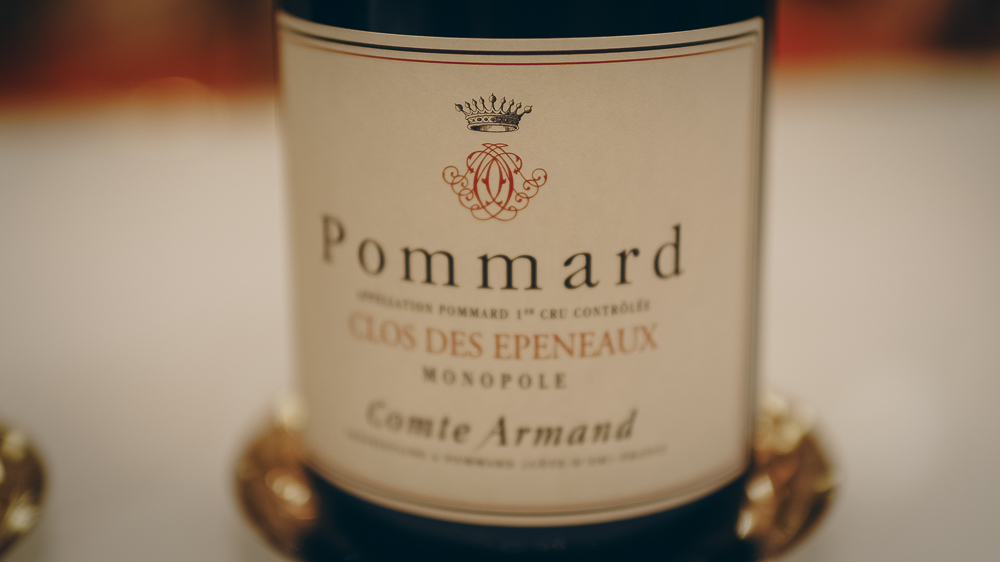
Comte Armand Pommard Clos des Epeneaux Monopole 2022 Bourgogne, France
Paul Zinetti made this wine. From 2026 Jane Eyre will be winemaker. This is a monopoly vineyard of 5.23 hectares. There are small nuggets of iron oxide here, giving a blood orange note. This is bold and yet quite elegant with sweet raspberry and cherry fruit, but also some smoothness, sweetness and elegance. Nice structure but it’s cloaked nicely by sweet fruit with a sense of real harmony. Beautifully textured with a touch of warmth. 95/100