Ca’Marcanda: 30 years of Gaja’s Tuscan outpost
Bolgheri’s natural beauty drew the 57 year old Angelo Gaja to spread his winemaking wings out from Piemonte in 1996, to establish Ca’Marcanda. The first vines were planted here in that year, and two years later he began building a wine cellar, hidden underground.
The name Camarcanda is a Piedmontese expression that translates as house of endless negotiations, referring to the 18 meetings that it took to buy the property.
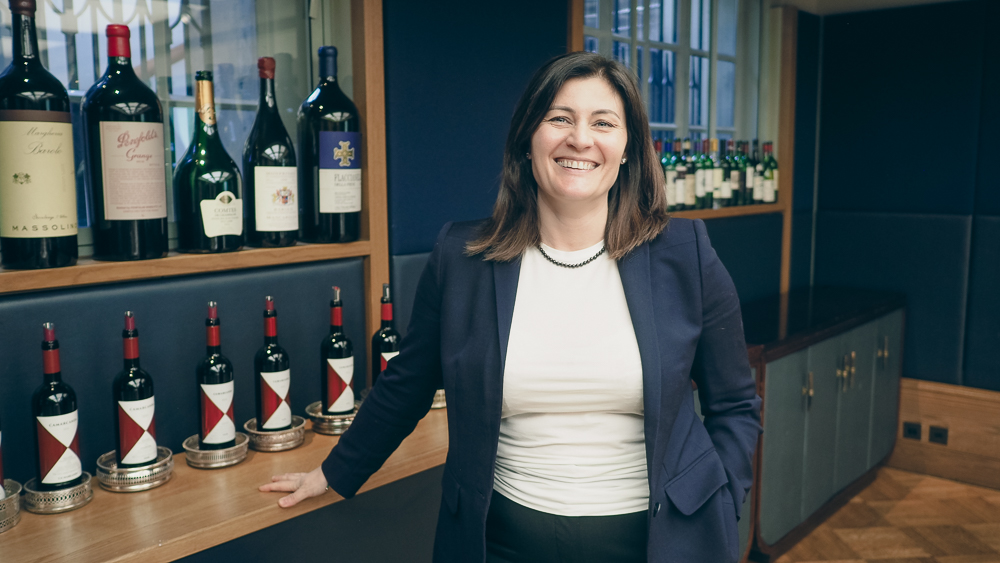
Gaia Gaja presented these wines. ‘We contributed to moving the little village of Barbaresco from the borders of the world of wine a little more to the centre,’ she says. She describes her family as contrarian in the best possible way, with the idea that excellence can often be found where no one is looking yet. Her family were one of the first to introduce single vineyards and introduce international varieties in Barbaresco but this was back in the 1970s. She says that those moves still cast a shadow on the things they have done since.
They are actively trying to bring new ideas, with contributions from entomologists and agronomists, to the cultivation of the vineyards.
Gaia says that one of the key attractions of Bolgheri was that this was the new world of Italy, just 3 hours’ drive away. 30 years ago there were some big names, but there were less than 10 wineries, and now there are more than 60. The first vintage of Sassacaia was 1968, and the other important wineries were born in the 1980s. So it’s all quite recent.
This is part of Italy that has focused on international varieties, making international-style wines. For Gaja, their job was to understand the territory and make a wine with identity, and this takes time and knowledge. Bolgheri now is different to the past and is finally making wines with a strong identity, and not just international-style wines.
In Piemonte there is a deep farming culture, full of locals. Bolgheri has been the land of the fancy families who have all travelled internationally. The noble people often married foreigners, so this international theme has been strong in the region.
Gaia says she wants to Italianize the region. An Italianity. This is what they are trying to get in their wines. ‘The wines we make in Bolgheri have this character. Our focus is to express the purity of the fruit, and then express the territory as much as possible. She says that it took quite a while to get this local character right in the wine.
Bolgheri is relativelyt compact wine region with just over 1300 hectares of vines. They are in the central part. The more you move to the hills, the less sand and the more clay. Ca’Marcanda comes from the vineyards closest to the hills with more clay in the soils, and on a platform of limestone. The vineyards closet to the sea was previously a swamp, with much richer soils with high organic material.
The soils turn from dark to light, with some colluvial rocks from the mountains, as well as limestone and clay. The mountains are called the metal mountains because there were lots of mines here. The result in Bolgheri is a lot of different kinds of soils as a result of these different influences.
The last zoning identified 27 different types of soils. ‘The future of Bolgheri will have a lot of surprises for us.’
In the central part they producer Promis, with more Merlot. And then there’s a mixed area where they plant Cabernet Franc.
They’ve been working extensively with cover crops in the vineyards, including mustard, vetch, lava beans and clovers, all with a specific purpose in mind depending on the site. They’ve also been looking at rootstock choices, with higher vigor rootstocks because of the warmer climate they are facing.
‘We are living in moments of climatic confusion,’ she says. And it’s in these moments they are seeing the best vineyard sites show why they are good, and she counts Bolgheri among these sites. It’s also an area where there’s a culture of blending, which is a big help in terms of climate change.
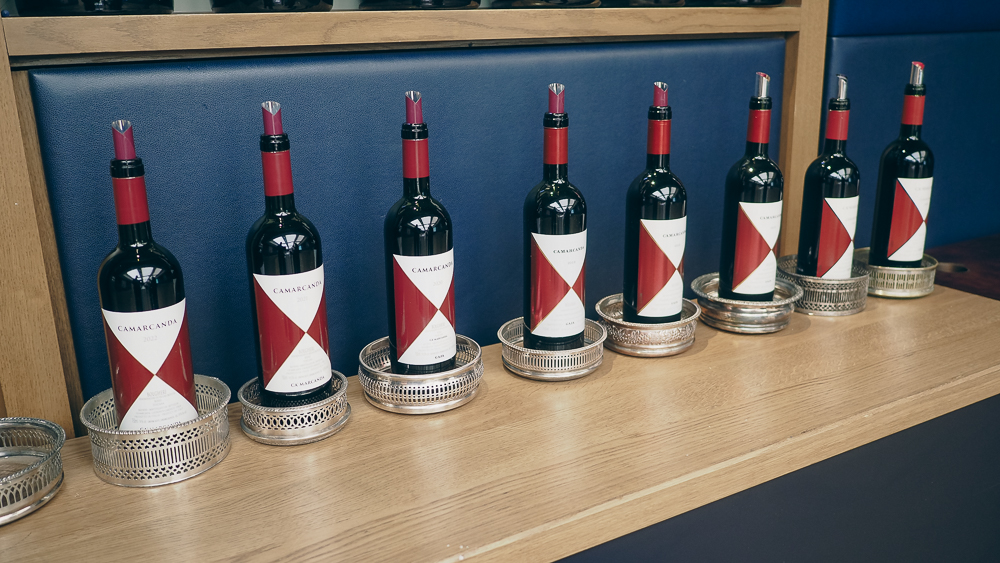
Since 2015 all the wines are 80% Cabernet Sauvignon, 20% Cabernet Franc. 200 and 2007 in this line up are both 50% Merlot, 40% Cabernet Sauvignon and 10% Cabernet Franc. Starting from 2015 they began using more whole cluster, and now they are frequently up to 50 or 60%.
They are now 60% tonneaux and 40% barrique, moving away from just small oak. The wood easily impacts the wines in Bolgheri, she says, and they have gone down to 30% new oak.
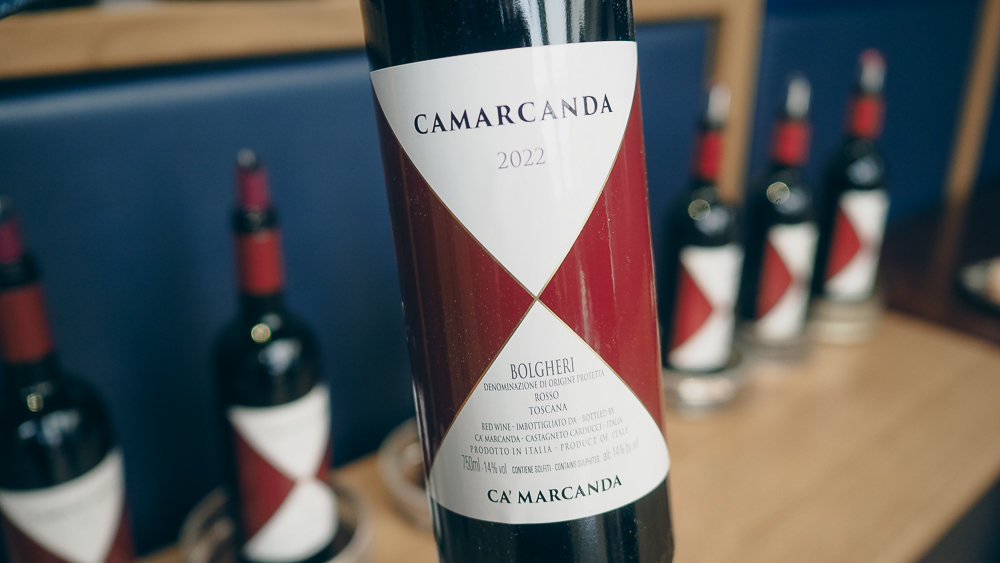
Ca’Marcanda 2023 Bolgehri, Italy
This is the current release. Fresh and expressive with elegant cherry and berry fruits, with real texture and focus. Very fine, juicy and elegant with nice drinkability. A charming wine, and it’s just so floral and expressive. 94/100
Ca’Marcanda 2022 Bolgehri, Italy
This is quite substantial but also really elegant, with nice blackcurrant and cherry fruit, with real finesse to the sweet fruit, as well as nice hidden structure. Such presence and finesse here with richness allied to freshness. There’s some tension here as well as gorgeous sweet fruit. 96/100
Ca’Marcanda 2021 Bolgehri, Italy
Real substance to this wine, with some firm tannins under the bold, sweet black cherry and blackberry fruit, with some savoury structure in the mix. It’s grainy and grippy, with substantial structure, and is a little closed at the moment. This could age very well: an opulent vintage, but there is also good structure and acidity. Could merit a higher score with time. 95/100
Ca’Marcanda 2020 Bolgehri, Italy
This is beautifully balanced, with concentrated blackcurrant fruit and some cherry fleshiness, bolstered by good structure. There’s a lot of tannin here, which gives a dryness to the mouthfeel, but there’s also a lot of lovely fruit. It’s really impressive, and should age well. Dense and yet fresh. 96/100
Ca’Marcanda 2019 Bolgehri, Italy
This is another well balanced wine, showing wonderful herb-laced blackcurrant fruit with nice structure and good acidity. Lovely weight in the mouth, beginning to evolve a little, but still upright and compact, with a long, fine, spice-laden finish. 95/100
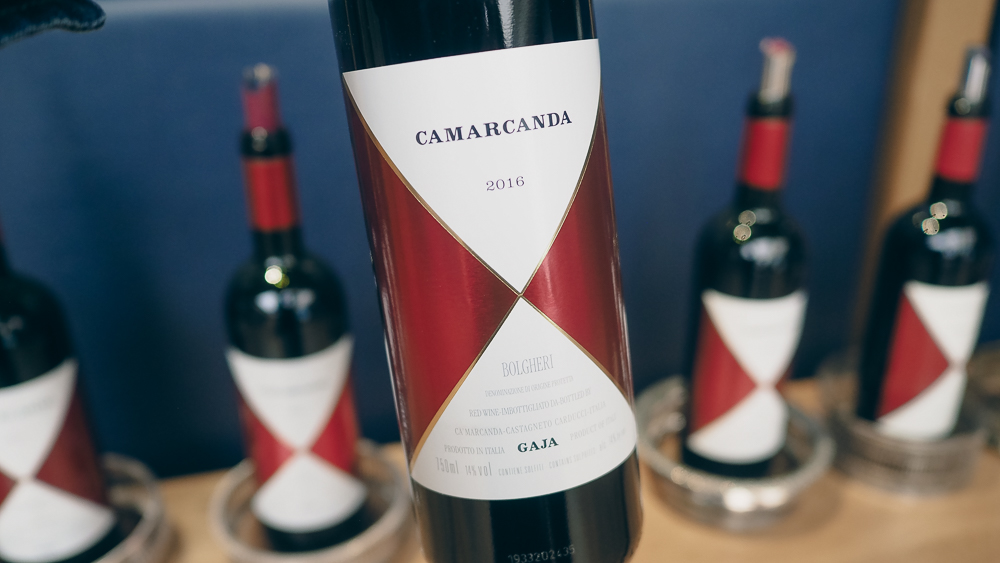
Ca’Marcanda 2016 Bolgehri, Italy
Some savoury spiciness on the nose with a touch of chalk and nice black fruits. The palate is immense with freshness and structure, as well as vibrant blackcurrant fruit. Great structure here, with real concentration and focus. This is very tannic, but there’s the fruit to match it. Should be close to immortal. 97/100
Ca’Marcanda 2015 Bolgehri, Italy
This is showing a bit of evolution. This was the year of change in the blend: the first year they took away the Merlot. It’s firmly structured and quite drying with some immense tannins that clamp down on the palate a bit. Unyielding and firm, it’s impressive but not that enjoyable. 93/100
Ca’Marcanda 2007 Bolgehri, Italy
Fully mature now with some notes of yeast extract (bovril) and earth as well as sweet berry fruits. Has some tannin still. It’s mellow, but perhaps past its best, even though it delivers some pleasure. 90/100
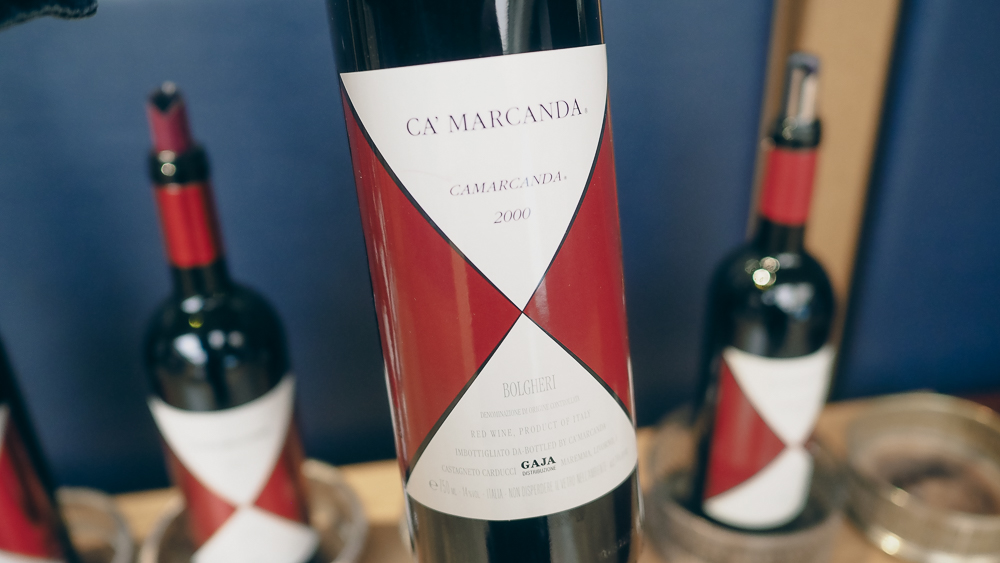
Ca’Marcanda 2000 Bolgehri, Italy
This is the debut vintage. Fully mature with herbs, earth, spice and some sour cherry. Nice depth with some sweetness to the fruit, and a mellow personality. It’s still alive, but won’t improve further. 91/100