Domaine de Vieux Telegraphe: a wine dinner with this top Châteauneuf-du-Pape producer at Mauro’s Kitchen
Daniel and Cecile Brunier were in town and led a wine dinner featuring their wines at the excellent Mauro’s Table, part of the Michelin-starred Mauro Colagreco at Raffles London at the Owa.
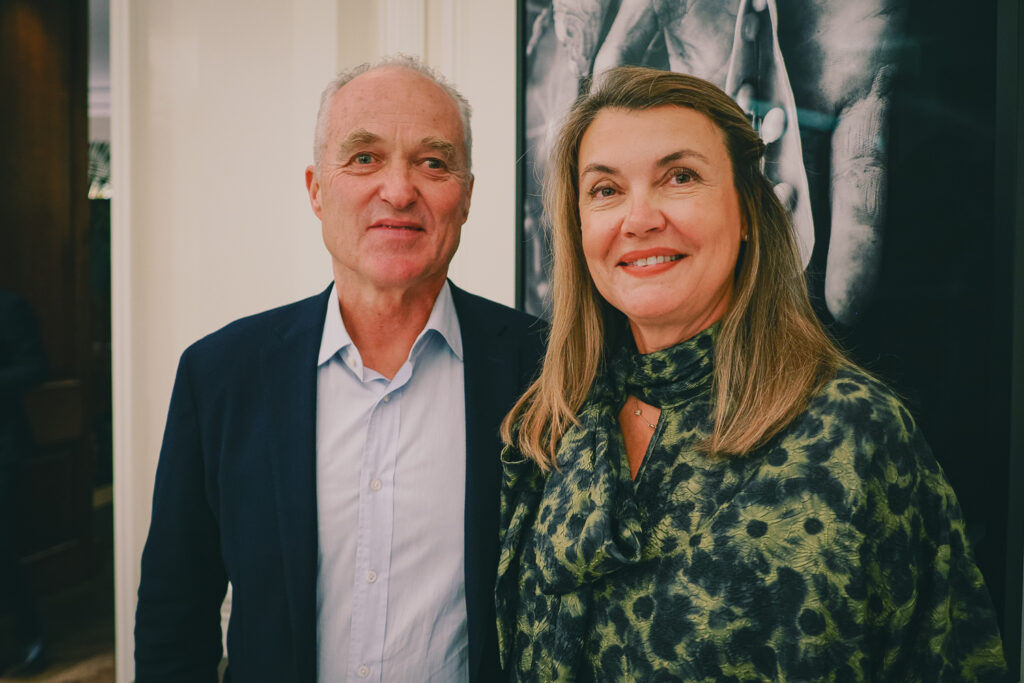
Daniel was on good form, and both the food and the wine sang. The Bruniers own the famed Châteauneuf property Vieu Télégraphe, as well as Domaine les Pallières in Gigondas and a property in Ventoux. ‘It is one philosophy and one grape,’ he says, ‘Grenache, red, white and grey. Grenache makes our philosophy: we choose soil for it, we choose barrels for it and our harvesting decisions are because of the Grenache. Everything is around the Grenache.’ He says that ‘Grenache has multiple personalities depending on where it is from and who vinifies it. If you try to make a monster, you can!’
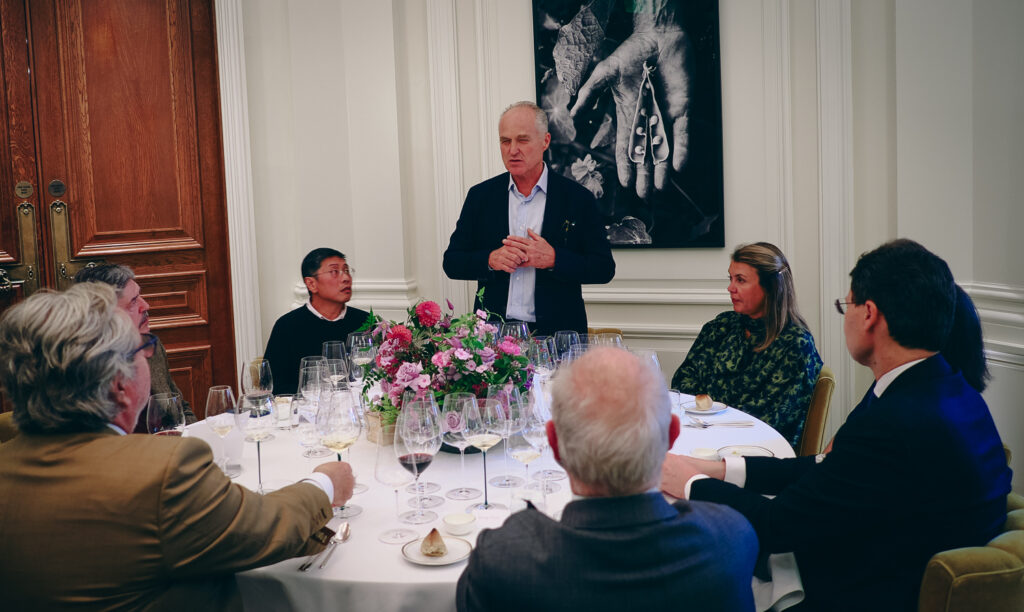
The wines are imported into the UK by Thorman Hunt, and the two have a long relationship. ‘I’m semi-retired,’ says Daniel. ‘I’m here because we’ve been friends with Jeremy Hunt and his team since the 1980s, and London is one of my favourite cities.’ He says the day to day running is now in the hands of the sixth generation, his son Edouard and his niece and nephew Manon and Nicolas. Daniel and his brother handed over to them around a decade ago. Continuity has been maintained, though. ‘Today we’ll be tasting some of the wines by the fifth generation and some by the sixth generation and it’s very difficult to see the difference.’
Daniel emphasized that the soil is much more present in the wines than winemaker technique. He also referred to the challenge posed by climate chaos. ‘We are in the south, in a hot climate, but we are not afraid of the heat: we are afraid of a lack of water,’ he says. They are allowed to irrigate if they apply for authorization, but don’t need it where they are. ‘We are in the north on a plateau, and we have a big layer of clay under the soil. It’s a sponge.’ But he adds that harvest dates have come forward more than 15 days since the early 1990s.
‘More and more we use old vines, and try to maintain them,’ says Daniel. ‘They have deep roots and can resist dry and hot summers. We also use another tool: whole bunches. We use stems more and more to reduce alcohol content and the sensation of power.’
‘Today wines are too dense and concentrated. For reds we do more infusion than extraction. We like to extract things slowly over a 30-40 day period, to keep balance and freshness.’ He adds that by making these changes they can still make wines with personality and balance as they did in the past, but he doesn’t know what will happen in the future.
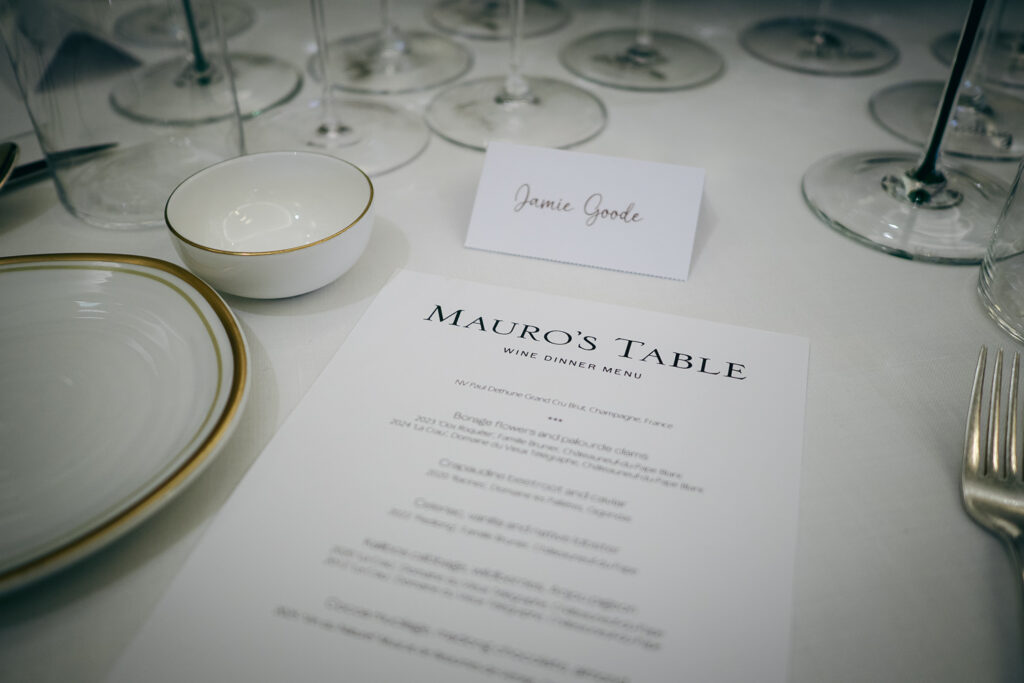
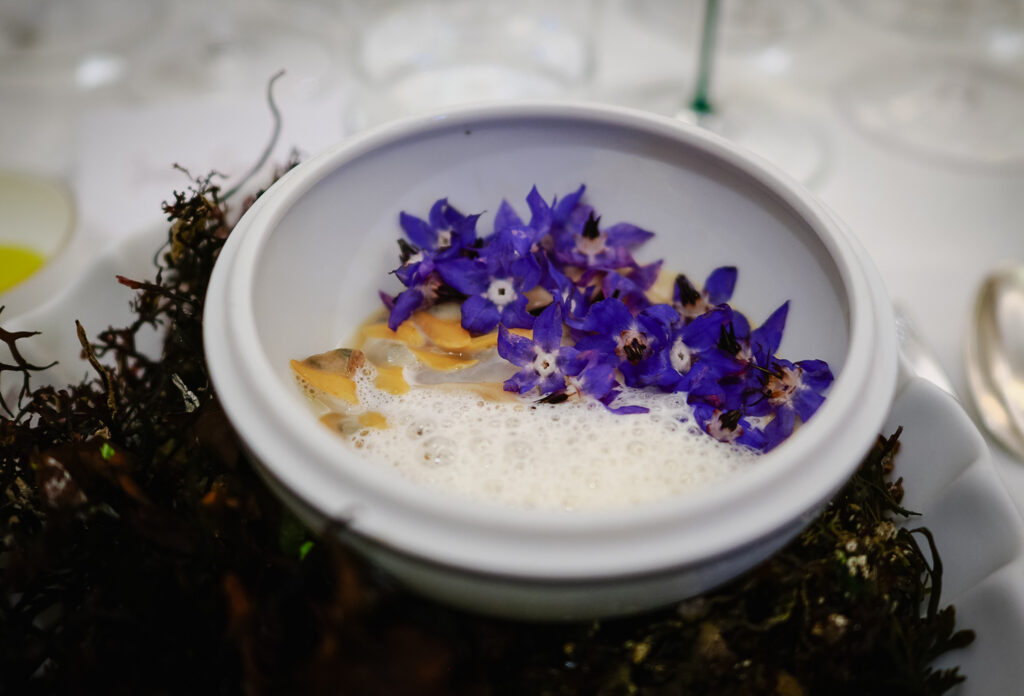
Borage flowers and palourde clams
this was a superb dish. You can just see the clams; they were beautifully layered.
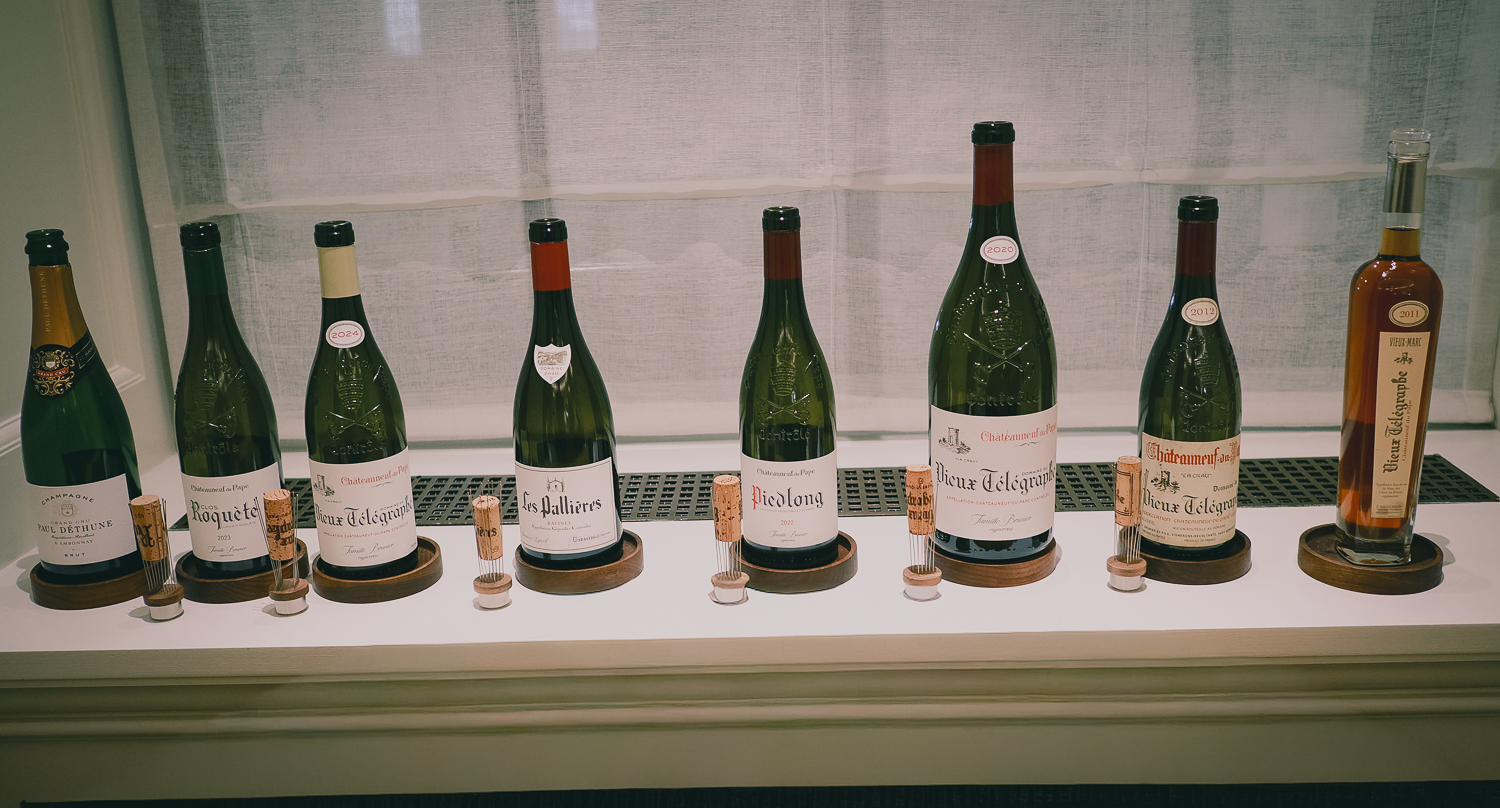
2023 ‘Clos Roquète’, Famille Brunier, Châteauneuf-du-Pape Blanc
This is from sandy soils (15% of the appellation has sandy soil) and it’s a blend of Clairette, which they love, Grenache Blanc and Roussanne. Textural with nice weight, showing some stoniness alongside peach and pear fruit with a liquid mineral quality and some honey and spice. Real richness allied to freshness, and quite mouthwatering. Lovely wine. 94/100
2024 ‘La Crau’, Domaine du Vieux Télégraphe, Châteauneuf-du-Pape Blanc
The vines average 60 years old and are planted on La Crau’s stony souls. Fresh and lively with nice texture and notes of pear and lemon, with a hint of apricot. Textured with some saline notes, and nice definition. 95/100
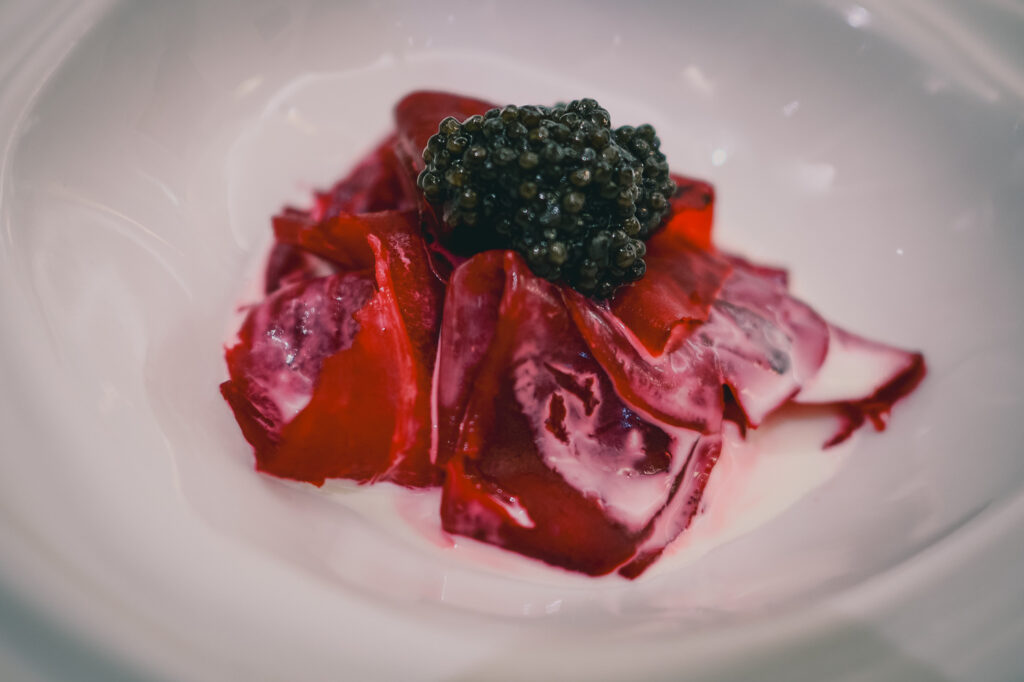
Crapaudine beetroot and caviar
This is one of the specialities of Mauro, and it’s a brilliant combination.
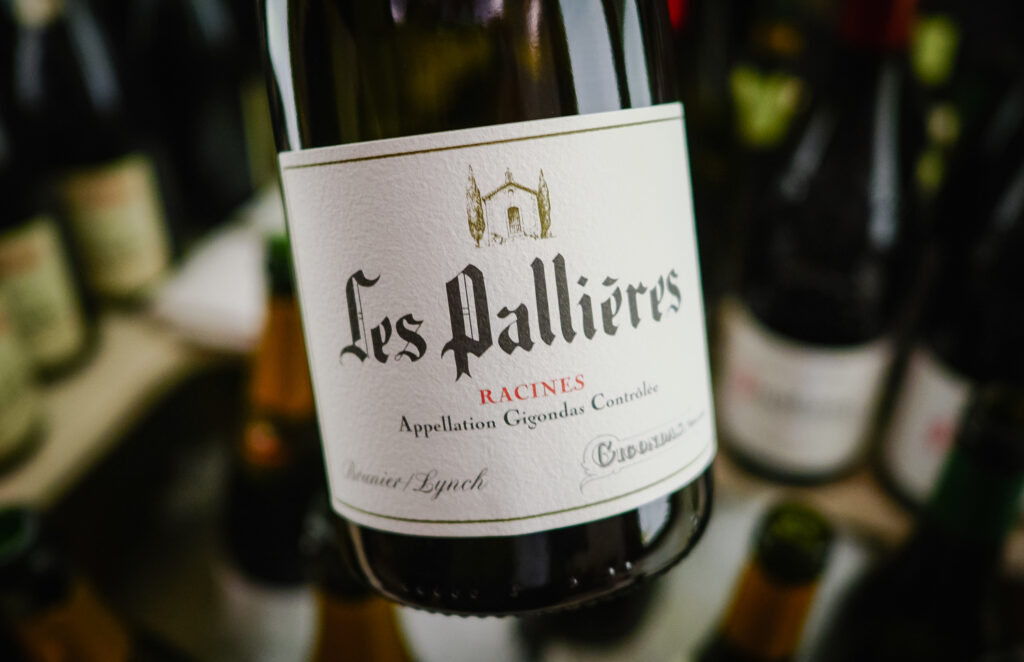
2020 ‘Racines’, Domaine les Pallières, Gigondas
Gigondas is a third of the size of Châteauneuf, and got its cru in 1960, 24 years later. This is 85% Grenache with Syrah and Cinsault. 90 year old vines on average. Long maceration with whole bunches. Then aged two years in large-format oak. Rich, saline and powerful with ripe cherry and berry fruits. Some blackberry and chalk, and a hint of earth in the background. Broad and expansive but still has freshness, with firm tannins and some saltiness on the finish. 94/100
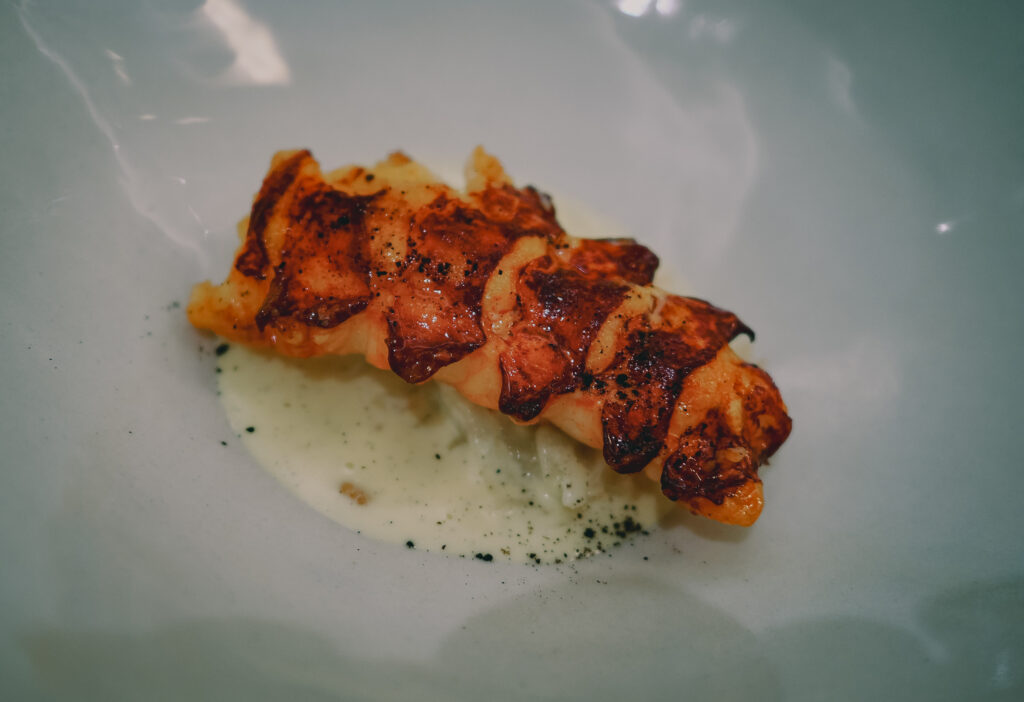
Celeriac, vanilla and native lobster
There’s a sweetness to this dish that works really well.
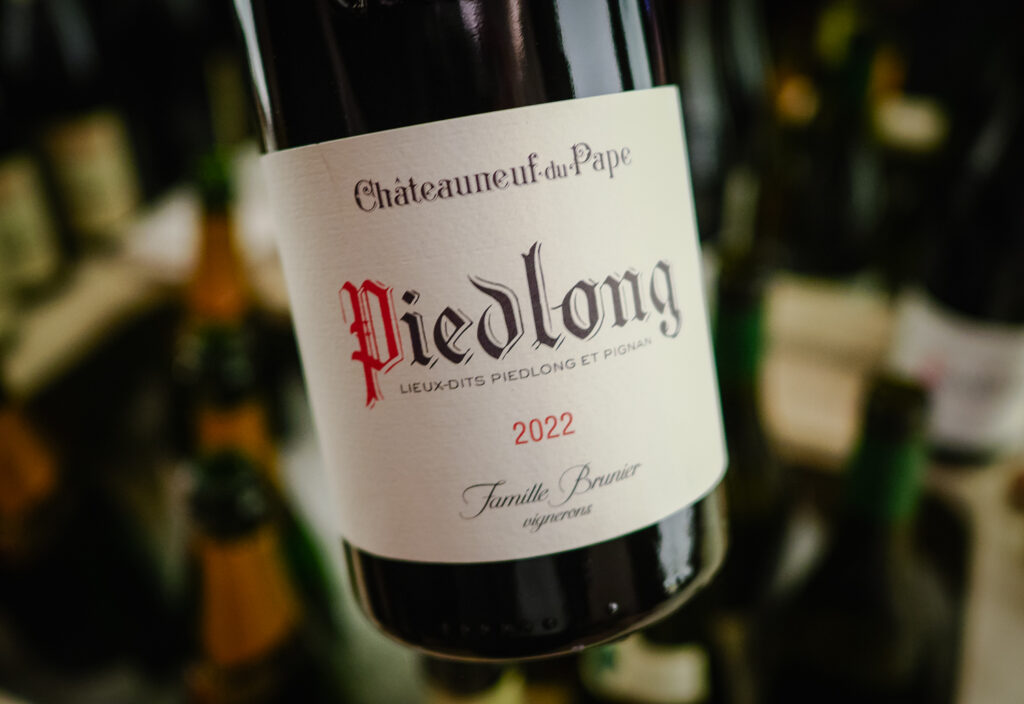
2022 ‘Piedlong’, Famille Brunier, Châteauneuf-du-Pape
85 year old vines, mostly Grenache, 50% whole bunch. Same winemaking as Racines. This is from a flat, south-facing plateau at the highest part of the appellation (130 m). This is a newer wine made for the first time in 2011. Really elegant with fine, supple red cherries and strawberries. Quite ethereal with a sweet core to the fruit but no heaviness. Has some fine herbal notes. A beautiful expression of Grenache. 95/100
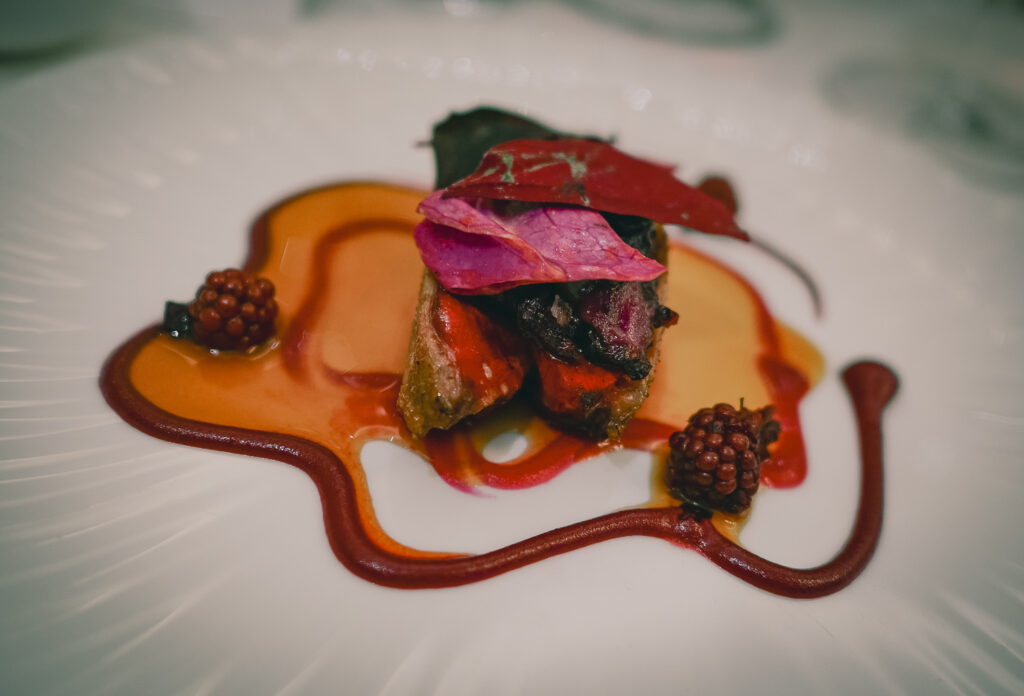
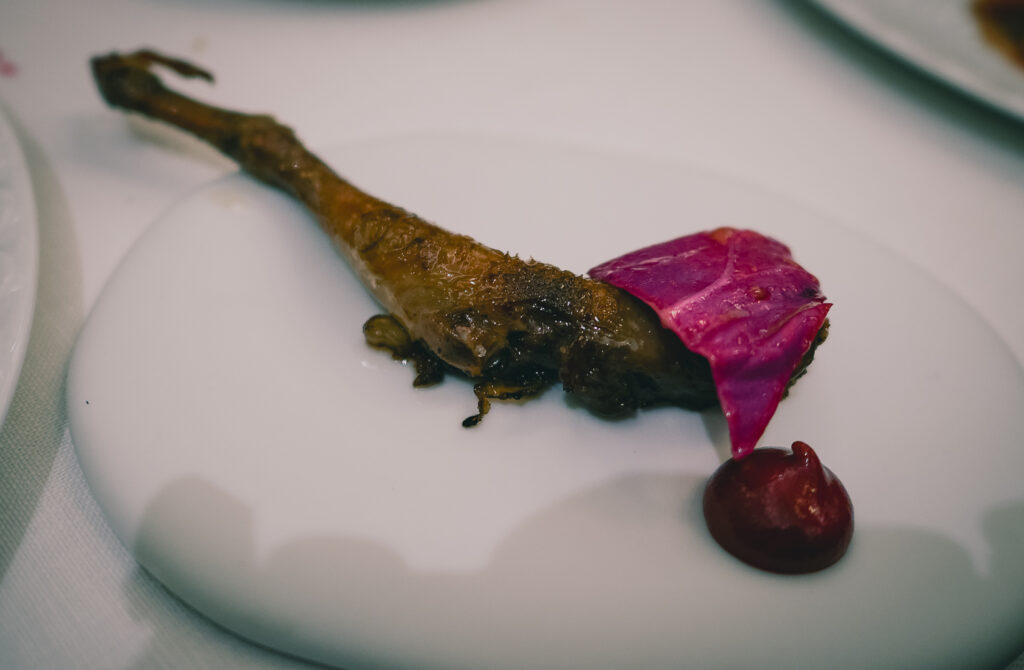
Kalibos cabbage, wildberries, Anjou pigeon
This was an amazing dish, with perfectly cooked pigeon. Stunning.
2020 ‘La Crau’, Domaine du Vieux Télégraphe, Châteauneuf-du-Pape
La Crau is the main Brunier vineyard on top of the appellation in a windy, stony location. Half of the vineyards were planted by Daniel’s grandfather, and the other half by his father. His own plantings haven’t yet made it to the Vieux Télégraphe blend. 2020 was a hot, sunny vintage. The blend is 60% Grenache, 15% Syrah, 15% Mourvèdre and then some Cinsault and Clairette. Focused and concentrated with nice intensity to the black cherry and spice, showing plenty of depth. Real presence here with sage and pepper notes, and fine-grained tannins. 95/100
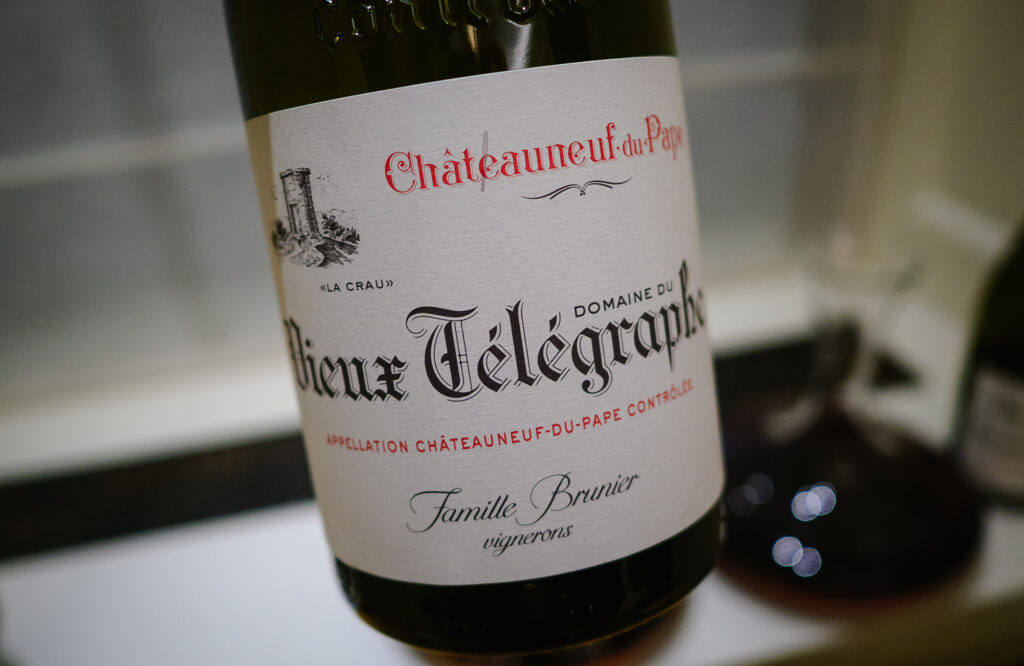
2012 ‘La Crau’, Domaine du Vieux Télégraphe, Châteauneuf-du-Pape
Supple and brooding with nice black cherry and blackberry fruit, showing finesse. Supple with nice grainy detail. Beautiful fruit still, and great balance. 95/100
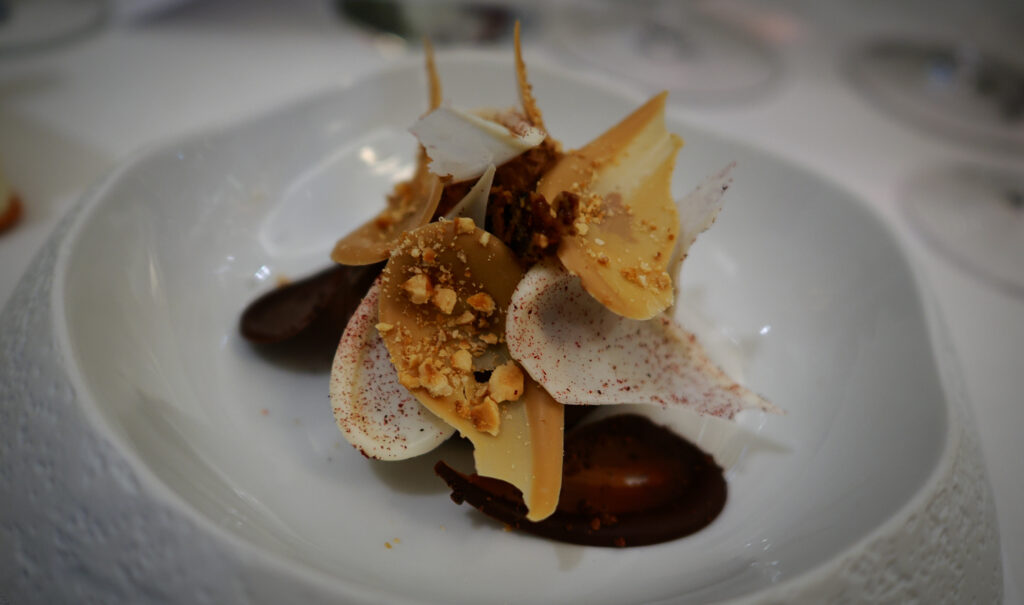
Cocoa mucilage, madong chocolate, almond
2025 ‘Vin du Naturel’ Muscat de Beaumes-de-Venise, Domaine des Bernadins
This is not a Brunier wine, but comes from possibly the best producer in Beaumes-de-Venise. Orange peel, grapes and honey, with nice detail. This has sweet fruit but also freshness, finishing with some aniseed. 94/100
Mignardises
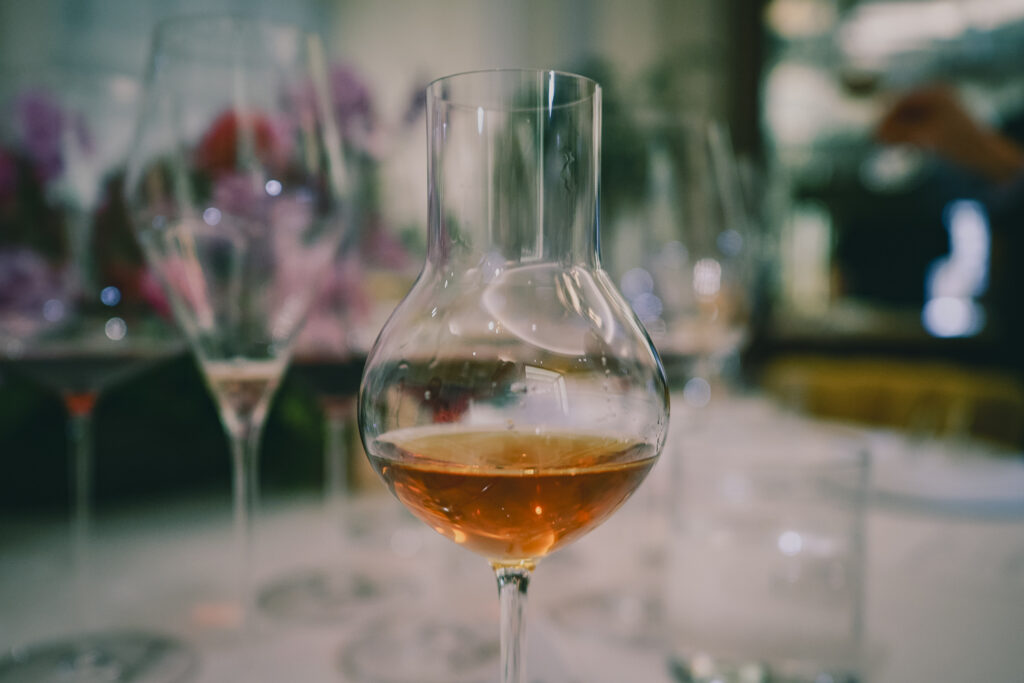
2011 ‘Vieux’ Marc de Vieux Télégraphe
Really impressive but I didn’t take notes.