
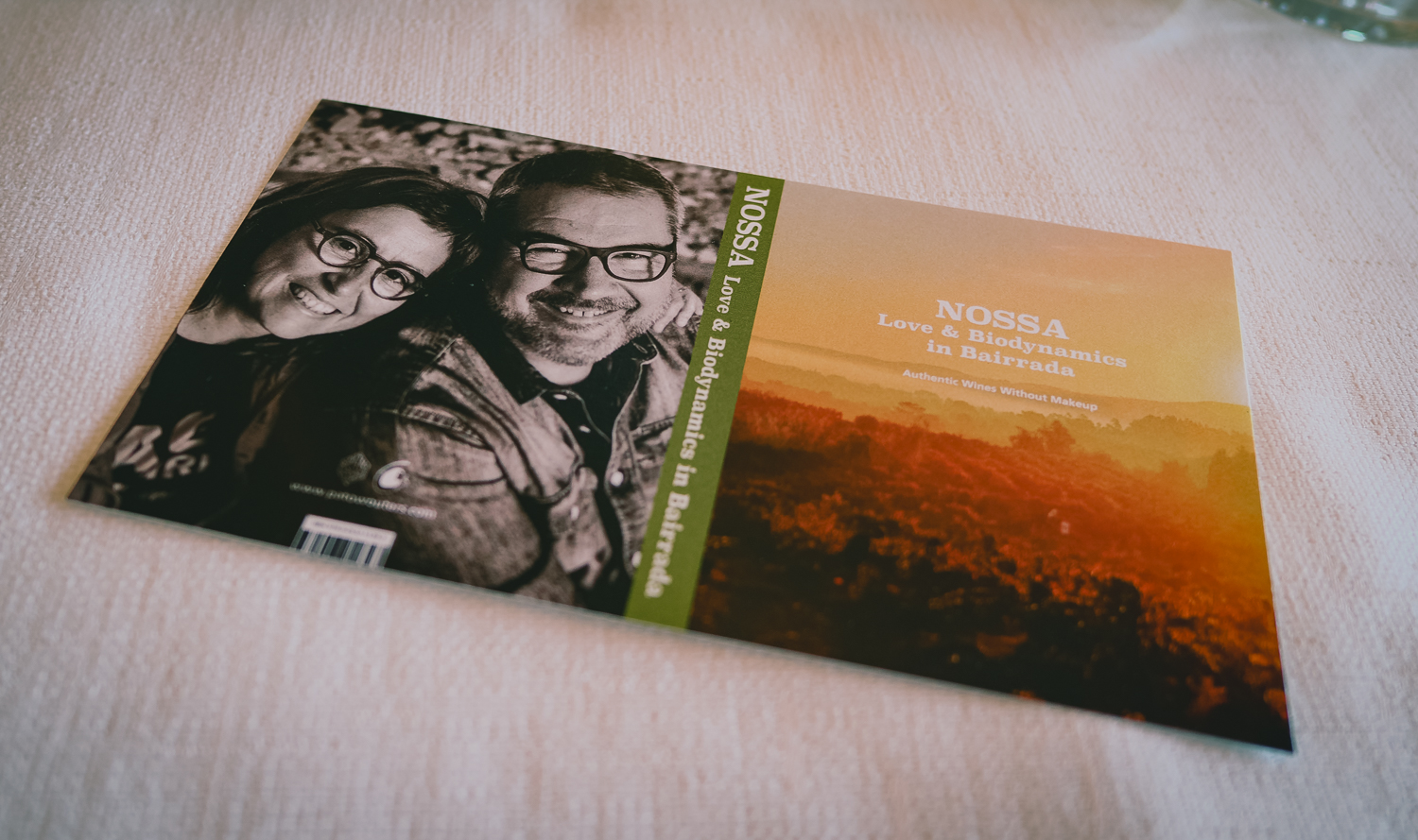
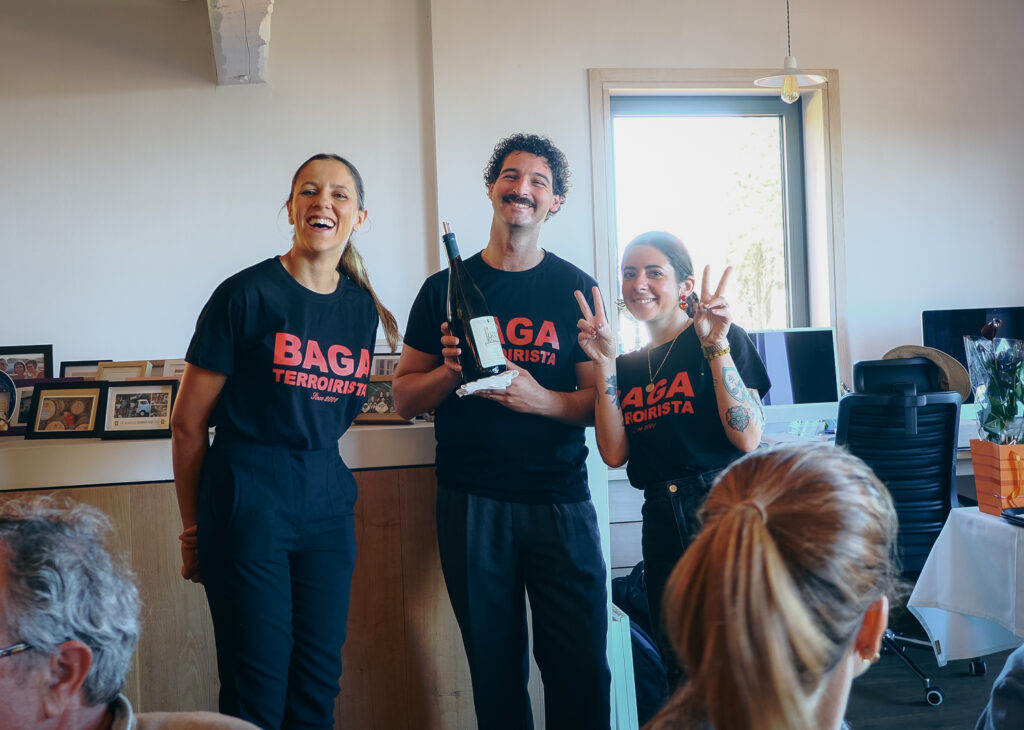
Celebrating 25 years of Filipa Pato’s wines with an amazing lunch and tasting
Flipa Pato, daughter of famous Bairrada winegrower Luis Pato, first started making her own wines 25 years ago, in 2001. She was aged 25, and the wines stood out as really impressive from the outset.
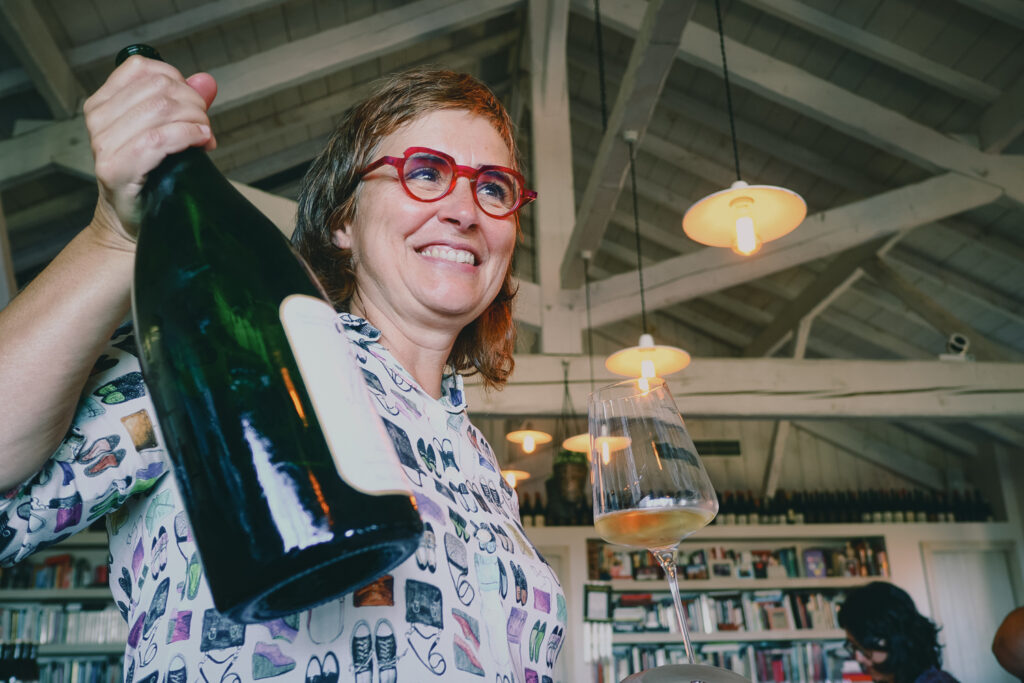
Gradually she added to these holdings. And Belgian restaurateur and sommelier William Wouters was another acquisition (he joined the project in 2006 and they married in 2008), and now the wines are labelled Filipa Pato and William Wouters. He’s brought another dimension to the project, but it’s Filipa who does the winemaking.
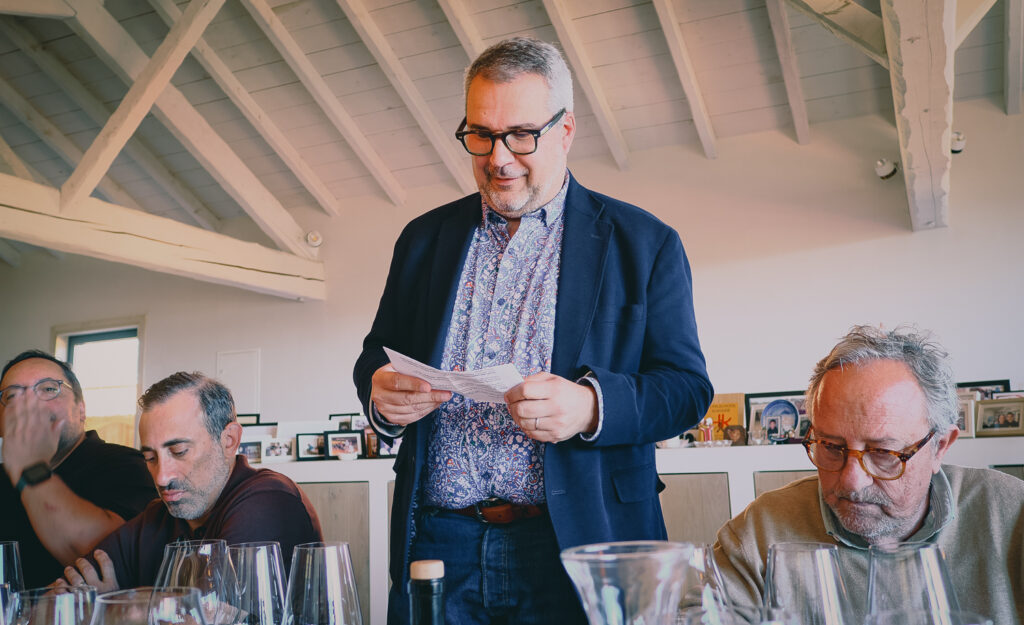
Bairrada is an amazing wine region, but it hasn’t always been well respected. This is now changing, and Filipa’s father Luis deserves quite a bit of credit for this. Initially he was quite a modernist, but he always kept his love for Baga, the principal red grape of the region.
For a while Luis left the appellation, but then he came back. Seen as a modernist, he ruffled feathers. But the modernists who caused the real trouble were those who replanted vineyards with international (French) varieties. They aren’t needed here.
Bairrada has amazing old vineyards, and not just red (Baga), but also white. The key to the success of this region is largely down to the soils, and partly due to the climate. Much of the region is limestone, with some clay in the mix. But as with other fine wine regions, there’s diversity in the terroir. Consider Bairrada as similar to Burgundy or Barolo, where site-specific differences can be realized in the wines.
There’s now a critical mass of producers making excellent wines in the region, with a clear focus on Baga as the key red variety. As well as Filipa and Wouter’s wines, we have Vadio, Quinta de Baixo (Niepoort), Gonçalves Faria and newcomer Transmission. And then there’s Luis Pato, Quinta das Bágeiras, Sidónio de Sousa, Quinta da Vacariça and Caves São João.
In the winery, Filipa’s approach to élevage encompasses a range of tanks and vessels, including quite a lot of clay. She even has a basket press that she designed herself. For Baga, she uses 30-40% whole bunch, not 100%. ‘I like a bit,’ she says. ‘It gives more drinkability, and I appreciate the vibrancy.’ She puts the whole clusters at the bottom of the tank, crushes it with feet, then puts destemmed grapes on top, and then on top of this more whole cluster. She might use more or less whole cluster depending on how full the tanks are: she ferments each plot separately, and doesn’t like to have half-full tanks. So if the tank is looking like it might not be full, she’ll put more whole cluster in because this takes more room.
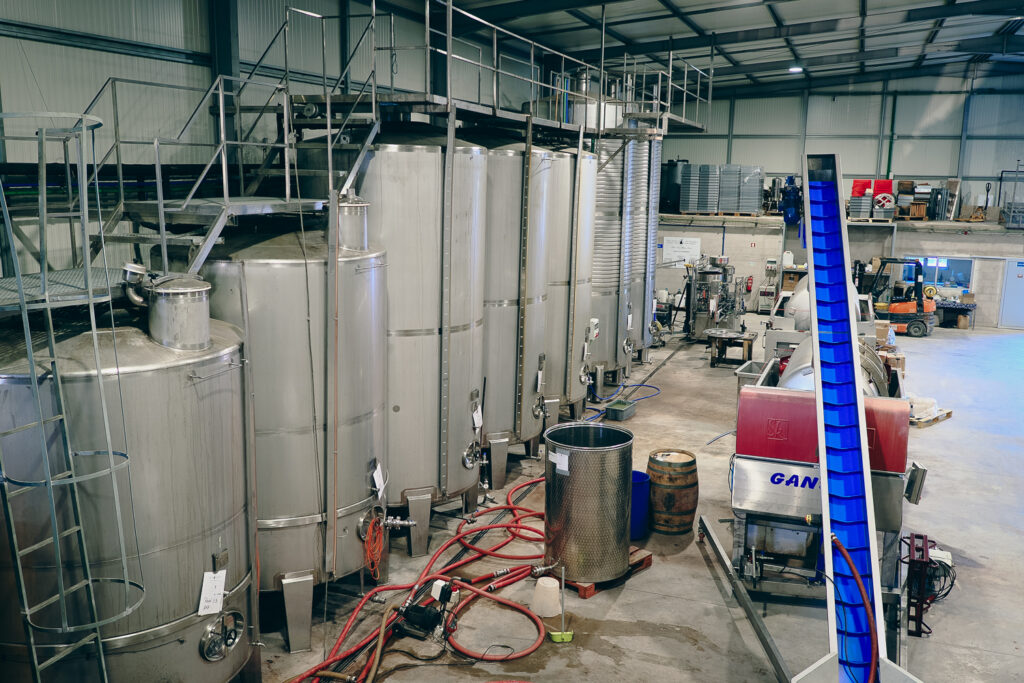
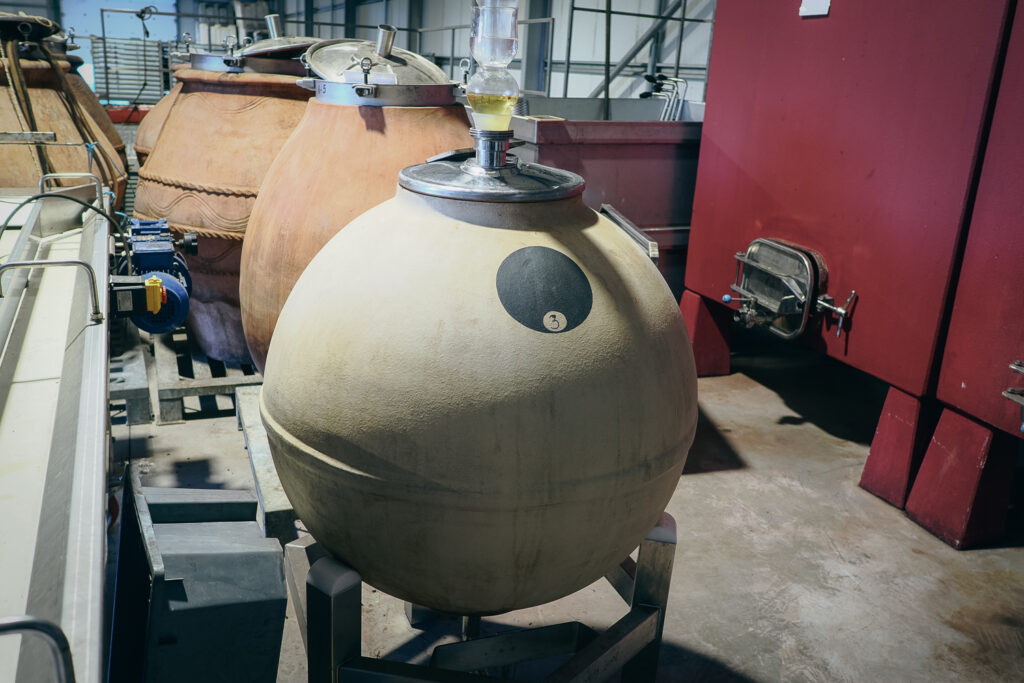
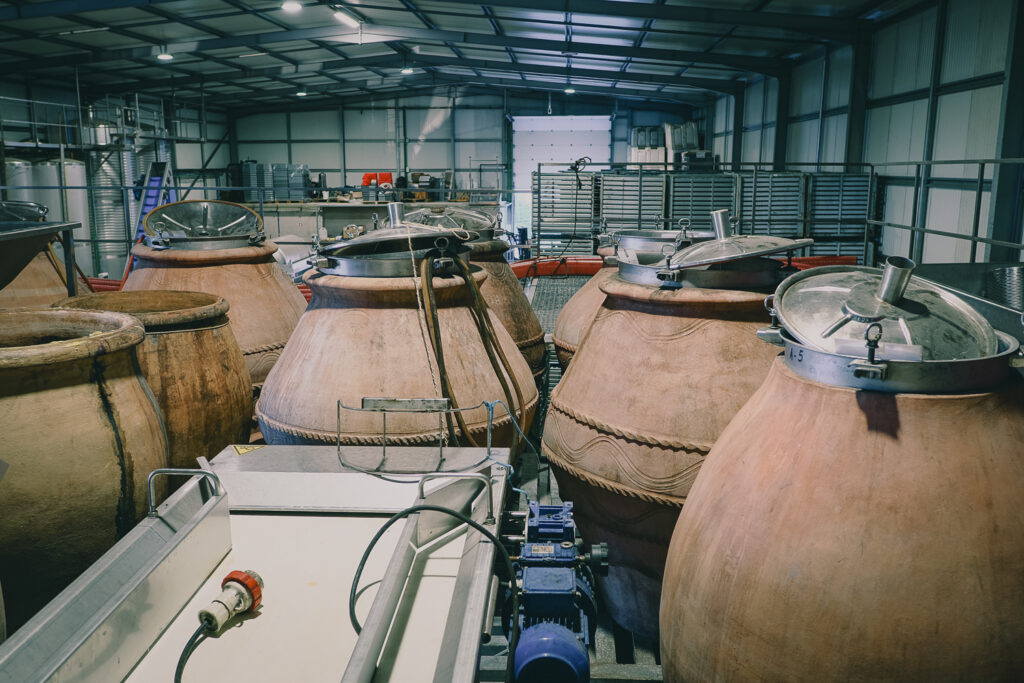
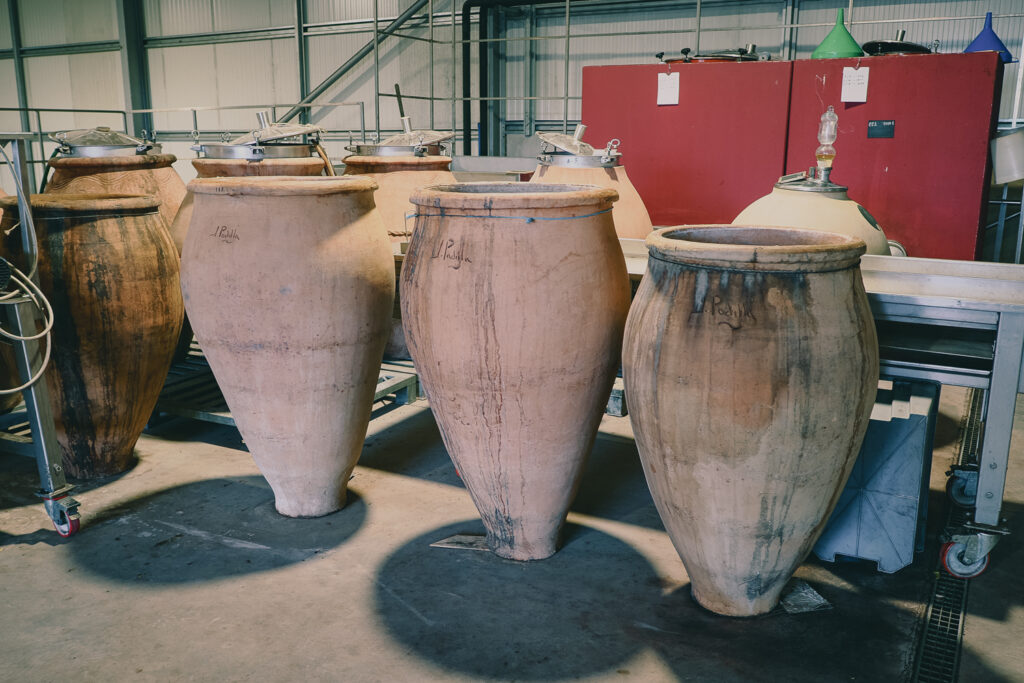
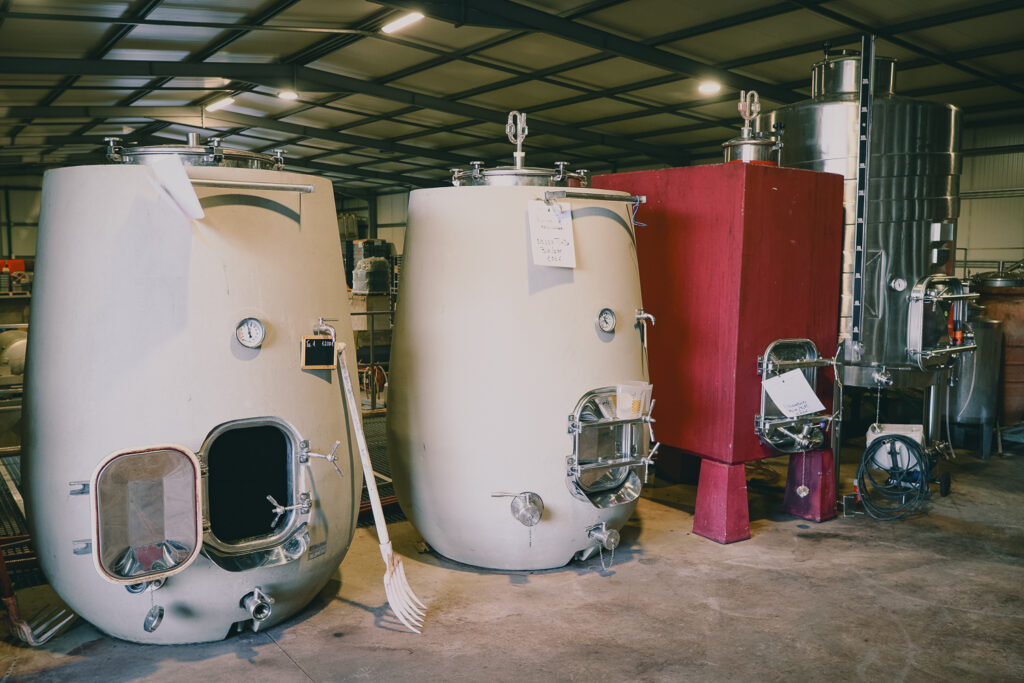
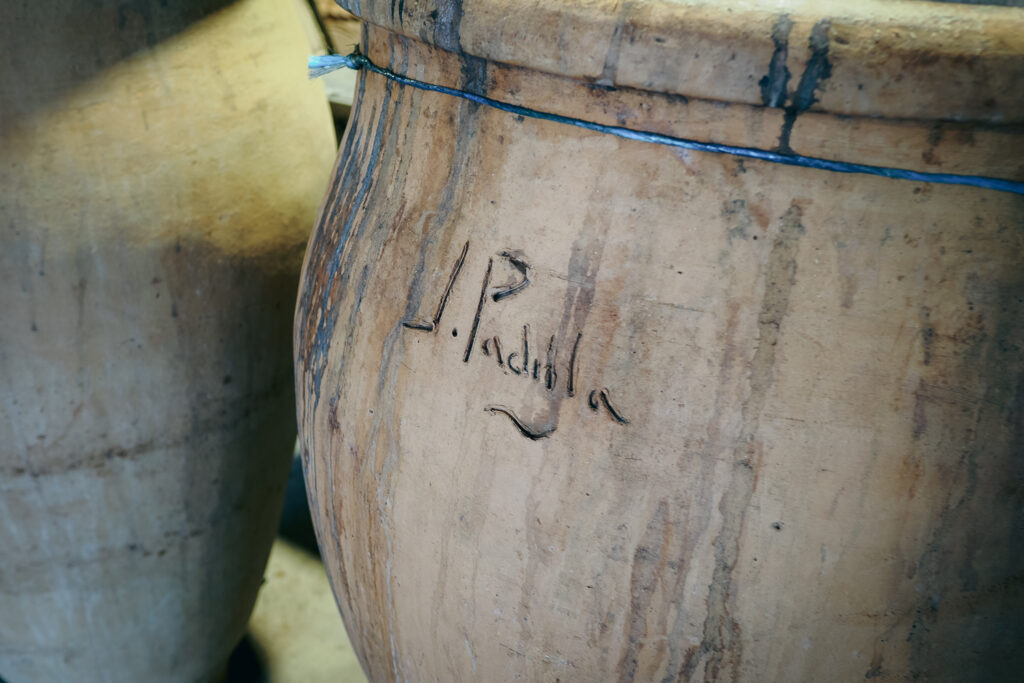
The winery, near their home in Óis de Bairro. Is relatively new. It’s much more practical than the old one. And next to it there’s a new wine bar, Nossa, offering Filipa and William’s wines, but also a nice selection of grower Champagnes that they import.
Before the celebrations, I visited some of the oldest plots that she has. Filipa began with three rented plots in 2001, and started buying vineyards in 2006.
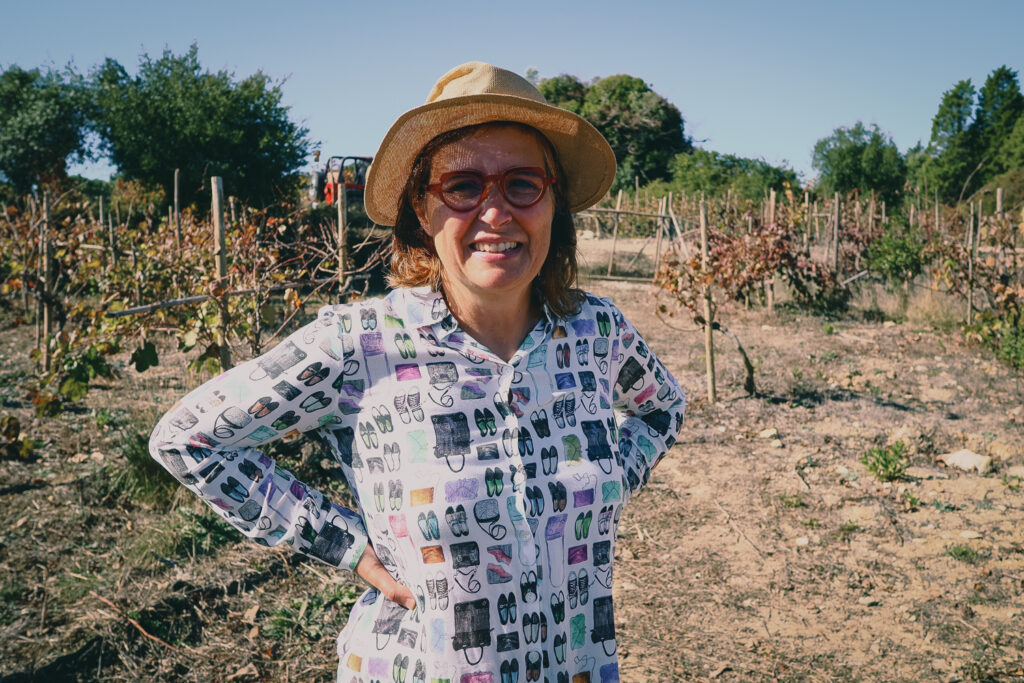
Over the last few years she has been busy buying old vineyards and then renovating them. Currently Filipa and William have 20 hectares split over 37 plots.
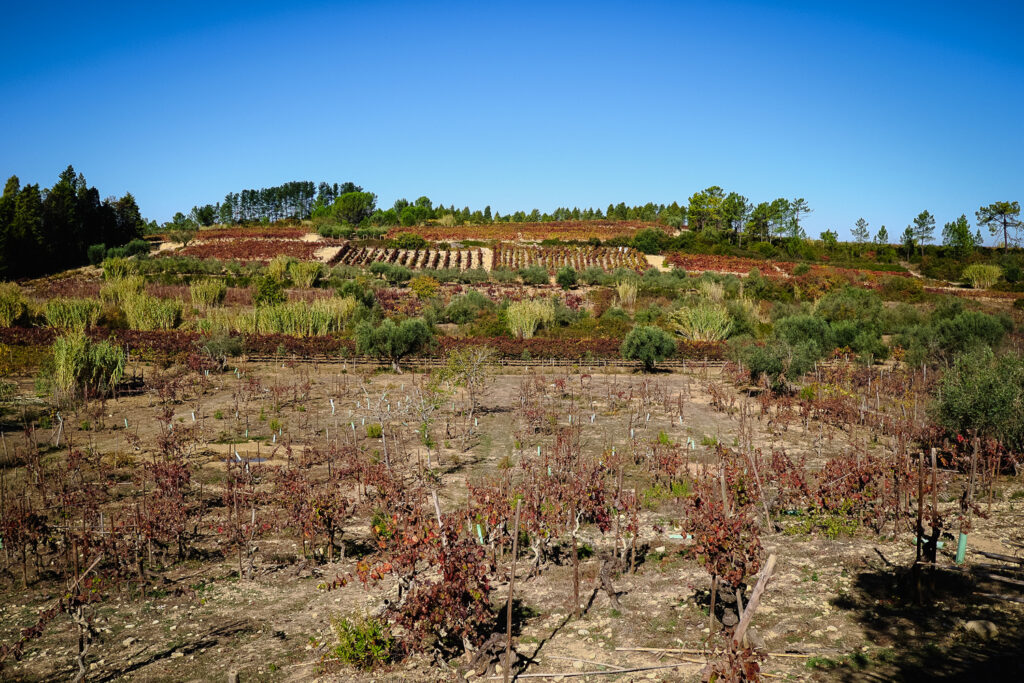
The first plot we look at is one of the centenarian plots that goes into Nossa, and this is where the pigs are.
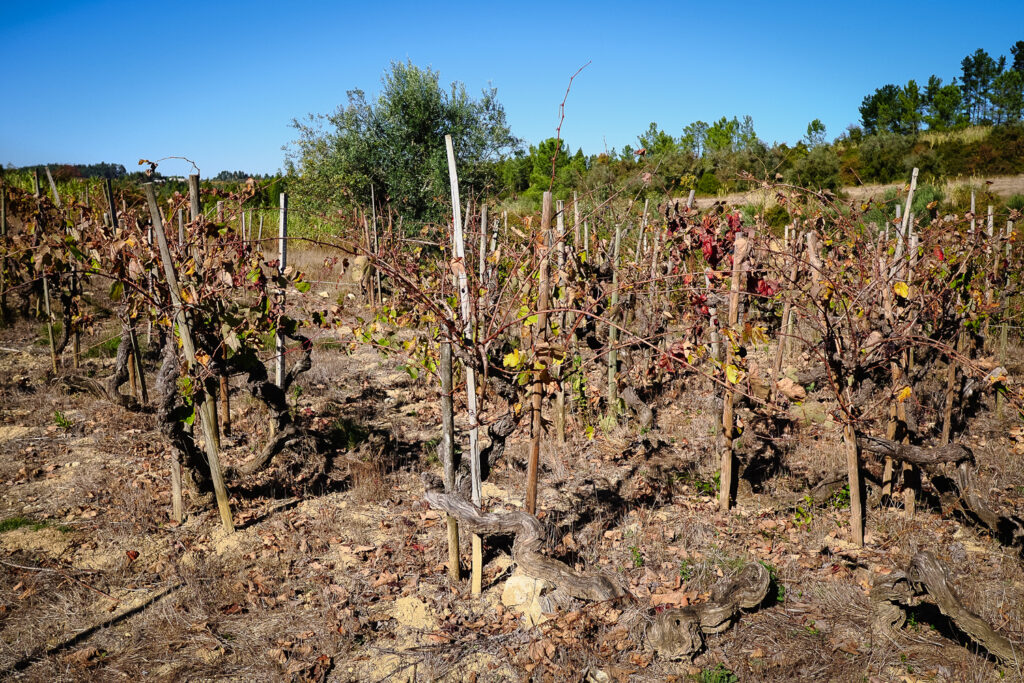
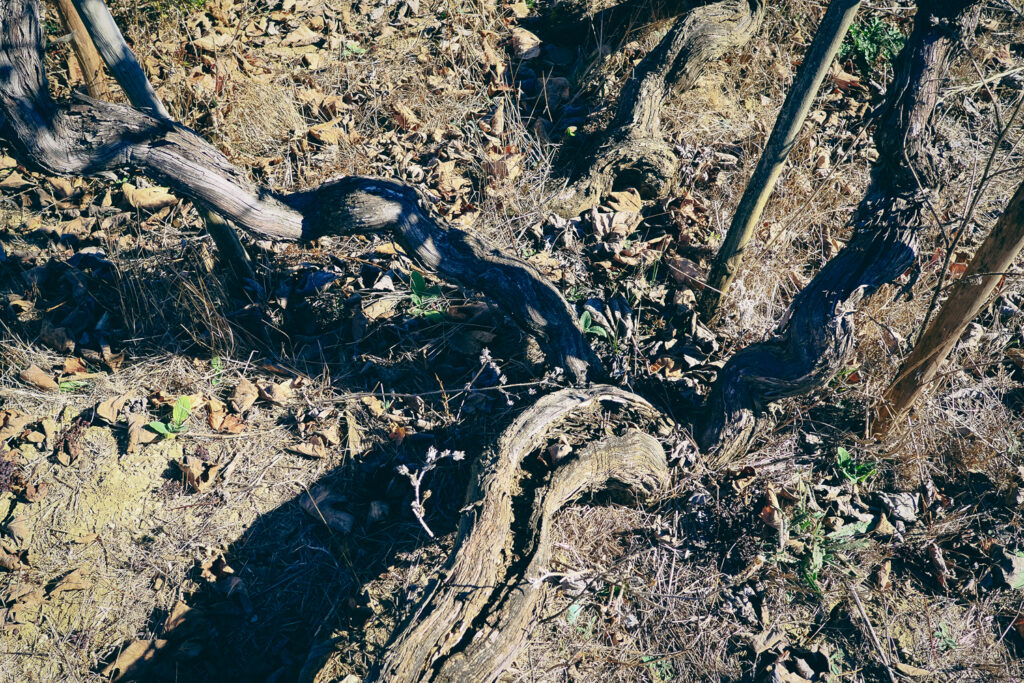
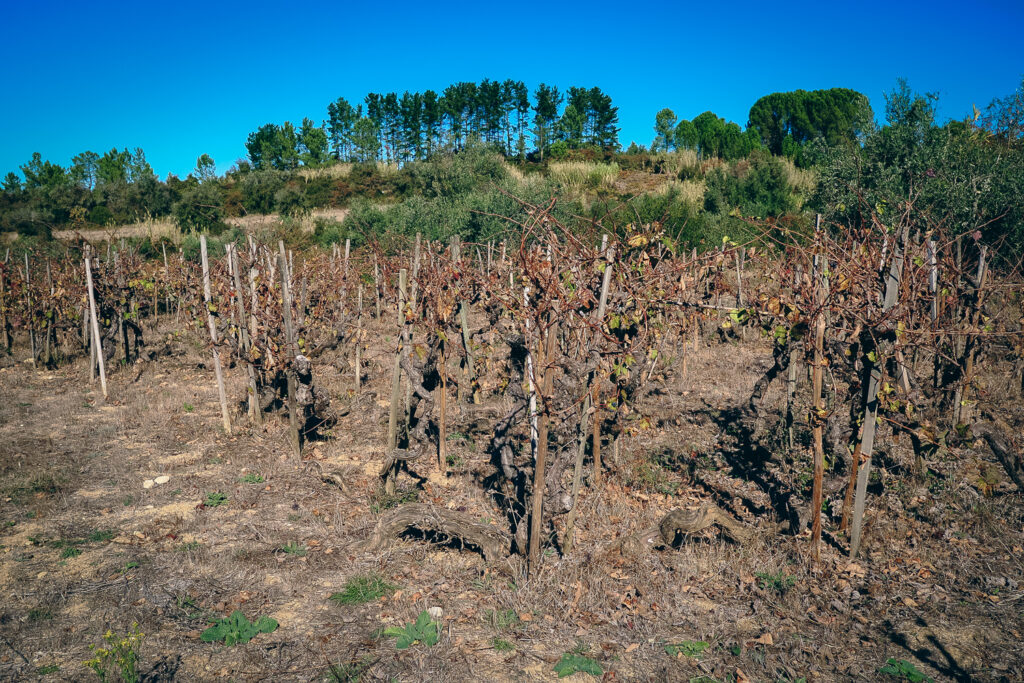
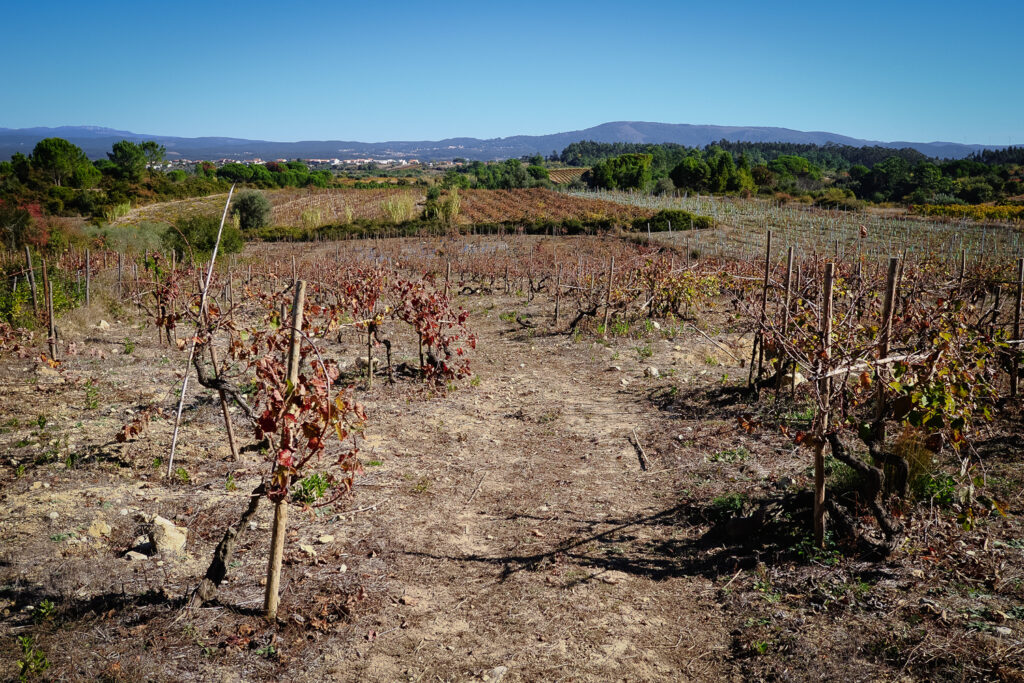
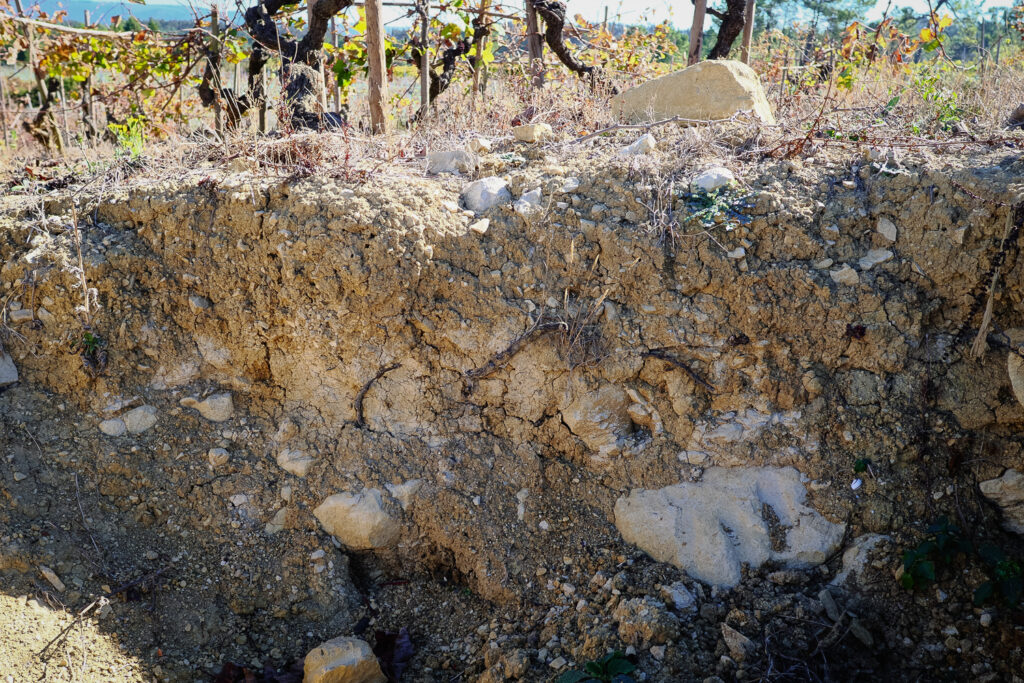
The second is an old vineyard called Careca: the grapes from this are fermented separately, and at some stage this will be a future cuvée in its own right. Then the third is the oldest, the Missão vineyard, which according to official records was planted in 1864. This is before phylloxera and the vines are ungrafted. It’s a remarkable plot, with wizened old vines. The trunks aren’t as thick as you might think, and this is presumably because of the bony soils. There’s a soil pit, showing a thin layer of clay topsoil over almost pure limestone. The plot is also east facing, which is ideal.
PIGS
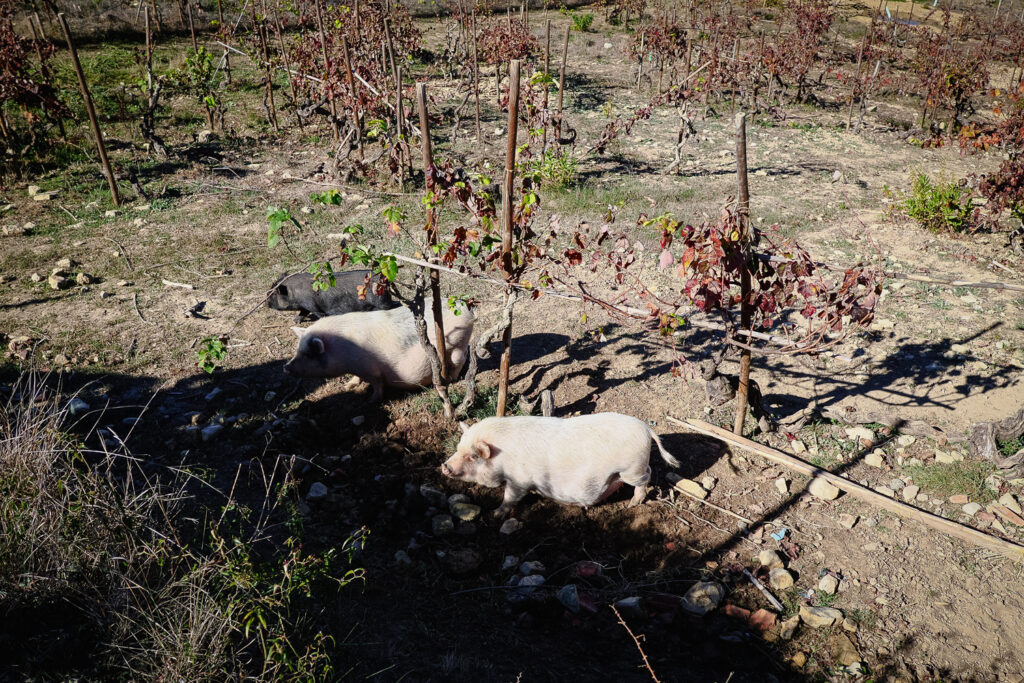
Key to farming the old vineyards is the use of pigs. You can spot Filipa’s plots because they are all securely fenced, and each has a small structure where the pigs can get shade and cover.
Filipa introduced animals because she wanted to help regenerate the soils. She farms biodynamically, and when she took over conventionally farmed vineyards it was taking up to a decade to recover the soils to full life. So she introduced animals to help with this process.
First she began with sheep, the animal of choice for many vineyards. But far too often the sheep were being attacked by hunters’ dogs. ‘In 2020, during Covid, we thought why not put the pigs on the vineyard?’ says Filipa. After all, Bairrada is famous for pigs: it is the home of Leitão, the suckling pig that’s the staple dish in restaurants of the region.
Filipa is using smaller pigs that are a cross between Vietnamese pigs and bizarro and Serrano, the two local pigs for Leitão. They work well, and because they are crosses they are hardy enough to live outside all year. And they aren’t troubled by dogs.
These pigs are moved from one parcel to another, and although they can’t be used all year round, they are focused on the ground and you get two months’ longer vineyard residence time than you do with sheep. The fences need to be good. ‘We can’t have male and female together,’ says Filipa. ‘If the ladies don’t give the men attention when they are suckling the males go away to the village.’ Escaping pigs have been the cause of many phone calls and call outs. Currently Filipa has 9 pigs, but two of the females are pregnant.
DRONES
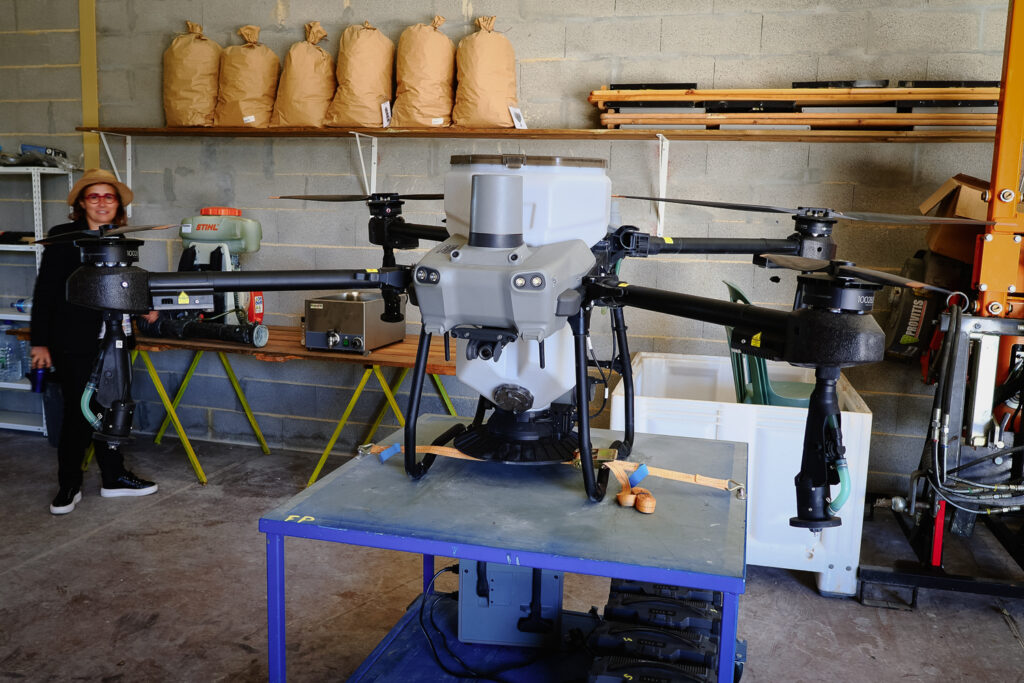
Another innovation has been the use of drone spraying, which she does from the beginning of May to end of June when there is a big mildew pressure. The advantage of the drone is that there’s no compaction of the soil (for vineyards where tractors would be used) and it’s much less work than back-pack spraying, which is how they treat the old vineyards (you can’t get tractors into them). ‘Since we have the drone we can spray every week,’ says Filipa, whereas before they could only really spray every fortnight. ‘It’s like a PlayStation,’ she says. ‘The young guys do it.’
Here’s the catch, though. In the EU, drone use for spraying agrochemicals isn’t allowed. The fear is spray drift. And this includes the biodynamic/organic fungicides elemental sulfur and copper-based products.
Filipa uses it to spray plant-derived products, such as teas derived from horsetail and willow, and some essential oils. And these have proven quite effective. This year for plant protection (2026) she used no copper at all in the vineyards (this would have to be back pack sprayed), but this was the first time.
The drone has also been really helpful with the olive trees. It does 3 m high passes and so it sprays them as well, and as a result they’ve had higher yields of olives and are now able to commercialise the oil.
There’s another use for the drone: it can be used to seed cover crops. The idea here is that when you want to sow a cover crop it can often be a bad time to access the vineyard. Filipa has a device that attaches to the drone which then spreads her se.ed mix throughout the vineyard
The drone she has is made by DJI, who are the world’s leading drone-producing company. They also make amazing gimbals and film camera all-in-one rigs. It’s one of the smaller agricultural drones (or UAVs, for uncrewed aerial vehicle, the official term) with a capacity for 22 litres. She bought it for treating the unmechanizable old vineyards, but she also uses it for the first two treatments of the mechanizable vineyards.
THE LUNCH, BY SÁLA
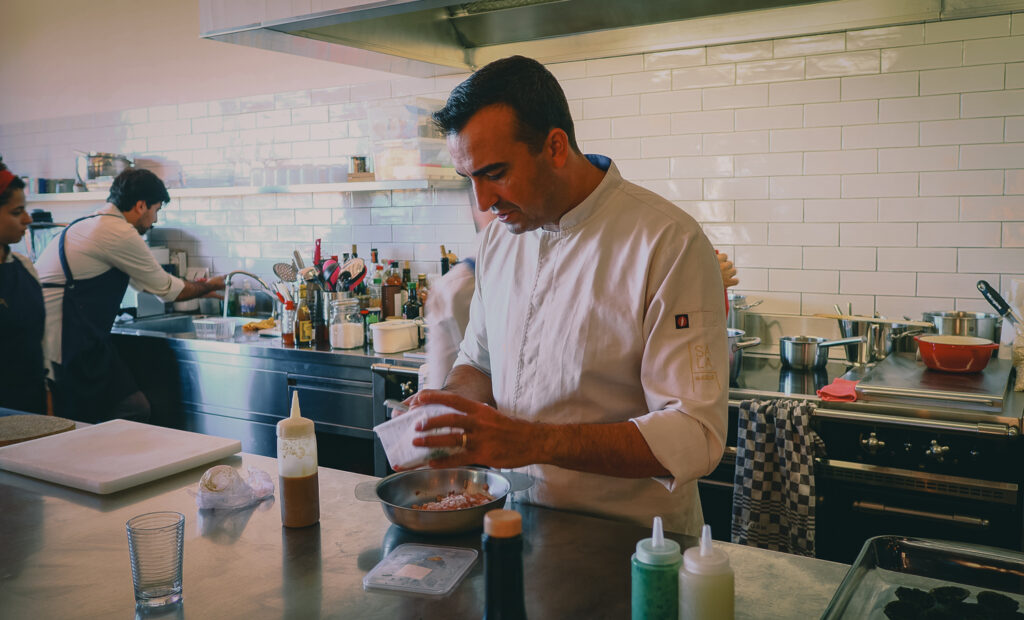
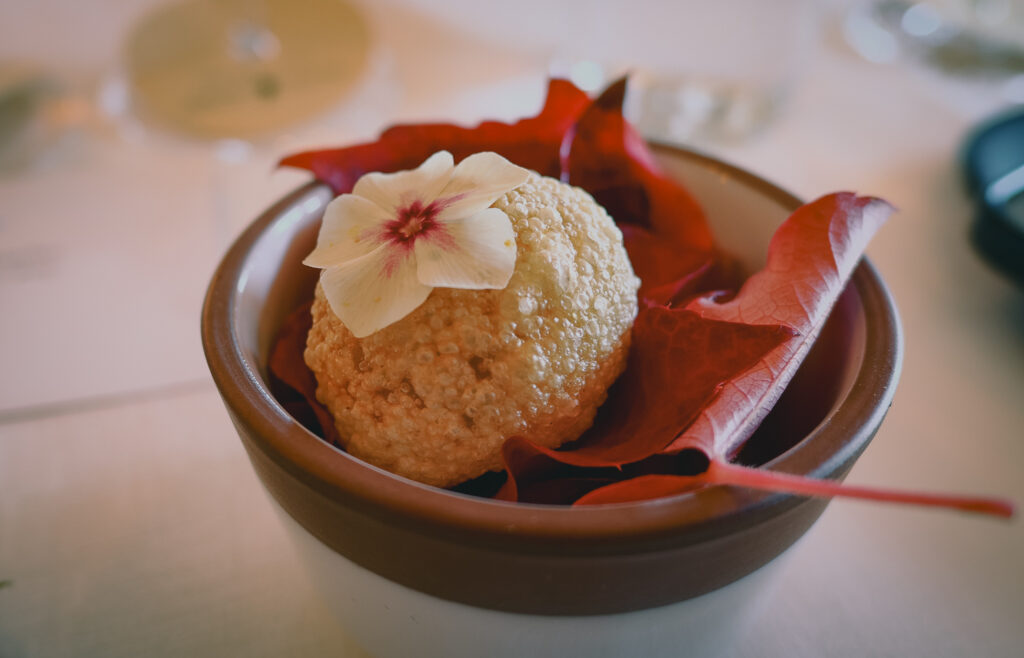
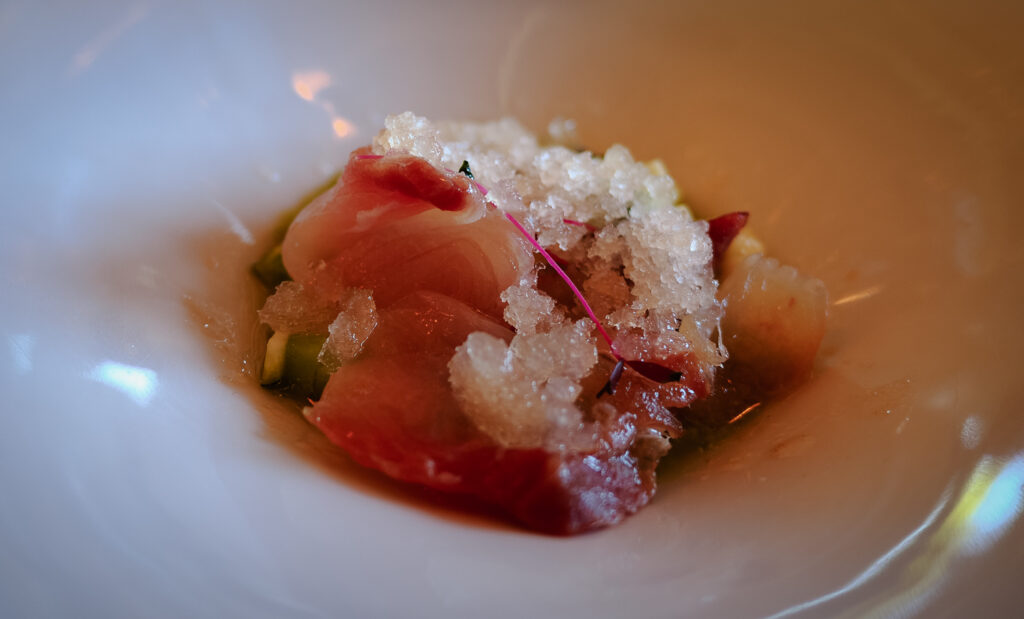
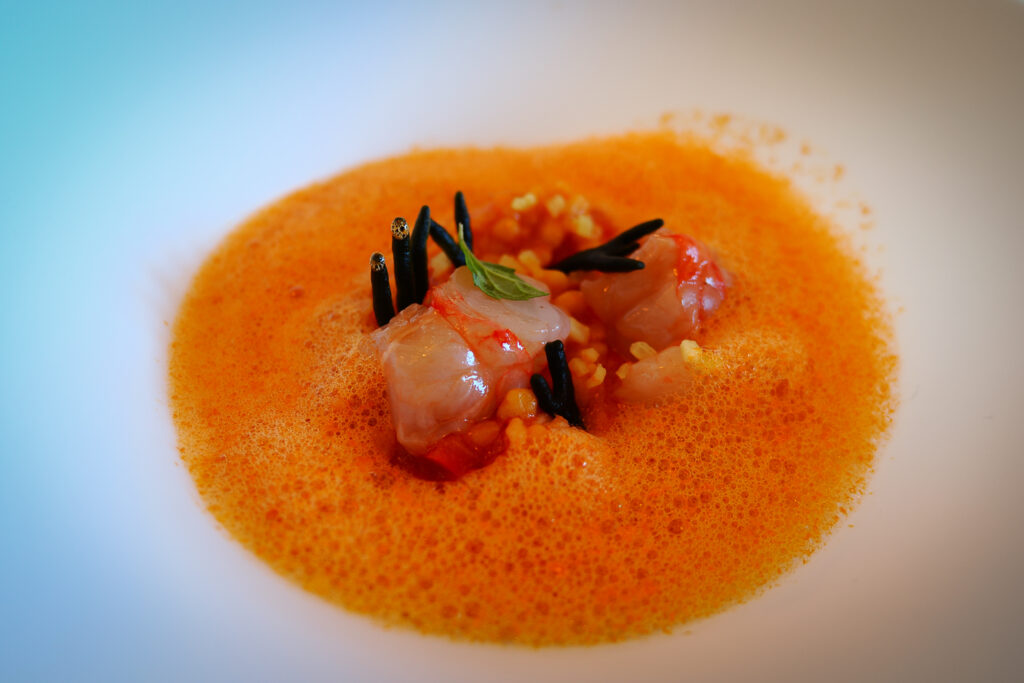
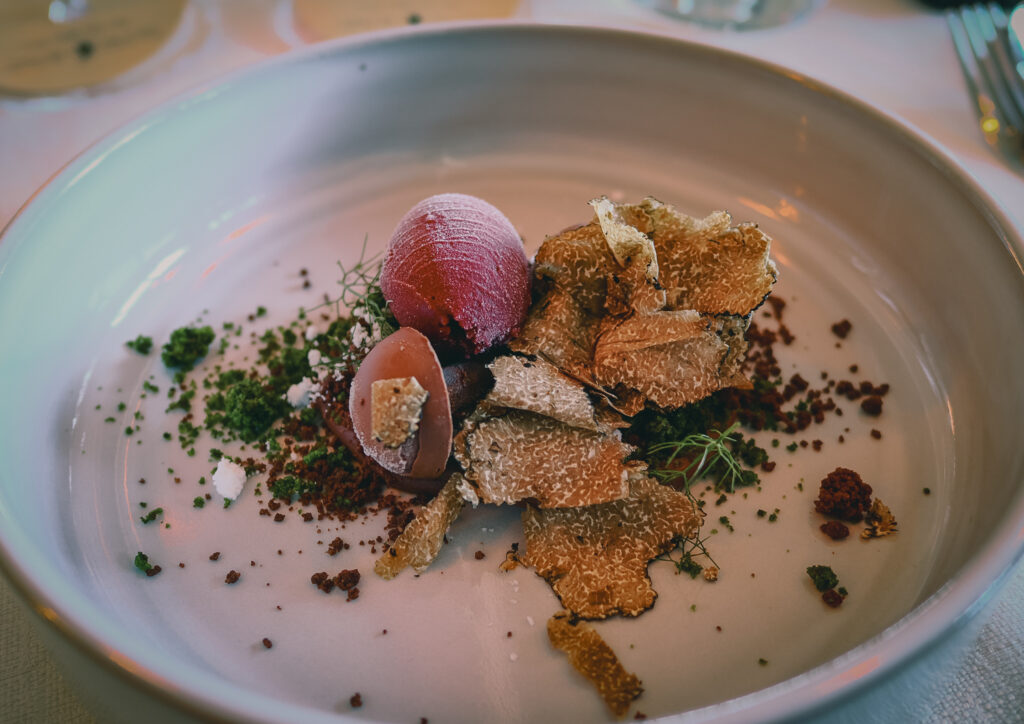
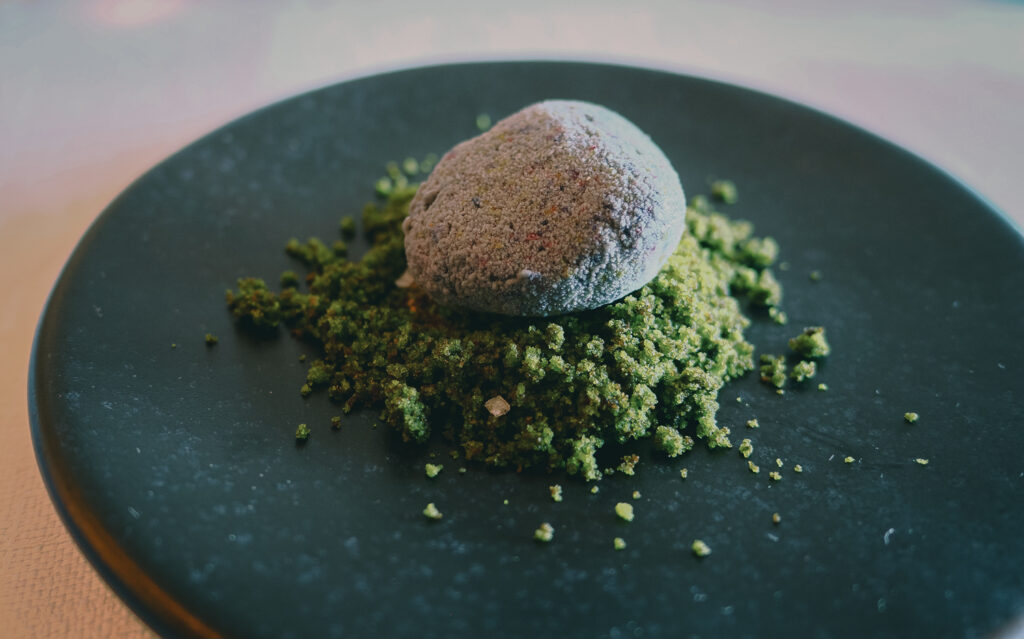
This lunch, celebrating 25 years of Filipa Pato, was quite remarkable. It was cooked by the team from Sála in Lisbon, the restaurant of João Sa. Everything was spot on, and some of the dishes were truly exciting.

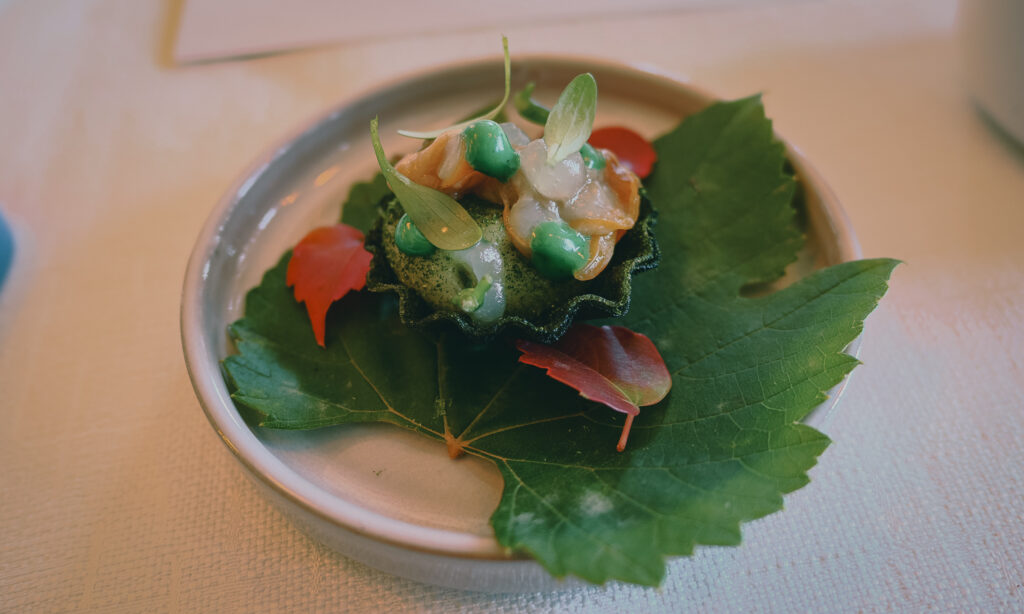
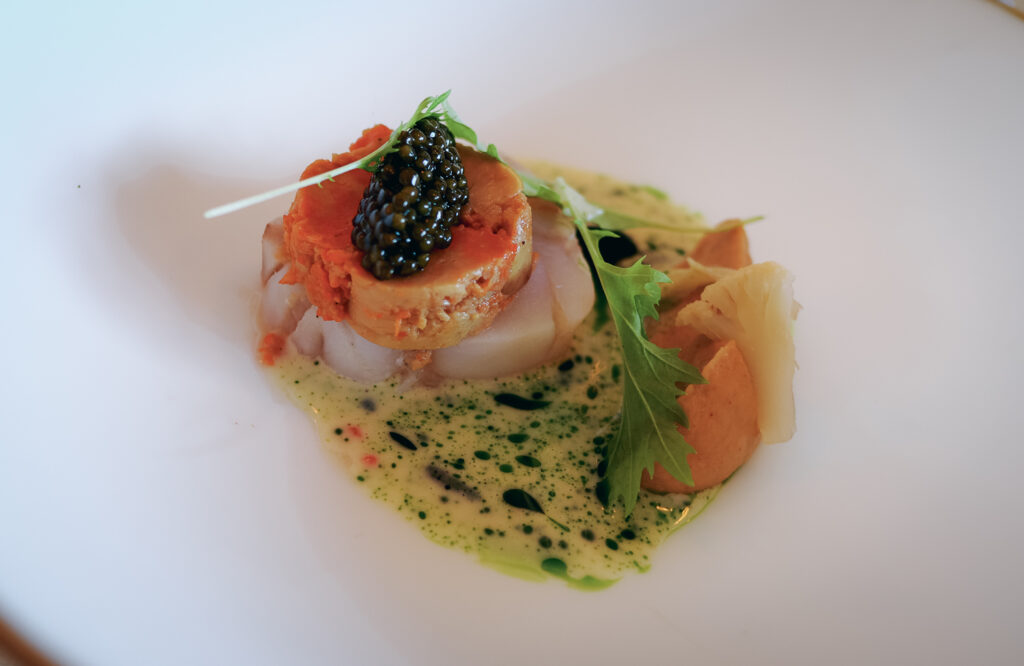
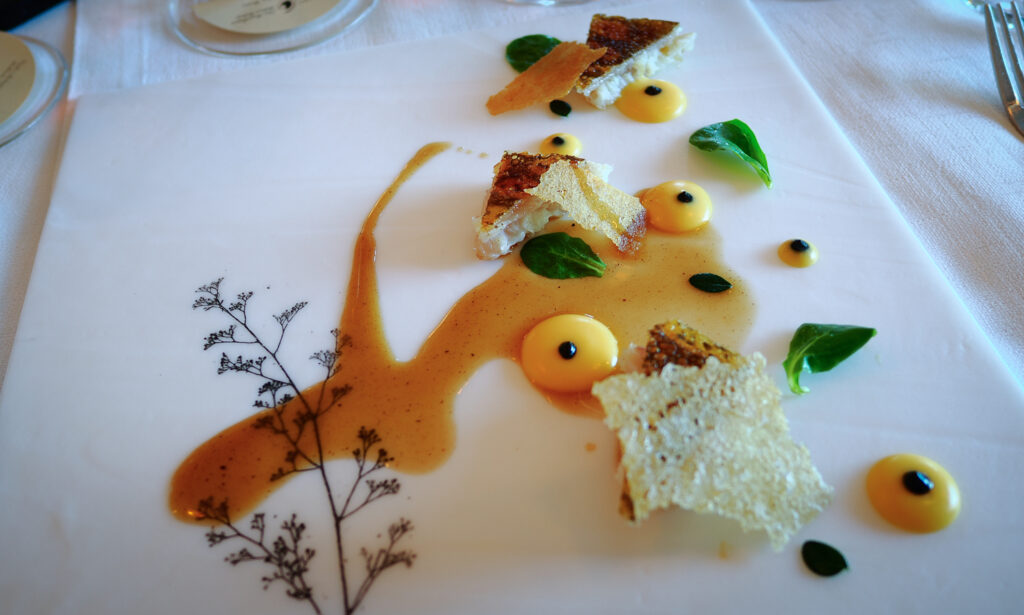
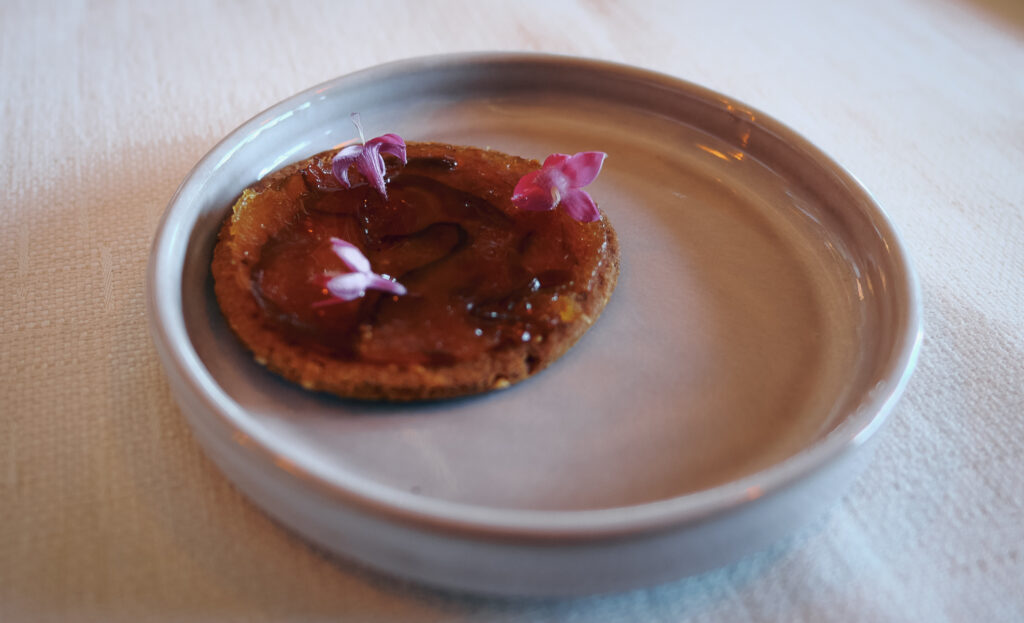
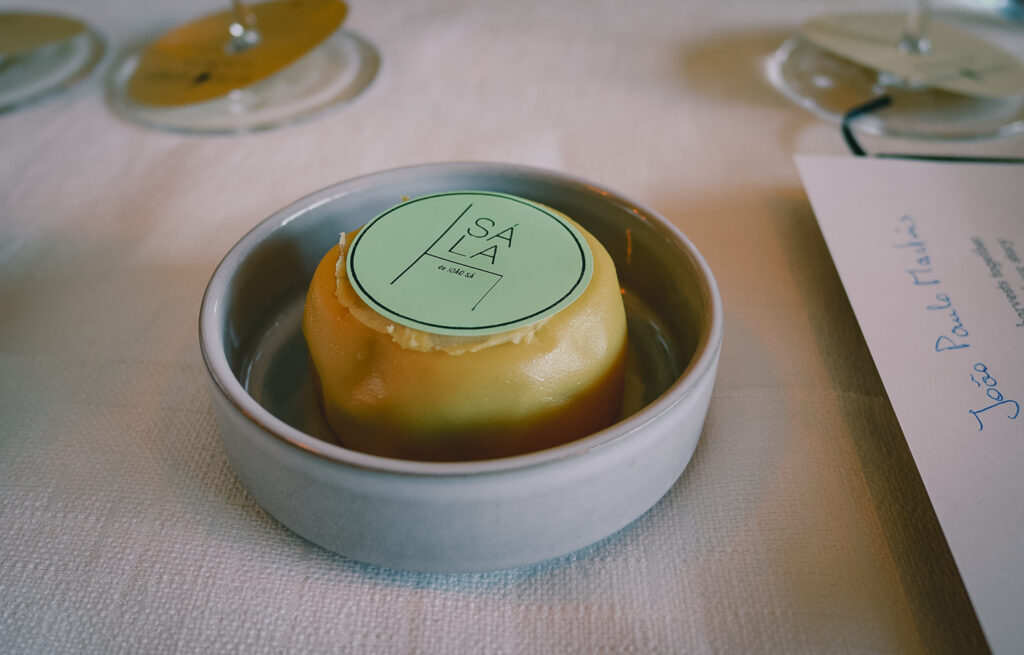
- Buffalo Pato Tart
- Puri with prawn tatare
- Aged amberjack, green curry and baobab
- Traditional couscous from Trás-os-Montes, striped prawn and tom yum
- Monkfish and mushrooms
- Bairrada style moray eel
- Lupin beans, fig and beer
- Truffles and chocolate
- Almond and white miso
WINES
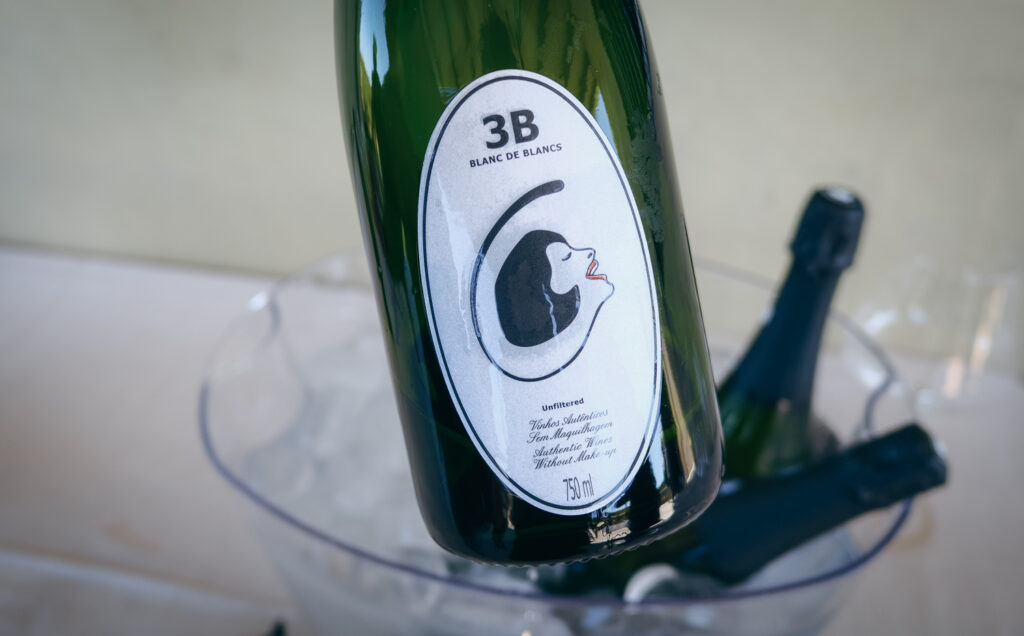
Filipa Pato & William Wouters 3B Blanc de Blancs NV Bairrada, Portugal
A blend of Bical (70%), Maria Gomes (23%) and Cercial (7%). Fresh and linear with nice vivid citrus and pear fruit some crisp green apple, and lovely chalky, salty mineral notes. Quite delicious. 91/100
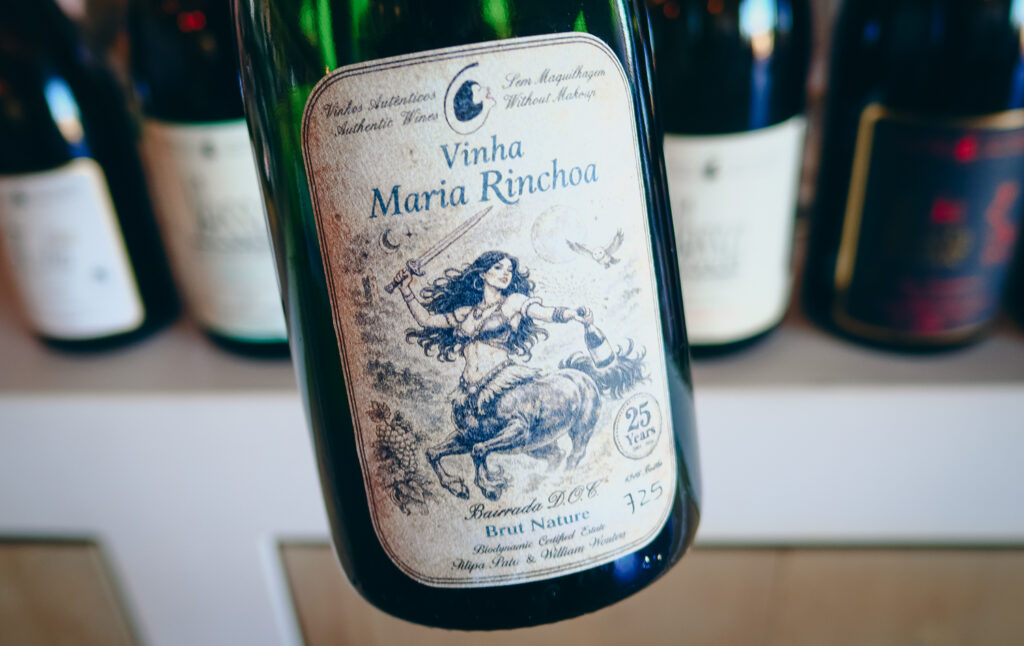
Filipa Pato & William Wouters Vinha Maria Rinchoa Brut Nature 2021 Bairrada, Portugal
This is from a single plot, and the base wine is a blend of Baga, Bical, Cercial, Arinto, Maria Gomes and Rabo de Ovelha, wild ferment in cask with so sulfites. Tirage under cork, disgorged three months ago. Full gold in colour this is powerful and lively with bold citrus fruit and a bit of toast. Complex and layered with some salinity and real focus, showing vivid citrus fruit. Not as rich as the colour would suggest. 94/100
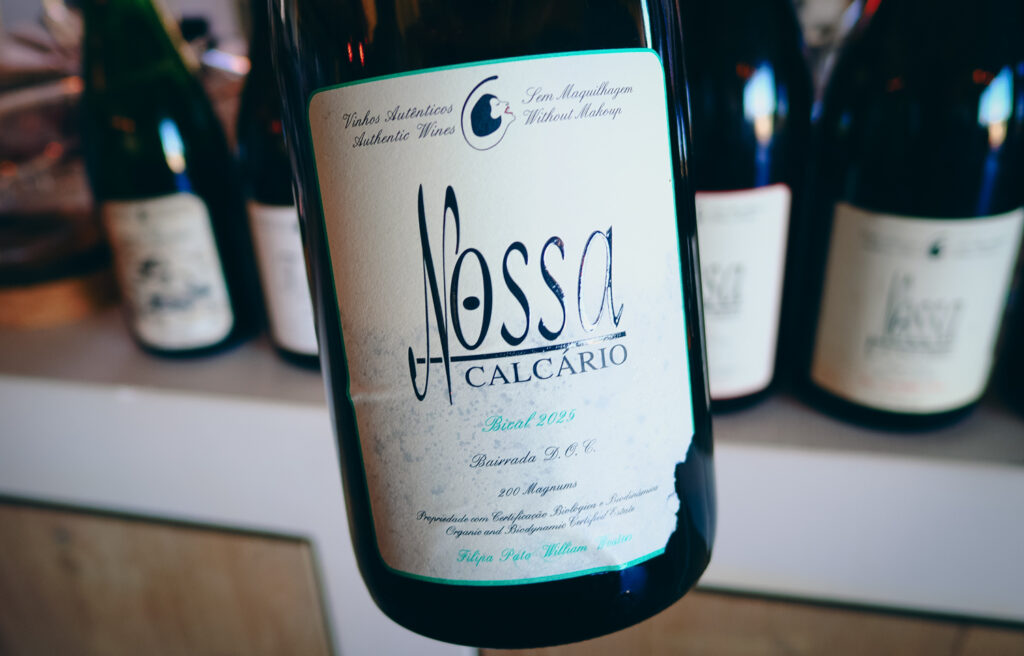
Filipa Pato & William Wouters Nossa Calcário Bical Branco 2025 Bairrada, Portugal (magnum)
Lively, with lovely acidity. Stony and bright with a nice mineral character under the lemon and lime fruit. So crystalline and linear; stony and refined. 95/100
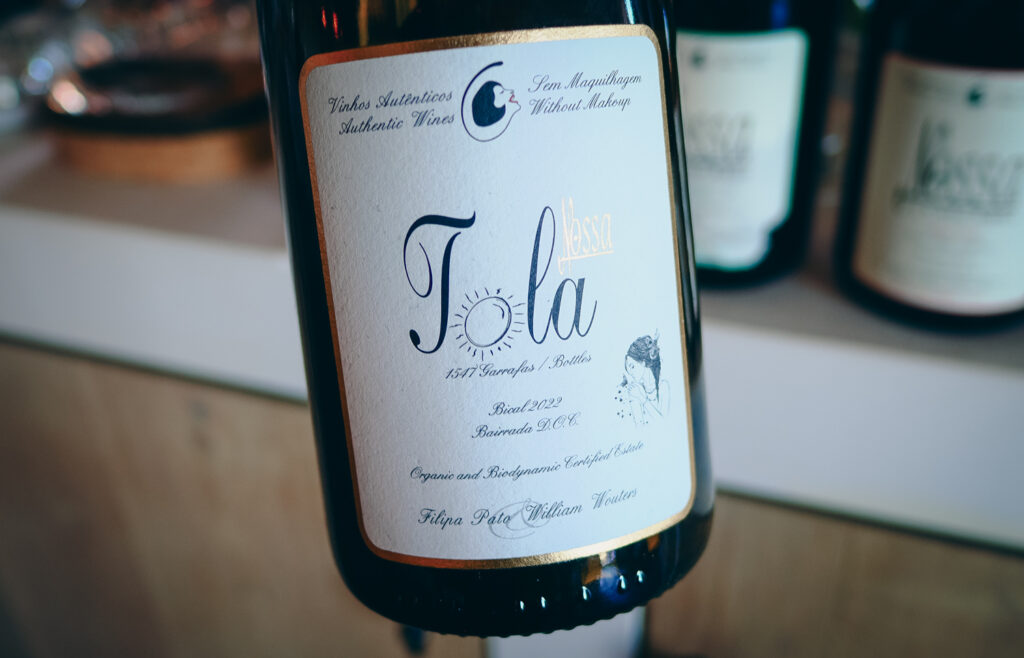
Filipa Pato & William Nossa T.la Bical 2022 Wouters Bairrada, Portugal
11% alcohol. Tola means crazy in Portuguese. This was the first vineyard that Filipa and William bought together and this cuvée spends longer (18 months) on the lees than the regular Bical. Massive concentration here with taut, mineral lemon and lime fruit as well as some waxiness. This has real density, and it is still quite primary. Beautiful saline streak running through it. 96/100
Filipa Pato & William Wouters Nossa Calcário Baga Vinhas Velhas 2023 Bairrada, Portugal (magnum)
Supple with some meatiness and a bit of spicy wildness. It’s fresh, with a savoury twisyt to the vivid black cherry and plum fruit. 93/100
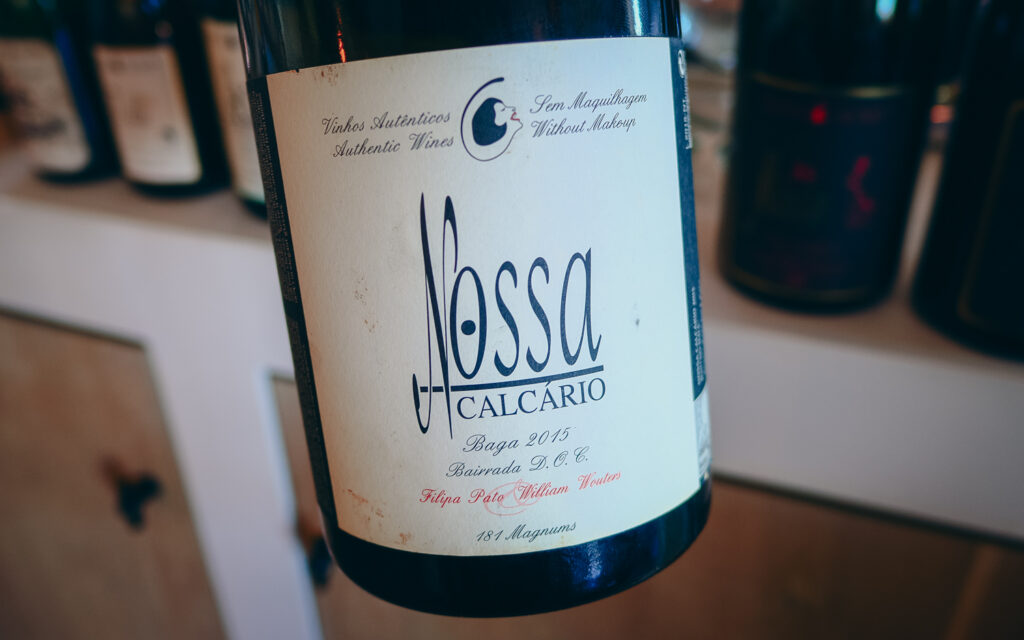
Filipa Pato & William Wouters Nossa Calcário Baga Vinhas Velhas 2015 Bairrada, Portugal (magnum)
At 11 years old this is linear and concentrated showing nice acidity and some good tannic structure. It’s still fresh, but it is showing some development. Chalky and linear with a slight tarry note. Fresh with some maturity. 95/100
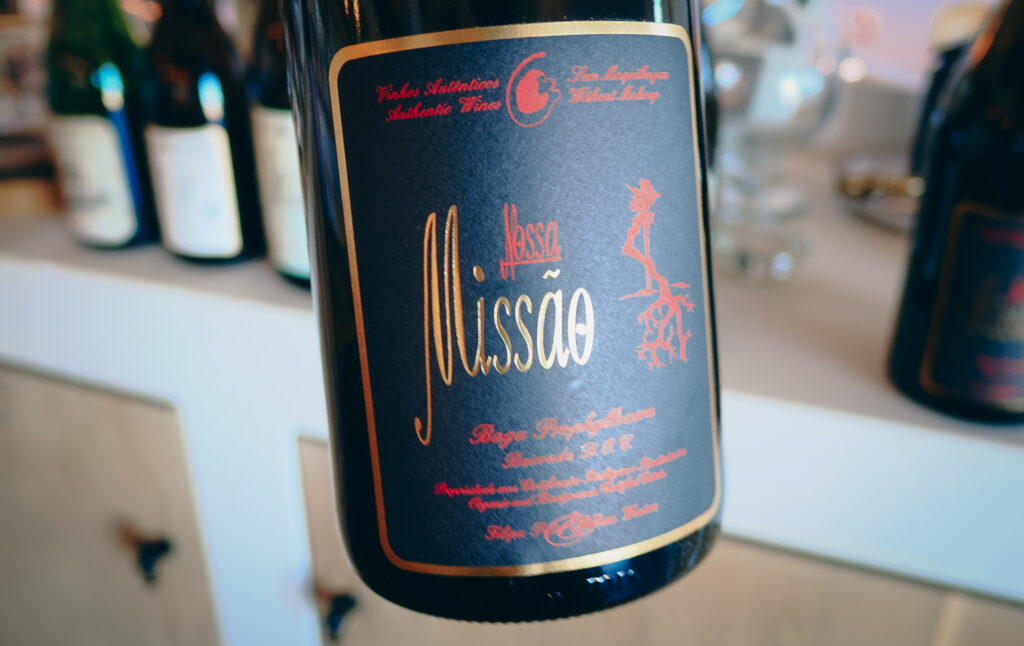
Filipa Pato & William Wouters Missão 2023 Bairrada, Portugal (magnum)
Focused, fresh and mineral this shows lovely black cherry fruit with some spice and pepper, as well as rosemary and redcurrant. Lovely texture and focus. Multidimensional with amazing acid line and refinement. 97/100
Filipa Pato & William Wouters Missão 2015 Bairrada, Portugal (magnum)
Savoury, spicy and firm, showing lovely structure and nice acidity. Quite mineral, showing freshness and elegance. Really refined, and grainy and nourishing with it. 95/100
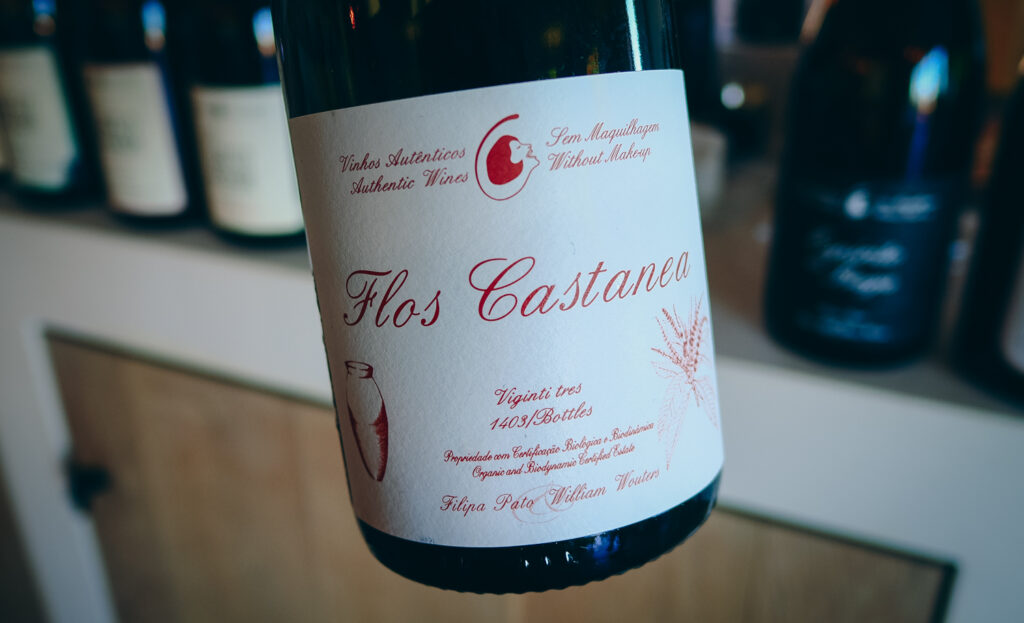
Filipa Pato & William Wouters Flos Castanea 2023 Bairrada, Portugal
This is really interesting because it’s a collaboration with a biodynamic Vinho Verde producer who uses chestnut flower instead of sulfites as a preservative. It’s Bical, fermented on skins, and then half is aged in cask and half in amphora. Saline and spicy with ripe apple and citrus, showing some tanginess and a lovely acid line. So distinctive and quite beautiful with real detail. 96/100
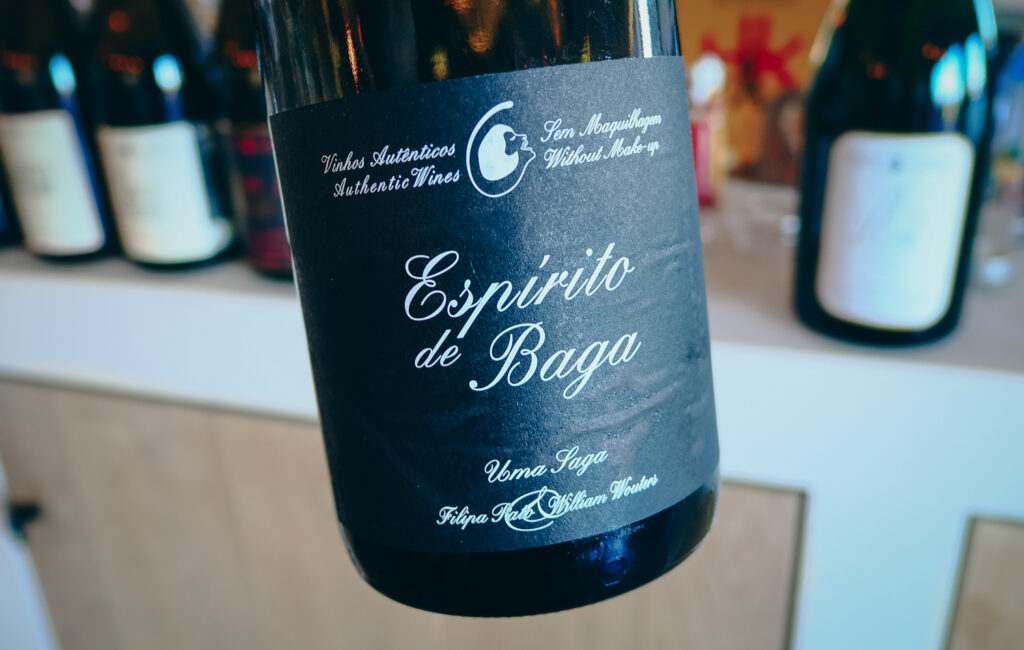
Filipa Pato & William Wouters Espirito Baga 2020 Bairrada, Portugal
This is fortified Baga. Before Filipa made it she phoned Dirk Niepoort for advice. She was under the impression that she should harvest late for fortified, but he said harvest at the same time as Nossa. This is whole cluster foot-trodden for 3-4 days, then fermentation is stopped. A bit of spirit is added at this stage, then the wine is pressed and fortified up to 19.5% alcohol before ageing in cask. Dirk said to her that one of the secrets is that to make great vintage-style Port you have to use very old casks (high alcohol is too extractive for younger casks) and he sent some old casks from Gaia. This has 90 g/l of sugar, and spent 3 years in Port pipes. Fresh, spicy, vital, tannic and firm. Still very youthful and quite delicious, with brooding dark fruits. 94/100
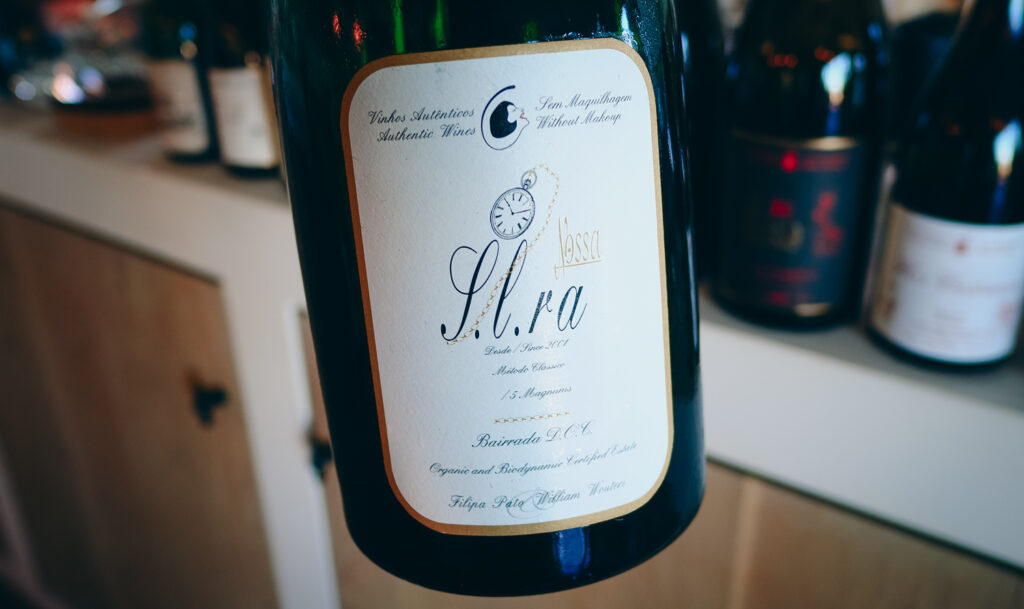
Filipa Pato & William Wouters S.l.ra NV Bairrada, Portugal
This is a traditional method sparkling wine made from a base wine blend that contains all the vintages since 2001 (for S.l.ra read ‘solera’). Three years on the lees. Powerful with lime, toast, spice and honey on the nose. Tangy and energetic with good acidity and a touch of sour cherry. Lovely energy to this expressive wine. 93/100


