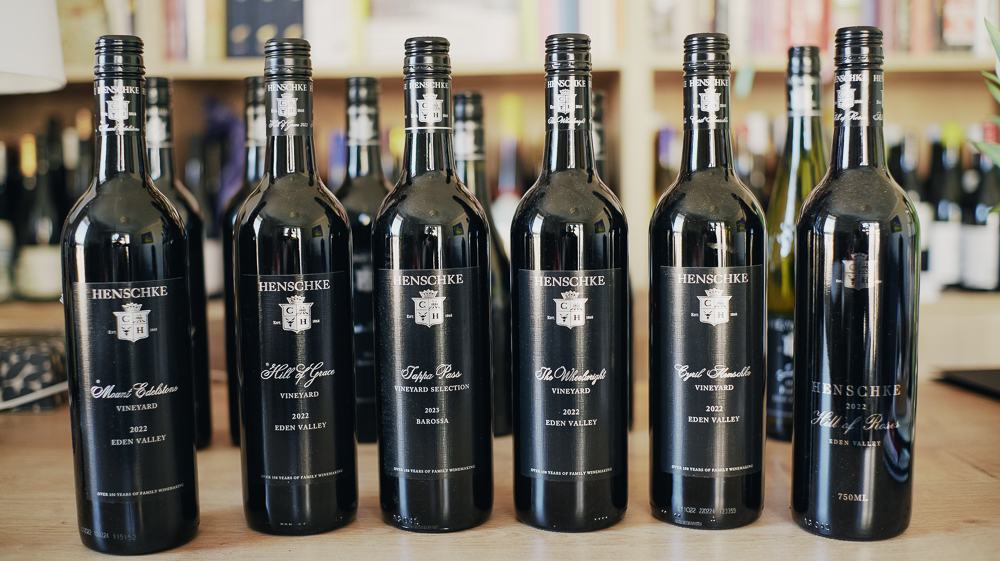
Henschke’s 2022 single-vineyard wines, including a stunning Hill of Grace
Website: https://www.henschke.com.au/
As with last year, I got to try the single vineyard releases from Henschke with Stephen and Prue over a Zoom call. It’s such a joy to try these wines with the people behind them. I visited for the first time last July, on the rainiest day of the year, but when you are experiencing very dry conditions, rain is a welcome thing.
Pretty much everything goes through the Henschke winery in the Eden Valley, but if they have too much to deal with they do have an option. ‘Generally, we prefer to do it all ourselves,’ says Steven. They have just upgraded the winery with new fermenters that Andreas Henschke, Steven and Prue’s son, has designed. They also have a more efficient receival area for destemming and whole berry sorting – they now have an optical sorting machine, which they used for the first time in 2024. ‘We have been fine-tuning the instrument,’ says Steven, ‘but it’s amazing. It gets out lots of rubbish.’ They also use a vibrating sorting material, which gets rid of the small shot berries.
Red winemaking involves the use of a submerged cap, in which some wooden boards (or more recently, stainless steel) keep the cap of grape skins that tends to float to the top in active fermentation under the surface of the developing wine. ‘We have been using submerged cap for 150 years,’ says Steven, ‘so it has been well and truly tried and tested. It works beautifully.’
The only downside is that you have to shovel the skins afterwards, which is quite a bit of labour. ‘It keeps the boys and girls fit,’ says Stephen. ‘Andreas has just designed a stainless steel version of the open fermenters with submerged cap, which we can then drop directly into the press below.’
The concrete fermenters they have been using so far were built in the 1950s and have a capacity of 4.5 tons and 6.5 tons, and are quite flat, giving a large surface to area ratio. The ferments don’t get too hot, and they pump over twice a day. This helps keep the temperatures down, and they can also do rack and return. The new stainless steel fermenters have in-built temperature control. They don’t do a cold soak before fermentation, and the end of fermentation they taste and then make a decision when to press. They rarely do any extended maceration. ‘We don’t want the tannins drying out at the finish,’ says Steven.
Do they ever use whole bunch? ‘In our region, because we have such old vines, we don’t need to incorporate whole bunches to get any added complexity.’ Stephen adds that by the time they get to the fermenter, around half the berries are squished so they are running with maybe 40-50% whole berries in the ferment, which gives nice complexity.
Do they every have to acidify? ‘It will depend on the season,’ says Stephen. ‘In 2021, 22, 23, 24 we haven’t had to correct anything. In the 2023 vintage we had acidity to give away. We had quite high acids and low pHs. In cooler seasons like 2021 they just have such beautiful natural balance. This year so far we are amazed at the balance.’
In the vineyard they now do no cultivation, even under the vines. ‘We have permanent swards, so that would range from cock’s foot and ryes to native grasses,’ says Prue. ‘Whatever is there gets mown flat, and it tends to die. And then under vine we have compost and straw, which has been a godsend, mainly because of the change in temperature under the vine. When you have mulch under vine you maintain more water and the vine isn’t going through so much stress. And also the basal leaves are not dropping.’ She thinks that the basal leaves drop because with no mulch the surface roots in the top 10-20 cm are dying off, but with the mulch they are not. ‘It is a real benefit. Even the YANS are better. There is less bunch stem necrosis, too.’ The mulch lasts for three years, which removes the need for undervine cultivation or herbicide spraying. They also use sheep in the winter.
THE WINES
The winemaking is identical for these wines, says Steven. So what we are seeing in the differences is the site, plus some vine age influence.
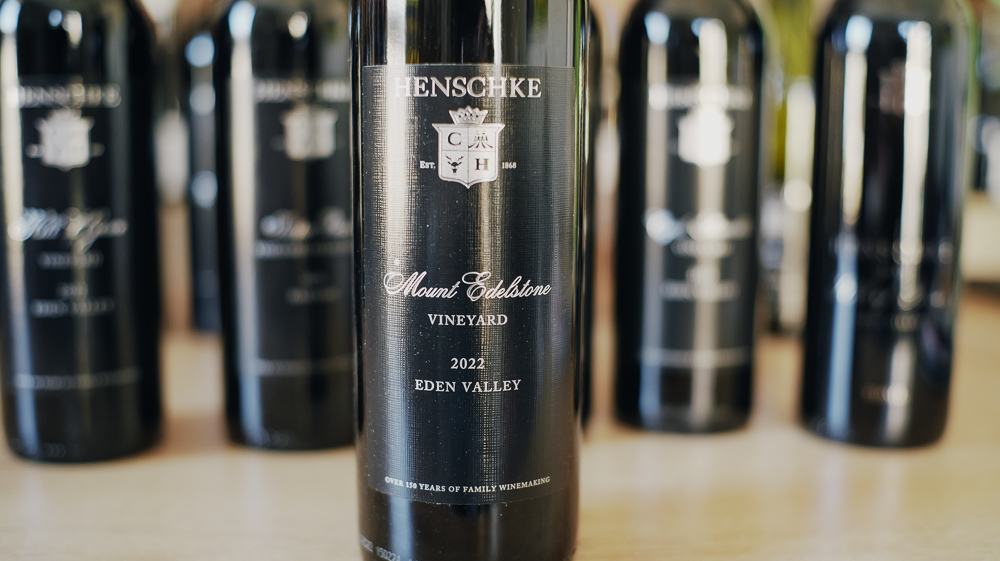
Henschke Mount Edelstone 2022 Eden Valley, Barossa, Australia
14.5% alcohol. This vineyard was planted in 1912 by Ronald Angas, and unusually for the time it was 100% Shiraz. This wine was first made in 1952. Ungrafted vines planted on friable, gravelly red brown earth soils. This is the 70th vintage, because 2011 wasn’t made. Warm, rounded nose with fine spices, dried herbs and white pepper alongside the refined red cherry and blackberry fruit, showing focus, intensity and also balance. The palate is vivid and youthful, with good acidity under the vibrant cherry, strawberry and blackberry fruit. This is taut and compressed, with chiselled fruit that just wants to expand into richness and density, but is biding its time. I love the restraint and balance here, with the use of old oak just allowing the beautiful fruit to take centre stage. This is very fine, with layers of fruit, spice and complex herbal notes. This has massive potential for ageing. 97/100
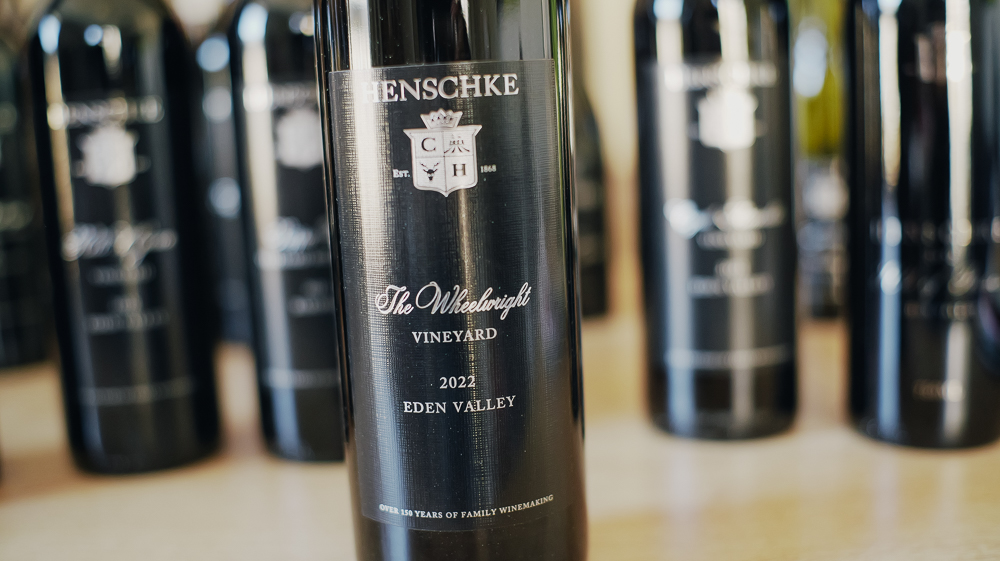
Henschke The Wheelwright Vineyard 2022 Eden Valley, Barossa, Australia
14.5% alcohol. Ungrafted Shiraz planted by Cyril in 1968 at 500 m altitude in the Henschke Eden Valley Vineyard, on contours. It was trendy to plant on the contours (keyline water management, avoiding erosion and keeping the water on the property). But it makes putting the vines on a VSP quite a challenge because pulling the wires tight is a problem. They put in stretches of VSP and put a strainer in, with straight-ish lines. This wine was first made in 2015, released in 2018. Sandy loam over sandstone soils, with a bit of schist. This is acidic soil, so it’s different to the red/brown earths of Mount Edelstone and Hill of Grace. Under the sandy loam there is a prismatic clay, so the roots go quite deep, making the vines vigorous. Complex aromatics on the nose, with a sweet cherry and berry fruitiness as well as hints of mulch and dried herbs, with fine spiciness. The palate is quite distinctive, with some fresh minty notes fringing the sweet cherry and plum notes, as well as some blackberry richness, and tanginess on the finish. It’s fleshy but tightwound, with a lovely primary fruit drive, finishing long and spicy, with a savoury earthy and herby quality in the background. Quite tannic, suggesting a bright future ahead of it, because there’s enough fruit there to evolve nicely. The fruit is just lovely. 95/100
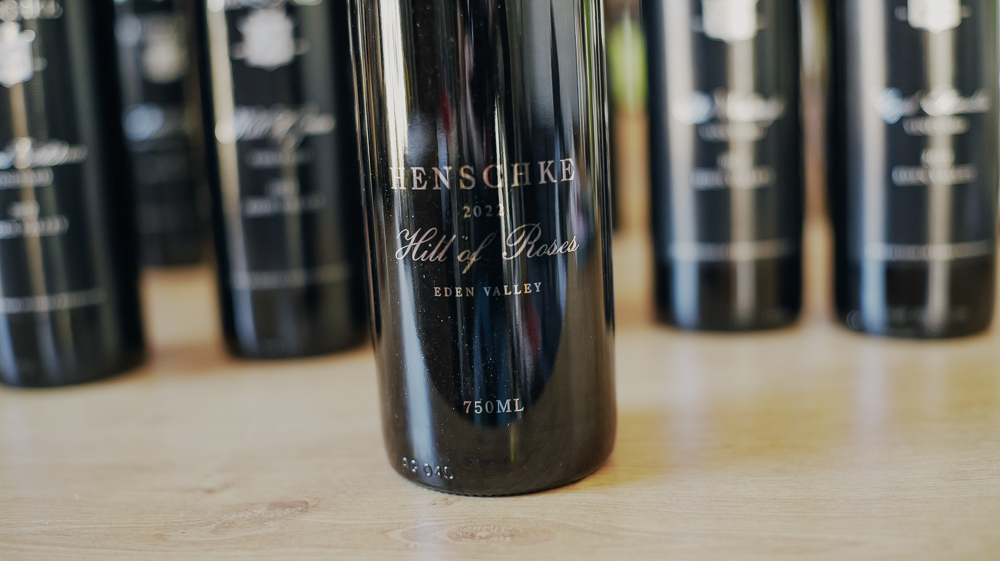
Henschke Hill of Roses 2022 Eden Valley, Barossa, Australia
14.5% alcohol. From a nursery block that’s a selection from the old vines of the Hill of Grace vineyard, planted in 1989. This is the result of a mass selection from the grandfathers to preserve the genetic character. They planted cuttings right on the end of the Post Office block, and since then they’ve been waiting to see when a young vine turns into an old vine. ‘Now that they are 32 years old they are starting to show the complexity of an old vine,’ says Pru. But if it’s compared with Hill of Grace, it’s still not quite there. ‘It is a bit shorter on the palate; there’s just another component in the Hill of Grace,’ she says. Steven recalls that for the first few harvests the wine was just like a pretty Shiraz and didn’t taste at all like Hill of Grace, despite the same site and same vine material. ‘It got to 2001, when the vines were 12 years old, and we thought the wines were starting to get serious,’ he says. ‘There were beautiful flavours and we bottled it for the first time in 2001. When you look at the wines [since then] you can definitely see an increase in complexity, in structure, in spice and depth of fruit.’ For now, these vines are still considered too young to go into Hill of Grace. Taut, brooding aromatics with raspberry, pot pourri, dried herbs and blackberry. The palate is tannic and dry with some dustiness, but also great concentration of blackberry, cherry and spice. This is a beautifully complex wine combining ripe fruit but also a complex savoury spiciness. Grainy, grippy and drying, but with lovey fruit and a touch of blood and iron. We are entering Barolo territory here a bit, as well as capturing that lovely savoury spiciness. 96/100
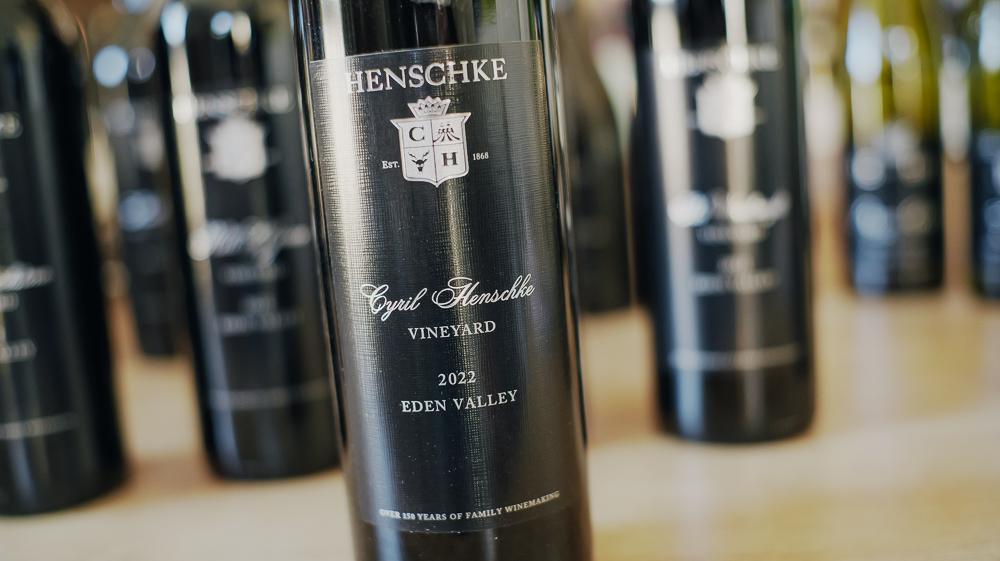
Henschke Cyril Henschke Vineyard Cabernet Sauvignon 2022 Eden Valley, Barossa, Australia
14.5% alcohol. First made in 1978, from the Henschke Eden Valley vineyard planted in 1966. The vineyard is on a north-facing gentle slope and the rows run east-west, with vertically trellised canopies. There are 25 rows of Cabernet Sauvignon and 5 rows of Cabernet Franc and 8 rows of Merlot. Each of these components are made separately and then after nearly two years in barrel the final blend is put together. It depends on the season whether the other varieties improve the quality of the wine. This has a lovely green leafy edge to the blackcurrant fruit. Very Cabernet Sauvignon with a slight warm climate twist. Nice sweet fruit at its core with some subtle gravel and chalk notes, showing elegance and nice fine-grained structure. Dusty and herby and nicely complex. Again, there’s a little bit of Barolo character with sweet fruit and taut tannins. This is lovely now but will age fantastically. 96/100
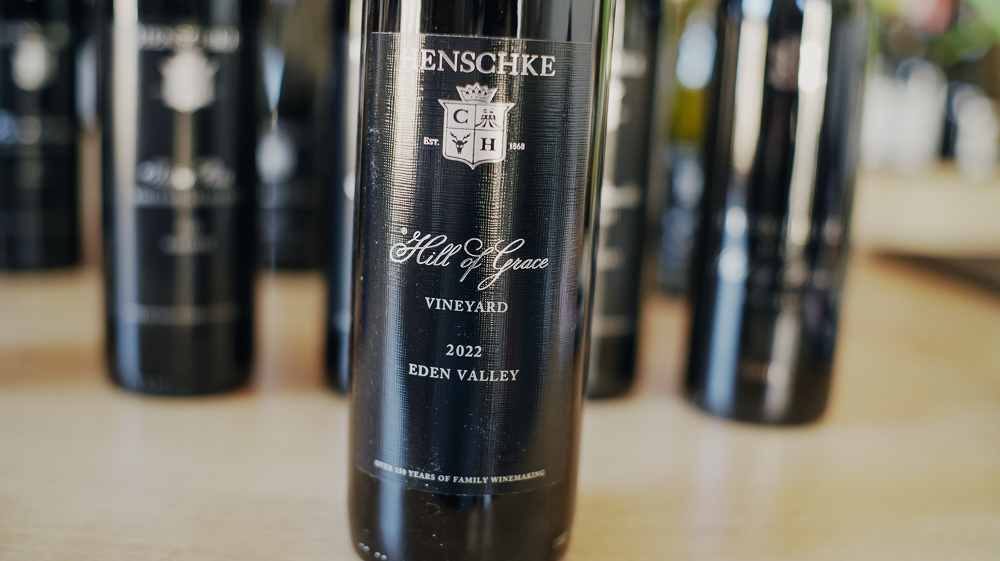
Henschke Hill of Grace 2022 Eden Valley, Barossa, Australia
14.5% alcohol. From one of the oldest extant vineyards in the world, let alone Australia. The soils have a beautiful layer of loess, around 30 cm, over a red/brown earth. This varies from one hectare to the next: underneath can be a silty clay, or a limestone ridge, or schist. In one block there is actually a scree on top of the red/brown earth, which gives earlier ripening. There are 8 hectares at Hill of Grace, and each block is different. The wine is a combination of 6 small blocks within the vineyard, with different characteristics. ‘We can see the flavour differences,’ says Steven. ‘There are subtle flavour difference between the different parts of the vineyard.’ These blocks are picked over about a week. For the first time this wine saw no new oak at all. Fruit like this really doesn’t need it. Enticing aromatics of black cherries, raspberries and blackberries, but this isn’t giving too much away at the moment. There’s some exotic five spice and pepper in the mix, as well as dried herbs. In the mouth this shows incredible concentration and texture, with everything pulling in the right direction. Fine spices, luscious black fruits, some herbal hints and then a long, layered finish, bringing everything together into a complex whole. There’s something very complete about this wine. It’s rich but beautifully balanced, and should age effortlessly for as long as you care to keep it. [Hill of Roses, from younger – 1989 plantings – on the same vineyard is a fantastic wine, but this has an extra dimension.] 98/100