Exploring the Roussillon (8) Domaine Lafage
Website: https://domaine-lafage.com/en/
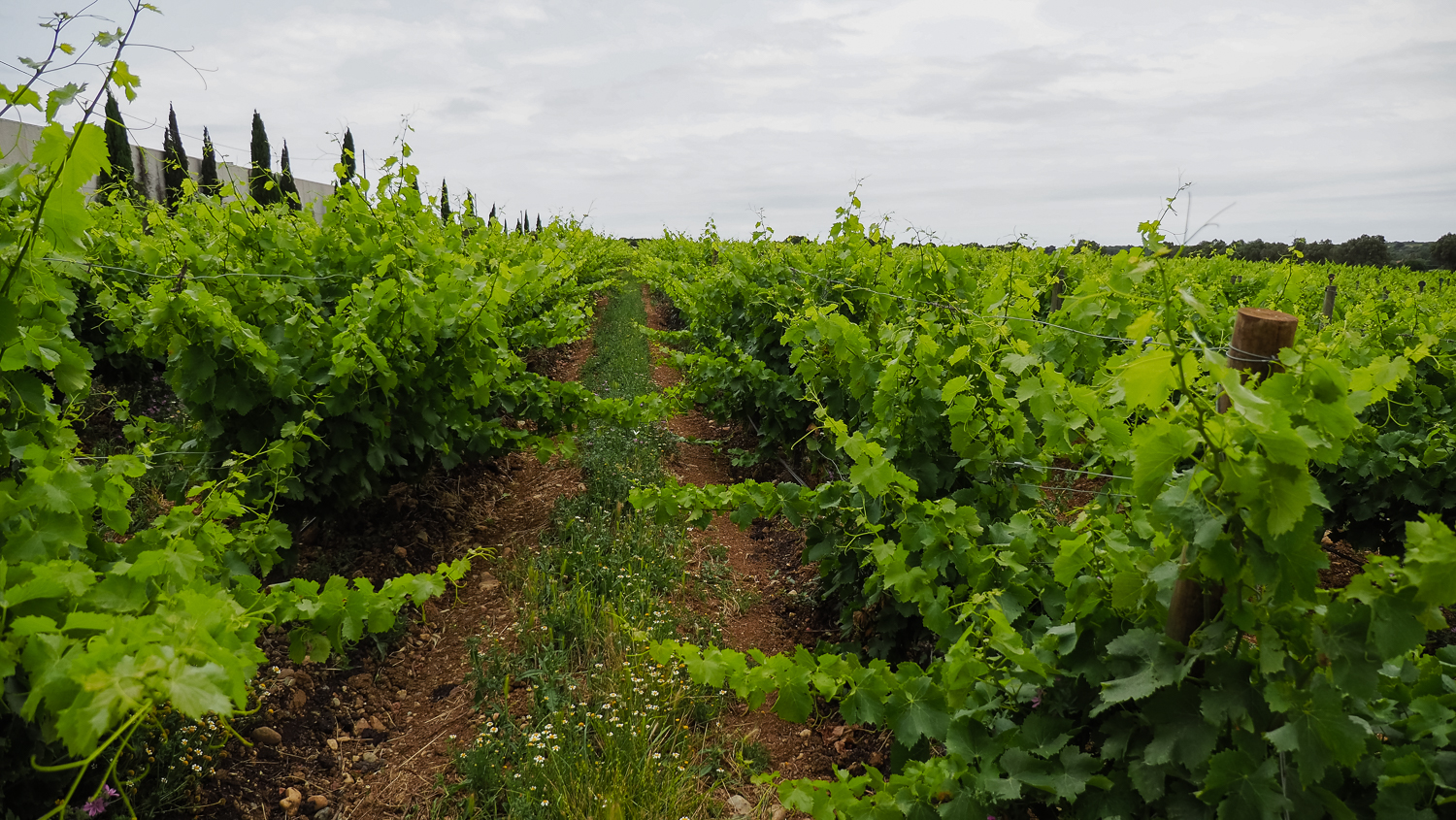
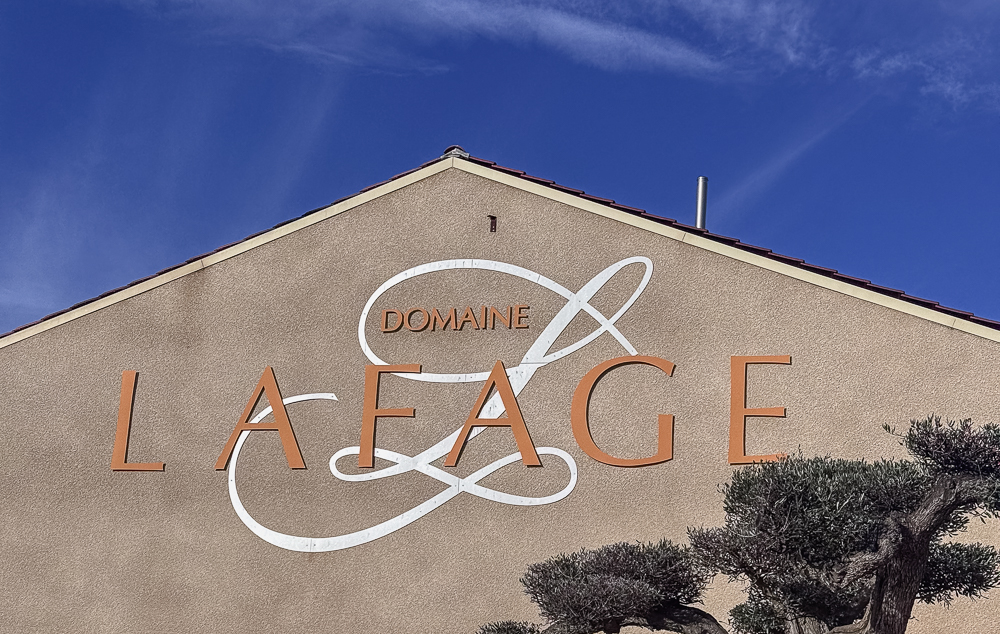
Domaine Lafage is an important producer in the Roussillon, and it’s significantly the biggest private winery in the region. I met with owner Jean Marc Lafage and Antoine Lespès, his research and development manager, to hear more about the regenerative work they have been doing. We began in the vineyard of Mas Miraflores, which is the first 18 hectares of their 350 hectares of vines to be certified regenerative. Initially they have been working with the scheme that Torres in Spain have initiated (Regenerative Viticulture Alliance, RVA), which is tied to organics because it is certified by Ecocert, the organic certifier.
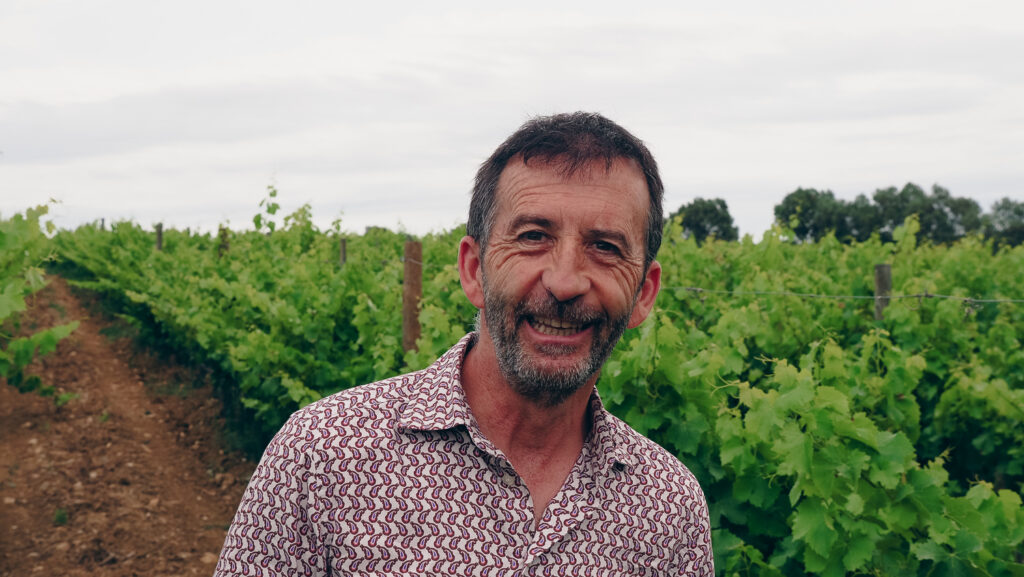
In the future they plan to certify with a greener world (AGW), which is not tied to organics. Their view is that it’s best not to tie regenerative certification with organics, but because they were working closely with Torres, this is the route they took earlier in their journey. And many of their vineyards were already organic, so this was easy.
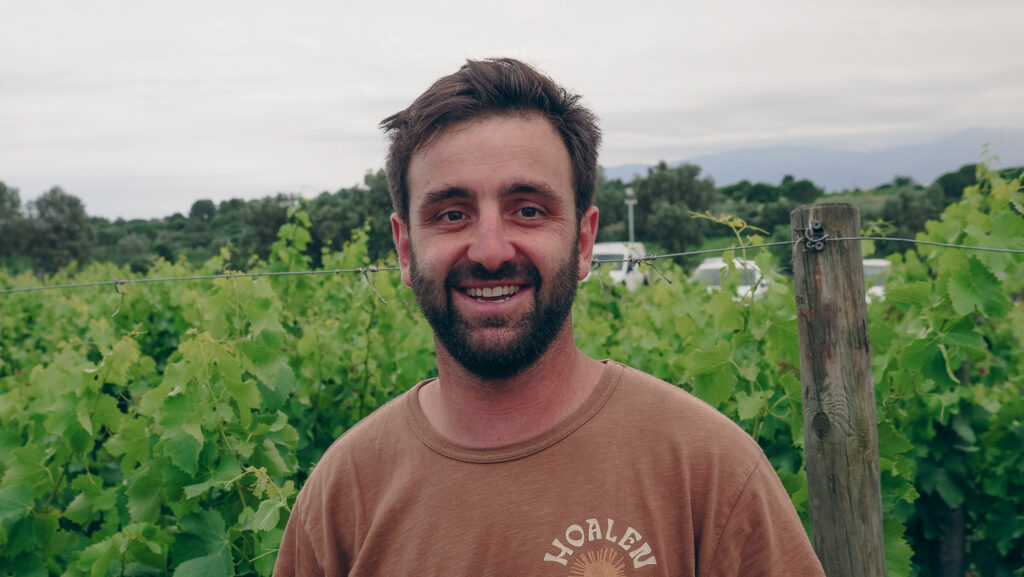
We looked at a plot of Grenache where they are doing an experiment on regenerative practices. We saw residues of rye, mustard and Vicia faba (broad bean) which had been sown, grew and were then terminated at the beginning of the season. The goal of this trial was to see how different management strategies with the cover crop affected the growth of the vines. ‘With regenerative viticulture we want a science-based approach,’ says Lespès. He adds that with the RVA certification you must keep the cover crop in place, no matter what the season is like. In the last two years it has been very dry, and the competition from the permanent cover has affected the vines. So they decided to do an experiment where they removed the cover crops with two different techniques, and as a control let the cover crop remain.
The tried to terminate it without damaging the soil, if possible. The soil here doesn’t allow them to use a roller crimper, so in one plot they used a disc. ‘It isn’t mixing the soil, it is just cutting the soil,’ says Lespès. The idea is to use the remains of the cover crop as a mulch, but there wasn’t enough of it this year to cover the soil properly. In another plot they used a V-shaped blade that does a similar job, going down just a few centimetres, killing the competition but keeping the cover on the top of the soil.
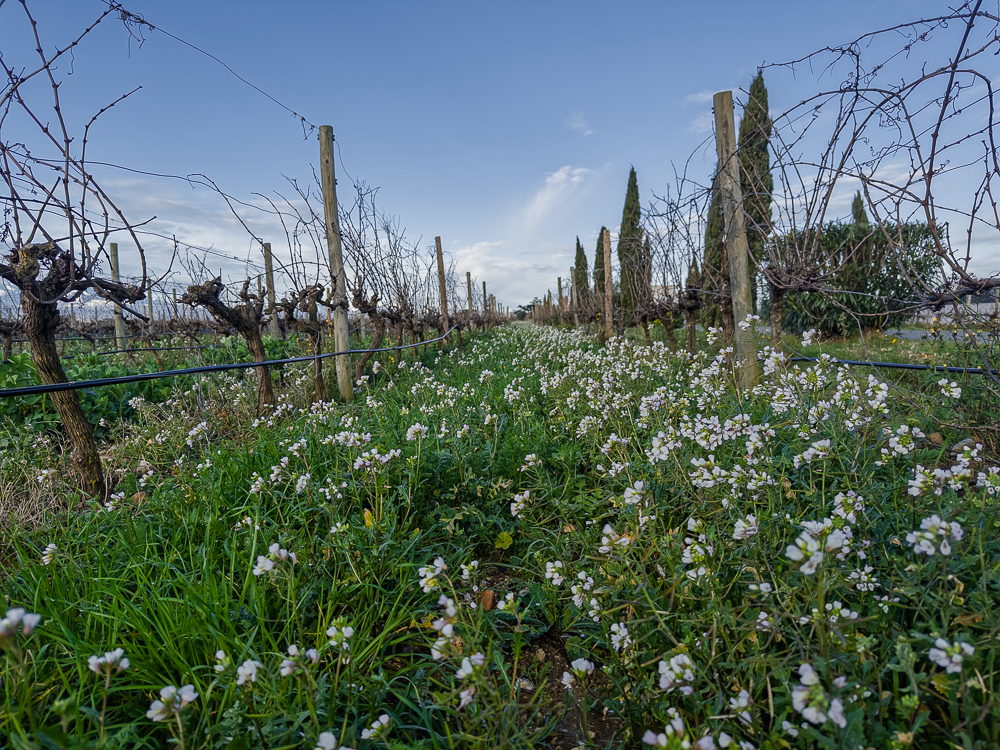
‘For each modality we have three sites with at least six vines where we can measure everything,’ says Lespès. ‘We have three probes so we can see the humidity below the surface near the root system. We want to see how the way we manage our inter-rows affects the humidity in the root system.’ The probes are at 20, 40 and 60 cm. This is the first year of the trial, and they tend to do their experiments over three seasons.
As an output, they measure the growth of the shoots, and also look at the pre-dawn water potential of the vines. ‘We think it is the best one,’ says Lespès, even though it means getting up very early. ‘The stagiares are not really convinced,’ jokes Lafage. They also look at the organic matter, and the microbiological activity (but not the diversity, because this won’t bring much information at the moment). Ideally, they’d like the ratio of fungal to bacterial activity to be higher. They are particularly interested in the enzymatic activity in the soil. They are working on this with Montpellier SupAgro, and Alain Deloire. Organic matter and nutrients are of interest, and they also do soil infiltration measurements. In Maury, last year, they found that when they used cover crops, water infiltration was three times as fast. ‘Cover crops are very good for infiltration,’ says Lespès.
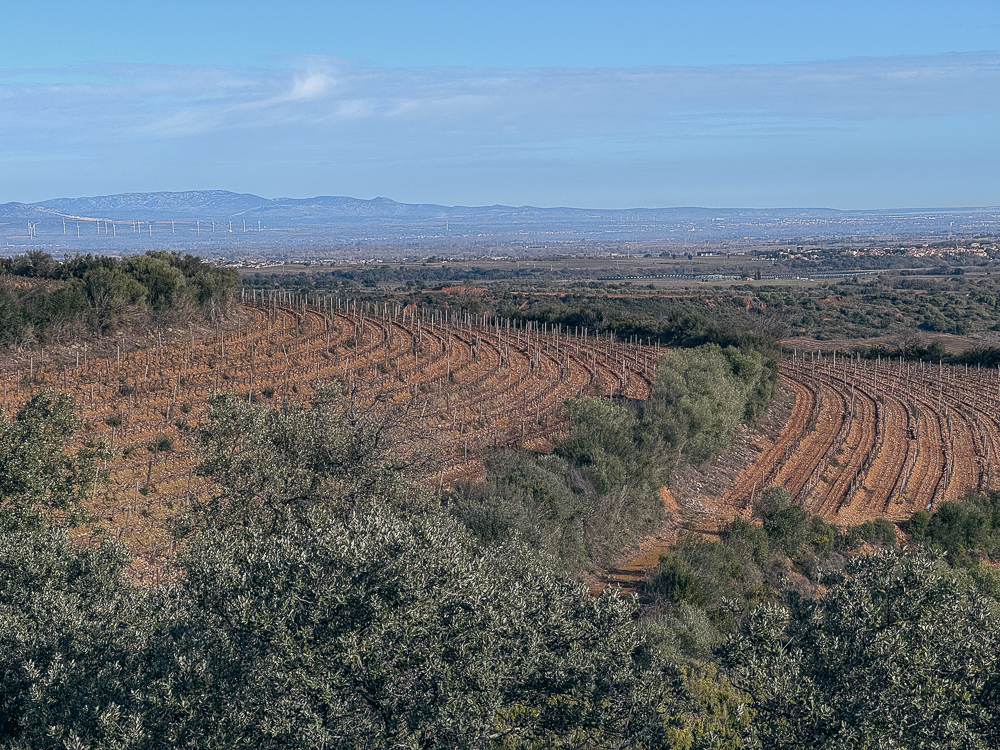
They have another vineyard in Les Aspres that is quite hilly, and there they have begun to practice regenerative hydrology. ‘Some people before me started to make terraces,’ says Lafage, ‘and when we took over we kept going with the terraces. It is good because it gives better water infiltration. But what we can see now on another project is that we have terraces with good infiltration but we are losing a lot of water on the road. It is taking water away. So we are trying to make some drains on the road, and the water goes to the terraces. These terraces aren’t completely flat, they have a slight inclination, so we put the drain into the first row to be sure that all the water accumulates on the upper side, and by gravity it goes down.’ Alain Malard and Alain Deloire have been helping with this project. ‘Initially I wanted to take all the water down and put it in a dam, and use it for irrigation. But after talking to them we decided that the terraces were already organized for distributing the water. This was done in the past by the Romans.’ He says they have some new terraces to plant, and these will be even better designed. He also says that it’s water plus mud that causes the worst erosion, because it has more power.
In an attempt to retain water in the soil they have been working extensively with biochar. ‘There are so many different types of biochar,’ says Lespès. ‘If you take wood from vines and wood from bamboo, and you put it in the same pyrolysis system, you will have two different types of biochar.’ In 2021 they tried applying biochar to some old vines, but Lespès says the biochar they used wasn’t ideal. ‘We bought it from Spain. In 2022 we identified better biochar that we bought in France. It had parameters that were more interesting for us. The parameters we were looking at were the surface area, in square meters per gram. This is the surface that you have for storing nutrients and water. The good bio char has a surface of 400–500 m2 per gram. The first was closer to 50 m2 per gram. We are also interested in the carbon percentage and the pH.’
They used this biochar on newly planted vines in the first year of their growth, and they got good results. ‘We planted, and then we applied the biochar with a normal sprayer. But we modified it a bit so that we can apply it very close to the vines, where the roots will be,’ says Lespès. They have tried to target the root zones of the vines, which don’t spread all that far into the row.
We looked at vines that had been treated with eight tonnes of biochar mixed with 24 tons of compost per hectare. There is also another plot with four tons of biochar with 12 ton of compost per hectare, and then there is a control with none. They measure the shoot lengths as a comparison between the treatments. In the first experiments they did in 2022 they had the same results, but on a different type of soil, and different vegetative material. The idea was to repeat the experiment here on a new soil, with new vegetative material (Vermentino; the first experiments they did with a new resistant variety that Lespès describes as the son of Grenache, called 3176, a Bouquet cross). ‘In the past we used 2 tonnes of biochar and 4 tonnes of biochar,’ says Lespes. ‘We have seen rate effects: the more biochar you apply, the better the results. This time, the minimum dose was the biggest we used last time. And we still see a difference between 4 and 8 tonnes.’
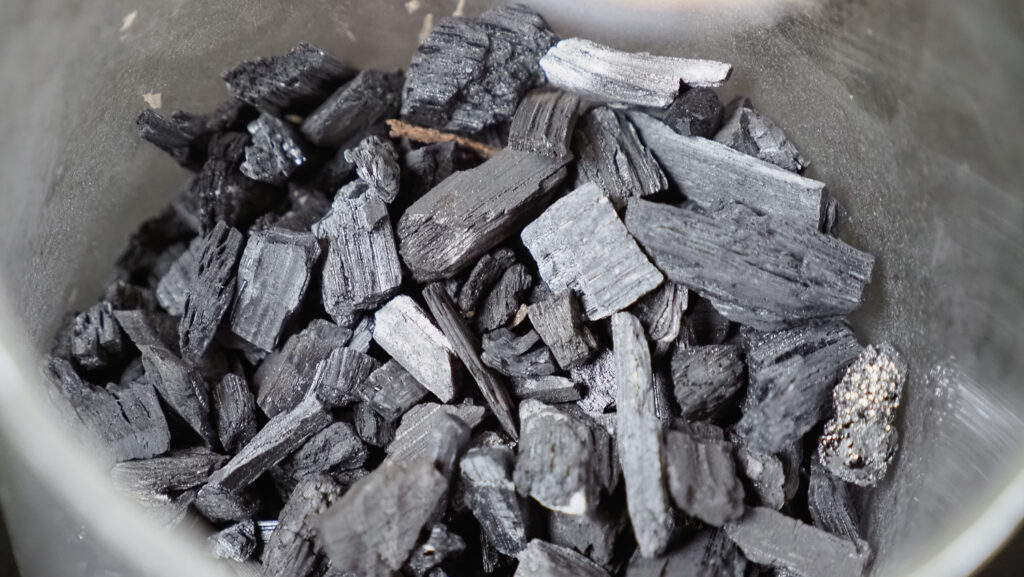
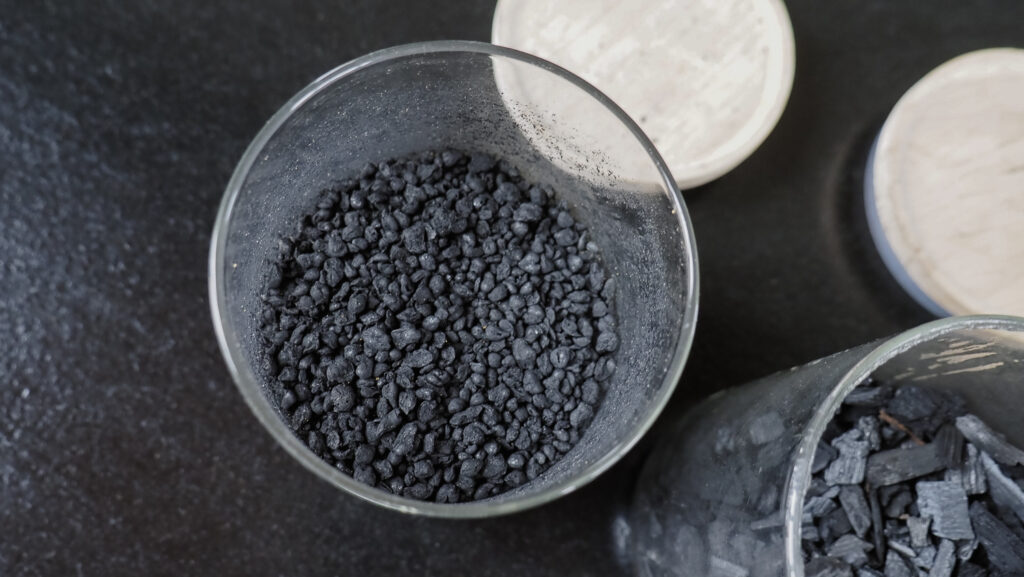
Is it expensive? ‘Today it is expensive,’ says Lafage. ‘It is not a big industry, so we pay around €1000 a tonne. You put it down once, and it is forever. The people in Burgundy were very keen to do the same thing, because the young plantation in Burgundy during the summer can be very dry. Now some Burgundian producers water their vineyards from the first year to the fourth year, before they start producing wine, because the AOP doesn’t allow irrigation. It is expensive and involves moving trucks and water. If they can add biochar they can then use less irrigation.’
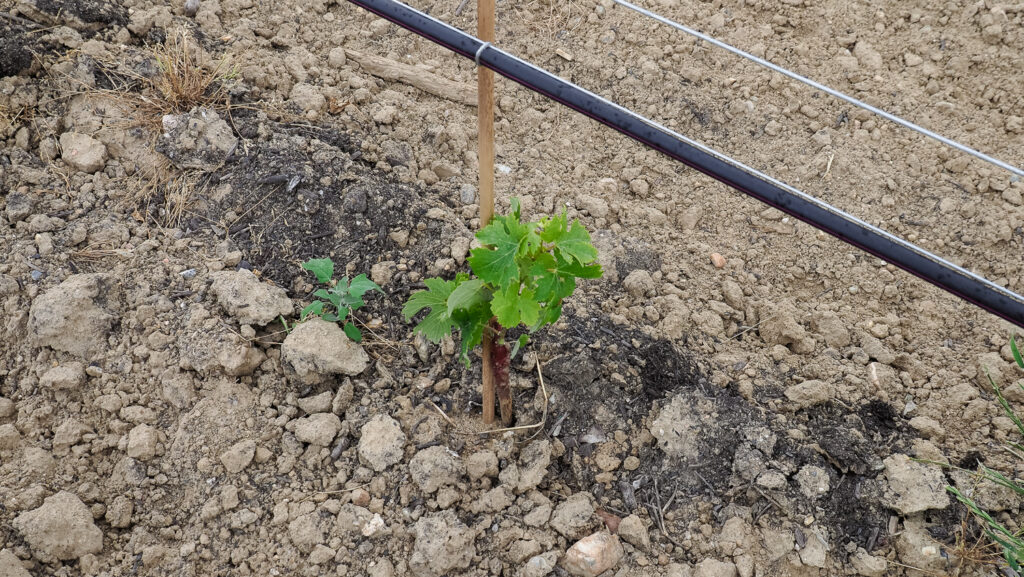
This time they are using smaller particles, which they think are better for the soil, but it is more of a challenge to apply because with the wind it can blow away.
‘When we have a vine starting well, it will be fine for the next 10 years. If it is very dry and the vine hasn’t started well, it’s difficult,’ says Lafage. ‘Even after two months of growth you can see maybe a 30% difference in growth,’ he says.
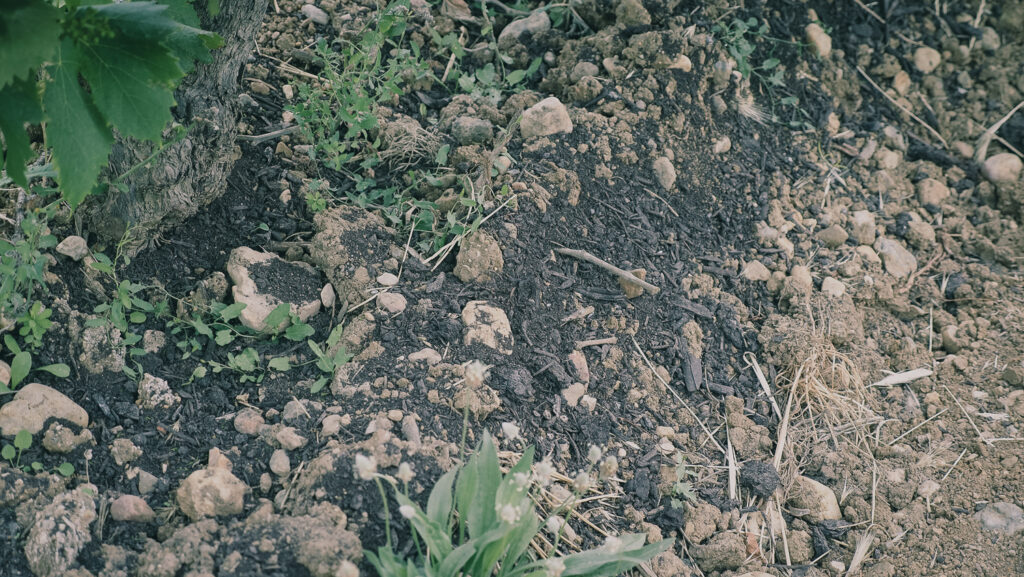
‘On average we have 10 cm more of growth in the biochar treatment than the control,’ says Lespès.
How is the biochar working? ‘Retention of water in the soil, but not only this,’ says Lespès. ‘I think it has an impact on the whole ecosystem of the soil, and not only the physical aspects, but also with pH adjustment and microbiological activities.’
Lafage adds, ‘Roussillon is a kind of open air laboratory. We haven’t had much water the last few years. Having biochar in the soil makes it a little bit more humid, making more habitat for fungi and bacteria, maybe making the soil more alive.’
‘We believe biochar is helping us regenerate the soil,’ says Lespès.
Back to the resistant varieties that they have been looking at. ‘One is called 3176N, which is a son of Grenache,’ says Lespès. ‘This makes sense in the context of the Roussillon. The other is G9 which has Muscat as a parent. It is low in alcohol.’
Lafage adds, ‘it is low in alcohol and it is very high in glutathione. This is a molecule that protects from oxidation. Being in a hot place, where picking can take place in high temperatures, having more glutathione protects the wine from oxidation. We can pick around 10.5% alcohol with very good acidity.’
Lafage have been working on reducing water use, and have worked a lot on conservation irrigation. Since 2022 they have had restrictions that meant they’ve had half the water available, so they are trying to understand the best way to use their water
In the Languedoc, most growers use 1500 m3 of irrigation, with 600 mm of rainfall, looking for yields of 10-12 tons/ha. They are trying to use 500 m3, aiming for 5 tons/ha (their average yields over the last few years has been 3 tons/ha, which is not sustainable), with 300 mm of rain.
They measure the plant, the soil and the atmosphere. They look at the root zone and put probes at the bottom of the root depth. There is no point irrigating past this. Capacitive probes are used in the soil. For the pre-dawn water potential on the vine, the literature says for 0.2-0.4 mPa is no stress, then 0.4-0.6 is stress, then 0.8-0.8 lots of stress, and >0.8 is too much. They found Grenache didn’t mind 0.8, and they find that 1.2 is where they need to switch irrigation on. If you see the vines are stressed and the vines are yellow, you are too late. This is why monitoring is important.
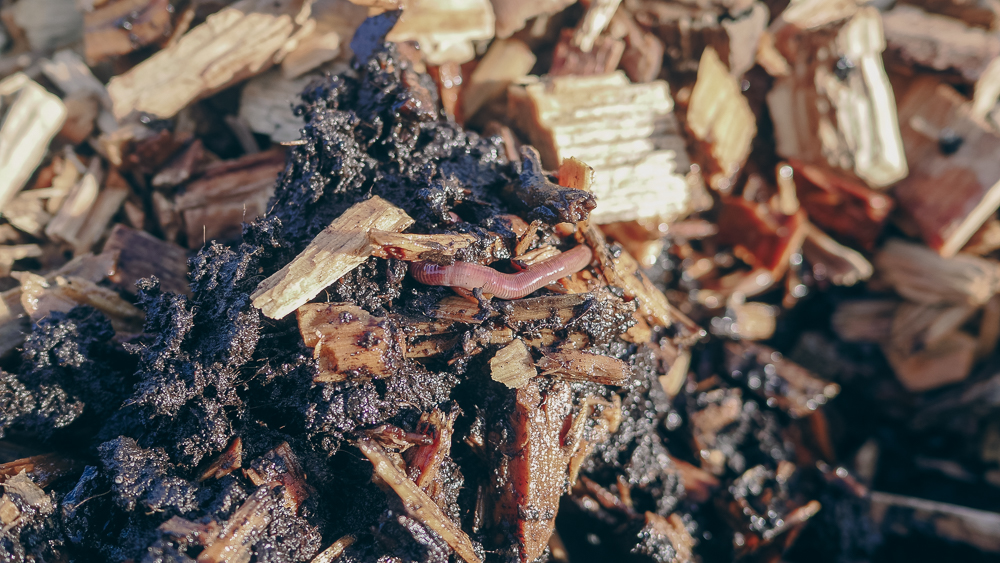
They also have a big project recycling their own water waste from the cellar. They purify the water to a level that’s good enough to use for irrigation. In winter they want to use it to help the cover crops grow. This is done by putting water in a pool with wood chips, sand and worms. This removes the organic material, and the water and the organic waste can be used in the vineyard. The technology for this comes from Chile where they use this for wineries but also cities.
In terms of biodiversity, they have 10 km of hedgerows. They also work on assisted natural regeneration (where you look at what is present naturally in terms of biodiversity and do more of it). For this they work with Alain Canet. They also have bat boxes (98) and nest boxes (48), with a result that nearly 10 million insects are eaten each year!
Since 2023 they have had two flocks of 30 ewes grazing 35 hectares of vines. And in terms of new plant material, they are looking at drought tolerant and disease resistant varieties, and have chosen two of these – 3176N (Grenache parentage) and G9 (Muscat parentage) – planting them on 1.5 hectares so they can make wines on a commercial basis.
THE WINES
Lafage Lafabuleuse Blanc Fristant 2024 Côtes Catalanes, France
This is picked last day of July, and is 9% alcohol. Fermentation is stopped by cooling keeping all the carbon dioxide (2 g/l) and it’s 7 g/ l sugar. This is bright, fresh and zesty with some fizziness and bright citrus and table grape fruitiness. It’s fresh, fruity and delicious with a nice transparency and massive drinkability. Quite light in style. Natural low alcohol. 90/100
Lafage Miraflors Rosé 2024 Côtes Catalanes, France
Grenache Gris, Grenache Noir and a bit of Mourvèdre. Keep 20% of juice at 0 C and 20 ppm and then ferment this in March and they do 4 bottlings before April, and then four after, where they refresh the wine with this, and the last bottling is entirely the fresh fermentation. Fresh and lively with fresh pear and cherry fruit with a bit of redcurrant. Lively and delicate with nice precision and a delicate acid line: it’s not sharp acidity, but it’s very fresh. 91/100
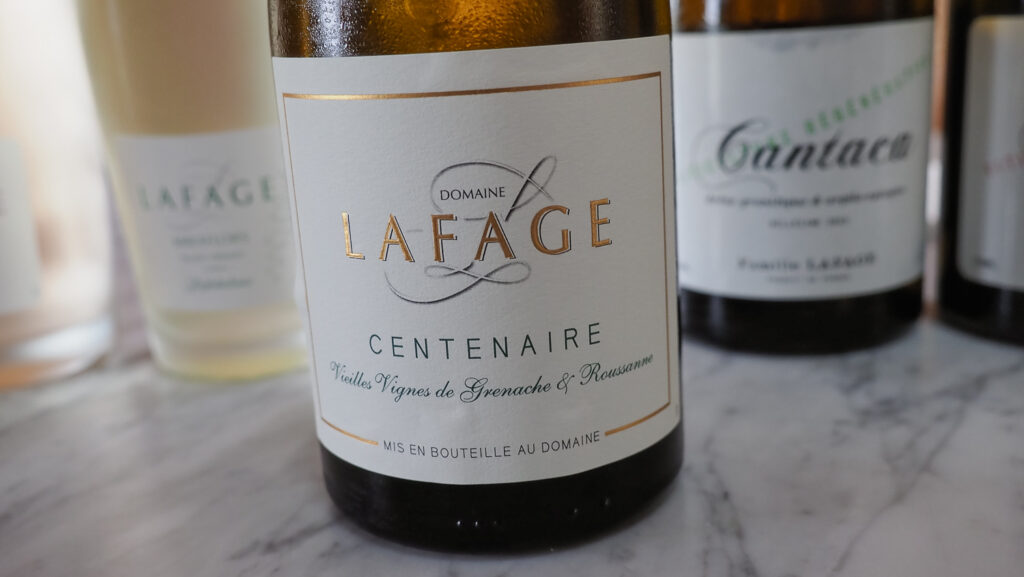
Domaine Lafage Centenaire 2024 Côtes Catalanes, France
13% alcohol. Centenarian vineyards of Grenache Blanc and Grenache Gris, with a bit of Roussanne that’s younger (20% of the blend). This is fresh, bold and layered with lovely delicacy. Very expressive with lovely delicacy to the pear and peach fruit, with some crystalline citrus notes. Two pickings – one 11.5% alcohol with high acidity. Starts fermentation in steel and finishes in 500 litre new and one year oak barrels. Then 80% is picked at 12.5% and fermented in stainless steel. And a few rows are picked in October – maybe 1% of the blend, as some seasoning. Fermented on skins. Full bodied with low alcohol. 94/100
Domaine Lafage Centenaire 2025 Côtes Catalanes, France
From galets roles in Miraflor, a terroir like Châteauneuf. Full flavoured, textured and refined with supple toast and spice, as well as pear and peach. Showing richness, purity and harmony. 94/100
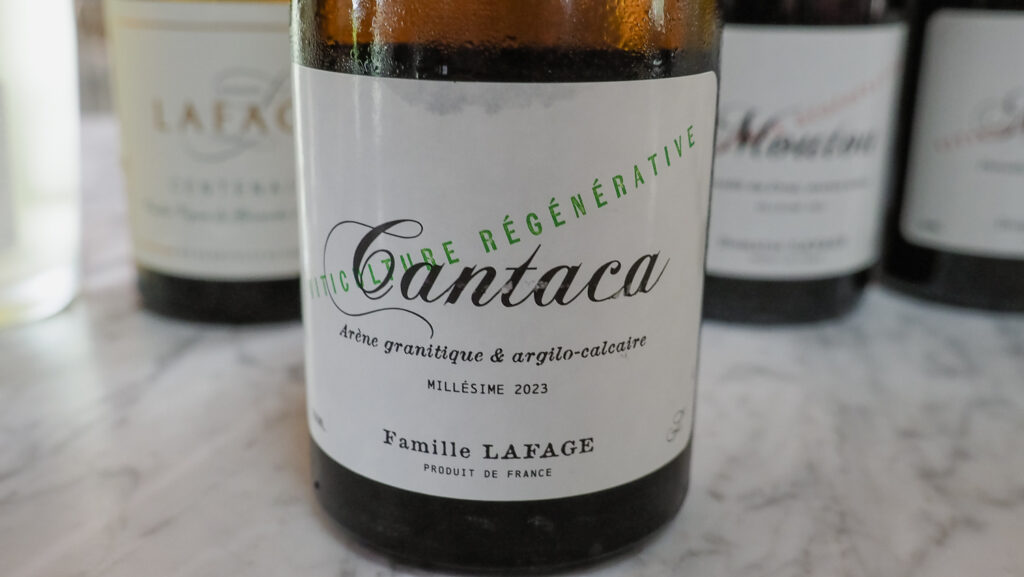
Lafage Cantaca 2023 Vin de France
13% alcohol. This is a regenerative white, made from Chardonnay, Petit Manseng and Chenin from Limoux, and Sauvignon from Saint Martin de Fenouillet at 450 m on granite. One day on skins and then 30 days juice stabulation, then fermented in cask. Full yellow colour. Rich but fresh with high acidity and crystalline citrus fruit, as well as some honey and nuts. Really fresh and intense. Ripe but with good acidity, showing electric mouthfeel as well as broad fruit. 94/100
Lafage Cantaca 2025 Vin de France
50% Chardonnay, 20% Petit Manseng, 15% Chardonnay, 15% Sauvignon Blanc. Textured and finely spiced with warm pear and peach fruit, with some richness and a salty twist. This has richness and some nutty sweetness, but also some good tension. Lovely character here. 94/100
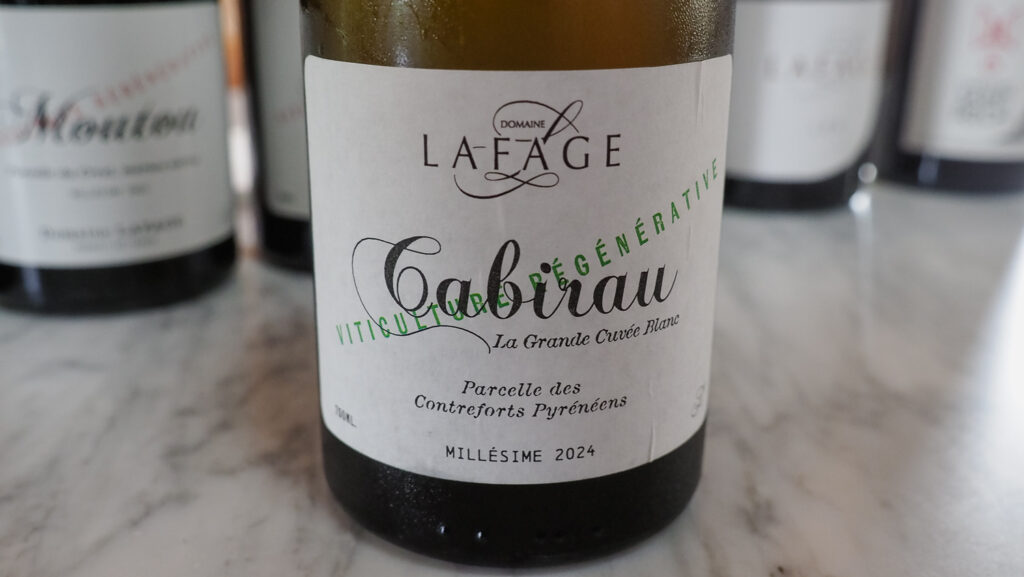
Lafage Cabirau Blanc La Grande Cuvée 2024 Maury, France
From old vines in Cabirau in the Agly valley on black schist. All bush vines, 60 years old: Grenache Blanc, Grenache Gris, Macabeu (70%). Direct pressed, fermented and aged in concrete with dirty juice (200 NTU). This has beautiful matchstick reduction as well as rich pear and peach fruit. The palate is bright and linear, but concentrated with some white pepper and dried herbs, showing depth but also precision. This is quite lovely with real potential for development, but it’s delicious now. 95/100
Lafage Authentique 2024 Côtes du Roussillon, France
This is Carignan, Grenache and Syrah, with some from galets roles in Miraflor and some from new plantings in Agly. 100% concrete aged. Beautiful meaty, olive-laced nose is ripe and full. Bold, rich, salty and textural on the palate with ripeness and meatiness. Textural. 95/100
Lafage Moutou 2023 IGP Côtes Catalanes, France
13.5% alcohol. This is from black marls, picked for fresh fruit flavour. From the Têt terraces. 20% whole bunch, the rest is machine harvested, infused 36 days, 5000 litre foudres for 18 months. Grenache and Syrah. Juicy, supple and bright in a lighter style, but with some lovely cherry and raspberry fruit with delicacy and precision. Effortless with nice texture to the fruit. Fine and expressive with nice purity and some nice peppery hints on the finish. Real elegance here. 94/100
Lafage Moutou 2024 IGP Côtes Catalanes, France (cask sample)
13% alcohol. 30% whole bunch. Foudre. So supple and energetic with cherry and raspberry fruit, with a bit of structure. Nice peppery detail with some tannic grip and raspberry crunch, showing amazing precision to the fruit. There’s some redcurrant freshness too. Very fine and showing brilliant detail. 95/100
Lafage Moutou 2025 IGP Côtes Catalanes, France (cask sample)
Mainly Grenache with a bit of Syrah. Sequential harvest into a wooden tank. Fresh, aromatic, floral. Juicy and vivid with lovely red cherry and black cherry fruit with a touch of meaty richness. Lively and vivid with nice depth and some fine green hints, as well as a touch of pepper. 95/100
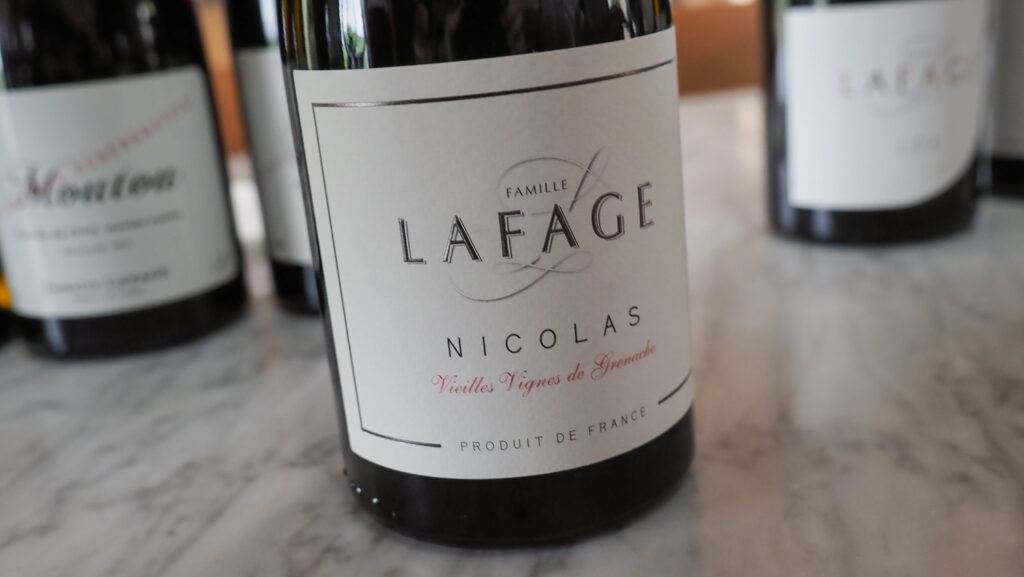
Lafage Cuvée Nicolas 2023 Côtes Catalanes, France
14.5% alcohol. Grenache. From Têt Valley and higher altitude plots in Aspres and Maury. 250 000 bottles made. Hand picked into 2.2 ton receival bins in the vineyard then straight into fermenters in the winery. 7 days cold maceration, then 22 days maceration then 30% barrel, 70% concrete. Ripe, sweetly fruited, generous, but still fresh with lovely strawberry and cherry fruit. This is supple and has nice silkiness with a hint of liquorice and pepper, as well as some wild herbs. Nice concentration of fruit here: it doesn’t have any over-ripeness. 93/100
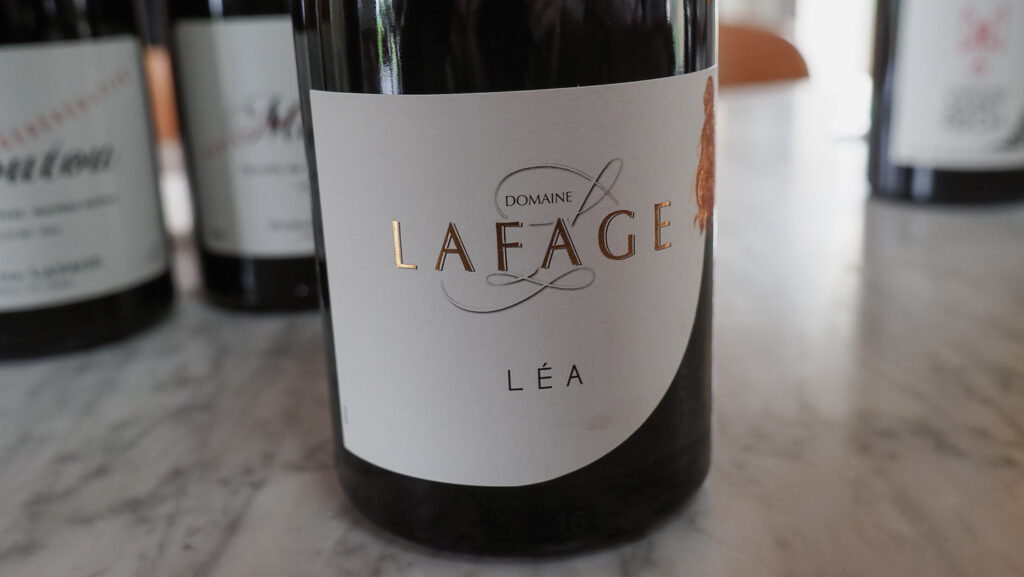
Lafage Cuvée Léa 2023 Côtes du Roussillon Villages Les Aspres, France
14% alcohol. This is the vineyard that has the keyline terraces. Grenache Noir, Carignan, Syrah. 30% whole bunch. Small open fermenters. Pure Aspres wine coming from the terraces. The soil has some clay but also lots of marble. Supple and fresh with red cherries and plums with a slight sour cherry edge with some raspberry crunch and nice green hints. Supple and bright with lovely precision and a bit of crunchiness to the fruit. Very expressive and enjoyable. Really good energy to this wine, showing bloodiness and juiciness. 95/100
Lafage Cuvée Léa 2024 Côtes du Roussillon Villages Les Aspres
Supple with a stony minerality and nice bright fruit with some mineral tension to the black cherry fruit. Blackberries, spice and pepper here with nice detail. 94/100
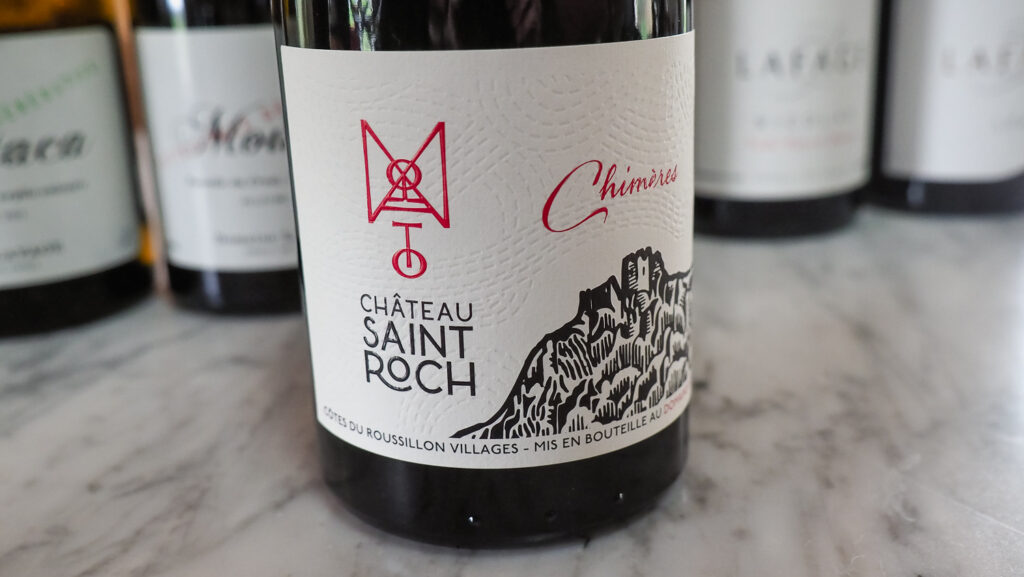
Château Saint-Roch Chimères 2022 Côtes du Roussillon Villages, France
15% alcohol. This is a separate winery, where they make 20% of their production. They have an area where they ferment in 40 open demi-muids in the winery, but this is made in concrete, 20% whole bunch, and then aged in concrete and a bit of oak. 80% Syrah, 15% Grenache, 5% Carignan. Rich, ripe and generous with bold black cherry and blackberry fruit with some mint and blackcurrant, with dried herbs and some saltiness. Some nice tannins and a touch of charcoal and tar on the finish. 130 000 bottles made. 93/100
Lafage Cabirau Rouge 2022 Maury Sec, France
15% alcohol. Black Schists from the Agly Valley. Grenache with some Syrah, 35% whole bunch, 18 months in foudre of 1200, 2400 and 5000 litres. 11 000 bottles made. Dense and bold with black cherry and blackcurrant fruit as well as crushed rock, salt and graphite. Lovely intensity but also rich, sweet fruit and a sense of pleasure and luxury. Such depth here. 94/100
Lafage Cabirau Rouge 2024 Maury Sec, France
Wonderful meat and olive nose: rich, aromatic and lush. The palate is textural and peppery with lovely focus to the black cherry fruit, and there’s nice spicy detail. 94/100
Lafage Blanc Comme Neige Vin Doux Naturel 2024
Sell 60 000 bottles at Christmas of this wine. Sweet, bright, pure and grapey with nice fruitiness. Spicy edge to the grapey fruit. Nice weight and balance. Also bottled as Grain de Vigne Muscat de Rivesaltes. 92/100
Lafage Ambré Hors d’Age NV Roussillon, France
15% alcohol. Made in an oxidative way in barrels. Golden brown in colour, this has dried fruits, spice, raisin, some apricot jam and then some orange peel and more spice on the finish. 80 g/l rs, so sweet, but with a bit of structure adding balance. Viscous and delicious. 94/100
Lafage Maury Tuilé 2017 Roussillon, France
15% alcohol. Fortified on the skins and then macerated a further month. This has nice sweet fruit with cherries and plums, with some nice grip. Lovely concentration and depth, with some development, but still lots of fruit. Direct and bright, and not too sweet. With nice tannins. 93/100
Lafage Maury Tuilé 1974 Roussillon, France
16.5% alcohol. Brown with some red, and quite intense in colour. They bought this two years ago and it was still in barrel: it has been left for almost 50 years. This is super-concentrated and rich with raisin, treacle, spice and even a touch of cherry fruit. Bold, with oxidative development, and some saltiness. This is so concentrated and rich with some flesh of dried plums and some raisin, with sweetness and smoothness. Salty, spicy, sweet and intense on the finish. This is quite beautiful. 96/100
THE ROUSSILLON