Brunello di Montalcino is unashamedly a wine that takes time to mature, and time feels noticeably short for us all. In a world that values fast trends, fashion, freshness and instant gratification, might patience be rewarded?
Lisse Garnett investigates…
The Libération Tardive Foundation is a UK-based non-profit that champions the late release of fine wine to preserve craftsmanship, increase the commercial potential of back vintages and facilitate the global market for such wines. For me, they champion the beauty of the analogue, the real over the cutting edge and the proven over the experimental. Fashion moves us in new directions, and marketing spend endorses the now, but before wine trends shunned oak, age, sweetness and maturity, there was Brunello di Montalcino, and it was good.
Current releases can be far more costly than their aged counterparts, a wine paradox that few consumers are aware of. Often when selling wine directly, I sense that ripeness, depth and flavour are precisely what the customer is seeking but are actively advised not to like. Big, bold, toasty reds may not be in fashion, but guess what, we, the people, love them.
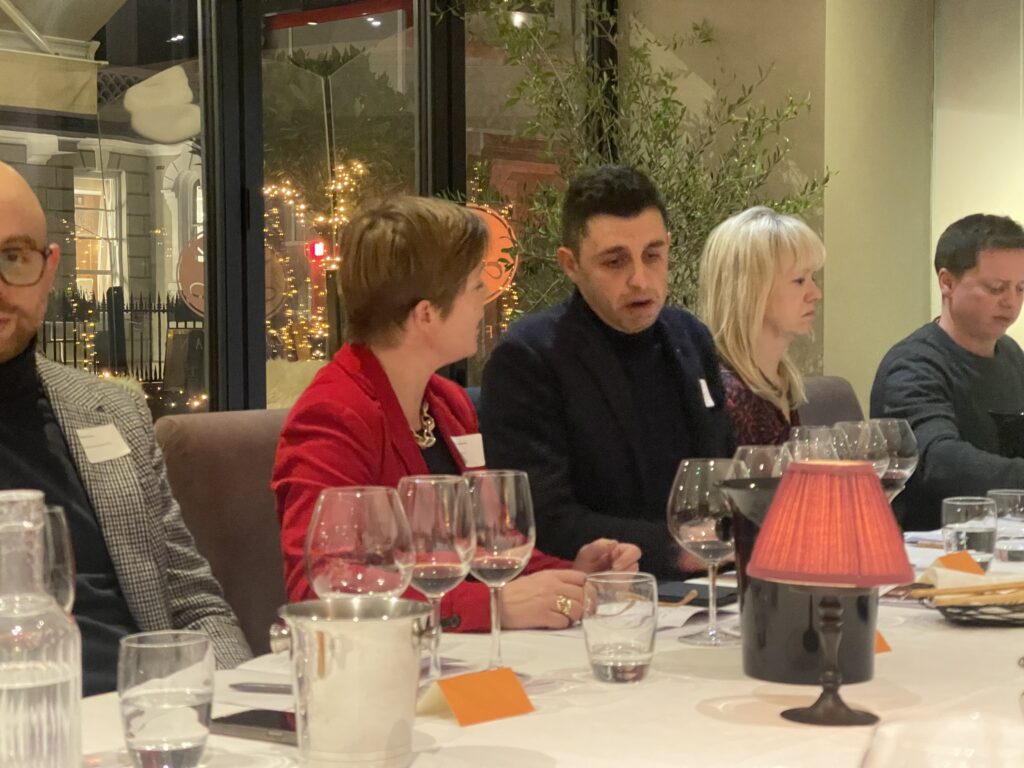
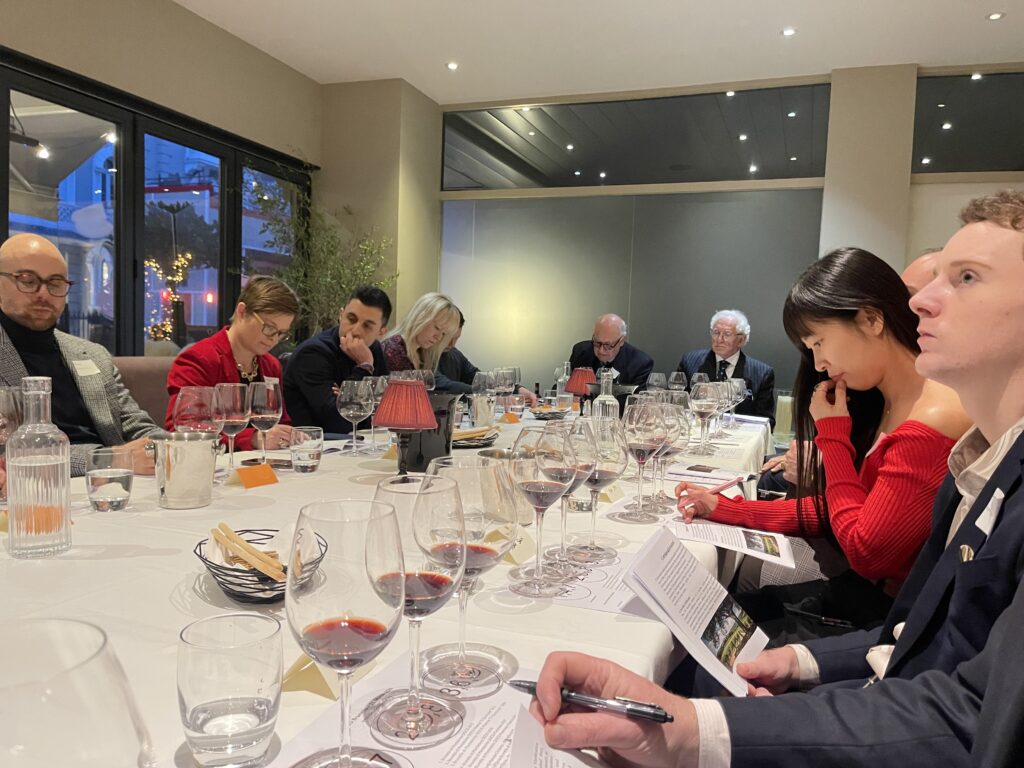
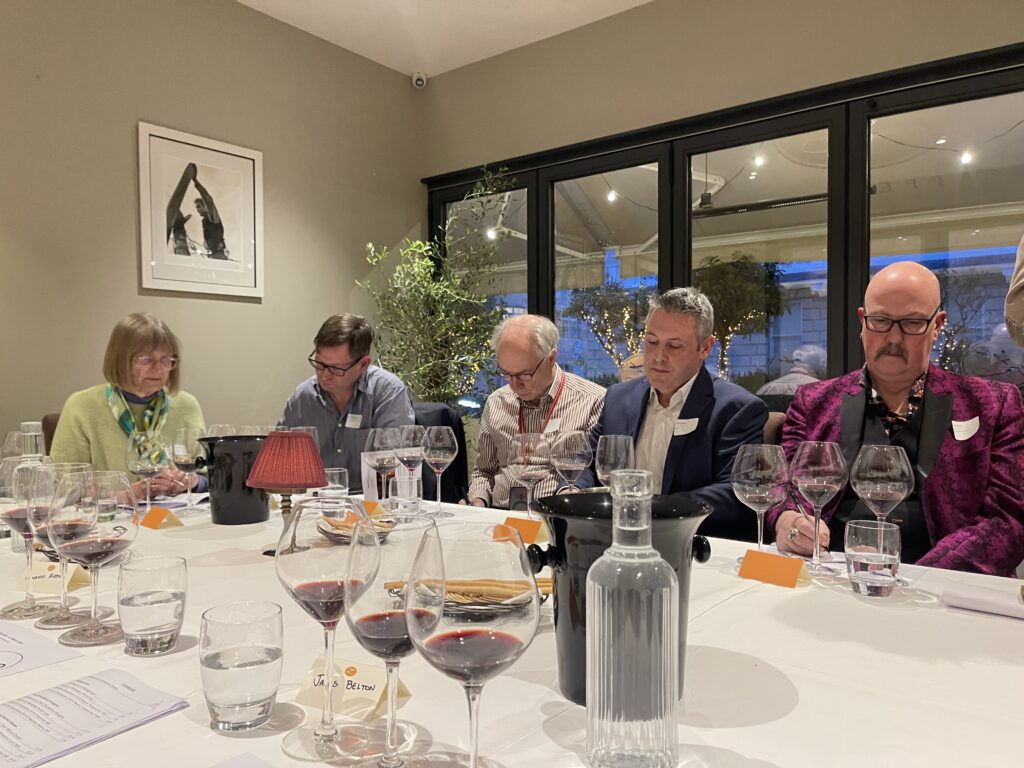
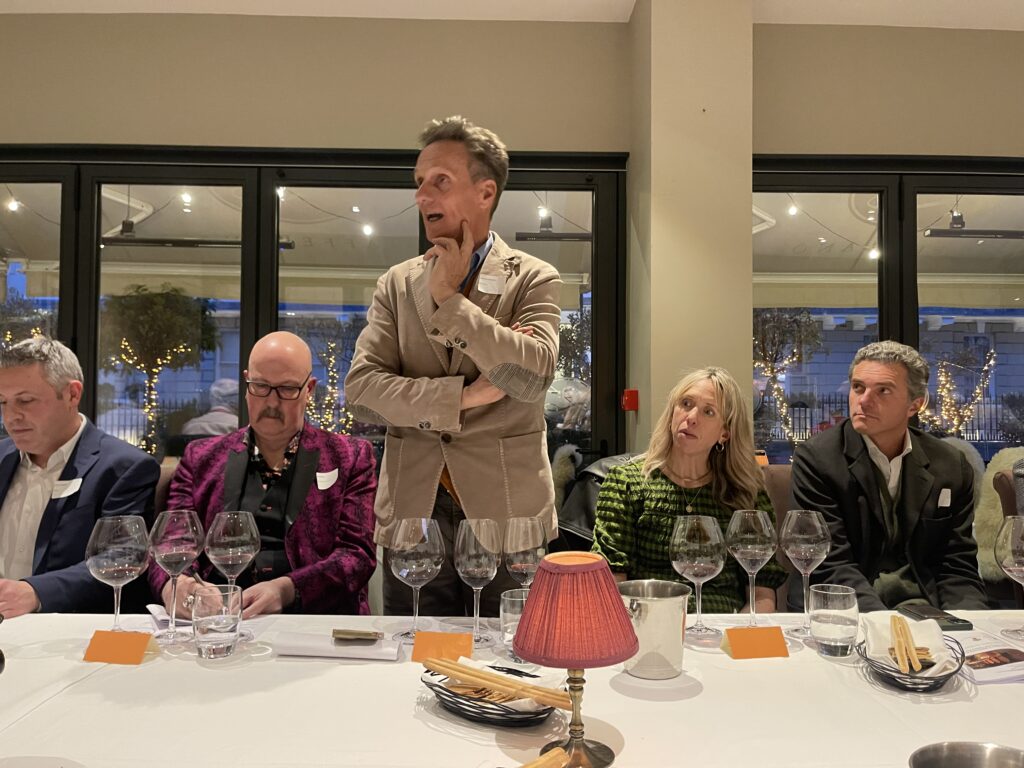
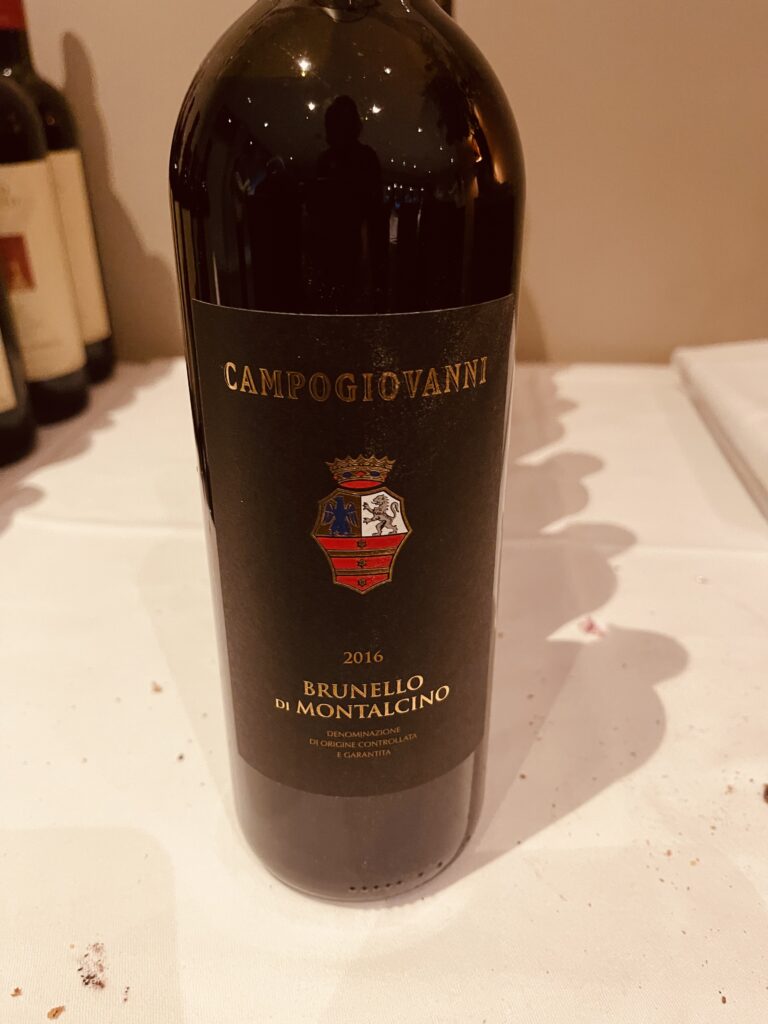
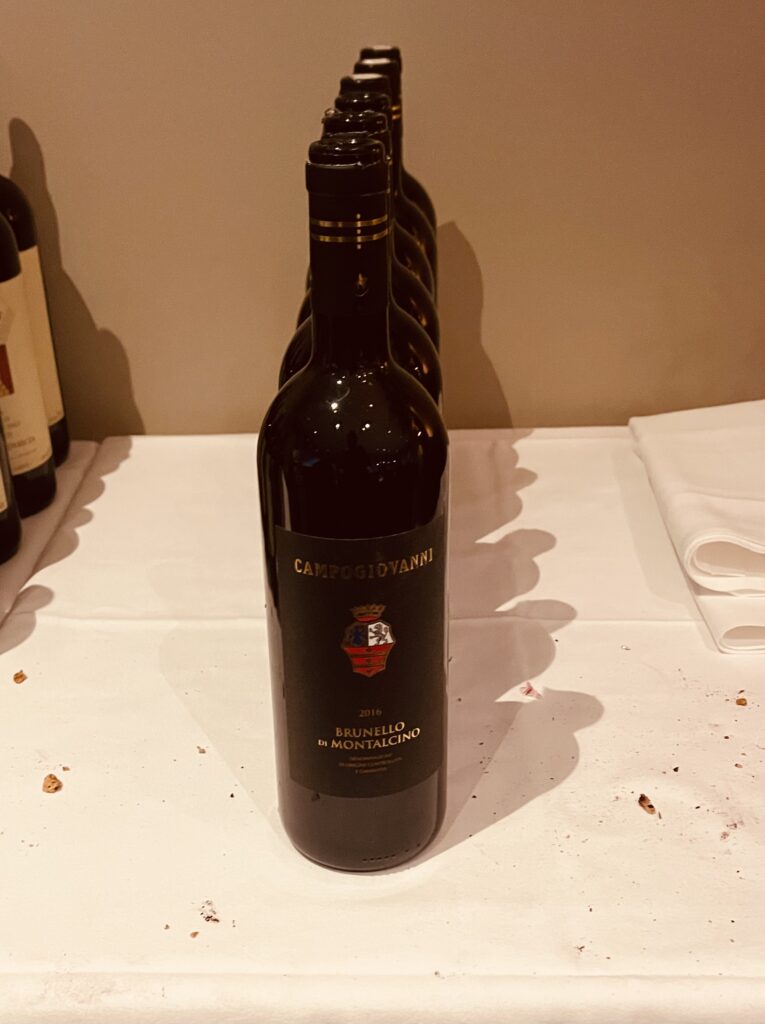
Invited by The Libération Tardive Foundation to taste back vintages of three Brunello di Montalcino producers, Campogiovanni, Ciacci Piccolomini d’Aragona and Col d’Orcia, Conti Marone Cinzano, we tasters tested the theory that good wine takes time.
HISTORY
The term Brunello was used as far back as the 14th century, according to respected Italian wine writer Walter Speller, but in the late 19th century, the Commissione Ampeleografica (Ampelographic Commission) of Siena identified Brunello not as a distinct variety but as a slow-ripening Sangiovese called Sangiovese Grosso (named for the plump largesse of its grapes). Brunello di Montalcino delivers the most full-bodied, structured and age-worthy Sangiovese in the world, which, together with the famed Super Tuscans, gained iconic status for its ability to improve over decades.
Sans ageing Sangiovese can be tight, closed, dry, astringent and reserved. Patience may reward the drinker with velvety depth, complexity, acidity, structure and tannin in symphonic alliance. Sour cherry and plum morph into fig, dark cherry, earth, leather, tobacco and chocolate – arch tannins into something silky and seductive, paired with aromatic rose petal, truffle and forest earth.
Brunello di Montalcino became a DOC in 1968 and was one of the first Italian wines to be upgraded to DOCG in 1980. At that time, appellation rules required 60 months of cask ageing, reduced to 36 in 1990 and 24 in 1998. The DOCG rules are still strict; Brunello di Montalcino cannot be sold until five years after harvest (six for Riserva), with at least two years in oak and several months in bottle. Yields are limited to 55 hl/ha.
Ferruccio Biondi Santi bottled the first labelled Brunello di Montalcino in 1888, a radically pure Sangiovese made from grapes grown on American rootstock. Ferruccio consciously selected the hardiest clones for his phylloxera-proof vineyard. The 1891 Riserva vintage is the pinnacle against which all subsequent vintages are still measured. Only 39 Riservas have been made since 1888.
Jancis Robinson is clearly a fan, in her FT column, entitled Brunellos Old and New, she praised Biondi-Santi for its resistance of the fashion for beefing up Brunello with French grapes and staying true to ‘Brunellos that need years in the bottle and then hours, perhaps days, in the glass to reveal themselves as delicate, exceptionally long-lived expressions of the Tuscan Sangiovese grape.’
TERROIR
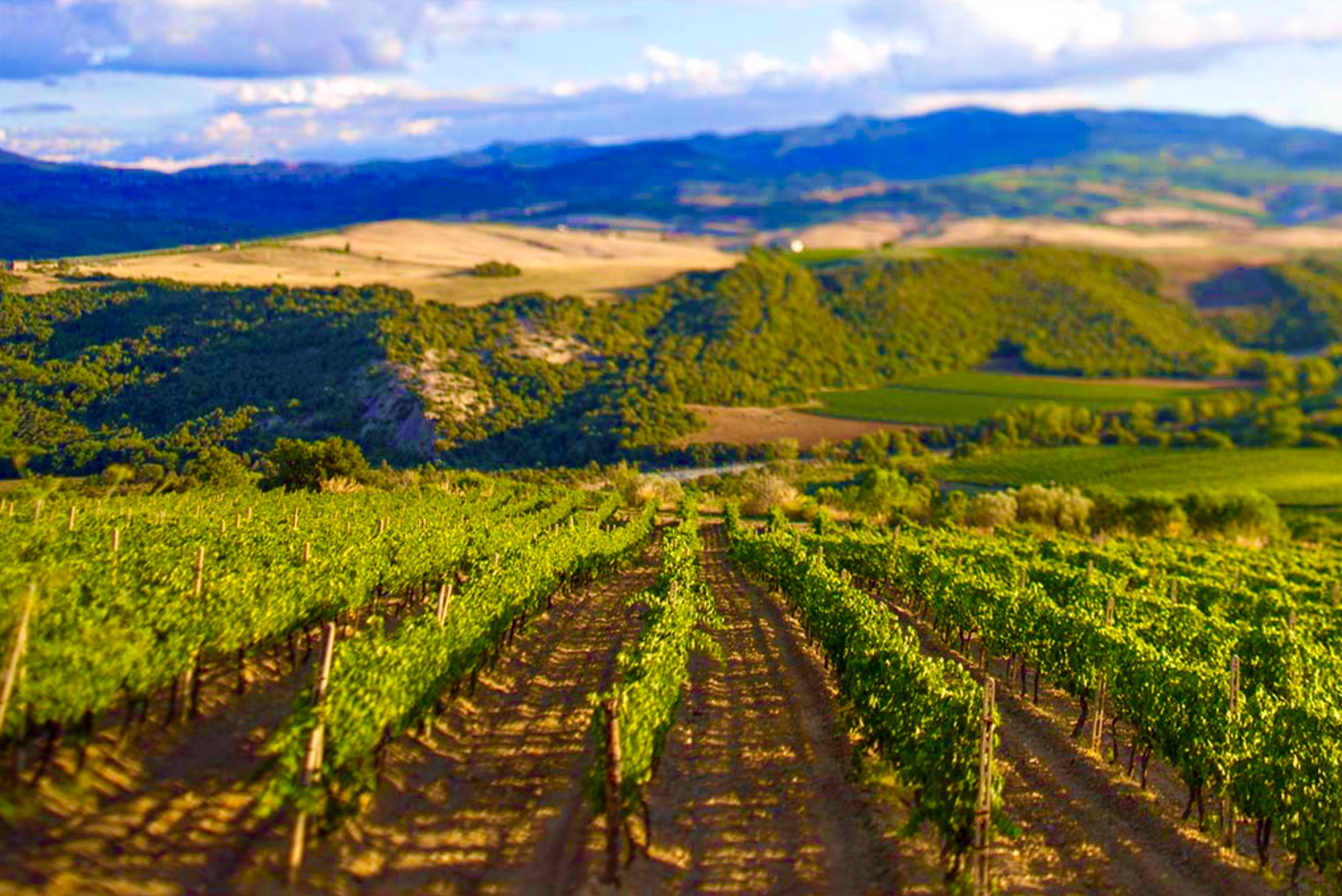
By 1929, Brunello di Montalcino had 925 hectares of vines, and in 1932, it was decreed that only those wines made and bottled within the commune could be labelled as Brunello di Montalcino. The region boasts a mix of galestro, volcanic, clay, and schist soils. The climate might be described as Mediterranean, a dramatic diurnal temperature range, thanks to proximity to the sea and altitude, which preserves acidity and allows for slow ripening. The tramontana wind cools the vines and allows for less disease pressure. Though small, the appellation offers dramatic variations in style, not least as vineyard altitude runs from 200 to 600 meters.
THE PRODUCERS
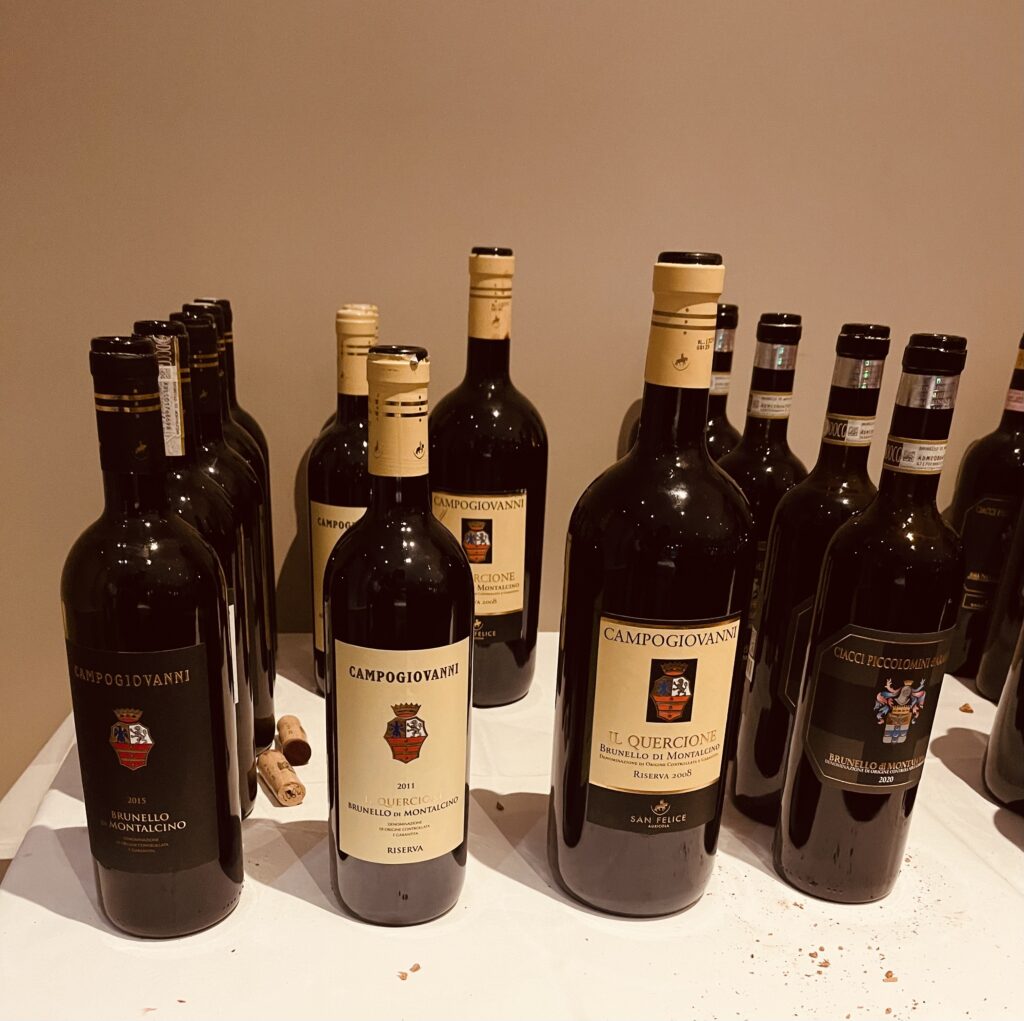
25 hectares of Sangiovese dedicated to Brunello, with a Reserva Single Vineyard. They produce four labels, always ‘classic fermentation’ as winemaker Leonardo Berraccini, by this he means long maceration of 25-30 days, for the riserva ageing is 36 months for the Campogiovanni, in tonno and cask.
‘I have always done classic fermentation, and to my generation, this means long skin contact, long maceration, when I say long, I mean 25/30 days, now it’s 20/21, I have reduced it a little bit, 28 degrees of temperature and in wooden tanks for the reserva. I age classically in wood, 30/36 months for the Campogiovanni and 24 months in smaller tonno for the Riserva. I know new oak is out of fashion but..’
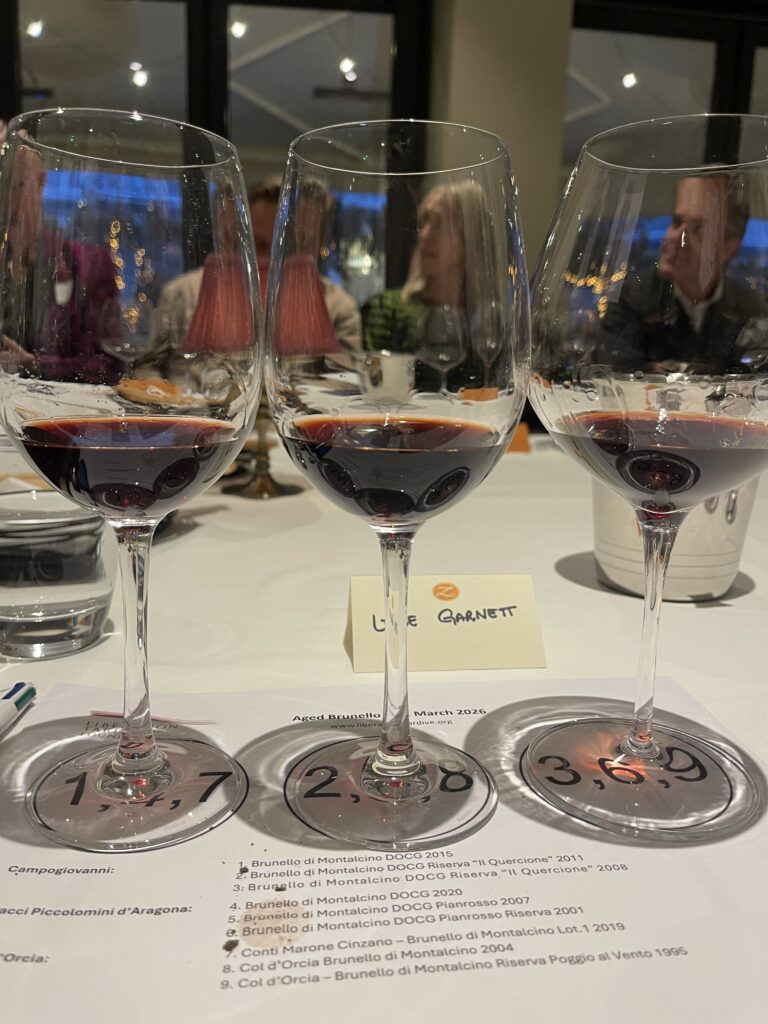
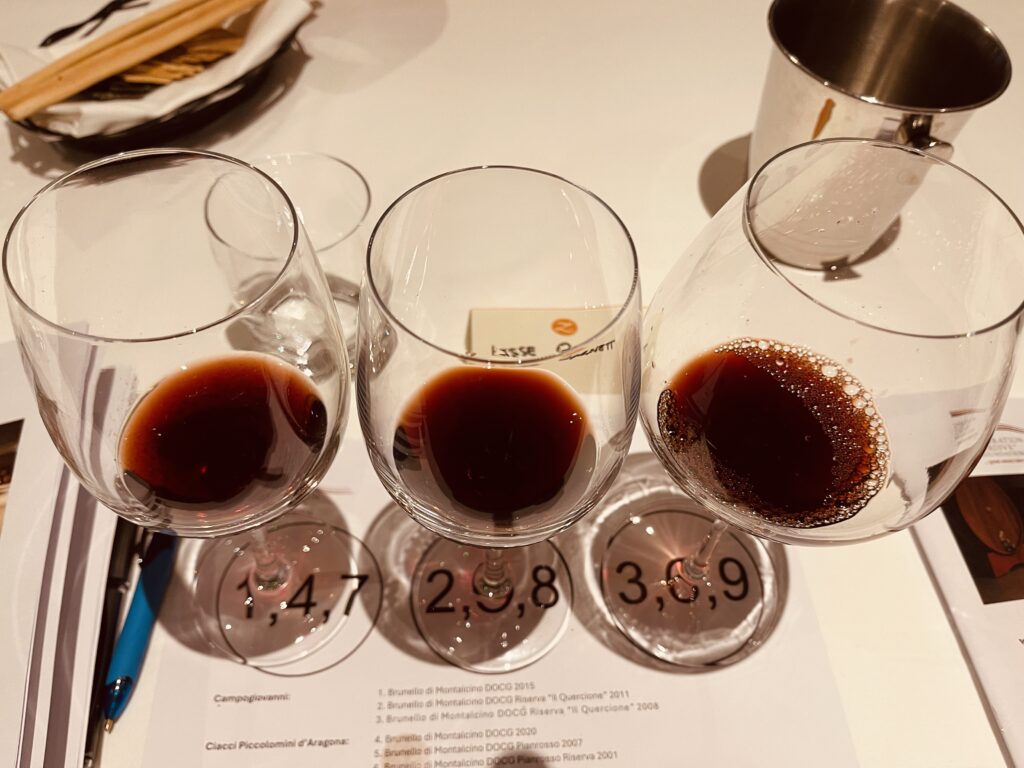
Campogiovanni, Brunello di Montalcino DOCG 2015, 15% Alcohol.
2015 was a very hot and dry year, Leonardo says the tannins were intense and needed time to become mature and round. Maceration was twenty days. This for me is a classically beautiful Brunello, perfectly integrated with toasted cigar and sour cherry notes, the tannins were ripe and sweet yet fresh. Delicious. 91
Campogiovanni, Brunello di Montalcino Riserva ‘Il Quercione’ 2011, 15.5% Alcohol.
Maceration was twenty-five days. Also a warm vintage – normal until the end of August when the heat arrived at picking time, resulting in a stimulating and rich, juicy, chewy, dark chocolate laced, spicy full wine with a touch of woodsmoke. 90
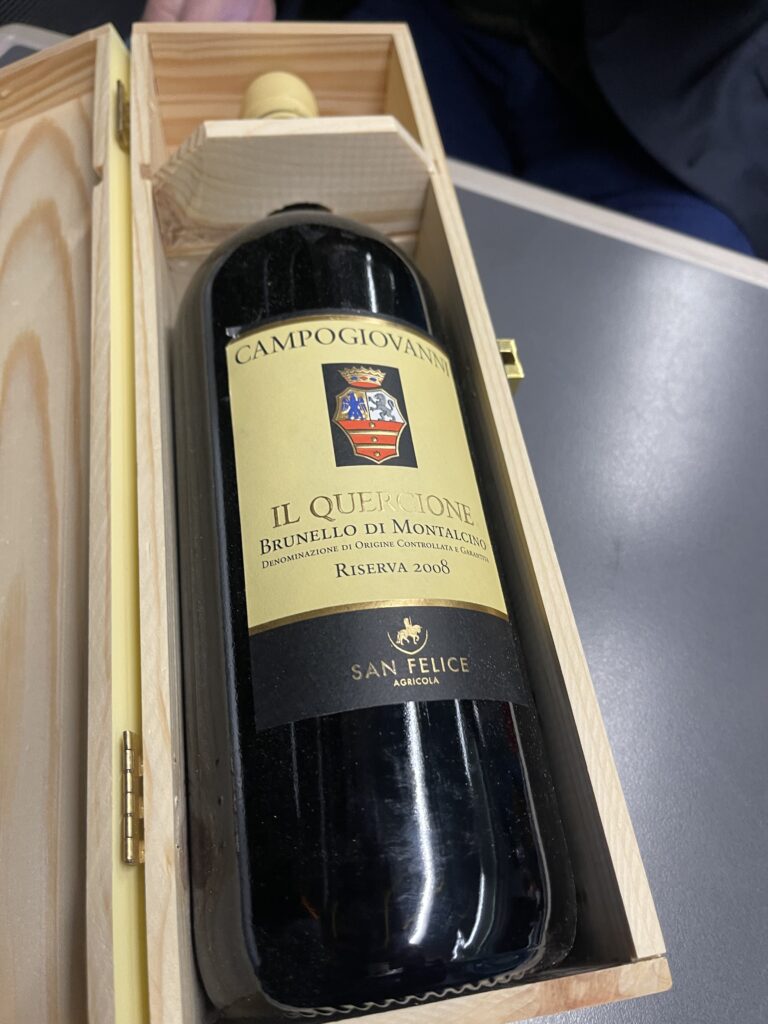
Campogiovanni, Brunello di Montalcino Riserva ‘Il Quercione’ 2008, 16% Alcohol.
This was a more classic vintage, according to Leonardo. Silky with sour cherry, toasted cigar, ripe plum, dark cherry, sandalwood and woodsmoke, the high alcohol added to the spice. I enjoyed the long, savoury finish. 89
Ciacci Piccolomini d’Aragona
The estate of Ciacci Piccolomini d’Aragona dates back to the 17th century. Alex Bianchini from Ciacci Piccolomini d’Aragona told us of his grandfather, a country worker who was the estate manager for the noble family of Piccolomini d’Aragona. Countess Elda Ciacci died in 1985. As the Countess had no children, she left the property to her long-standing estate manager Giuseppe Bianchini, Alex’s grandfather.
They have 60 hectares of vineyards and 30 hectares of organic olives. They produce eight different labels. They only use large barrels of Slovenian oak.
‘We need to find the perfect balance between alcohol and acidity; sometimes it’s easier, sometimes you have to find a solution.’
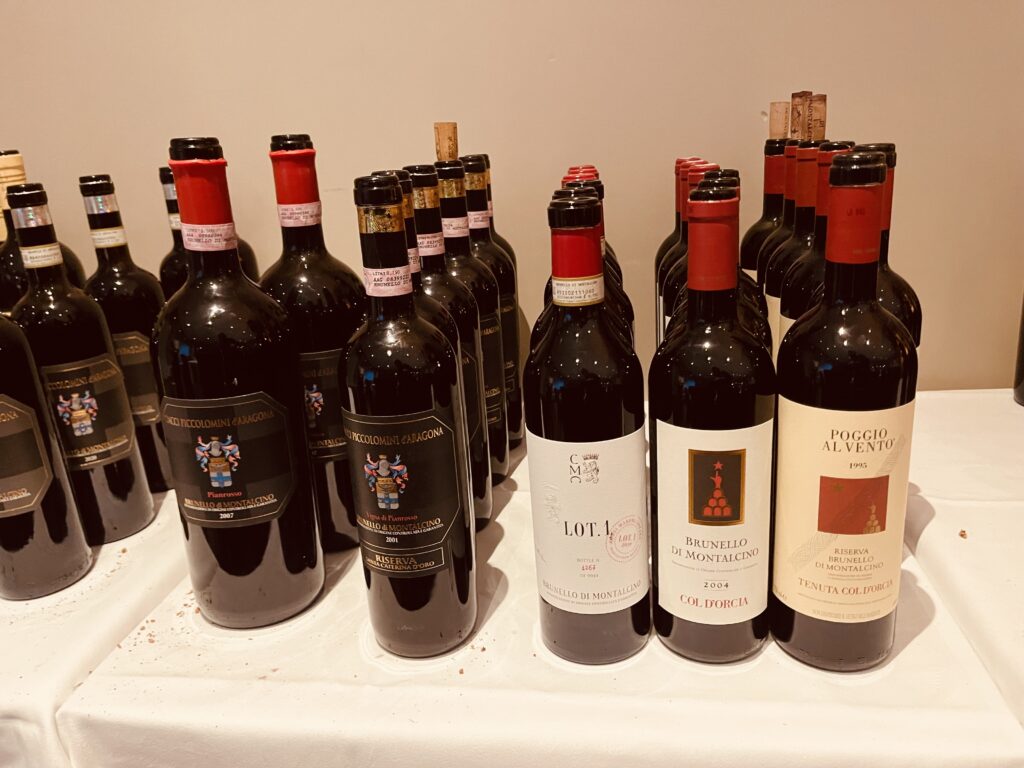
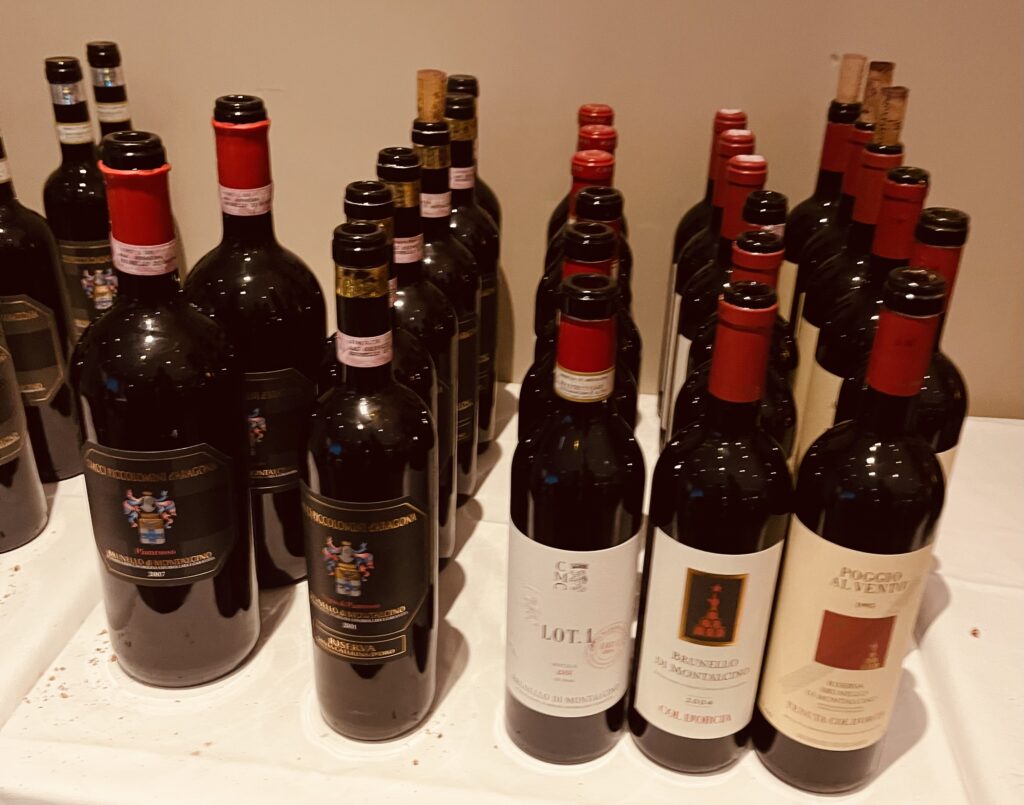
Ciacci Piccolomini d’Aragona Brunello di Montalcino DOCG 2020, 14% Alcohol.
A warm and dry year is reflected in the beautiful sweetness and dry tannins. Full, lithe, succulent, laced with savoury eucalyptus, mint and rose. Perfect for long ageing. 90
Ciacci Piccolomini d’Aragona Brunello di Montalcino Pianorosso DOCG 2007, 14.5% Alcohol.
Grown on iron-rich red soil, a warm vintage, they produced a Reserva too. Saw thirty-six months in Slovenian oak. Intensely spicy, layered and fruit-forward with enough acid to give freshness. Dense, succulent and vibrant, it has a deliciously chewy, supple savoury herbal edge and a hint of rose petal and golden tobacco. 92
Ciacci Piccolomini d’Aragona Brunello di Montalcino Pianorosso Riserva DOCG 2001, 14% Alcohol.
Grown on iron-rich red soil, these were planted by Alex’s grandfather in the best spot. They only produce a Riserva in the best years. This supple, gorgeous beauty bled strawberries and cherries, the ripe tannins and cigar-laced savoury character was more in evidence despite being fruit forward. Satisfying, chewy and delicious. 92
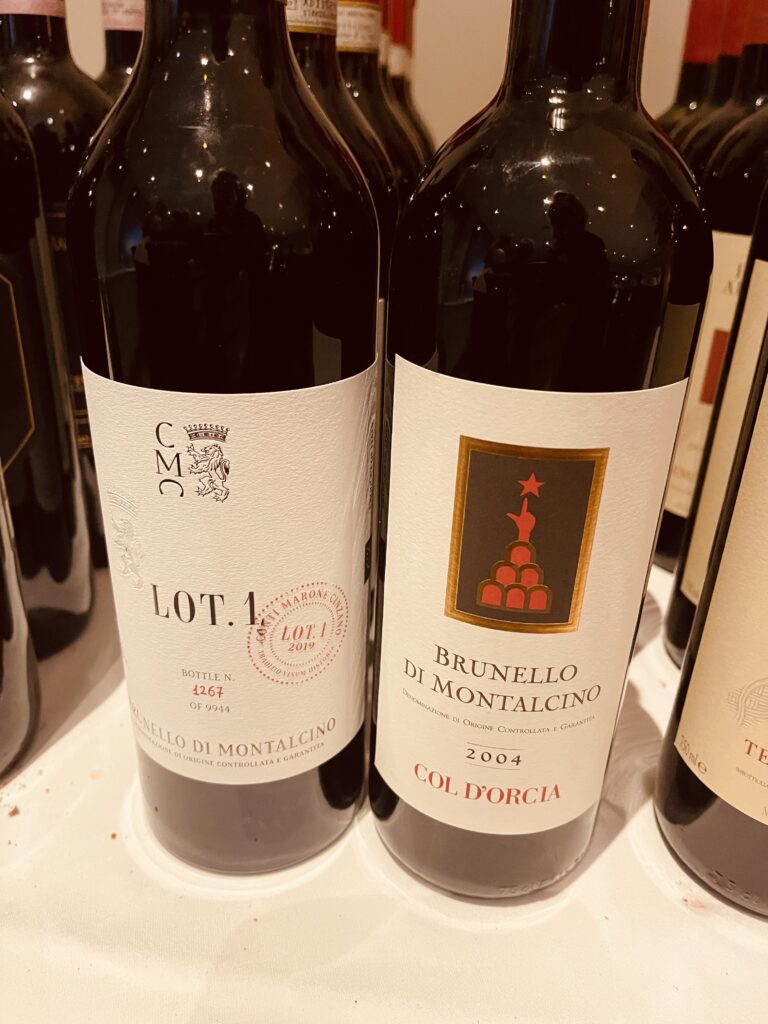
Col d’Orcia, Conti Marone Cinzano
2019 Conti Marone Cinzano Brunello di Montalcino Lot 1, 14.5% ABV
Silky and textural. Ripe with cherry-laced spicy sweetness yet fresh and seductive with smooth, round tannins. Aromatic cedar, herbs and liquorice bring a salty savoury element to this delicious vinous offering. 93
2004 Col d’Orcia Brunello di Montalcino DOCG, 14% ABV
Ample, inviting, structured, powerful, this gamey, textural damson-laced, silky beauty is deliciously quaffable. Fragrant with blooms, herbs and a touch of liquorice. Pleasure incarnate. 93
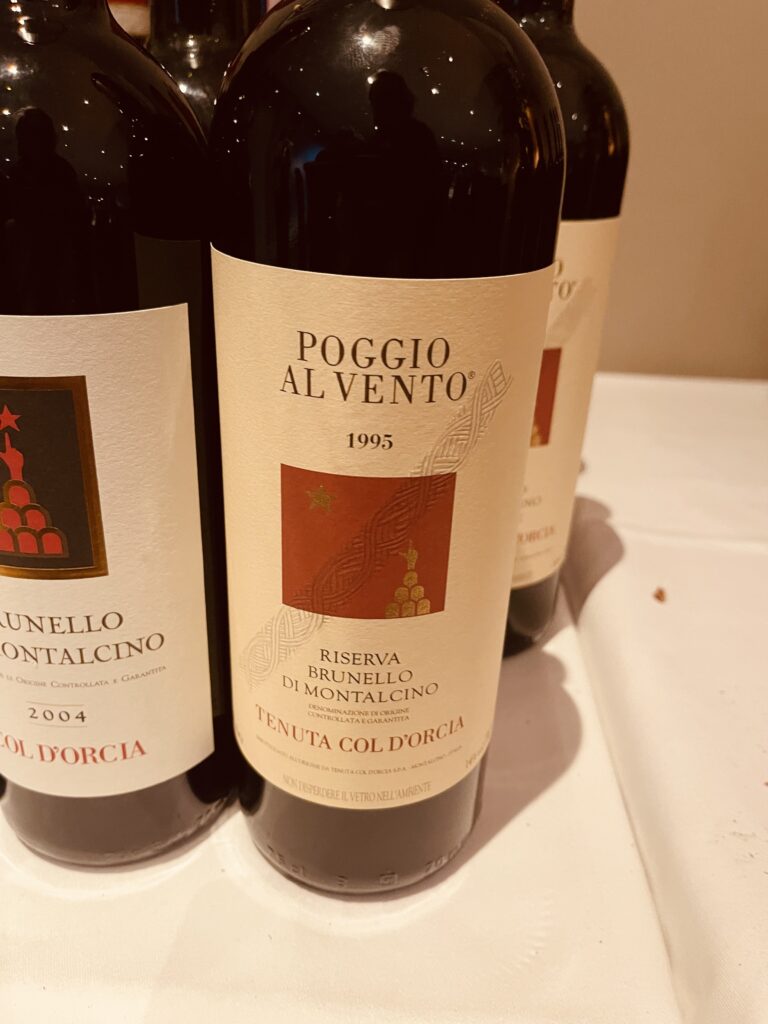
1995 Col d’Orcia Brunello di Montalcino DOCG, 14.3% ABV
So rich in depth and deliciously layered with chewy cigar, cinnamon, liquorice, sour cherry and a hint of orange. It’s warm, spicy and boozy on the mouth – powerful, structured, virile and intense. An endless finish. 92