Loosen Barry: where the Clare Valley meets the Mosel, a Riesling collaboration
Website: https://www.jimbarry.com/news/loosenbarry-unique-collaboration-meeting-minds-shared-obsession
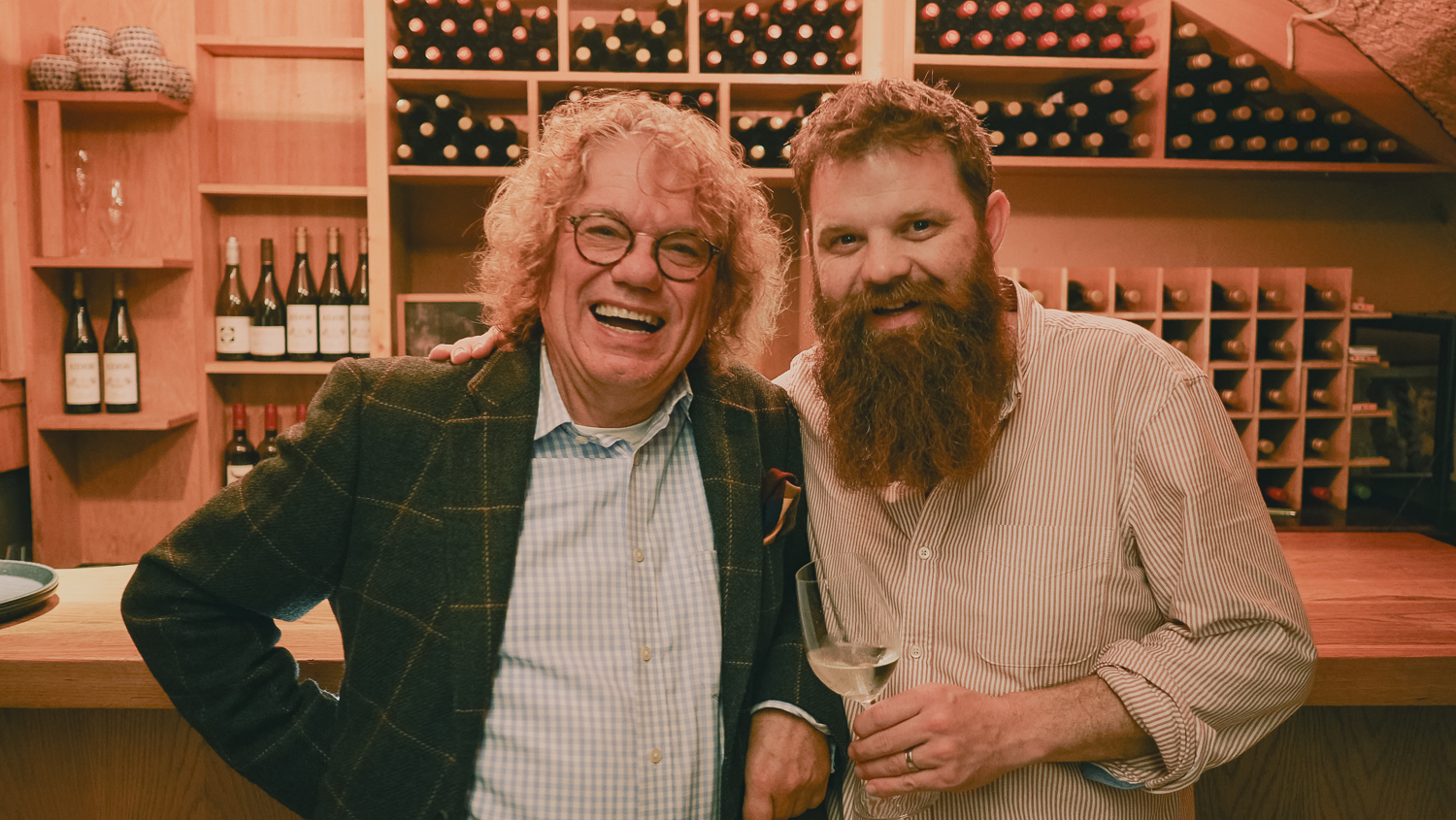
Loosen Barry is a fun (and quite serious) joint Riesling project, and I did a deep dive into it with Sam Barry (of Jim Barry Wines in Australia’s Clare Valley) and Ernst Loosen (of Dr Loosen in Germany’s Mosel).
Sam Barry describes the collaboration as a ‘wild ride’. It’s based on the Florita vineyard in the Clare Valley. ‘This is a very important vineyard in the history of Australian white wine,’ he says. Leo Buring planted it in 1945 with Palomino and Pedro Ximenez, and over the years the vineyard developed quite a reputation. It was used to make Leo Buring sherry, a fino-style wine made with flor (which Buring established with cultures he’d taken from Jerez), called ‘Florita Fino’. The Flor in the name Florita is a reference to biologically aged sherry! ‘Andrew Caillard thinks this is the first Australian white wine to have a vineyard name on the label,’ says Sam. In 1955 John Vickery joined Buring as winemaker, and then in 1962, after the death of Buring, Lindemans bought the vineyard, keeping Vickery on as winemaker.
Vickery decided that Florita should switch to Riesling, and the new plantings were made in 1962. And Vickery began making Leo Buring Rieslings, both from Florita and other Clare sites, which were to sweep up medals and trophies on the show circuit. This was before Chardonnay came onto the scene.
By the 1980s, sunshine-in-a-bottle Chardonnay came on the scene, and in 1986 the Florita vineyard was put on the market by Lindemans. Leo Buring had seven years inventory of Riesling, which was no longer fashionable, but Jim Barry fancied his chances selling it. The vineyard almost broke them: they were paying 20% interest rates and they couldn’t sell the wine. The other hiccup was that Lindemans sent a legal letter saying that even after the purchase, they owned the Florita trademark. It took a decade for the trademark to lapse, and in 2004 Jim Barry trademarked it themselves.
But now Riesling is cool and this is one of the most famous vineyards. It has a reputation for ageing, and Barry keep back 60% each year as library stock.
Florita is in the Watervale subregion of Clare, and it’s on limestone soils. It’s a 30 hectare vineyard, with 5 hectares of the 1962 plantings remaining. It’s mass selection, ungrafted, and this is the bit used to make the 12 000 or so bottles of Florita Riesling each year. They inoculate using neutral Champagne yeast, ferment cold, leave it on fine lees for a few months and then bottle. It’s the tried and trusted formula.
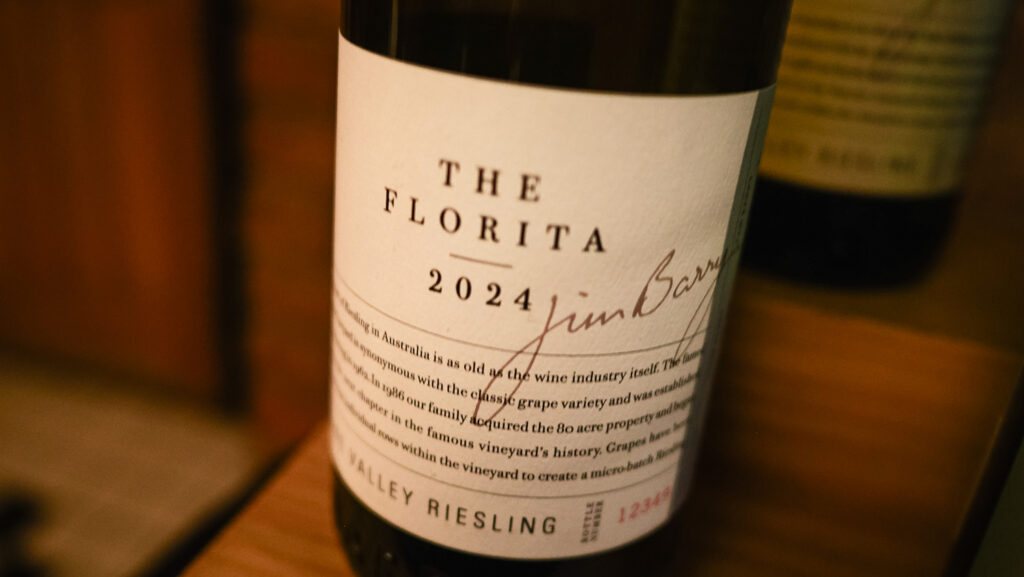
Jim Barry La Florita 2024 Clare Valley, Australia
The third of three La Niña years (cooler), 2024 was the warmer of the three but still had good soil moisture. Linear and bright with good acidity. Juicy, fine and expressive with a slight saltiness and nice fruit. This is quite lovely. 94/100
Ernst (Ernie) Loosen met Peter Barry (Sam’s father) in 1995. It was the start of a long friendship. In 2010 Tom Barry did a vintage with Ernie in the Mosel. ‘It was a crazy vintage, with crazy acid levels,’ says Ernie. They had to deacidify.
Ernie decided he’s quite like to do an Australian Riesling in his grandfather’s style, which is something he’s been working with for a while. The Loosen style has gone back to the way the wines would have been made in the past: keeping the Riesling on its full lees in large barrels for two-to-eight years, a method used from 1880-1920. Peter Barry agreed, and in 2016 Ernie sent the first 3000 litre barrel over. [It actually turned out to be a 2800 litre barrel, one that Ernie’s winemaker Bernie didn’t want any more.]
The wine was made with a natural ferment and kept in the barrel for two years, in a GG Reserve style, and then it was bottled without filtration.
Ernie explains that this long ageing on lees with a tiny bit of microoxygenation keeps the yeasts alive a bit longer, creating a more reductive environment. This integrates the Riesling acidity into the complexity of the wine. Battonage, in contrast, kills the uyeast and increases oxidation. ‘We want ageability,’ says Ernie, ‘and if you don’t kill the yeast you give the wine enormous ageability.’
‘We’ve never done wild ferment on Riesling,’ says Sam. ‘These flavours are something we hadn’t seen in Clare Valley Riesling.’
On his visit in 2016 Ernie asked whether Florita was the vineyard with the longest hang time. It turned out that another vineyard, Lodge Hill, which is on slate, has more hang time and flavour maturity. So Ernie chose a block here planted in 1980, and told them to hold off picking for a few days to build more flavour, and then press a bit harder. Typically the juice yield from Florita is 500 litres a tonne (this is low, indicating light pressing), whereas for Lodge Hill for Ernie, it’s 560 litres a tonne. Still not high, but more than Florita.
The Lodge Hill is the source for the collaboration wine, Wolta Wolta (this is the traditional name for the Lodge Hill site). In 2023 a second wine was added to the collaboration: Slate Hill. This is wild ferment and then ageing for 2 years on gross lees in stainless steel.
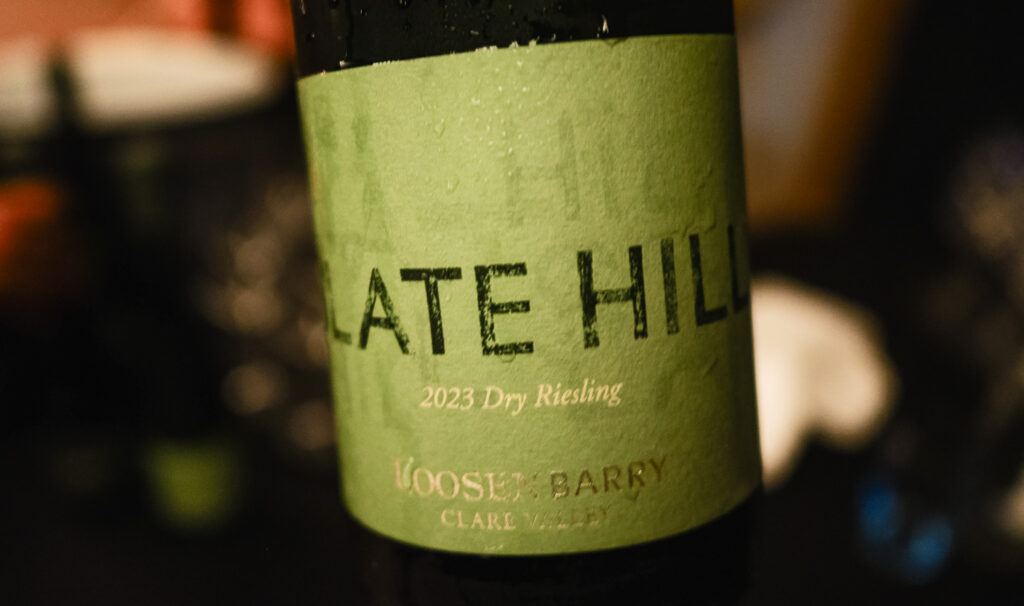
Barry Loosen Slate Hill Riesling 2023 Clare Valley, Australia
Fine, stony and delicate with some apricot and white peach exoticism. Textural and refined with nice stoniness and a crystalline citrus character. Very fine. 94/100
In terms of closures for Wolta Wolta, Ernie wanted to use cork, and sent 4000 bottles and NDTech corks (tested individually for TCA) to Australia. But Barry didn’t have the technology for bottling them, so they used screwcaps. Anyone looking for 4000 Riesling bottles and taint-free corks should make them an offer. [Ernie surveyed his buyers in the USA about their attitude to closures. They came back with a clear message: screwcap for anything under $30, cork for anything more than this.]
A new Jim Barry Riesling wine is in the works: Florita Solera, a blend of Florita across vintages, aged on lees. Wolta Wolta is priced at A$120 and broke the A$60 ceiling for Riesling in Australia; Forita Solera will break it again, it seems.
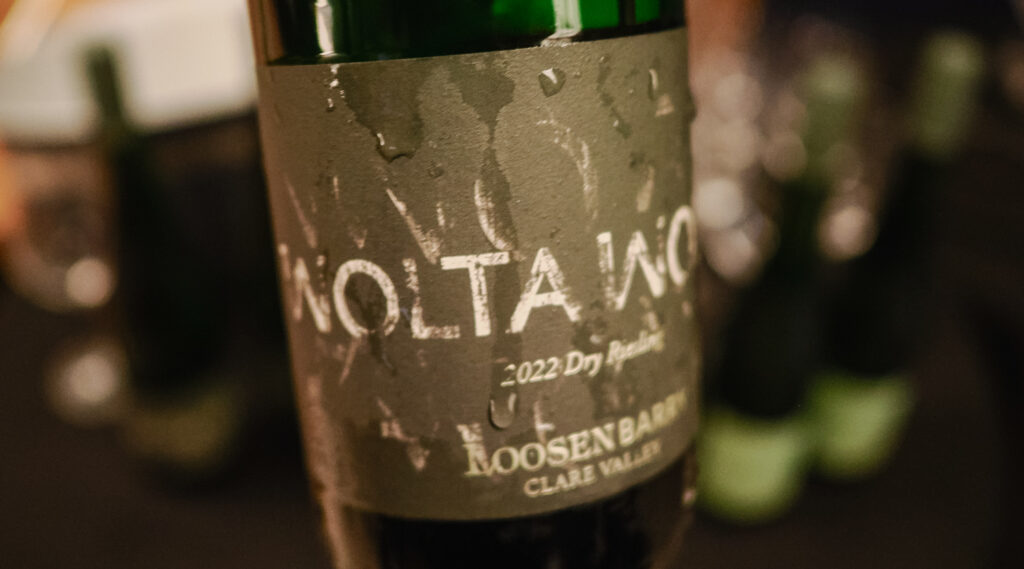
Loosen Barry Wolta Wolta Riesling 2022 Clare Valley, Australia
This is taut and focused, but has some richness. Lovely citrus drive with crystalline lemon and a touch of pear. Bold, concentrated and textural with nice density and potential for development. Youthful. 94/100
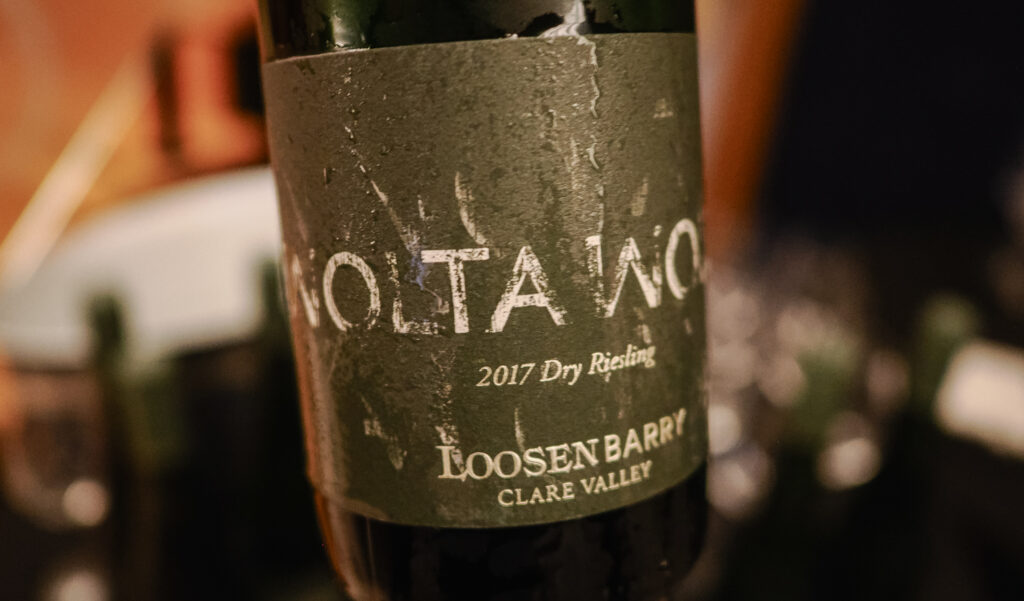
Loosen Barry Wolta Wolta Riesling 2017 Clare Valley, Australia
Such texture here with citrus and pear fruit, as well as hints of apple and aniseed. Broad but fresh with precision, and in a super place now. 95/100
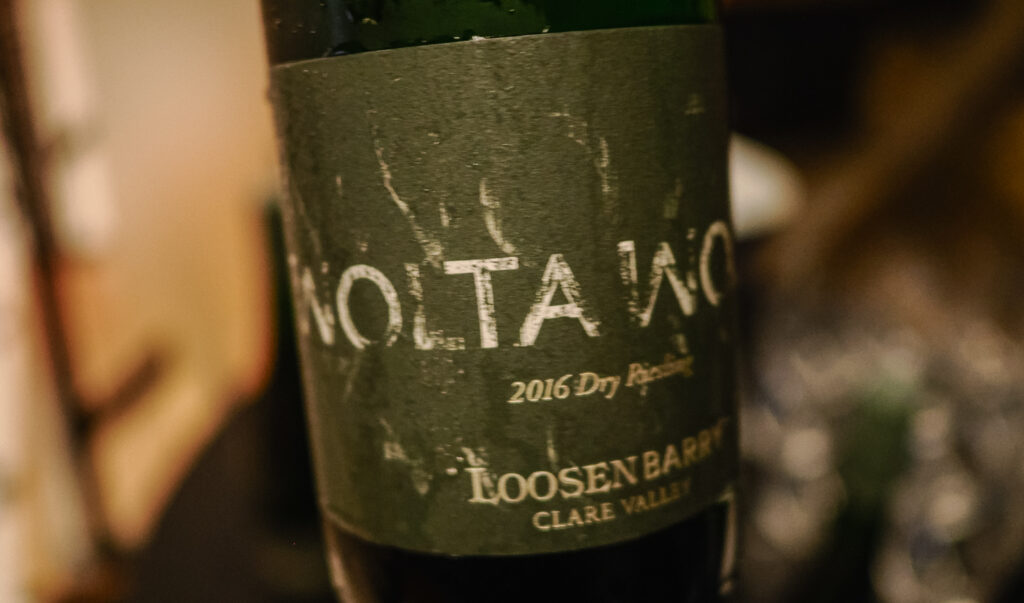
Loosen Barry Wolta Wolta Riesling 2016 Clare Valley, Australia
This is also in a lovely place. There’s a slight creamy element with amazing melon, pear and citrus fruit, opening up beautifully with some richness and texture, and a hint of apricot on the finish. Amazing depth and weight here with real finesse. 96/100
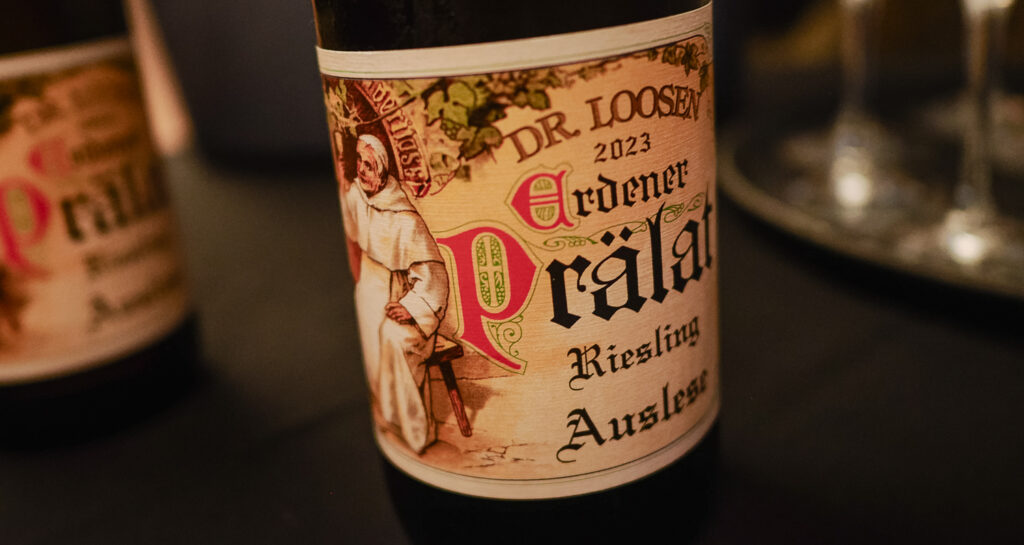
Dr Loosen Erdner Prälat Auslese Goldkapsel 2023 Mosel, Germany
9% alcohol. This is almost 100% botrytis. Linear and mineral with apricot, pear and some melon, as well as great acidity. Youthful, tensile and crystalline. Beautiful. 95/100