Arnaldo Rivera, a top tier of wines from the overperforming Terre del Barolo cooperative
Websites: https://terredelbarolo.com/en/ https://arnaldorivera.com/en/
The Terre del Barolo cooperative was founded in 1958 in Castiglione. First vintage was 1959, and today they are an important player in the region. In 2017 they began the Arnaldo Rivera project, named after the founder of the cooperative. I met with Gabriele Oderda, Director of Arnaldo Rivera, on a video call, to chat through this interesting project while tasting five wines.
Gabriele emphasized that understanding Arnoldo Rivera today requires an understanding of how Barolo has developed as a region. These days, it’s famous and the top wines are expensive, but this wasn’t always the case.
After the second world war, Langhe was one of poorest agricultural areas of all northern Italy. This isn’t all that long ago. It was in 1958 that Arnaldo Rivera began the cooperative Terre del Barolo. He was an important figure in the region and for 37 years was mayor of Castiglione Faletto. ‘He was a man of the people, the guy that you want to call for an advice,’ says Gabriele. ‘This was the time when Giacomo Oddero was mayor in La Mora, Battista Rinaldi was mayor in Barolo and Giovanni Gaja was mayor in Barbaresco. It was an all-star game. These are the founding fathers of the modern Barolo. And also Arnaldo Rivera during his lifetime was one of the closest friends of Bartolo Mascarello himself. But he did something different from all these people. He didn’t put his own family name on the label. But he put the community ahead. And he thought of building a winery for the people.’
One of the motivations for forming the cooperative was because of how badly the growers were being treated in the grape market of Alba. ‘It was known locally as the dead people market, because of the depreciation in the price of the grapes,’ says Gabriele. ‘The grape market was ruled by just a few brokers.’
What happened in Barolo opened the path for quality, says Gabriele. In contrast, things didn’t work out so well in the north of Piemonte. At the beginning of the 20th century this northern part of the region was one of the most intensively planted regions in Italy, but a lot of the vineyards have now gone. Workers left from the vineyards to the textile industry and to the cities. This could have happened to the Langhe, too, but it didn’t.
Terre del Barolo is the only grower cooperative in Barolo. When Analdo Rivera founded it, only 22 growers joined the first year. The next year, 250 joined. ‘We are a little bit like the sheep in Italy, we never move,’ says Gabriele. ‘We look around, but we don’t move. If one starts to go, everyone follows. So, as soon as they started to build a winery, in the springtime of 1959, there was a big attraction towards the coop.’
Arnaldo Rivera stipulated some conditions for those who wanted to join. They needed to be located in one of the 11 villages of Barolo, they needed to own their vineyards, and all their grapes had to come to the cooperative. And the grapes needed to come to the cooperative in small boxes, with no pressing at the farm. This allows the strict control of quality.
The cooperative is significant for the region, making 12% of all Barolo. The whole appellation is 2200 hectares, and cooperative members have 240 of these.
Terre del Barolo have a number of tiers of quality, in a sort of pyramid. At the bottom is bulk wine, sold to supermarkets and big players, enabling them to get quality at a good price. Then there’s middle range, which is the core of their production. And the top tier is around 10% of production, and this is Arnoldo Rivera, which is a completely separate philosophy, based on vineyard-designated wines. 35 of the 300 growers Terre del Barolo contribute to this tier. They are paid according to the potential yield of their site, so it is about enabling them to farm well, with a specific vineyard protocol. ‘This Arnaldo Rivera philosophy was born from the bottom,’ says Gabriele. ‘This is not a director’s marketing programme.’
As well as Barolo, they have added some interesting grape varieties to the range, including Freisa, Verduno Pelaverga, Dolcetto and Nascetta (a rare white variety).
I asked Gabriele about where the cooperative sat on the modernist/traditionalist Barolo discussions of the past. ‘Our winery is a farmer cooperatives. And when we think about taking a decision with the 300 heads, this is very time consuming. Sometimes being slow provides luck!’ So they didn’t jump on the modernist small-oak bandwagon. ‘We passed the trend. We didn’t even notice.’ They stuck with the large-format wooden casks. But when they stared started Arnoldo Rivera ten years ago they had to buy some smaller vessels because they were dealing with small plot vinifications. ‘We have Rocche Castiglione, which is a vineyard of 0.34 hectares. We cannot fill a large cask.’ For smaller oak, they are very careful about the barrels, they test the staves and everything is not toasted, but staves are bent by vapour and not fire to limit the impact on the wine.
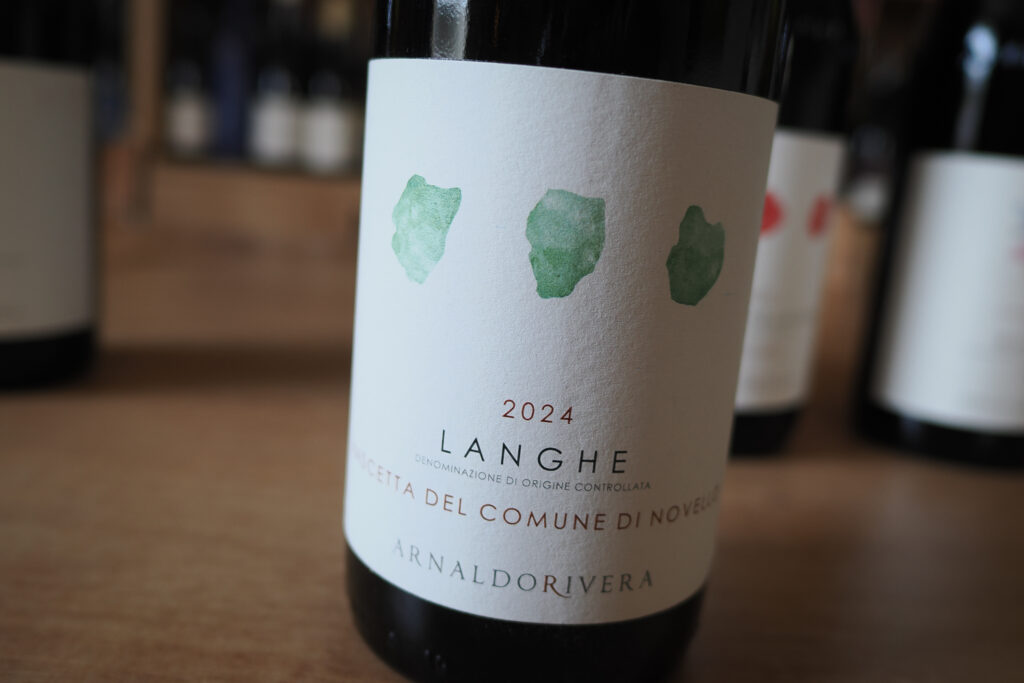
Arnaldo Rivera Langhe Nascetta del Commune di Novello 2024 Piemonte, Italy
13% alcohol. Nascetta is a rare variety that’s unique to the commune of Novello in Barolo. No oak here, but an extra year in bottle to help subdue some of the more floral terpenic notes. This is textured and quite broad with a subtly spicy edge to the rich pear and white peach fruit. It’s a really classy, full-flavoured wine, but has balance. Subtle notes of wax and toast, and some aniseed and sour cherry on the finish. Bold and quite delicious. 93/100
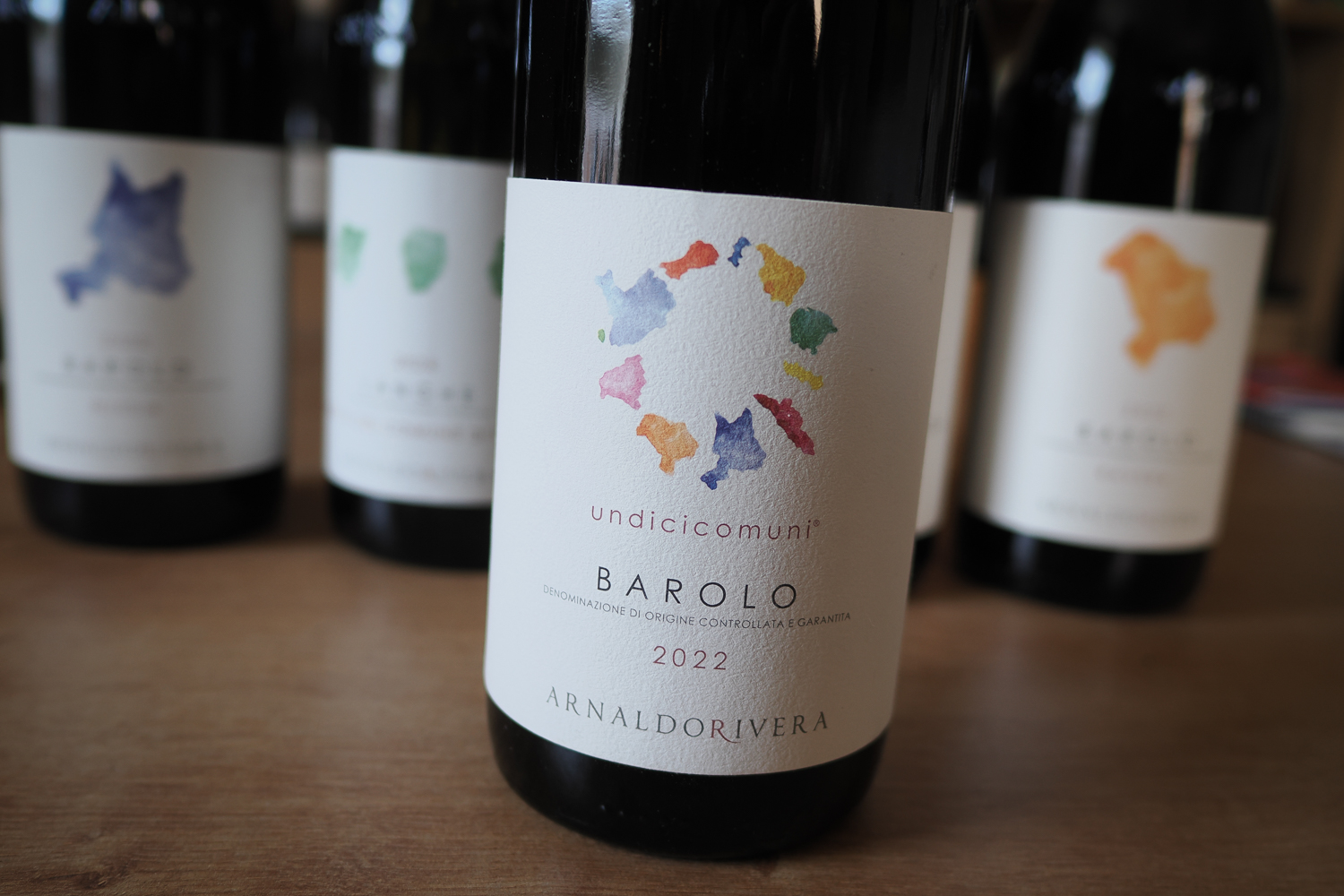
Arnaldo Rivera Undicicomuni Barolo 2022 Piemonte, Italy
14.5% alcohol. Potentially from all 11 communes in Barolo (they are the only producer to have grapes from all of them, but it wasn’t until 2025 that all made it into the blend), two years in large oak. This is rich, ripe and textured with some warm spiciness and nice structure under the red cherry and cranberry fruit, and there’s also a floral dimension on the nose. There’s some richness here, but it isn’t a heavy wine. The alcohol makes its presence felt, and the fruit sweetness coats the tannins. Finishes warm and spicy. There’s a harmonious integration to this wine. This is a classic Barolo from a warm vintage that should age in interesting ways: it picks up some weight and structure on day 2 after opening. 94/100
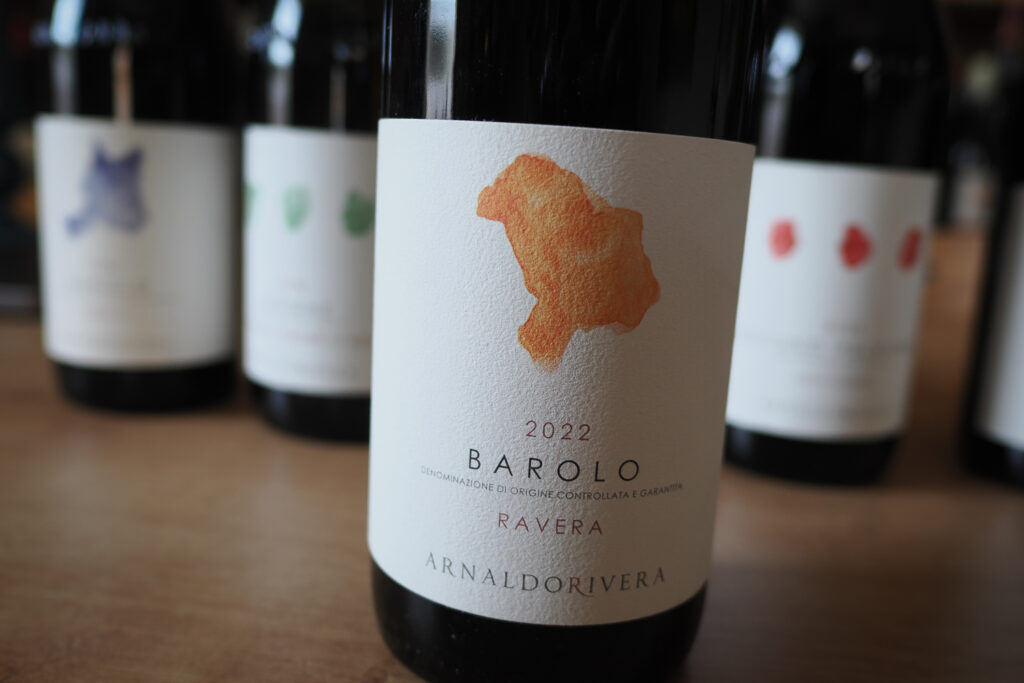
Arnaldo Rivera Barolo Ravera 2022 Piemonte, Italy
14.5% alcohol. From five sites in this south-facing MGA. 30 months in cask. Just 4500 bottles made. Lovely aromatics with warm spices, some cedar hints, rose petal, iodine, wild strawberry and red cherry. The palate shows raspberry, cherry and strawberry with lovely texture and a hint of mint and pot pourri. This is a lovely wine with ripeness, detail, structure but also elegance. Some alcoholic warmth. 94/100
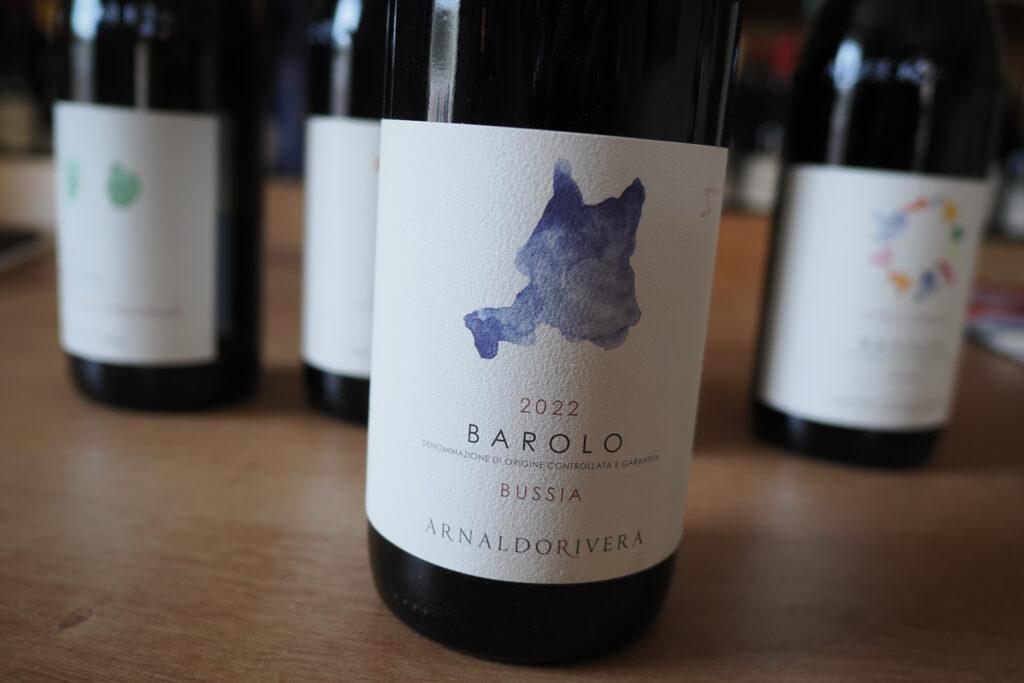
Arnaldo Rivera Barolo Bussia 2022 Piemonte, Italy
15% alcohol. From two sites facing southwest in this MGA. 30 months in cask, 3600 bottes. Lovely pale cherry red in colour. Some warmth on the nose, with red cherries and redcurrants as well as fine spicy notes. Elegant despite the alcohol, with dried herbs and some rose petal. The palate is textured, warm, elegant and has some smoothness from the high alcohol. There’s a real harmony and delicacy here, as well as ripe fruit and some alcoholic warmth. Lovely stuff and should age really well. 95/100
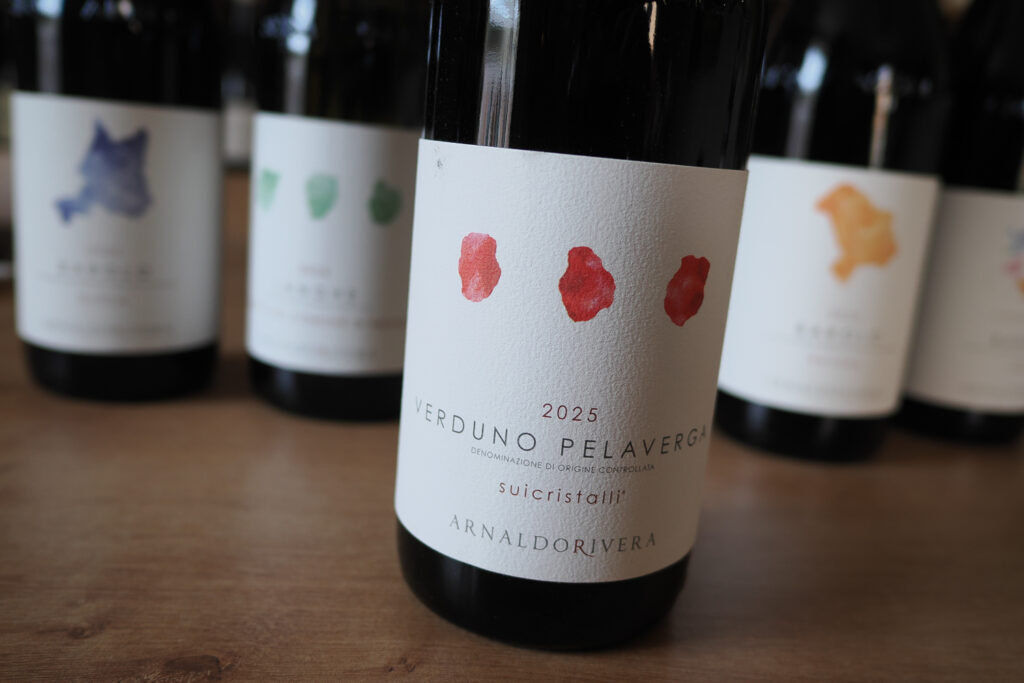
Arnaldo Rivera Verduno Pelaverga Suicristalli 2025 Piemonte, Italy
13.5% alcohol. Lighter red in colour. Wonderful aromatics of sweet cherry and aniseed with some leafy green notes and black pepper. The palate has lovely texture and detail, with a bit of structure and good acidity. Such a distinctive variety showing its best here. Massive drinkability, but also a bit of seriousness. I love it. 94/100