
Gut Oggau: stunningly original, naturally made wines from Austria’s Burgenland
Website: www.gutoggau.com
Eduard Tscheppe and his wife Stephanie Tscheppe-Eselböck farm 20 hectares of vines in Austria’s Burgenland region, and their winery name is Gut Oggau. They work with old vines which they farm using biodynamics (they are Demeter certified), and they make the wines quite naturally. They were in London at their importer, Dynamic Vines, to share their wines and their story.
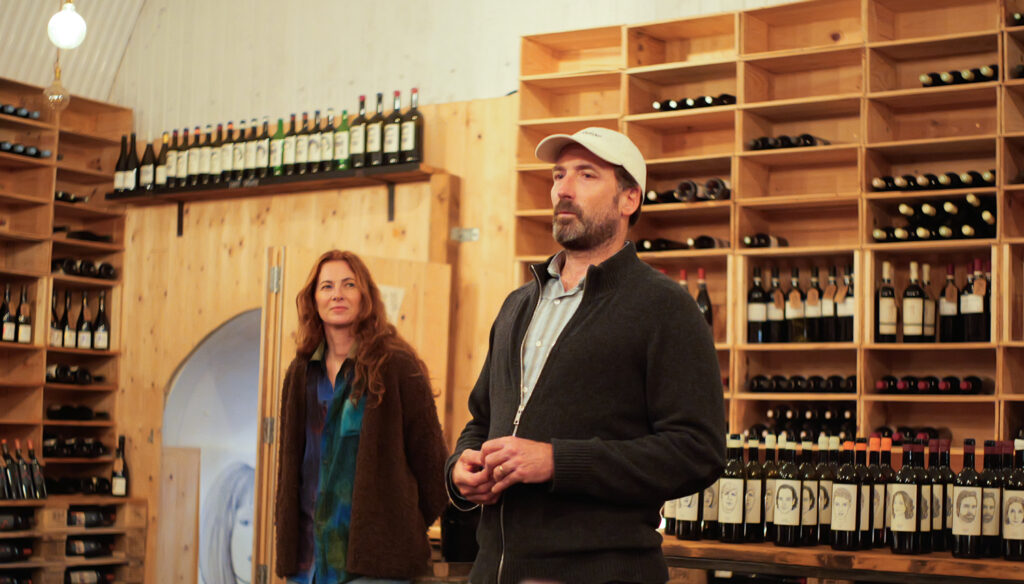
‘We chose our approach, which totally feels good for us, and we feel this is the best we can do to express the potential of our soil and of our vineyards,’ says Eduard. ‘But you might talk to another grower, and they might tell you a totally different story. That’s okay, because in the end, the culture is something personal, the connection with the land and the plants is certainly something which you cannot copy and paste, and you have to find your own approach’
‘We started 20 years ago next year, in 2007,’ he says. ‘We had a chance to buy an old estate in the town of Oggau, which is on the west bank of lake Neusidel, close to the Hungarian border in Burgenland.’
The previous owner had lost track, and for 10 years before they took over she hadn’t made any wine.
‘In 2007, the wine world was on a totally different chapter,’ he says. ‘The term natural wine wasn’t born yet.’ He says there were no role models or people to follow. ‘The inspiration we had was also driven a lot through the place, because when we started working with those old vineyards, back then 30-60 years old, we felt we needed to treat them as sensitively as possible to revitalise them.’
And then when it came time to make the wines of this place, again, they had no reference points, so they made them in a non-interventional no-makeup style, which they have continued with.
‘Wine has never been a drink that you can reproduce or standardise; wine has always been this cultural experience of a place combined with a certain time,’ says Eduard. ‘So what we call the vintage is actually all the information collected from the weather, from the climate, from the cosmos into the grapes, and that will never be the same. And what we call terroir is basically all the information and the energy from the soil, from the mother earth, which is also to a certain extent unique, because the roots are ever growing, and the soil is also changing, but it’s a little bit more constant, because usually the roots are where they are, and the mineral components are what they are.’
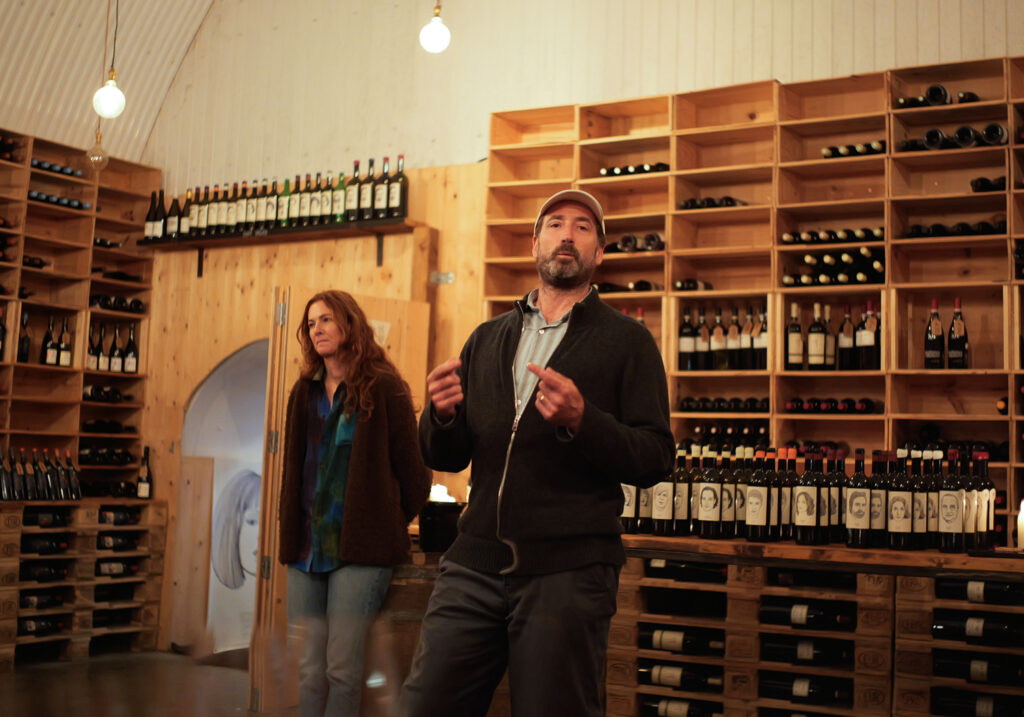
Their view is that wine carries this sense of place and time, and that then this creates emotions. ‘We can talk about what the wine tastes like, but ideally we would want you to tell us what it makes you feel like.’
Eduard says that what makes their wines special, to an extent, is that they allow us to connect with everything that drives life on the planet, bundled into grapes and then into the wine. ‘It is the forces of the planet Earth, which nurtures us from underneath, and it’s the forces of the vast cosmos around, which nurtures us with energy from above. There would not be life on our planet without those two poles. And this is what Biodynamics is essentially about: respecting those two poles and fine-tuning.’
In terms of their farming, they now work in a more sensitive way, recognizing that everything is connected. This is ancient wisdom, they say. One of the ways they do this in the vineyard is to move away from monoculture and create biodiversity. ‘We plant a lot of trees every year in the vineyards to create a different microclimate, to connect the roots with the mycorrhizae, and to attract birds and insects. We have a lot of cover crops. We also planned a lot of bushes and herbs. So on purpose, we reduce our crop of the grapes, but what we get from this is more resilience and more quality.’
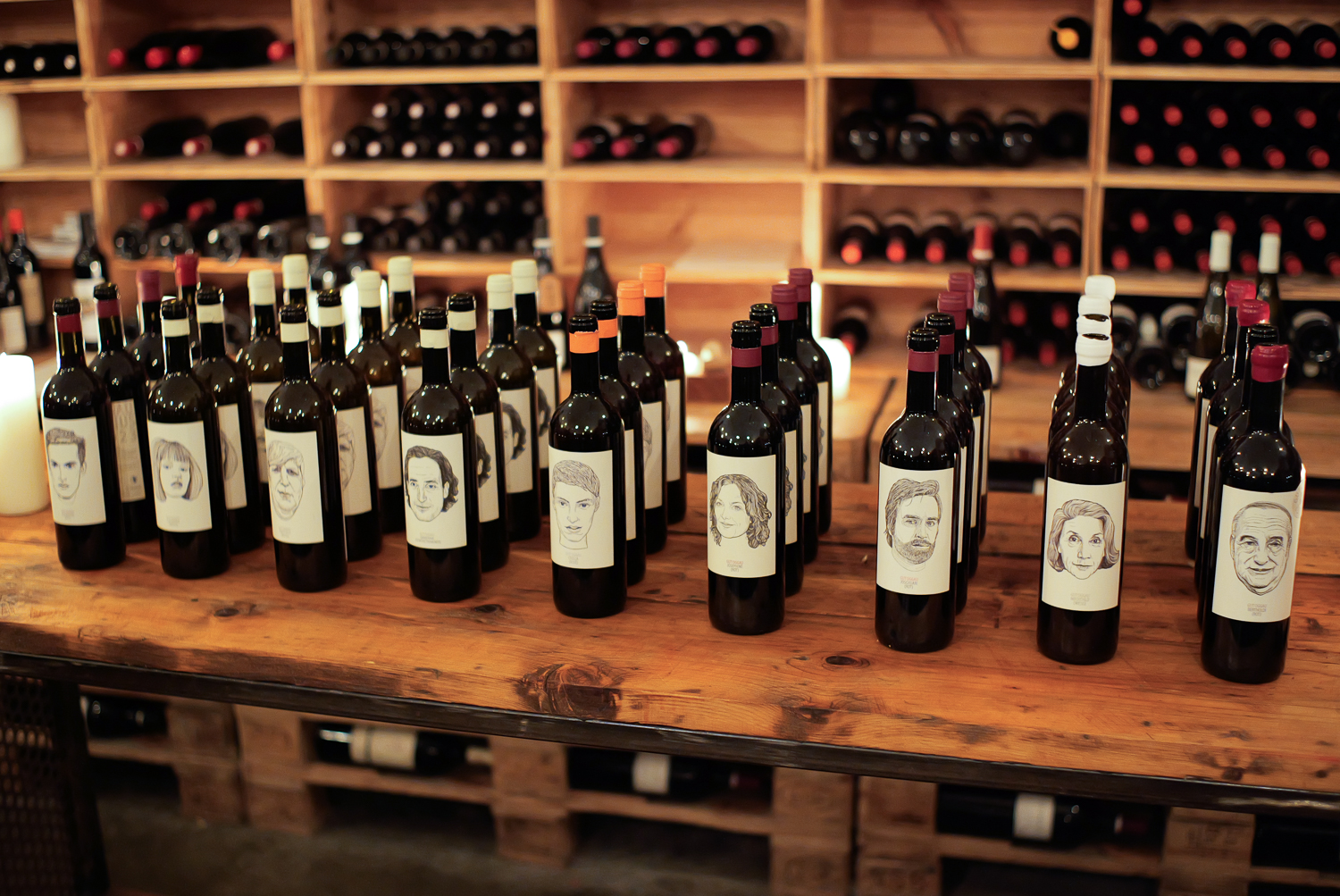
When they made their first wines, they were excited by how different they all were. This is when they came up with the idea of describing each wine in terms of the personality of a person. They did a personal profile on each wine and then imagined faces according to the profile. So each of the Gut Oggau wines is named after a fictional character, created by Jung von Matt, who’s a German designer, and their faces are depicted on the labels, which are quite distinctive. These fictional characters are integrated into a family tree! Eduard feels that the wines have strong personalities, and this anthropomorphism is a way of expressing this. There are children, their parents, and also grandparents. It’s an interesting concept.
They mix and mingle the red and white grapes in their wines, and they don’t alter their vinification on the basis of whether they are using red or white grapes. They macerate the whites on the skins, and then with the reds they’ve pulled back from doing a traditional full maceration, which they think is too much. ‘Freshness in our wines is mainly minerals, not just acidity,’ says Eduard. ‘Too much tannic structure hides a little bit of this beautiful vibrant energy from the soil.’ So they so most of their wines part on skins and part direct pressed. Their only use of sulfites is just before bottling.
In the cellar they use Austrian oak only, from the north of Austria, and the barrels are made by Stockinger. Here the oaks grow very slowly. ‘We always ask for the wood to be aged for more than five years outside, to wash out all the green tannins.’
At one stage they visited Georgia (in 2015) and thought about importing some qvevri, but only reflection they thought it wasn’t right because the qvevri belonged there, in Georgia, not Austria.
Eduard refers to wine as living. ‘In the precious juice which ferments, we still have a lot of microorganisms sleeping, but also doing the job to evolve the wine in a certain direction. And especially after the fermentation, for this ageing period, life leads oxygen.’ For this reason they don’t like stainless steel, except for holding blends just before bottling.
Their view is that there is no good or bad vintage. The question is: how much effort does it take to achieve balanced grapes? Humid years are physically more exhausting, while dry, hot years are mentally more exhausting. ‘We never expect anything at the beginning of the season,’ he says. ‘We embrace the natural conditions.’
Because of the concerns about compaction from repeated treatments against mildew, they are rethinking their grape varieties, and will only be planting resistant varieties going forwards. ‘We will plant only hybrids in the future,’ says Eduard. ‘We have Vitis vinifera which doesn’t have any tolerance against downy and powdery mildew. For us, we feel the time is right to plant [resistant] varieties.’ There’s a nursery that is selling resistant varieties based on Austrian grape varieties that they are using, with Austrian genetics plus tolerance to mildew. ‘People question whether hybrids have the same quality and express terroir,’ says Eduard, ‘but we still graft hybrids, so the connection to the soil is the same through the rootstocks.’ He adds, ‘it’s a big relief for the system.’
‘We never had the intention to provoke with our wines,’ he says, ‘but our wines have been hugely provocative to the wine world. It’s about what people expect from a wine.
Stephanie adds, ‘for you, what is perfection? For you it is something different than it is for me.’
The wines are separated into generations. The younger generation is vineyards on the flat lands (120 m), and then this goes up to the older generation on this hills, which reach 300 m.
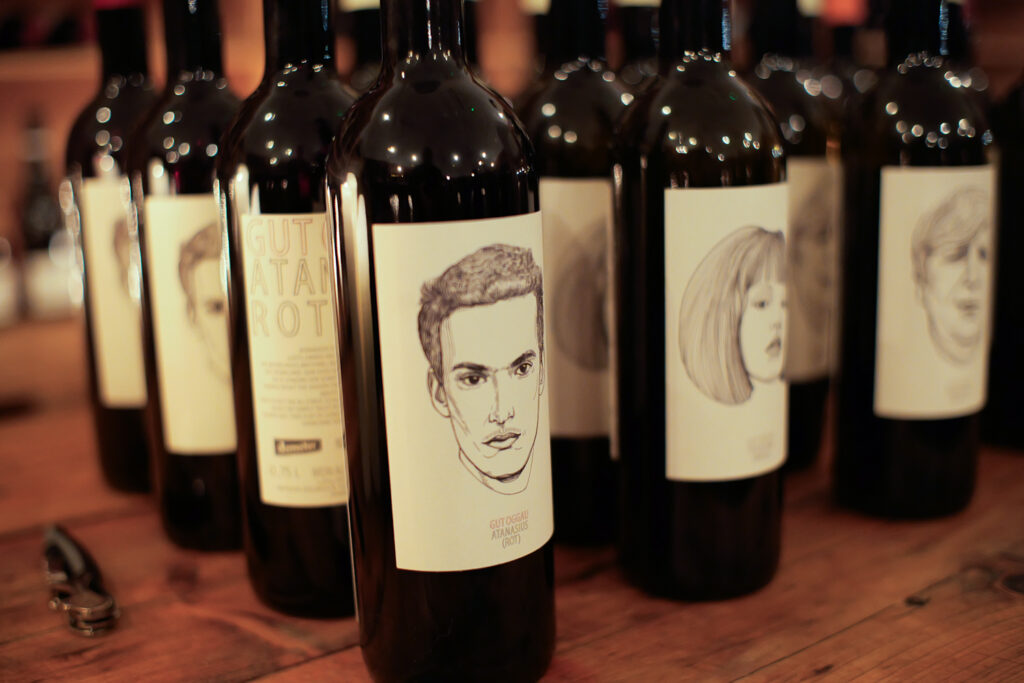
Gutt Oggau Anastasius 2025 Burgenland, Austria
This is from 7 parcels on the flatlands, on gravel and limestone soils. This is supple with red cherries and raspberries, with a distinctive stony character under the vivid redcurrant and raspberry fruit, with a savoury twist. Nice acid line. Lovely. 93/100
Gutt Oggau Theodora 2023 Burgenland, Austria
From gravel soils, this is youthful but has substance. Complex and textural with notes of honey, dried grass, lemon, wet stone and spice. Such presence, with nice tension and a hint of ripe apple. 94/100
Gutt Oggau Timotheus 2023 Burgenland, Austria
Limestone/slate soils. Full yellow/gold in colour. Powerful and textural with a bit of structure but also lovely pear and white peach fruit. Not super aromatic but with great concentration, showing a sense of harmony. This is quite beautiful. 95/100
Gutt Oggau Emmeram 2022 Burgenland, Austria
This is a rarity: a single variety. It’s Gewurztraminer, which is too predominant in a blend. Limestone soils. Slightly cloudy full yellow colour. Wonderful aromatics of grapes, pears and some white peach. Lovely freshness allied to depth with a nice acid line, and some warm spicy notes, dried herbs and chalky freshness. There’s a bit of grip here too. 94/100
Gutt Oggau Cecilia 2023 Burgenland, Austria
Limestone soils. On southeast-facing hils, a co-plantation of white and red varieties. Two-thirds white, one-thirds red, co-fermented. Pink in colour, this has lovely fruity aromatics of lime, cherry and herbs. The palate has good energy and focus with vibrant cherry and cranberry fruit, with subtle fine-grained structure and a hint of sour cherry. Lovely. 95/100
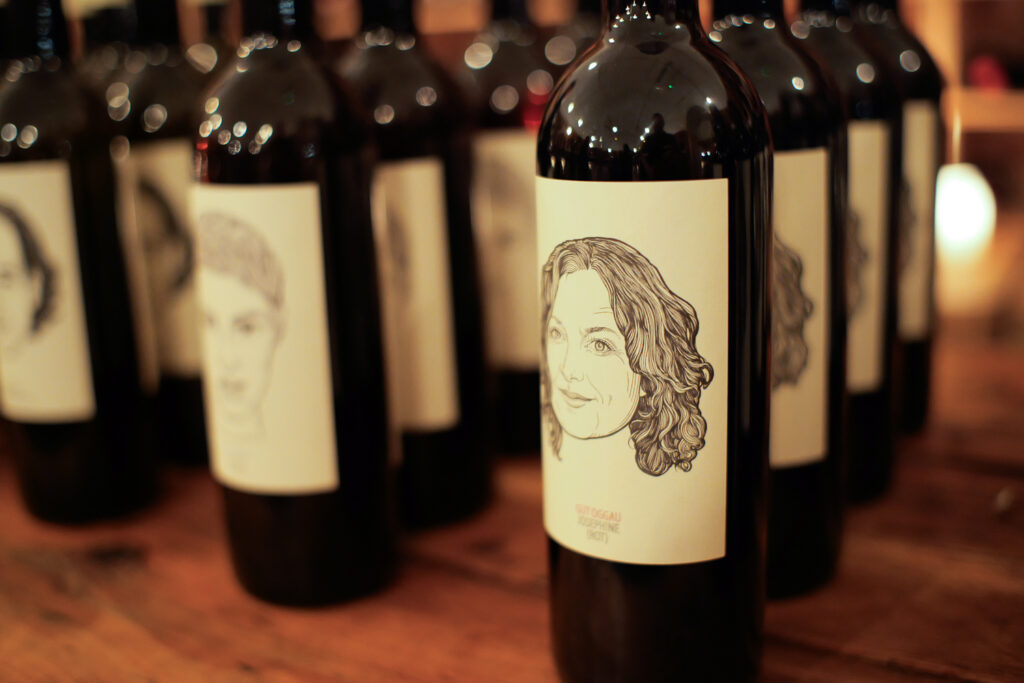
Gutt Oggau Josephine 2021 Burgenland, Austria
This is a parent generation wine, and it’s a blend of vineyards that they took over in 2011. These are south facing and are the warmest vineyards they own, and the main grape here is a teinturier hybrid called Roesler. Vivid but very fresh with nice acidity as well as chalky, stony minerality. Fresh with raspberry and blackcurrant fruit, showing lovely depth but also good freshness. 94/100
Gutt Oggau Joschauri 2021 Burgenland, Austria
From stonier soils at 300 m. This has lovely complexity and energy with nice purity. Floral, expressive red cherries and redcurrants. Quite an elegant style with modest structure and a nice acid line. Good intensity here. 95/100
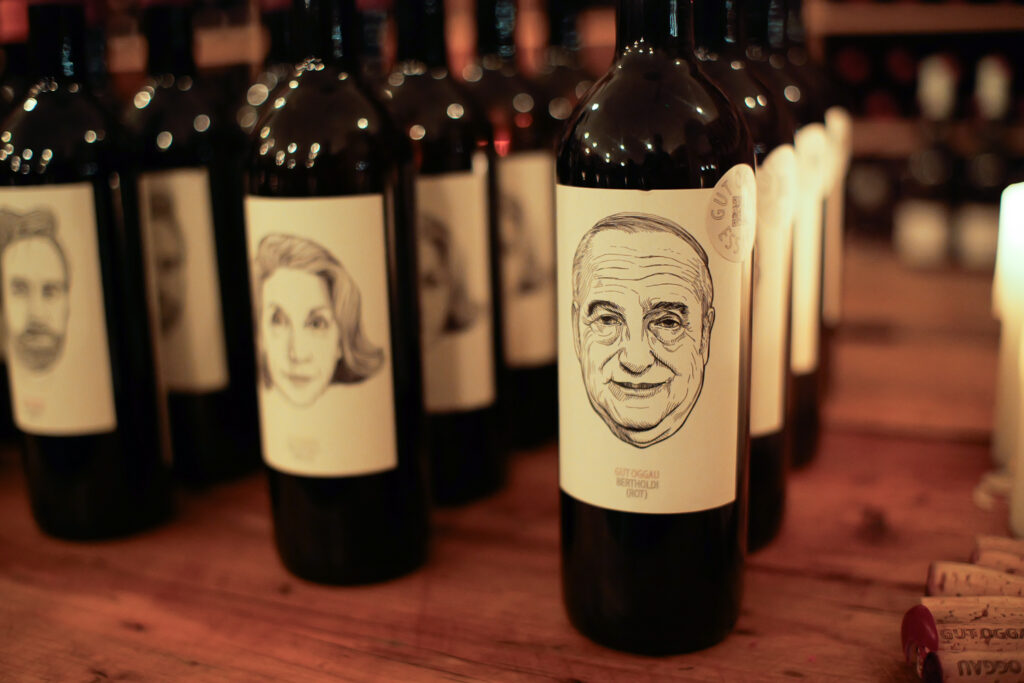
Gutt Oggau Metchtild 2022 Burgenland, Austria
This is the grandparents’ generation, from the oldest vineyards (70+ years), with a mix of limestone and schist. Whole cluster ferment then pressed with a 200 year old restored beam press. Complex, fresh and tannin with lovely energy. There’s a sense of harmony, with notes of orange peel and ripe pear, as well as some grip. Lovely ripeness with some tannins but no bitterness. Such lovely detail and energy. 96/100
Gutt Oggau Bertholdi 2019 Burgenland, Austria
This is Grüner Veltliner and Blaufränkisch, pressed with the old beam press. This has beautiful tension and energy with good acidity under the cherry and raspberry fruit, with wet stone and a touch of redcurrant. Supple and fine with a lovely flow across the palate. Such focus here, quite beautiful. 96/100
UK agent is Dynamic Vines


