Visiting Black Chalk, tasting current releases and the exciting 2025 base wine blends, at this superb English sparkling wine producer
Black Chalk are one of the most interesting English sparkling wine producers, and they’ve made some impressive wines since their debut vintage in 2015. For the first few years they were made at Hattingley Valley where winemaker Jacob Leadley was working, but he left in 2018 to pursue Black Chalk full time, and was joined by Zoë Driver who’d been working with him at Hattingley. They have now been working together for 10 years, and I visited with them both to look at how they are progressing. (For more background on Black Chalk, there’s an extensive interview on wineanorak from a visit in 2022.)
They now have 12 hectares of estate vineyards across three sites, plus a small circle of vines behind the winery. Production has stepped up from 7000 bottles in 2015 to 120 000 bottles, so they’ve had to source more grapes. Initially, they were considering planting more vines. ‘We hummed and harred about what to do,’ says Jacob, ‘but the commercial reality is that while there is so much fruit around it makes no sense to plant.’
So they went to Kent and explored a lot of sites, and explored some more in Hampshire. They have decided to focus on chalk, and they have purchased some fruit from the Itchen Valley in Hampshire, and also from the Stour Valley in Kent, near Maidstone. The only wines that have a blend of all the vineyards are the classic white and rosé.
Prices for fruit move around a lot depending on the vintage, but there’s more fruit around than ever. ‘You can be a lot pickier as a buyer,’ says Zoe. ‘Working with fruit you are growing yourself is an ideal, but we needed more fruit, and the next best thing is to work with people who have a similar ethos.’
‘We believe that there is something special about our vineyards, and we wouldn’t ever move away from them,’ says Jacob. But it works for them to buy fruit from elsewhere as well, because their site in a tricky year can be very expensive to farm.
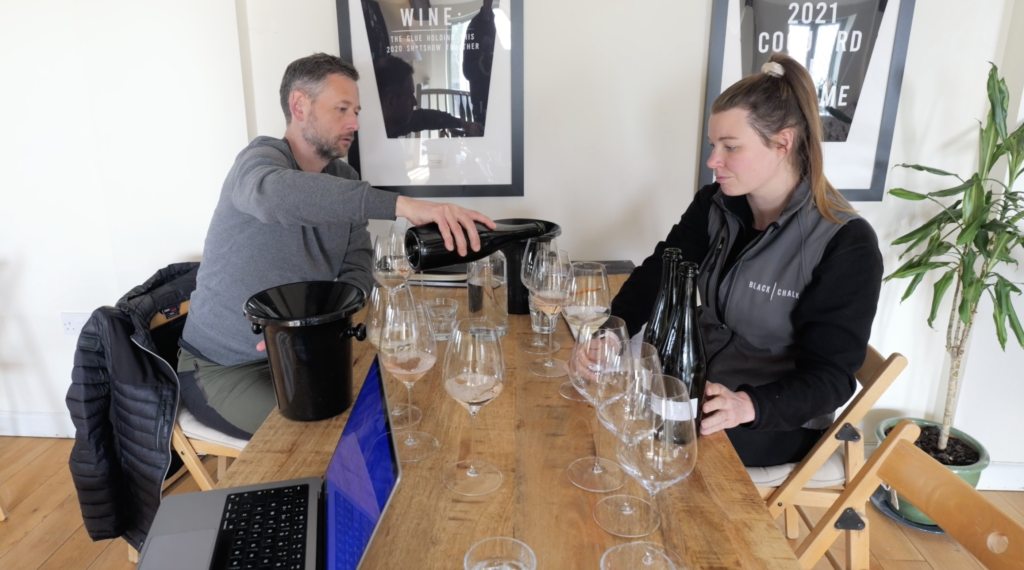
It was great to be able to try 11 of the 13 final base wine blends from 2025, which is looking like a very exciting vintage. These will be bottled in June. Sugars were high, and acids all stayed where they should be, between 9 and 13.5 g/l. The sugars were a concern so they picked a month earlier than they would in a normal year. ‘From day 1 it has been about trying to celebrate wines that are truly English,’ says Jacob. ‘We are looking for fruit forward wines and aren’t chasing creamy, toasty autolytic characters. We do no malolactic.’
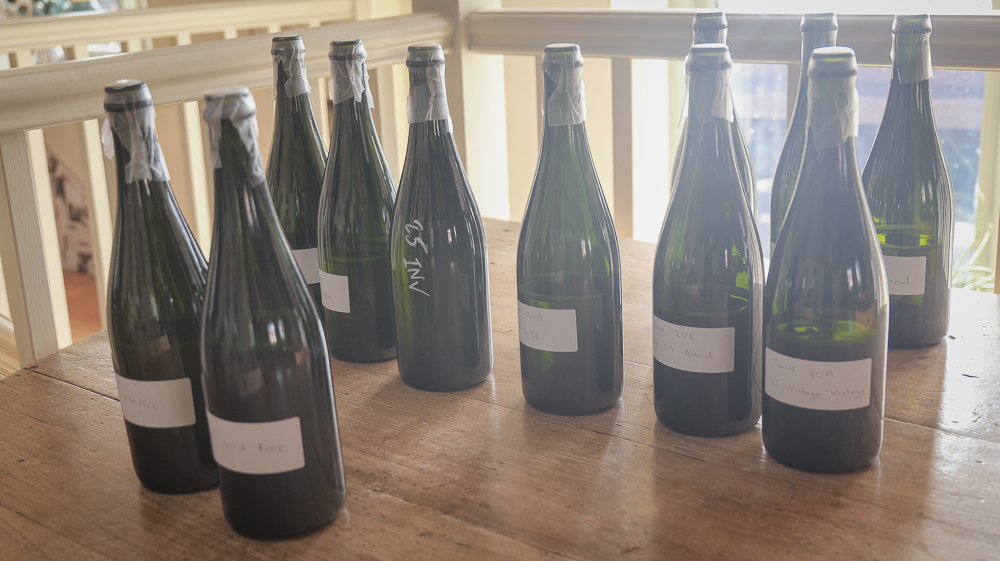
2025 base wine blends
Classic Cuvée
45 different components, mostly stainless steel. 6% old oak. This is bright and focused with high acidity prominent, but also some riper pear and peach notes alongside the citrus, and just a touch of cherry. So much flavour and delicacy here.
Wild Rose
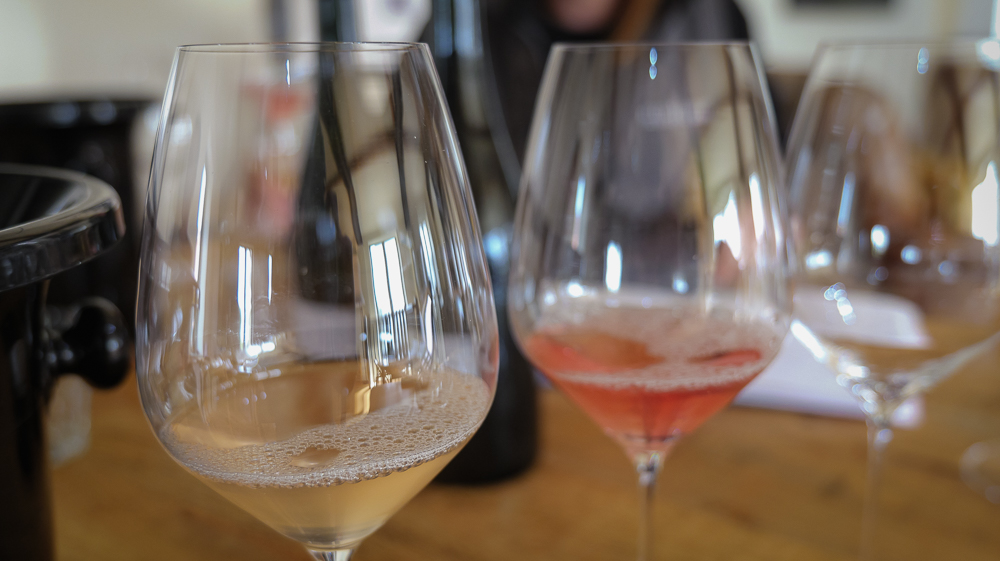
Nice pink colour (some of this will go with stabilization). Good acidity again, but lovely freshness and brightness and flavour. Cherry and pear with a strong grapefruit line, too. Lovely fruitiness with some nice flesh to the palate. Very stylish.
These two will be on lees for 24-30 months. And then there’s time on cork. They have just moved over to Amorim and all the premium wines are sealed with NDtech, while the core range is on the regular two disc corks. They found DIAM, which they used at Hattingley, kept the wines too closed. It didn’t allow the wine to open and develop. They want the Classic and Wild Rose to have 6 months under cork, and preferably a year (which is what the current release, 2022, has).
89.6
89.6 is a new wine (first vintage will be 2020, not yet released), and this is how many million years old the chalk they grow on is, and this wine is only made in magnum. It’s a Blanc de Blancs, and it’s a blend of stainless steel and oak (four different yeast strains in four different barrels). 27% old oak here. Beautiful aromatics here, with spicy citrus and some mineral and apple notes. The palate is concentrated, linear and fine with great acidity and lovely crystalline citrus notes, with ripeness, freshness, energy and salinity. This is exceptional.
Paragon
30% oak foudre. Blanc de Blancs. Really refined aromatics of crystalline citrus with nice purity. Great concentration on the palate with chiselled but concentrated citrus, showing real class and refinement. Everything is pulling together well here, with lovely energy and focus, but also some depth. Again, this is really exceptional.
Inversion
Blanc de Noirs. Based around 777 clone, with some 521 and a bit of Pinot Meunier. Pinot grown in chalk in Hampshire, 2.5% in wood. A wine built around structure. Taut, lively aromatics with redcurrant and cherry as well as some citrus. Lovely energy on the palate with vivid citrus and cherry notes, as well as some slight sappiness. Lovely energy here. Superb.
Hide
Another new wine, and it’s a single-vineyard wine that’s a classic blend of all three main varieties (68% Chardonnay, 12% Pinot Meunier, 20% Pinot Noir). It has 50% stones in the soil, so it needs careful management. But there’s a natural balance here. 8% old oak. This is spicy, taut and linear with great concentration to the citrus fruit, with some wet stone minerality and good acidity. Amazing mid-palate intensity here. Will be quite special.
Pinot Meunier
For the first time they are doing a Pinot Meunier blend. It was a Meunier year: really lovely textured bright fruit, and all the clones were showing well. Has some pink colour, but this will lessen and this won’t be a rosé. 6% old oak. This is so supple and bright with mandarin and lemon and nice texture. Open and delicious with a sappy green note in the background. This should make a lovely fruity Meunier with real freshness and drinkability.
Vintage Vintage
This is a selection of best tanks from the vintage. This is a wine that they haven’t made before and may end up making this only once every ten years. Name to be confirmed. No oak. Bright, focused and linear with amazing precision and keen acidity. Lovely wide dynamic range to the flavours: this shows crystalline citrus and apple, and it’s really linear. Would work well with longer time on lees.
The following three wines are are all on chalk. Small volumes of all three, probably to be sold as a trio.
Stour Valley Chardonnay
This is from Kent. Beautiful matchstick reduction on the nose (CX9, a high nitrogen need yeast). Lively citrus fruit. The palate is bright and focused with real personality to the lemony fruit. Real focus and brightness here. Mineral and precise with nice personality and energy.
Itchen Valley Pinot Meunier
Just the other side of Winchester, Hampshire. Pure, linear and bright with subtle red cherry fruit and a sense of delicacy. There’s a purity and weightlessness to this. Should produce a very elegant wine, with subtle red fruits.
Test Valley Pinot Noir
This is from one of the estate vineyards, and it is clone 521. This is bright, linear and sappy with lovely red currant and cherry fruit, as well as some lemony brightness. Juicy and focused.
The blending process took about a month, and they did over 100 blends before they came up with these 13 wines (we just tasted 11 of them here).
While we were in the winery, some of these base wines were being prepared for bottling and undergoing cold stabilization. For the geeky, here’s the protocol. Set tank to -3.8 C, turn the agitator on, seed with cream of tartar at 4 g/l, and then turn the agitator off after 48 h, and turn the chilling off. After a further 24 h filter through a lenticular filter at 0.6 microns. Then the wine is ready for bottling. This is a belt and braces approach: you can do it at -2 C and it will probably be fine.
Bottled wines
2022 is the current release. This was a hot vintage, but it resulted in the lowest pH wines they have ever made: the Wild Rose was pH 2.78 and the inversion pH 2.76.
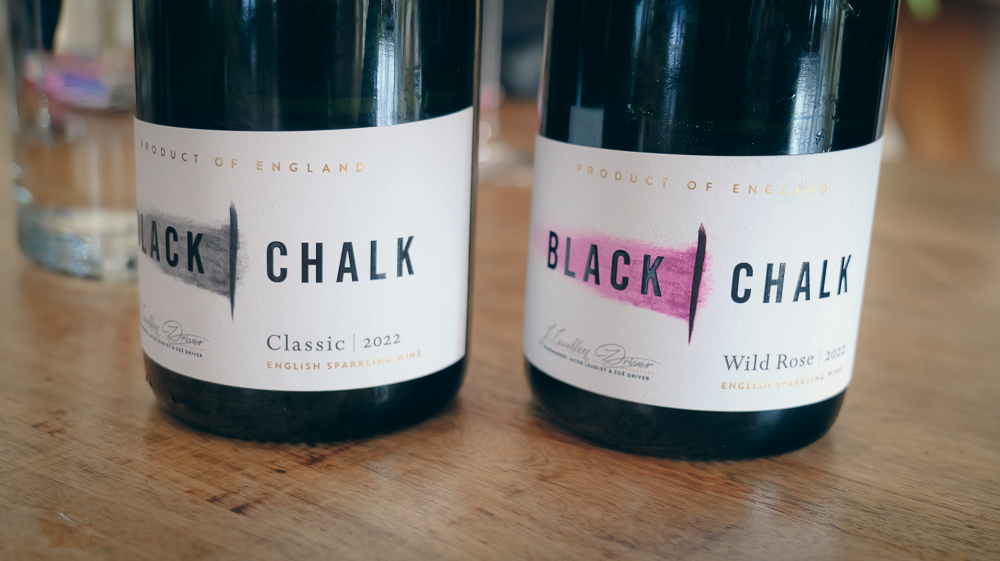
Black Chalk Classic 2022
46% Pinot Noir, 42% Chardonnay, 12% Pinot Meunier. 25 months on lees, then a year on cork. Total RS is 5.8 g/l, with a 4.8 g/l dosage (use beet sugar with the same wine). This is concentrated, juicy and fine with crystalline citrus fruit. Such precision and focus with a slight salinity on the finish. Lovely fruit purity, keen acidity, and great balance. 93/100
Black Chalk Wild Rose 2022
57% Pinot Noir, 36% Pinot Meunier, 7% Chardonnay. 1.8% of the Pinot Noir is still red wine. 2.78 pH, 6 g/l residual sugar. Very pale in colour. This is bright and fresh with nice redcurrant and lime character. Pure and linear with great acidity, showing amazing precision and focus. Tart, but beautifully balanced, this is such a chiselled wine. 92/100
This is the second vintage of Paragon and Inversion, which were first made in 2020, and then skipped 2021.
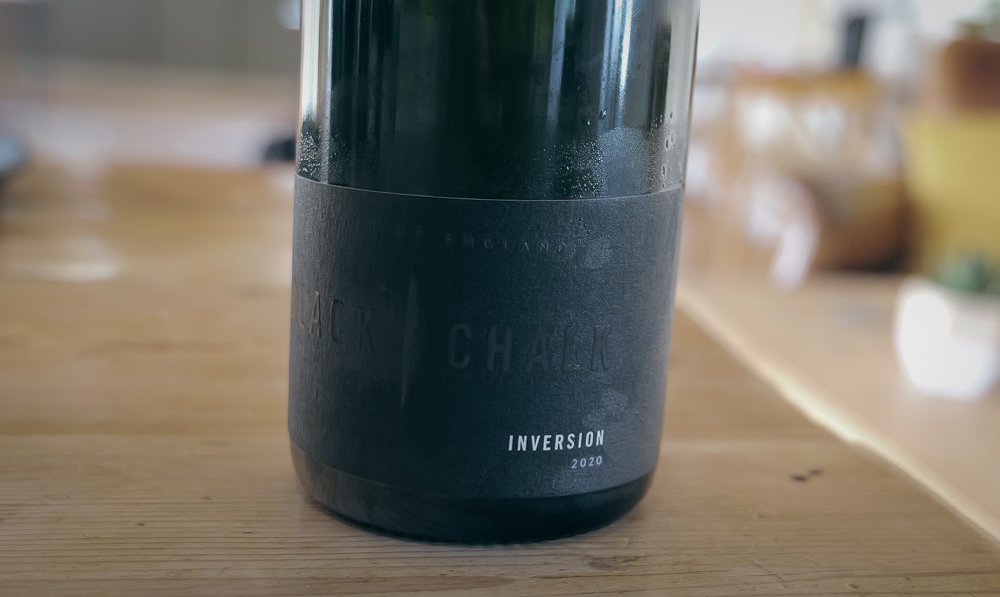
Black Chalk Inversion 2022
Pinot Noir. The lowest pH wine at pH 2.76. Has had just a month on cork after 36 months on lees. 6.5 g/l rs. Lovely aromatics of cherry, fennel and lemon, with real complexity. The palate has complex herbs, mandarin, lime and cherry with amazing tension and precision. So juicy and fine, showing its Pinot character beautifully. Really impressive. 95/100
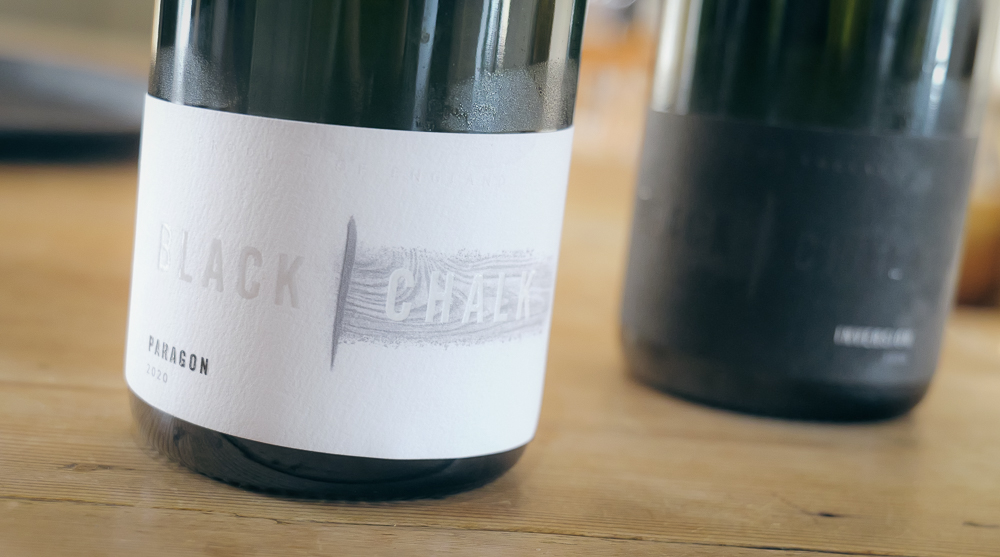
Black Chalk Paragon 2022
This is pH 2.88, with an rs of 7.3 g/l. This is concentrated and linear with a slight saltiness as well as crystalline citrus fruit. Apple, pear and even some peach notes as well as the ripe citrus, with layers of flavour. Crystalline and taut with lovely precision. Serious stuff. 96/100
Black Chalk Hide 2021
Tricky vintage, debut for this wine. This is the one wine they do where the blend moves around. Will probably sit above Paragon and Inversion. Single vineyard estate wine with 50% stones. 4.2 g/l rs. Blend of all three classic grapes, 42 months on lees. This is pure, fine and linear with lovely lemony fruit core and then amazing texture, with pure fruit and then a slight mineral focus. The key to this is amazing purity and elegance. By the time this has spent more time on cork it will be very special. 96/100
Black Chalk 89.6 2020
56 months on lees, but so far just a month on cork. Chardonnay, only in magnum (800 magnums). 20% small oak (used) with different yeasts in each barrel. 80% stainless steel. 7 g/l rs. Fine, crystalline aromatics with bright lemon and lime but also some richness. Fresh and linear with subtle toasty hints and lovely crystalline citrus fruit on the palate, showing nice texture and intensity. Very fine and expressive with nice intensity on the finish. This is really serious. 96/100 (will be around £150 for the magnum, which is great value)
A short film of the visit: