
Exploring speciality coffee and its parallels with fine wine: a visit to Fazenda Mió in Brazil to catch the harvest
There are many parallels between speciality coffee and wine, and that’s one of the reasons I was really excited about this deep dive into the world of coffee. I’ve often approached wine through my background as a science person, but also blending this with the curiosity of a geek. I think the combination of approaches, enthusiasm and analysis, work well, and this is the way I was coming to coffee. Dig deep into the details, but keep the wonder.
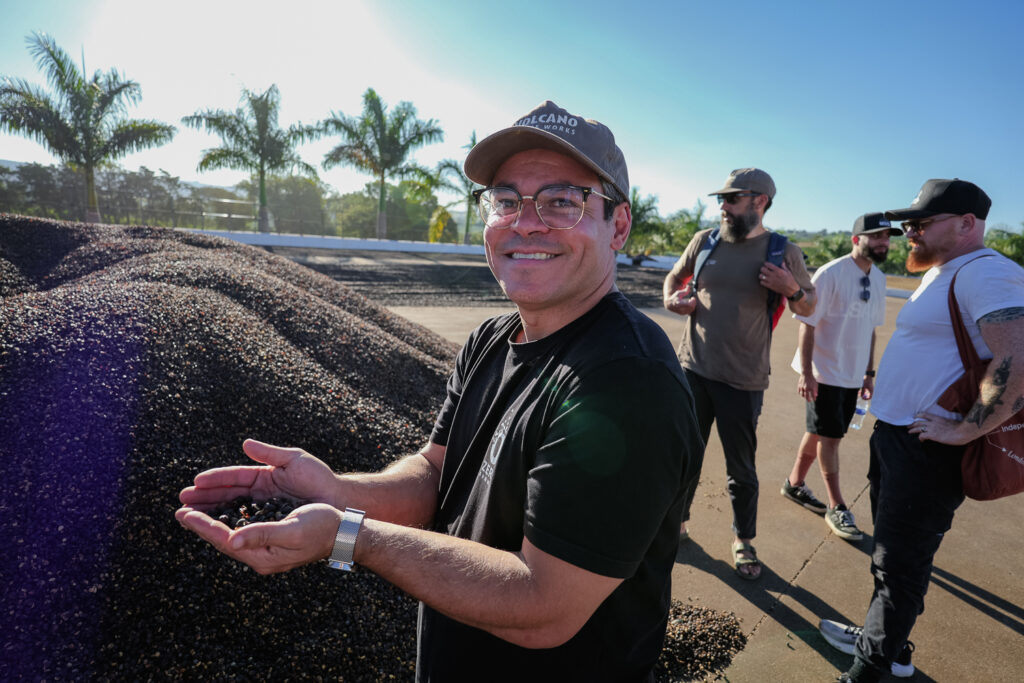
This was also my first time in Brazil (apart from transiting a few times through Sao Paolo). I was joining a buyers trip from Volcano Coffee Works, a speciality roaster based in Brixton, London. Volcano also has a sister company, Assembly Coffee.
We travelled to Fazenda Mió, in Monte Santo de Minas, 200 miles north of São Paolo. This area in the southwest of Brazil, Minas Gerais, is the heart of coffee production in Brazil, the largest coffee-producing nation. Brazil produces just over 3.5 million tonnes of coffee a year, which is around one-third global production.
The next few days were to prove to be a deep immersion into the world of speciality coffee, which has many parallels to wine.
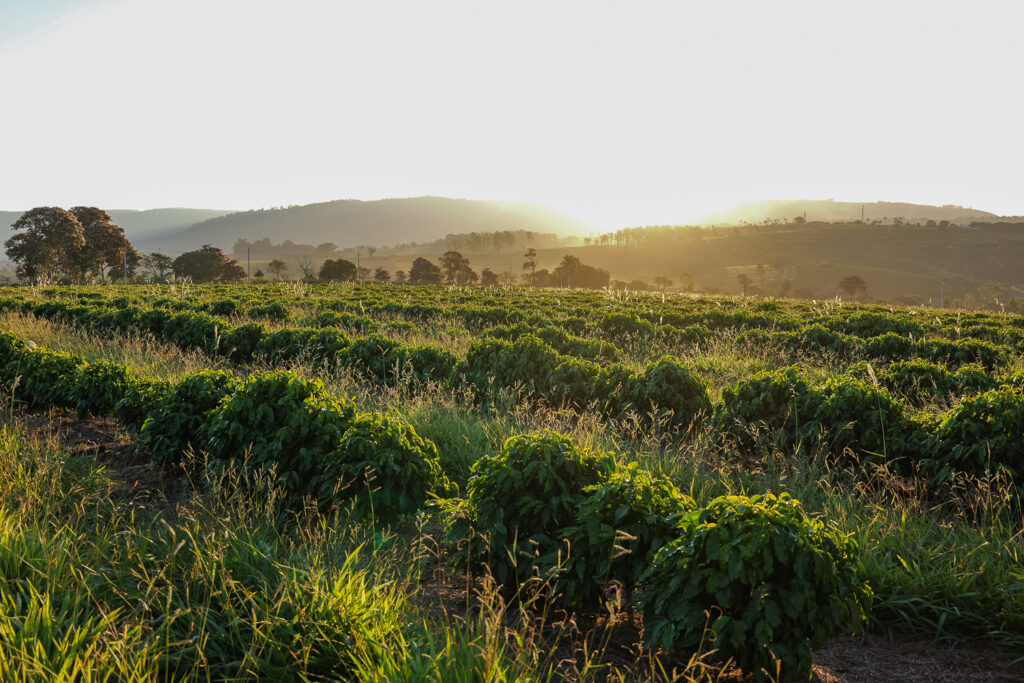
First, some details about the farm. Fazenda Mió is at altitude (900 to 1100 m). It’s a big farm with over 2000 hectares of land, and some 665 hectares of coffee plants (of which 63 hectares are grown with trees in a shade coffee set-up; more on this later). They are forward thinking, and have invested lot in a research program, including hiring a leading coffee researcher Dr Lucas Louzada, who previously ran a team at Espírito Santos university.
It’s June when we visit. This is winter in Brazil, but the winters here are dry and sunny. The seasons here aren’t so pronounced, and the winter temperature is comfortable. It’s ideal conditions for drying coffee outside, which is convenient, because this is peak harvest time. At Mió, harvest runs May to August, and they deliberately cultivate early, medium and late varieties of coffee to spread the harvest out.
It rains quite a bit here, but most of the 1700 mm annual rainfall is when the coffee plants need it, in December to February. There isn’t much rain in the period June to August, which is great for the harvest and the subsequent processing steps that are vital to coffee production.
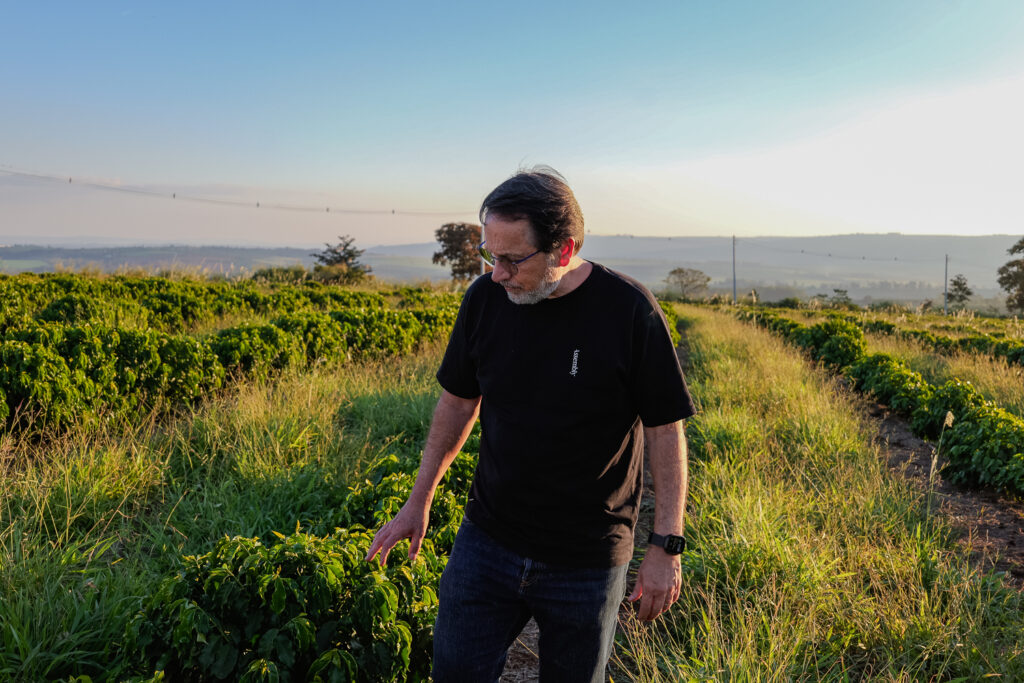
Owner Carlos Pellicer, his wife Renata and his daughter Ana Luiza Pellicer were our hosts.
Carlos explained the layout of the farm, and how they have done aerial mapping of all the coffee plots, using precision agriculture approaches to map the natural variation across the property. They then work with this information in designing how to plant and then manage the coffee plants. Matching variety to plot, and then using management techniques to take natural variation into account sounds very similar to precision viticulture approaches in wine.

The starting point for wine is the grape berry, the fruit of the grape vine. This is a perennial plant whose growth form has been adapted in various ways to produce a good yield of healthy grapes. The parallels with coffee are immediately obvious, because coffee also begins with a fruit, the coffee cherry, that grows on a perennial bush. Good wine begins with good grapes, of more-or-less homogeneous ripeness; good coffee begins with healthy cherries that are either picked in tranches to obtain homogeneous ripeness, or which are sorted after picking to eliminate as much variation as possible.

The climatic needs of grapevines are quite different from coffee. Coffee is grown in 60 different countries based in the tropics, in a band of latitude that ranges from 30 °N to 30 °S. Altogether there are some 11.5 million hectares of coffee plantations, many of them on a small scale. Wine is typically grown in latitude bands 28-50 °N, and a corresponding band in the southern hemisphere that’s shifted northwards a bit. There are 7.3 million hectares of vines, and they prefer a moderately warm climate, without too much growing season rainfall. Coffee likes it a bit hotter, and doesn’t mind growing season rainfall so much.
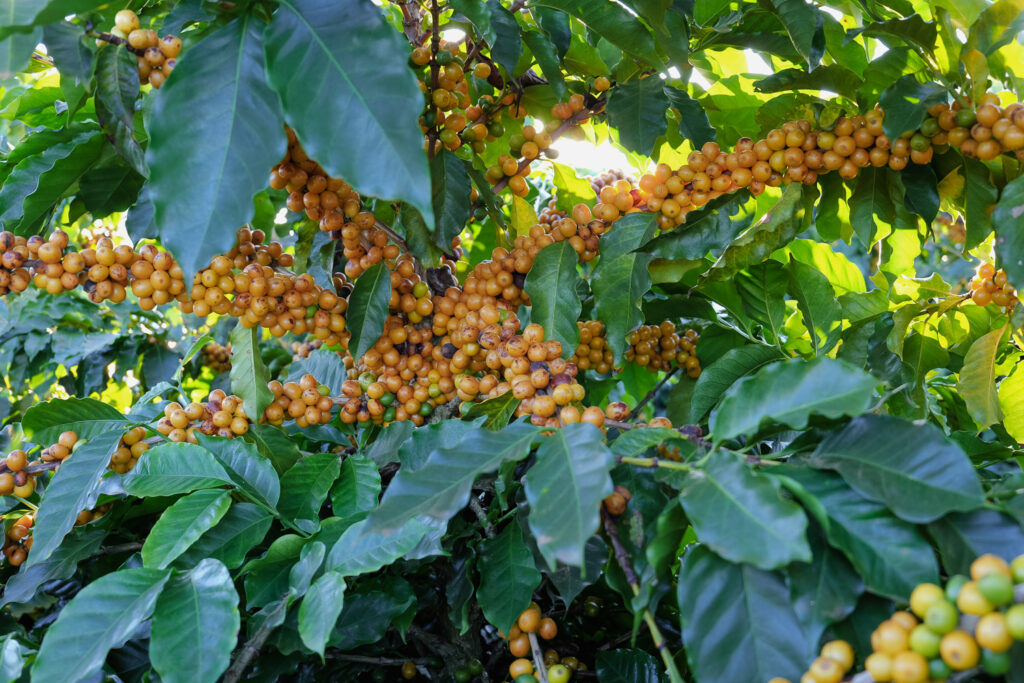
Coffee bushes begin yielding after 3 years, and then they are typically pruned every few years. After 9 years they are pruned back to the trunk, and then grow again. They have an active lifespan of 20 years, but can still be producing after 50 years. Mió have bushes that are 70 years old. But while vine age is prized with grape vines, for coffee it seems less important.
The big difference between wine and coffee is that for wine, the seeds aren’t wanted; we want the juice, pulp and (in some cases) the skins. These are fermented by yeasts, and then possibly also by bacteria, and the finished wine is then aged for a while before bottling, and arrives to the customer in its finished state.
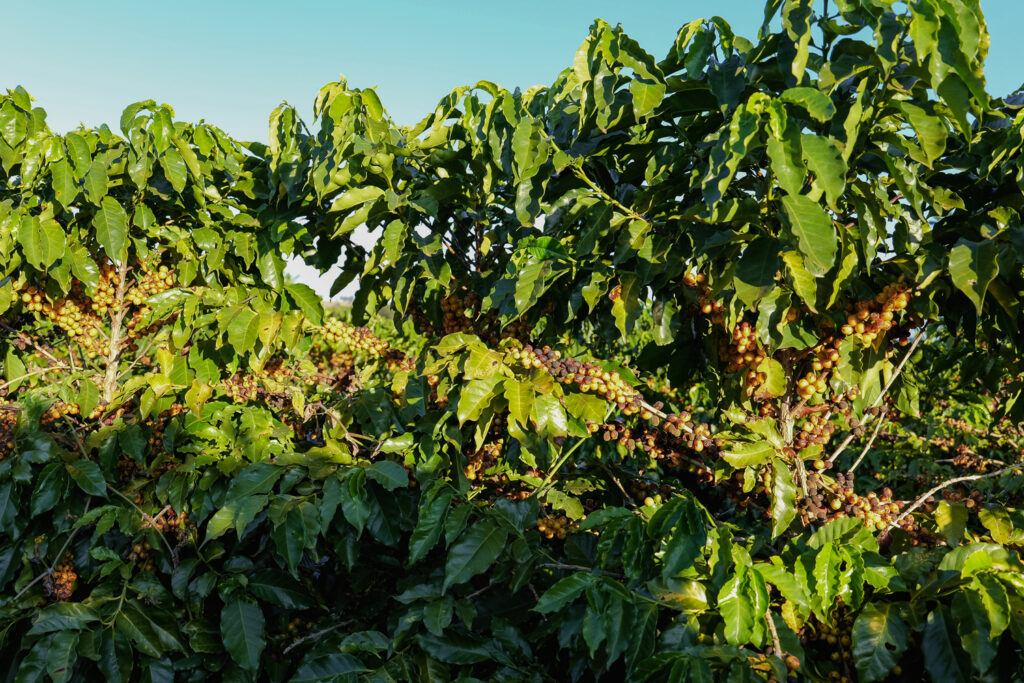
For coffee, the pulp, skin and juice of the cherry isn’t what we are interested in. Instead, it’s the seeds, and coffee cherries have two of them. Fermentation is also involved in coffee processing, but its role in affecting flavour is less direct than its role in wine. Still, it’s important. There are a range of ways of processing coffee post harvest, and this impacts the flavour considerably.
After processing and drying, we are left with the green beans. These are packed and then delivered to the customer, where they are roasted in market. This is a very significant step that impacts flavour greatly, but it doesn’t happen at the coffee farm. Then there’s another step: brewing, which is either done by the customer or the retailer, and is another area where the flavour can be affected.
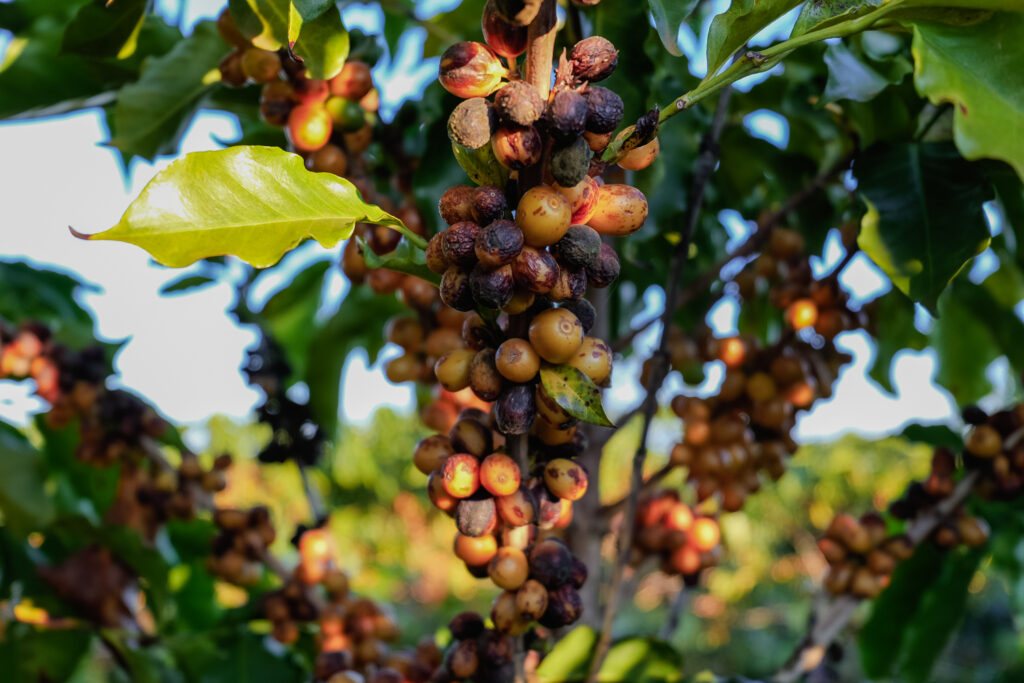
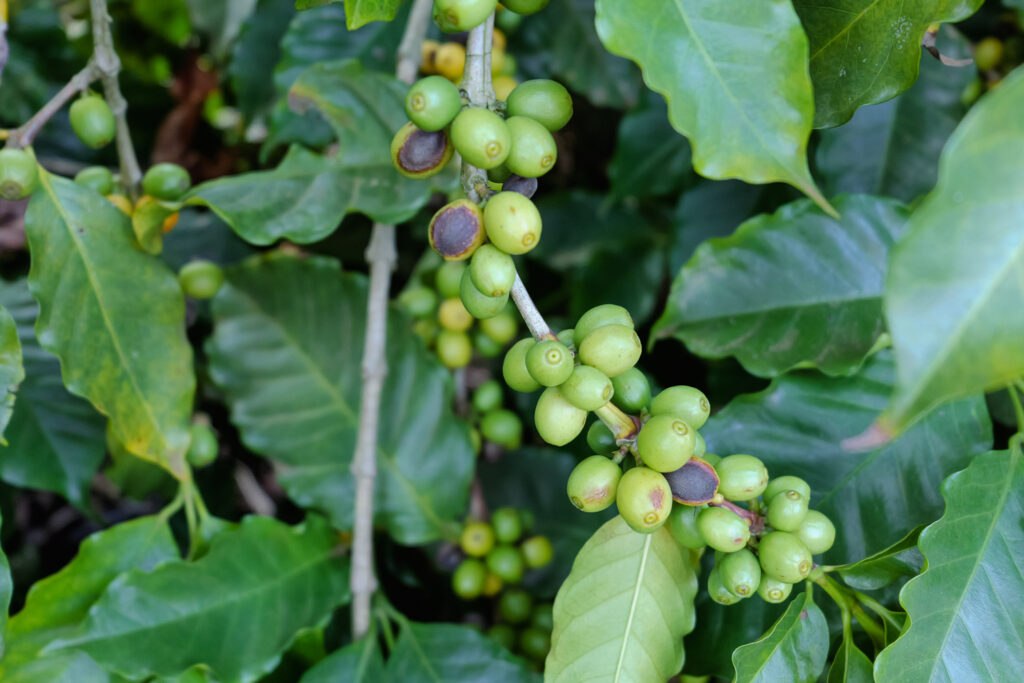
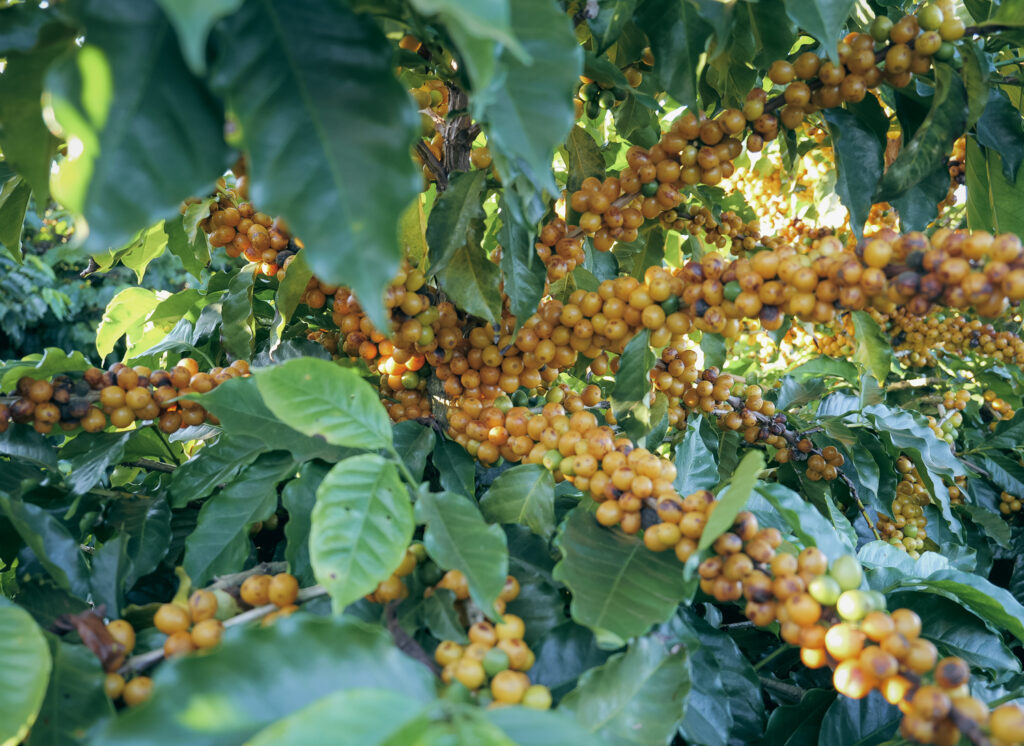
When it comes to harvest, it is almost impossible to perfectly homogeneous ripeness on the same tree, explains Ana Luiza Pellicer, as we look at some coffee plants that are just about to be harvested. ‘You always have ripe, overripe and underripe on the same tree.’ She adds that over-ripes are good for the natural process (more on this later), but you want to minimize the greens.
With wine, hand picking is prized, but often this isn’t any better than machine harvesting when it comes to coffee. Some of the hand-picking is done without selecting the berries: the whole branch is picked in one go, and this is worse for the tree than machine picking. Selective hand picking, going through and picking just the perfectly ripe cherries in tranches, is very good. ‘But it takes forever,’ says Ana. ‘And you can’t find labour.’ The first machine harvesters were introduced in the 1960s, and the technology has improved a lot.
For some countries they separate cherries by ripeness in the field by selective picking: this is common in Panama and Ethiopia. In Brazil, the selection of ripeness levels is done at the washing stage.
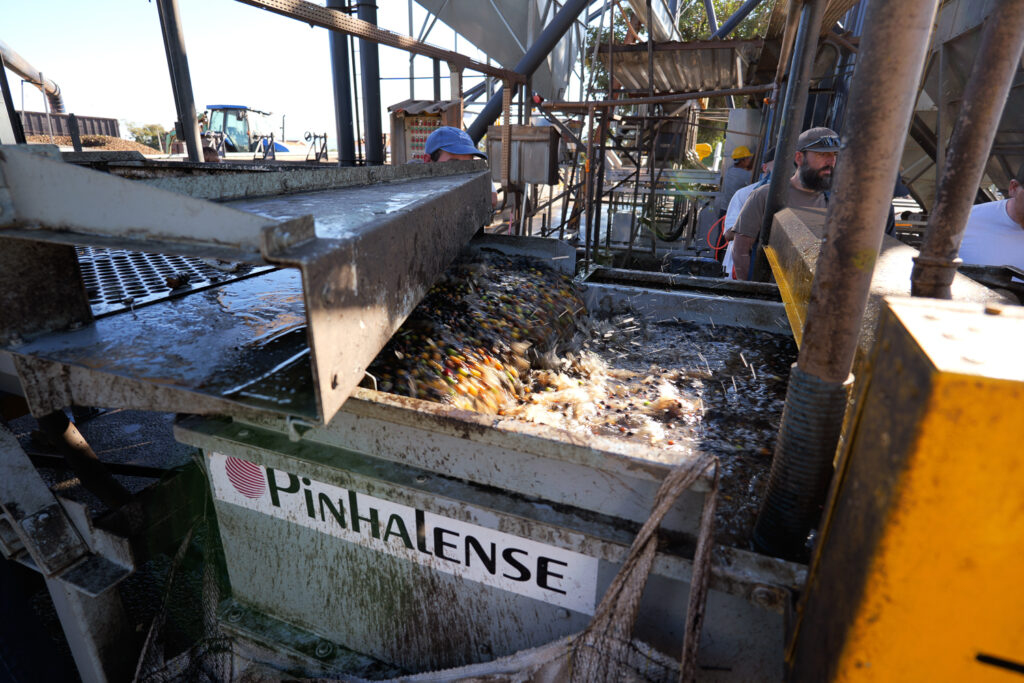
Lucas Louzada took us around to have a look at the way that the harvested coffee cherries are processed. Mió have a large range of processing approaches, and are particularly innovative. This is an area that’s perhaps the most critical stage in terms of the formation of flavour compounds in the bean, and it can get quite technical and complicated.
Any coffee text will tell you how there are three ways of processing coffee: dry (natural); washed (wet) and semi-dry (honey). Dig a little deeper and the reality is a lot more complicated.
The goal of processing is to end up with raw coffee beans at the required moisture level (around 11%) that can be bagged up and sent to market. Good processing results in beans with lots of interesting flavour precursors, that are then revealed through the roasting process, and an absence of defects. And processing choices should be made bearing in mind the starting point: what are the cherries that have come in like?
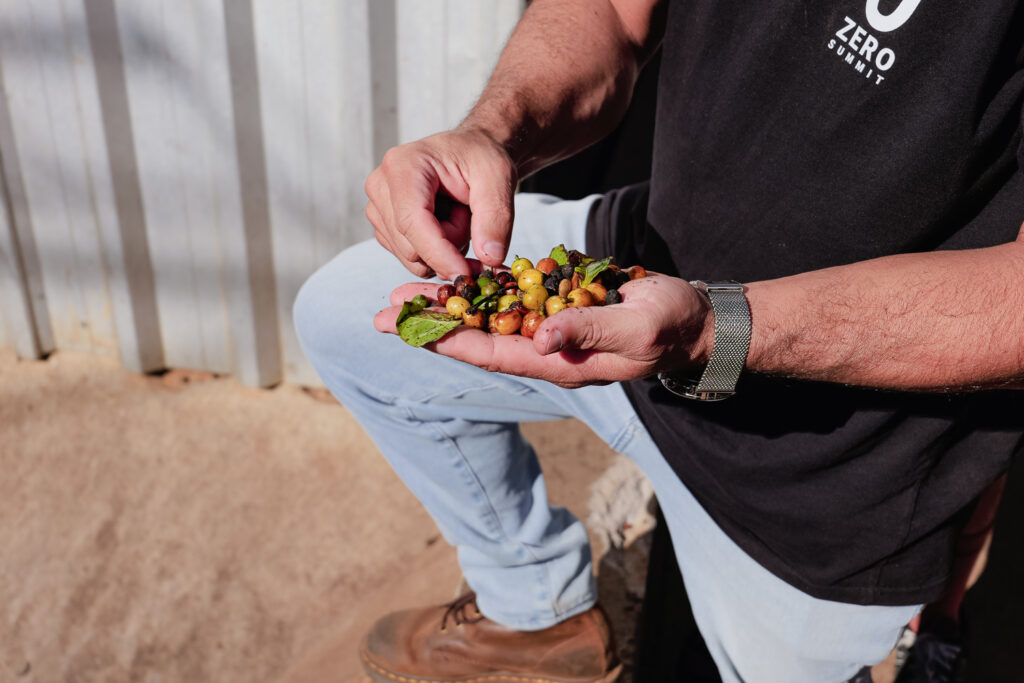
The cherry has several layers of tissue. On the outside we have the skin, and then the main body of the fruit, called the pulp. Below this is the mucilage layer, and then surrounding the bean we have the parchment and the silver skin. Each cherry will normally have two beans. The processing phases confer different flavour precursors to the beans. And these beans remain metabolically active during the processing, too.
Fermentation is key to processing, and it has two main functions. It removes the polysaccharide-rich mucilage layer (in particular, it breaks down pectinases), and it also modifies the bean composition. The microbes can make esters, organic acids, aldehydes and higher alcohols which then permeate the bean. The way that the pectins in the mucilage are broken down affects the flavour: there is a lot of flavour leaching into the bean, and also the metabolic processes in the bean change.

Dry (natural) process
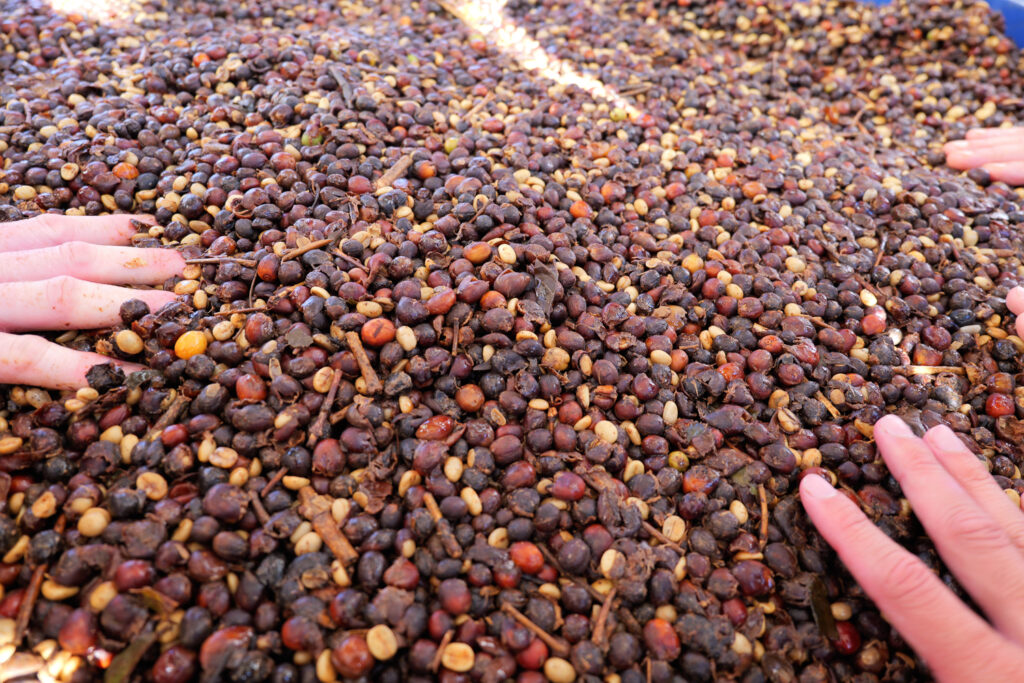
This is commonly used in areas with limited water access. Here, the intact cherries are dried in the sun after de-pulping, leaving the mucilage layer intact. There are lots of polysaccharides and minerals in the mucilage that act as precursors of volatile organic compounds. The cherries are then dried for 14-30 days, and there’s a spontaneous fermentation process in the berries as they dry. Once they are dried to around 11% moisture, they are hulled to leave just the bean.
Wet (washed) process
The beans are pulped and then sorted by weight in water, and then sorted by size. After this they are fermented in water for a short period (at Mió typically 72 hours) to remove the mucilage, after which they are dried.
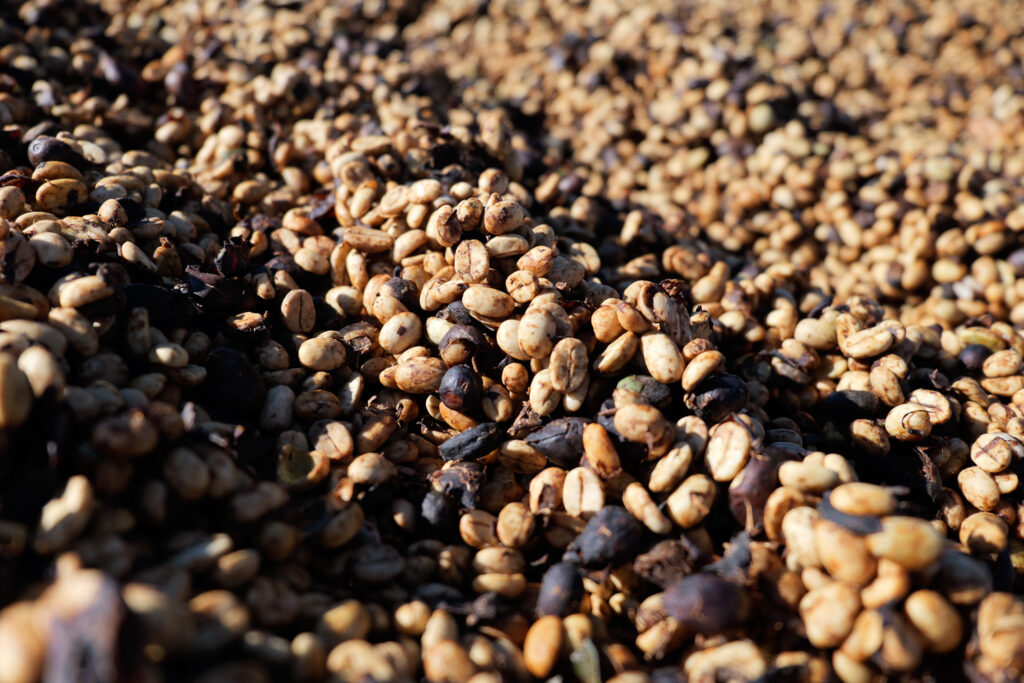
Semi-dry (honey) process
The pulp is removed and some of the mucilage is removed before drying. The extent to which the mucilage is left means that honey can be divided into white, yellow, red or black honey process, with the former removing most and the latter very little. Leaving some mucilage prolongs the fermentation stage.
There are many variations on each of these themes. Lucas showed us a tank that he’s used for carbonic maceration. Just as with carbonic in wine, the intact coffee cherries are sealed in an atmosphere of CO2, and internal enzymatic processes and fermentations take place in the cherries themselves.

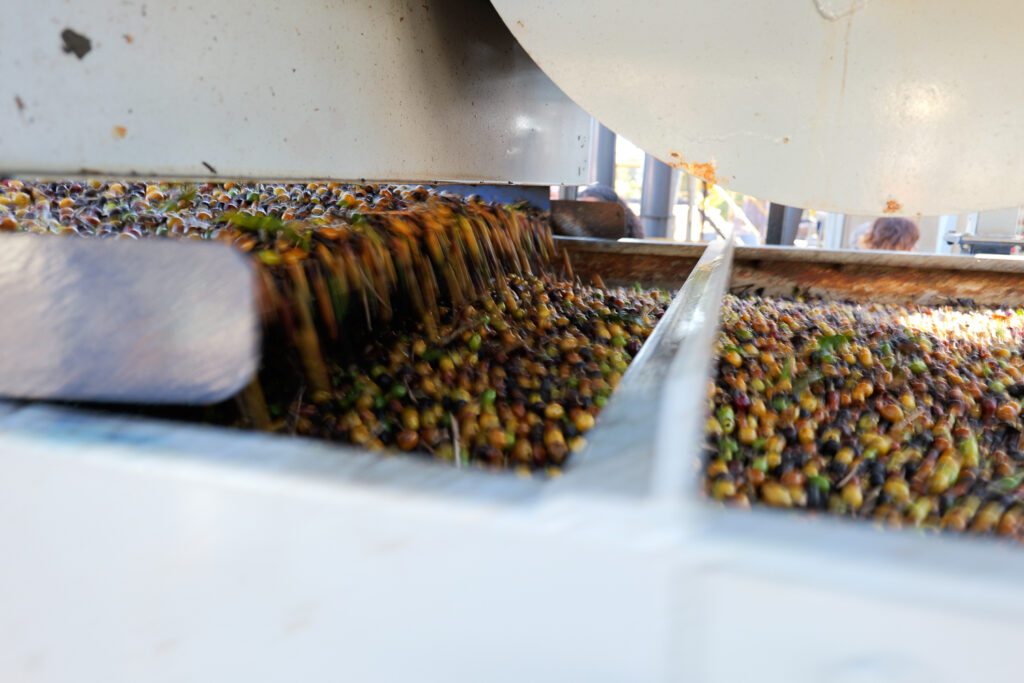
The technology in the wet mill is impressive. They use a water floating system that separates the cherries out by density, and then they put it through an optical sorter that works on colour.

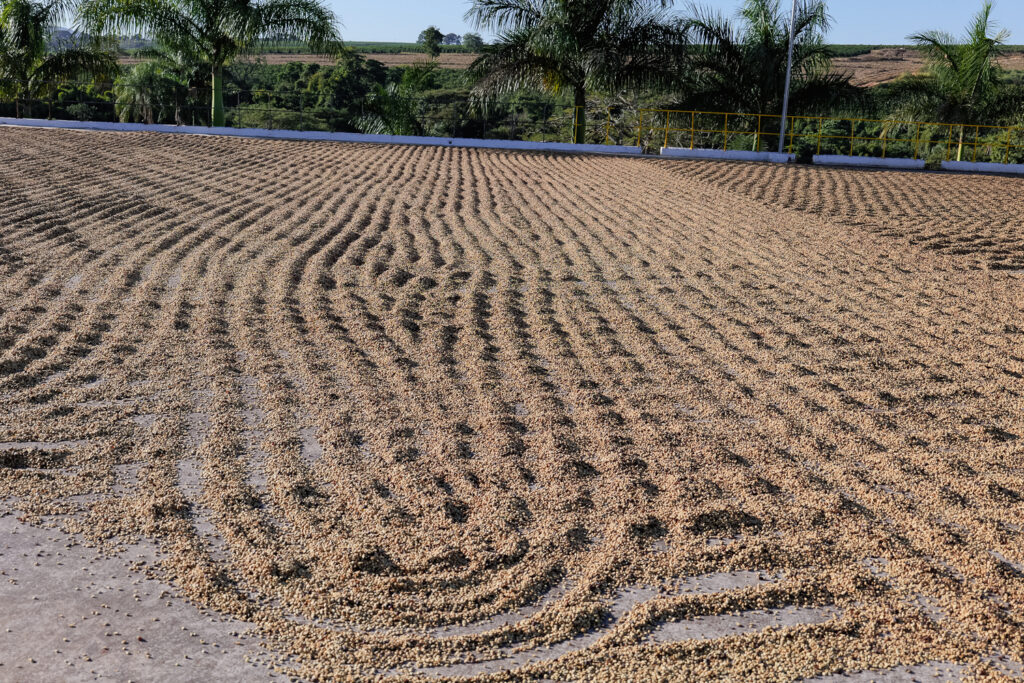

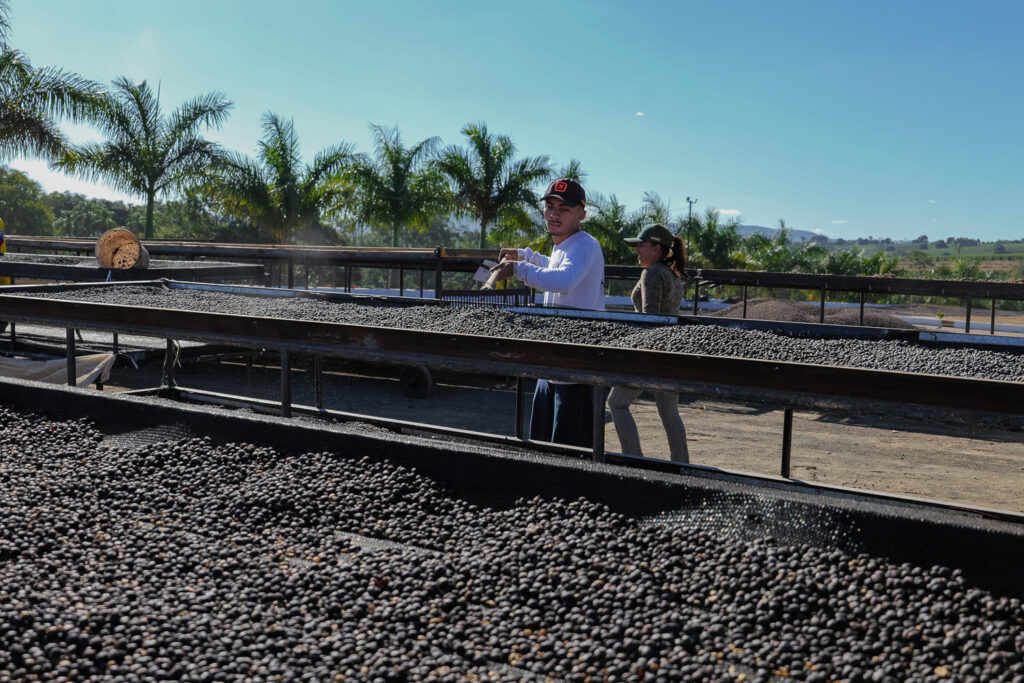
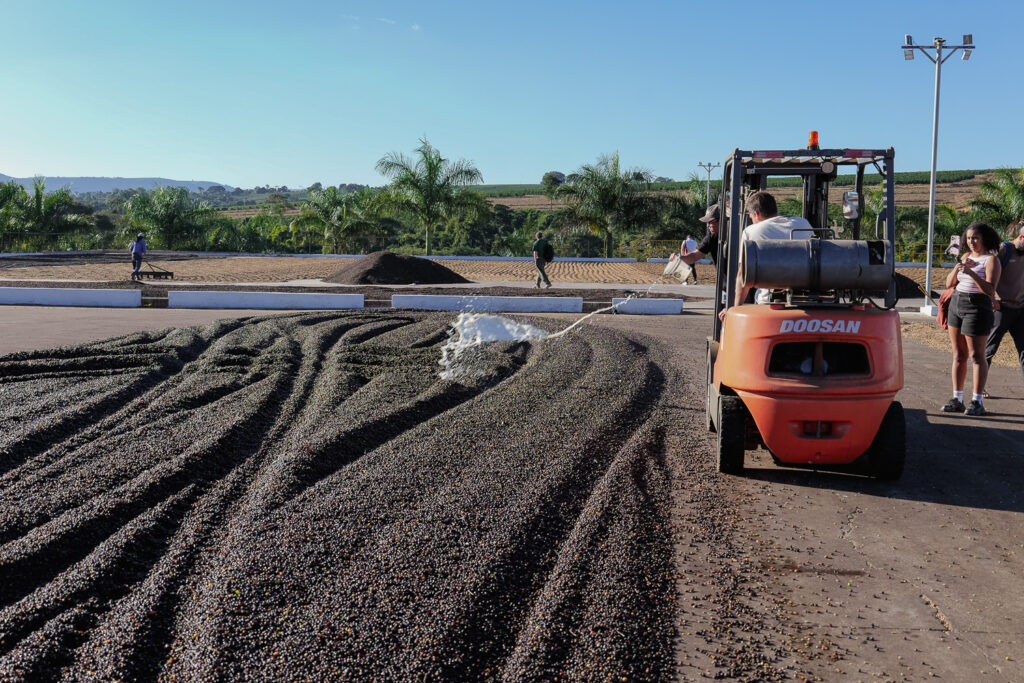
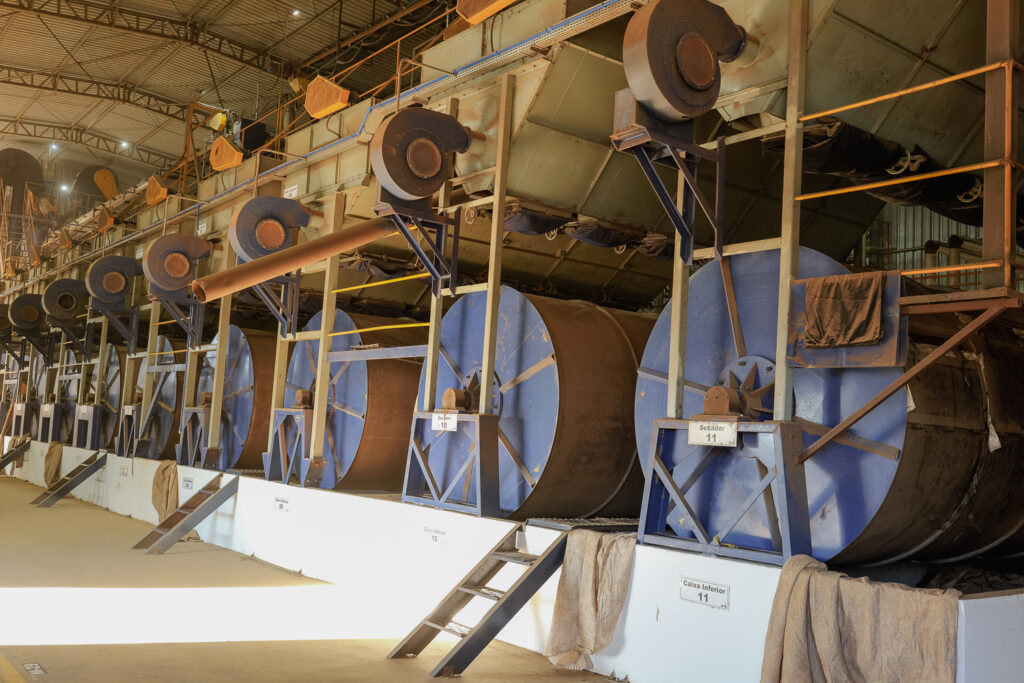
The drying process takes place either on the patio, where the beans are frequently moved around to dry under the sun. Or it can take place inside large drums, under controlled temperature and humidity conditions.
Finally, the dried beans are milled before packing. They have to be careful not to leave any stones or other foreign objects in with the berries because these can destroy grinders.
A short film on the importance of fermentation in post harvest processing of coffee cherries:
Lucas took us to the newly opened quality control centre that he heads up at Mió. They have begun collecting a bank of microorganisms so they can ferment their coffees with their own microbiome. ‘It is like our signature,’ he says. In 2024 they had an extremely dry and hot winter, so they had a lot of overripe coffee cherries. This challenge pushed them to try innovative new methodologies. ‘In 2024 we developed the volcano process,’ says Lucas. ‘This allows us to do the fermentation with over-ripe cherries using specific microorganisms. It’s possible to make some very good coffee [even from overripes]: it’s not 90+, but 84, 85, 86. If we decided just to dry, we are talking about 78, 79 points. The technology helped to produce the quality.’ He’s referring here to the scores that coffee graders use when cupping coffee. It’s an agreed-upon 100-point scale, and speciality coffee starts at 80.

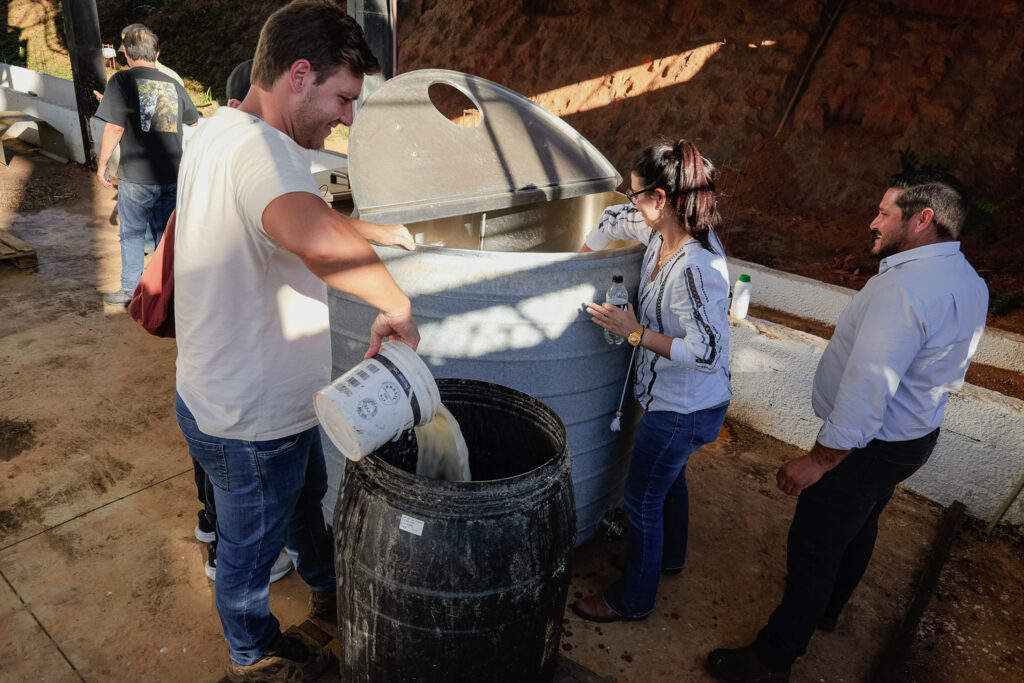
‘In the textbooks, speciality coffee comes from perfectly ripe berries,’ says Lucas. ‘But with science you can enlarge the window.’ He has also developed a recipe for dealing with the green underripe berries. They rest them in water for 7 days, and this results in a coffee that tastes really good: much better than it should from the underripe cherries.
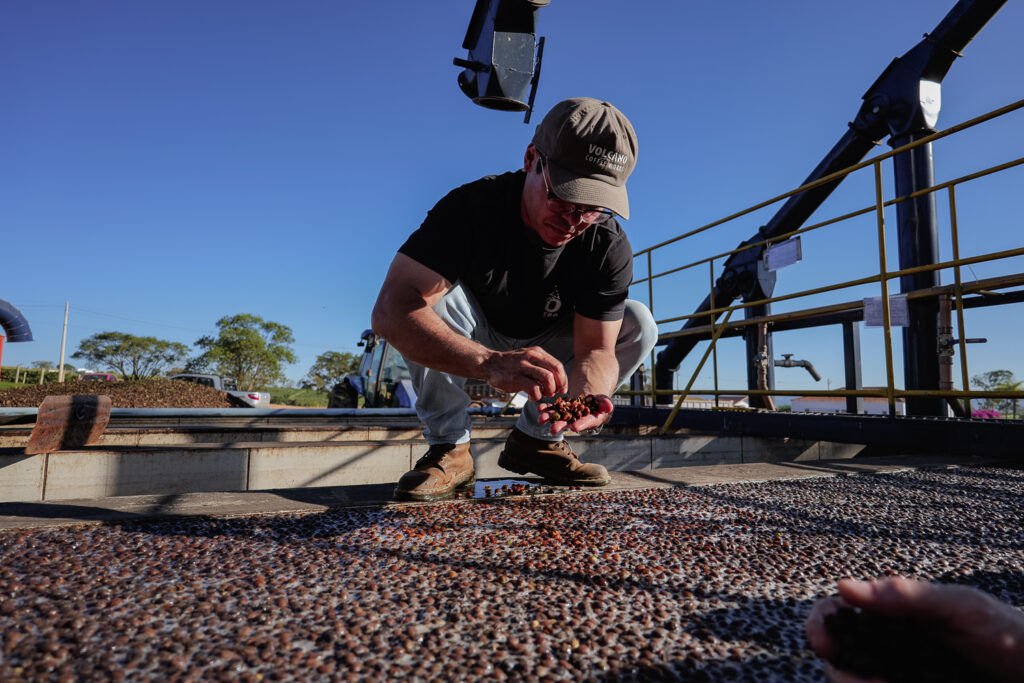
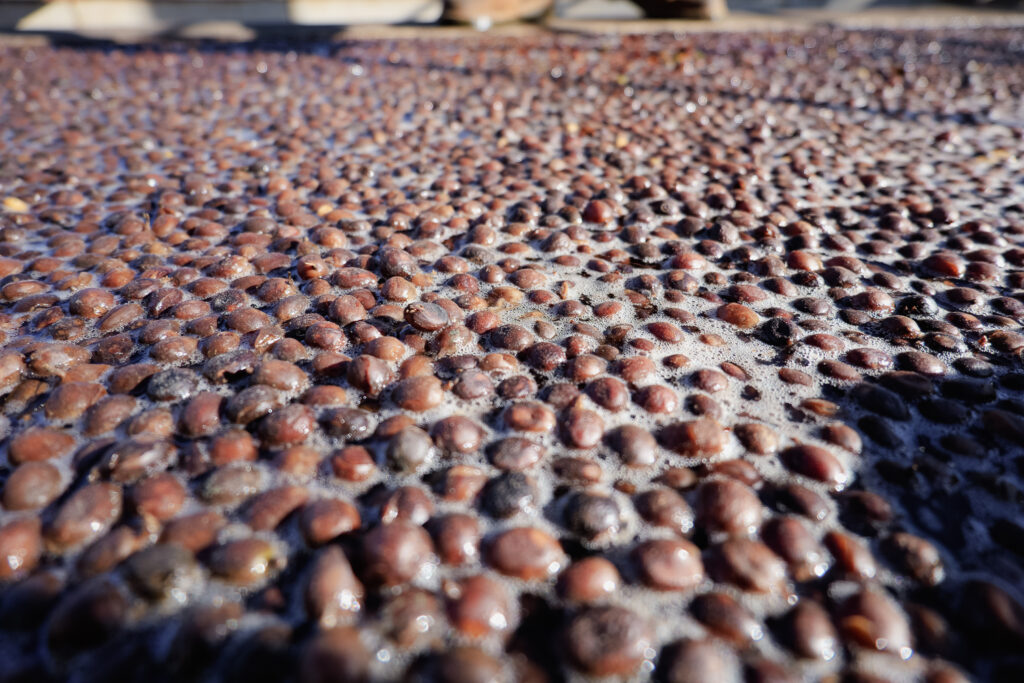
So by using these innovative processing steps, they’ve managed to bring non-speciality cherries into the speciality zone.
A film about the processing stages:
SPECIALITY COFFEE AND ITS PARALLELS WITH WINE
- A visit to Fazenda Mió in Brazil to catch the harvest
- Regenerative farming in coffee production at the Sombra agroforestry project at Fazenda Mió in Brazil
- Planning for the future: looking at new coffee varieties
- Sensory assessment of coffee, with parallels to wine tasting: cupping, grading and describing, with Dr Fabiana Carvalho