Exploring speciality coffee and its parallels with fine wine: regenerative farming in coffee production at the Sombra agroforestry project at Fazenda Mió in Brazil
Mió have initiated an agroforestry plot in an attempt to find truly sustainable alternatives to monocrop coffee, and at the same time mitigate some of the effects of climate change.
One of my key wine interests is regenerative viticulture, so I was really interested to see the Sombra agroforestry experiment that Mió have undertaken. There are three main motivations behind agroforestry approaches in coffee. One is that having trees and shrubs interspersed with coffee bushes helps mitigate frost risk, by trapping warmer air. The second is that they provide some shade, which helps as the climate gets warmer. And third, they add biodiversity, not just above ground but also below ground. And this creates an agroecosystem that works better, and produces better coffee. It clatters the physiology of coffee plants, stimulating vegetative growth and reduces nodes per branch. Studies have shown that shade levels above 50% reduce productivity, but below 50% yields aren’t compromised. And a big bonus is that production is more stable across years, without the big fluctuations that are often seen in non-shade plots.
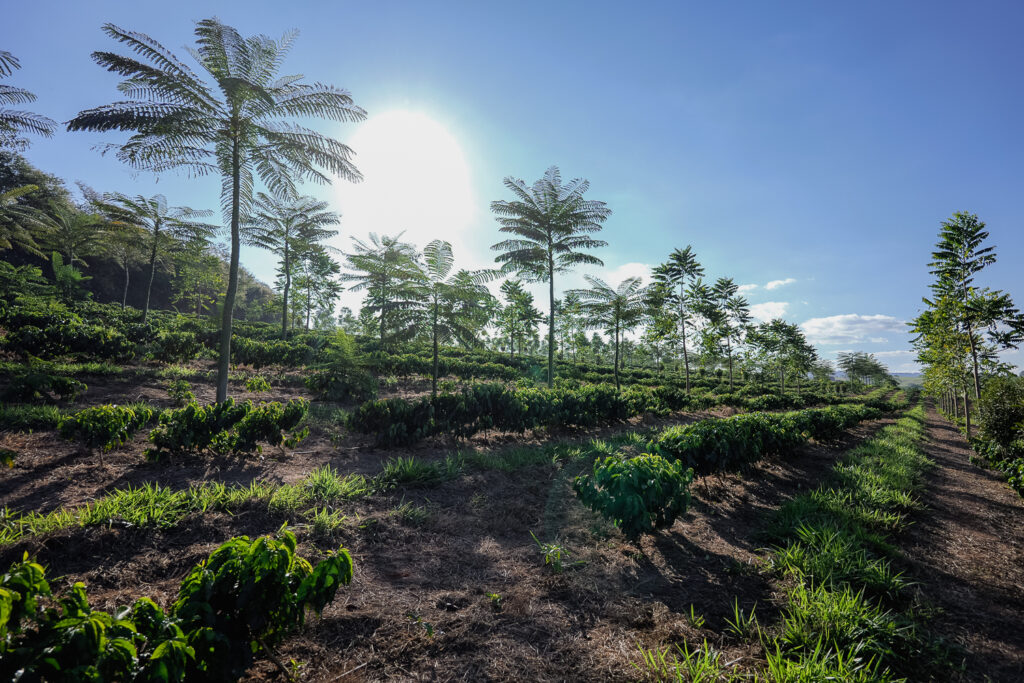
Shade coffee is already well established, and there are some plots that are farmed this way at Fazenda Mió. But this agroforestry trial is taking things a bit further, and the goal is to experiment and see which trees, and which planting densities work best here. They also want to find a way to partially mechanise a shaded system coffee crop, and to demonstrate that with good management the agroforestry plot can deliver similar yields to a full sun system.
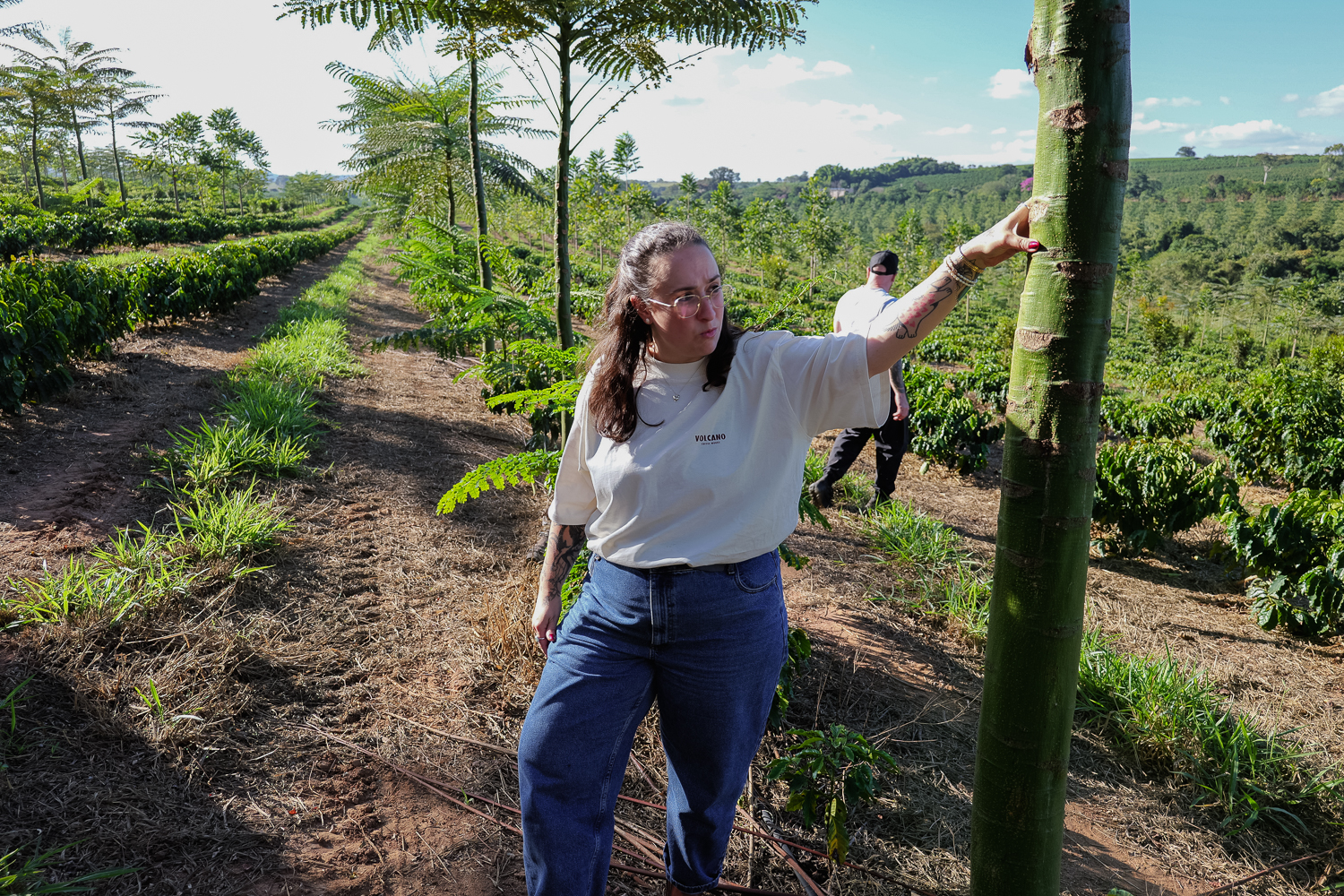
Ana Luiza Pellicer explains how this project came about, as a three way collaboration between Mió, Nick Mabey (Volcano Coffee Works) and Dr Lucas Louzada. ‘We started this with Nick, who was at my first talk about frost,’ she says. ‘He wanted to be part of the project, so we started Sombra as a three way collaboration, between the research institute where Lucas used to work, Mió and Assembly/Volcano. The first year we spent designing this plot. This is proper scientific research and we want to have a proper statistics, to confirm findings, not just to guess.’ In order to get good data, the 15 hectare experimental field has many replicates of the different trees and coffee varieties.
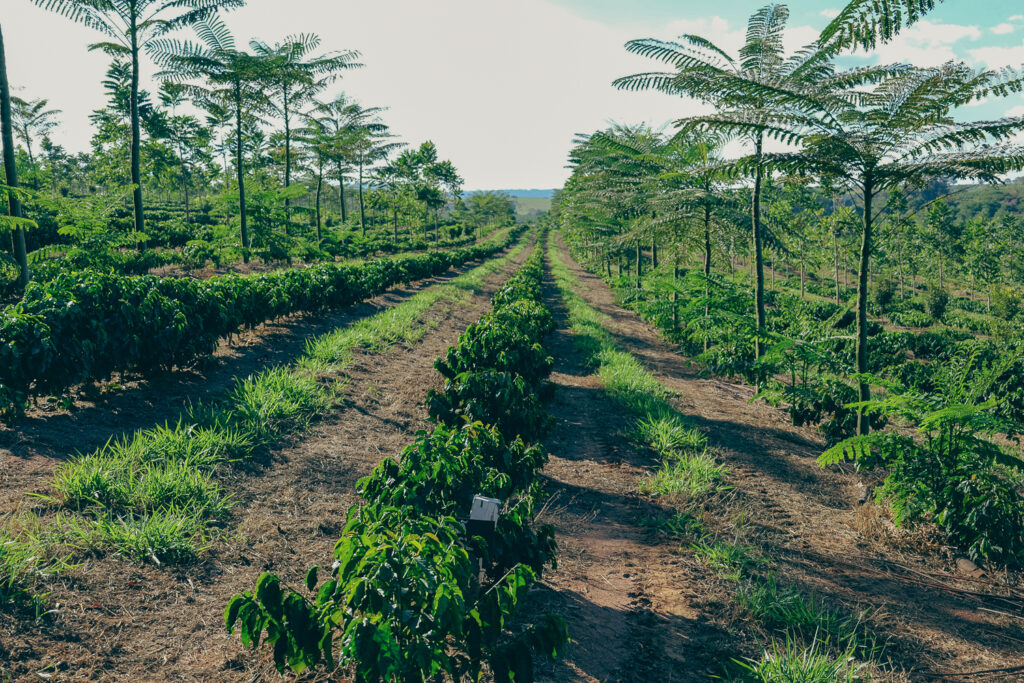
‘We designed this plot with four different coffee varieties and three different trees. Guapuruvu is native to the Atlantic forests,’ says Ana. ‘It grows really tall, and really fast. The idea is that each year we will cut every other Guapuruvu tree. The reason is we want to put the wood back into the soil to feed the soil. As it decomposes, it has a lot of fungi in it, and these will feed the soil with organic matter. It works in terms of soil, but it doesn’t work with the coffee. As it grows so fast, it asks a lot from the soil. So the coffee around it is really tiny. So the rows with Guapuruvu grow less than the others.’
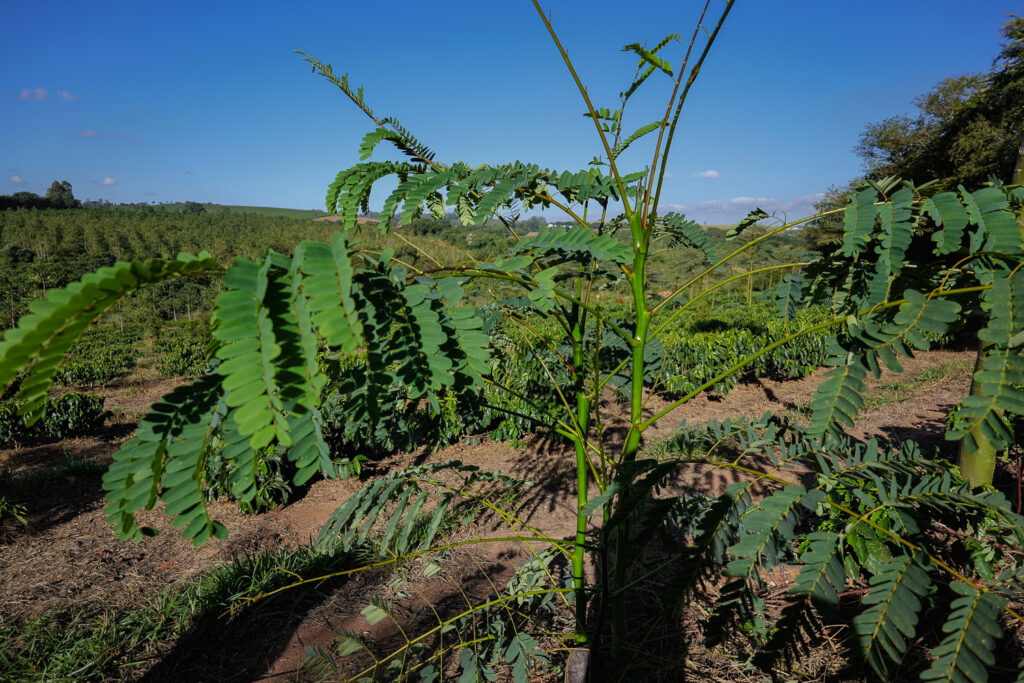
‘It is quite interesting, because it is native to the Atlantic forest, which has a lot of different types of ant. A lot of the trees in these forests have ways of fighting the ants, and this tree fights the ants because its trunk is really sticky when it’s young, to avoid ants growing up it.’
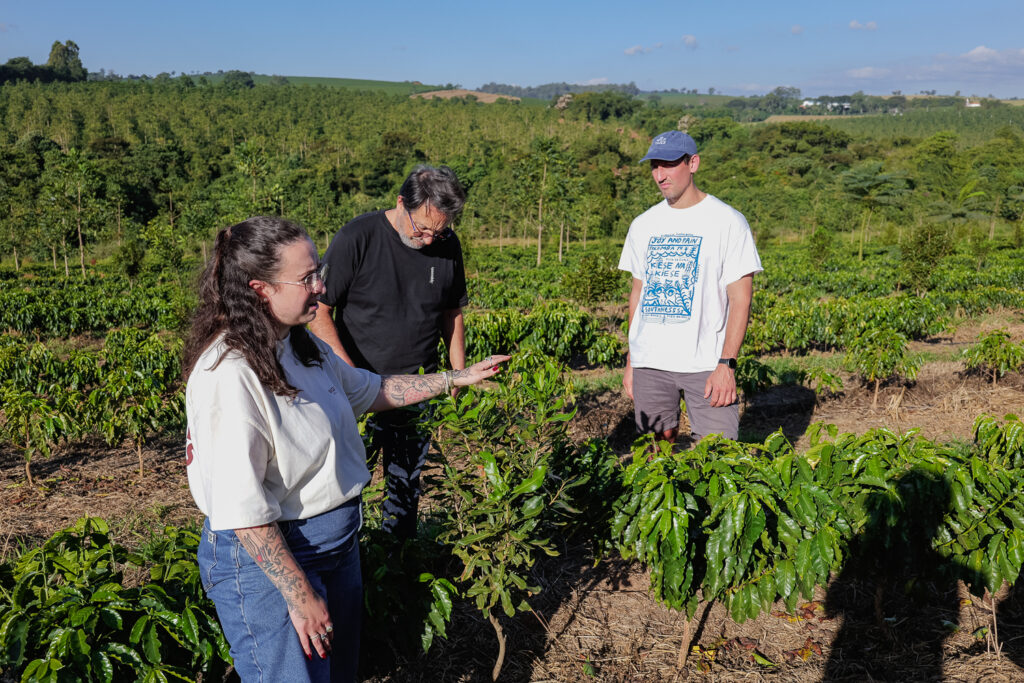
The second tree they have planted is with a view to getting an economic return from it: macadamia. It isn’t native to the Atlantic forest, but they chose this because to dry macadamia nuts uses the same machinery as drying coffee. ‘Macadamia ripens later in the year than coffee, in Brazil, so that means that once we were done with drying coffee, we could use the dry mill for another few months for the macadamia,’ says Ana. The macadamia grows too slowly for it to give shade production, but it could be alternated with other trees.
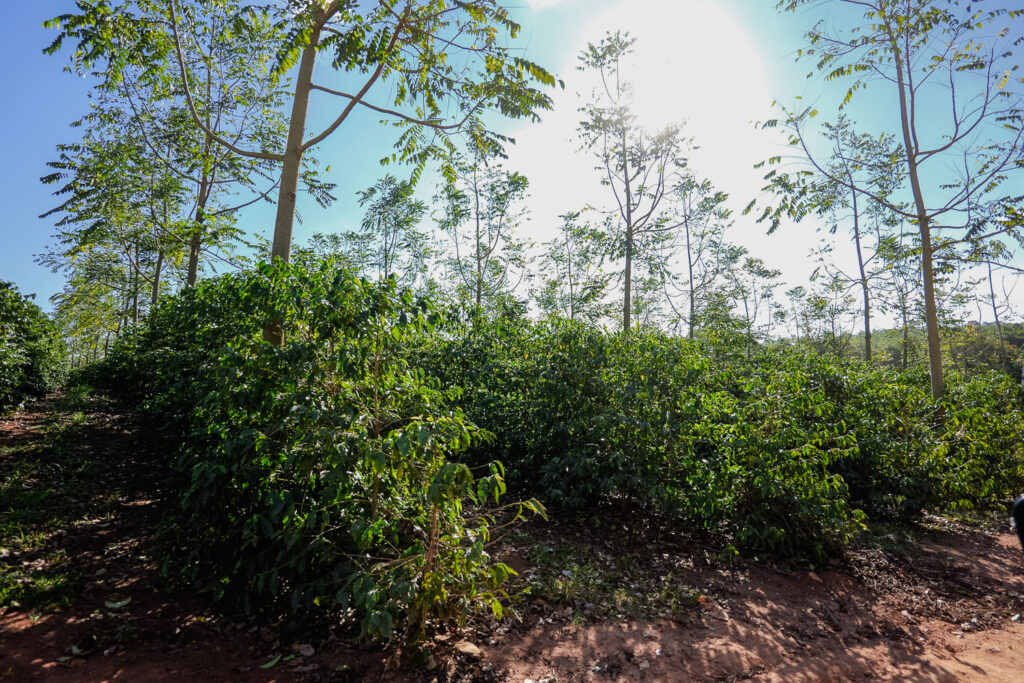
And the other tree type is the one already used in their existing shade plots: cedar. These cedar trees in Brazil (such as Cedrela fissilis and Cedrela odorata) are broadleaf hardwood rainforest trees closely related to mahogany. They are not the same as cedars found elsewhere (such as Lebanese cedars) which are evergreen conifers with needle-like leaves.
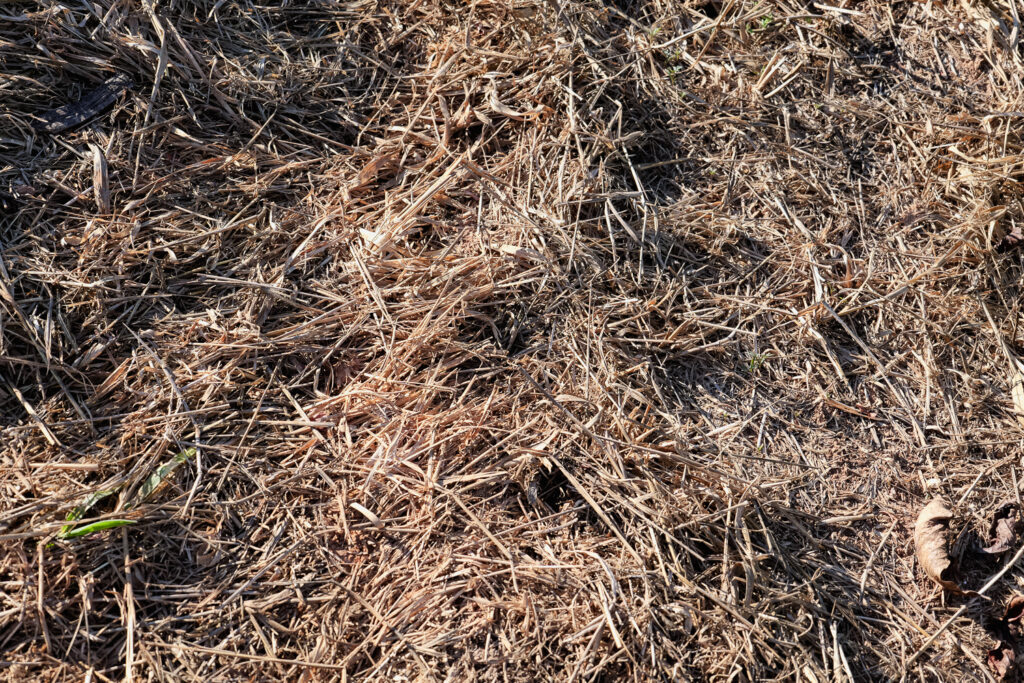
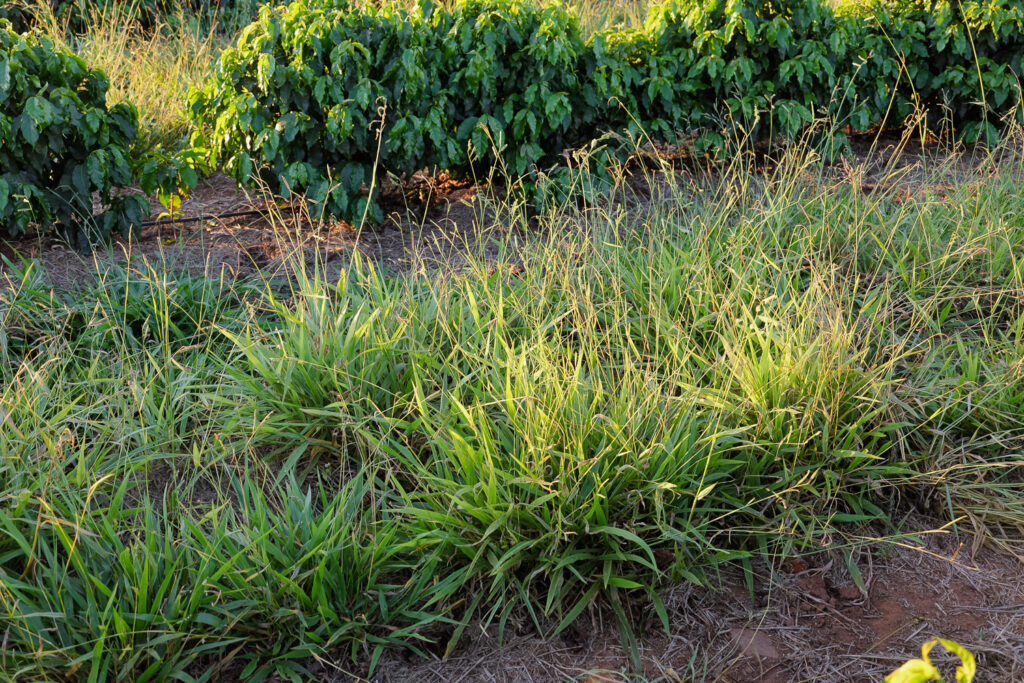
Importantly, they are using cover crops in the rows. The species chosen is a grass called Brachiaria ruziziensis. Carlos Pellicer is very excited about this. ‘The roots go down to five metres,’ he says, ‘although most only go down two metres. They open up the soil to allow water to penetrate and release nutrients. The most important part is how much they cover the soil. ‘We don’t want the soil to be exposed,’ he says.
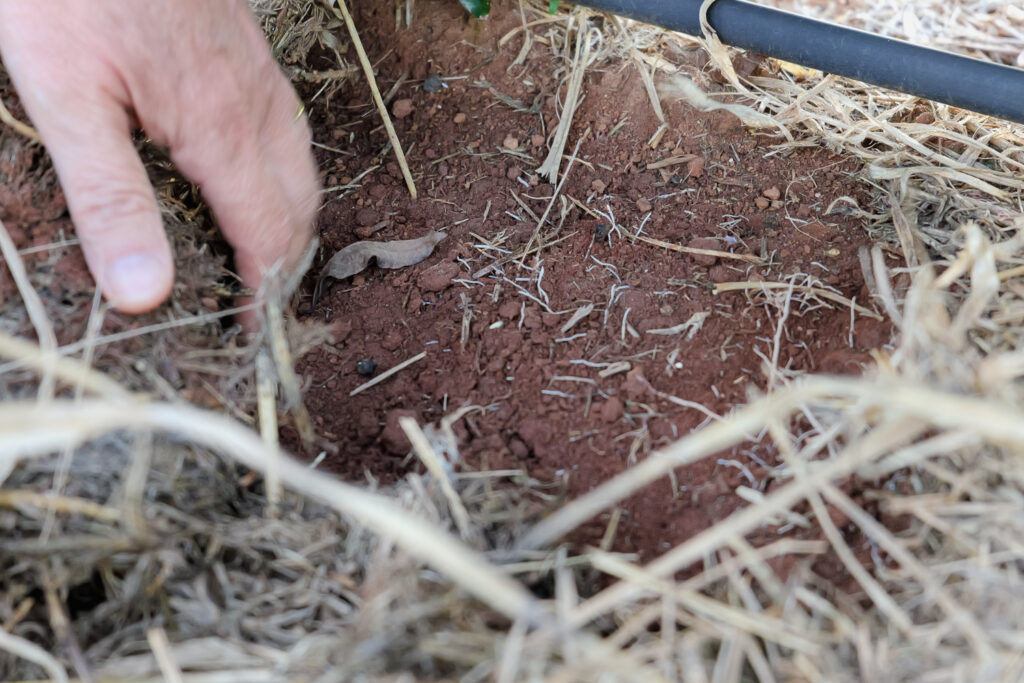
Planting density here is 2700 coffee plants per hectare, and they get 4 kg of coffee cherries from each plant when they are in full production. They use compost for nutrition, and add 14 tonnes of compost per hectare, supplementing the compost with some fertilizer.
In this plot they planted the trees first, and then the coffee. Next time they do this they will plant the coffee first, give it a year to grow, and then plant the trees.
SPECIALITY COFFEE AND ITS PARALLELS WITH WINE
- A visit to Fazenda Mió in Brazil to catch the harvest
- Regenerative farming in coffee production at the Sombra agroforestry project at Fazenda Mió in Brazil
- Planning for the future: looking at new coffee varieties
- Sensory assessment of coffee, with parallels to wine tasting: cupping, grading and describing, with Dr Fabiana Carvalho