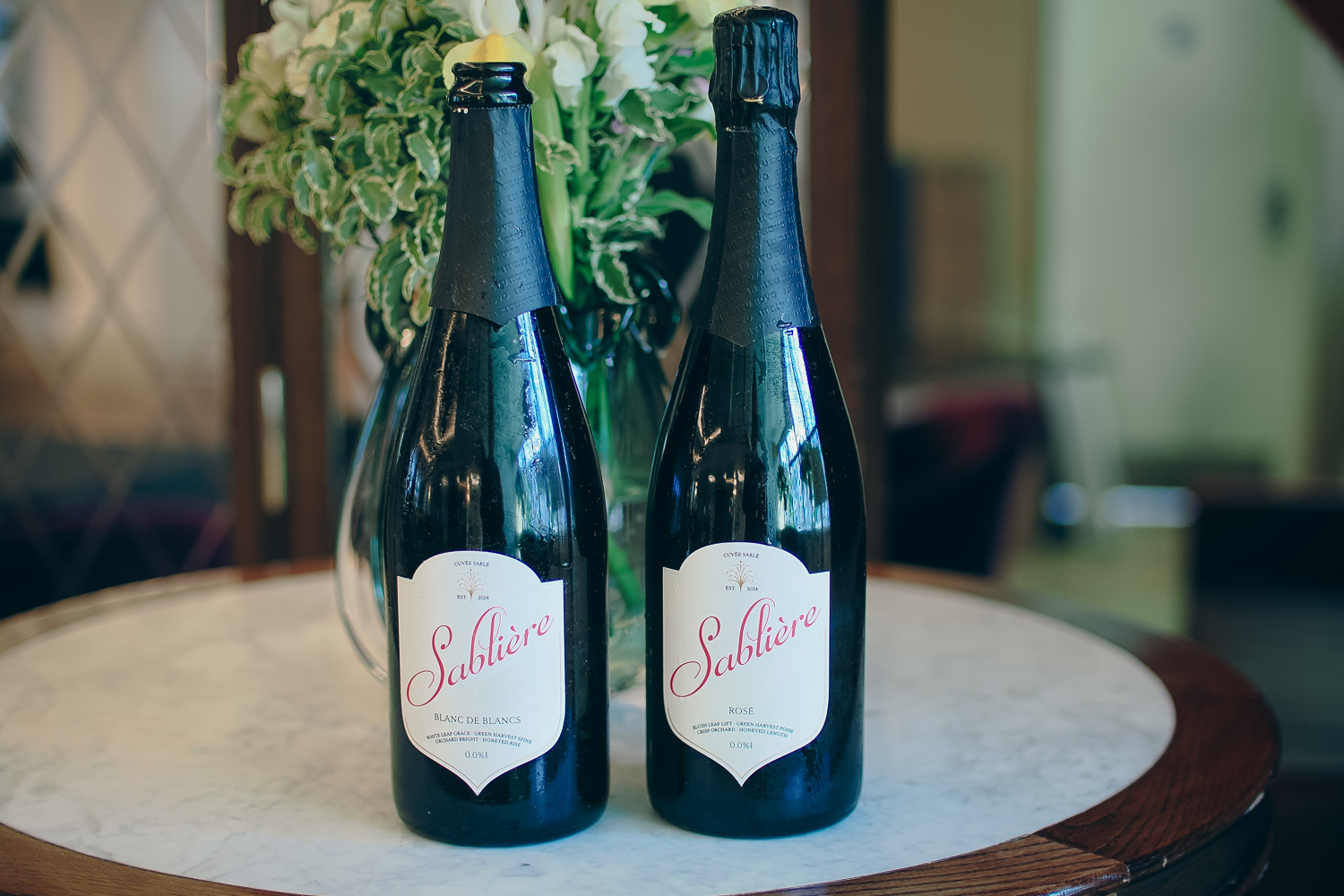
Sablière: a new 0% alcohol sparkling ‘wine’ designed from first principles
Website: https://sabliere.co.uk/
I’ve written quite a bit about the attempts to make interesting, complex dealcoholized wines. There’s another approach, which is purpose-built proxies: complex non-wine drinks that operate in the same space as wine.
And this week I met up with Lucy Isles, co-owner of a new brand, Sablière, which is built from the ground up after a lot of research to behave just like a good Champagne or sparkling wine.
Lucy emphasizes that this is not a sparkling tea or a kombucha, but something that has been put together after a lengthy research journey.
Her partner in this venture is Kim Wilson, who studied brewing technology at Heriot Watt University, and then worked for Diageo. Sablière is made in their own facility in Edinburgh.
The challenge they faced is one that’s common to anyone working in the zero alcohol space. Without alcohol, they have no viscosity, no sterility, no mouthfeel and no texture.
She describes the research journey as a ‘wonderful multidisciplinary experience’.
They have worked with innovative South African winemaker Bruce Jack, with a microbiologist from Lallemand in Denmark, an Edinburgh University physicist looking at bubbles, and Andrew Gardner, a tea specialist (a tea specialist).
‘We were really trying to think, how can we do something novel here?’ says Lucy.
So, their first pair of sparkling wines are now live. These are meant to be wine replacements, and they are beginning to look at how they can also do this with still white and red wines.
The wines are built up using four key ingredients. There’s tea, which gives length. There are apples, for body. Honey gives aroma. And, finally, verjus gives acidity. They finish by carbonating to 6 bars pressure, the same as Champagne.
There are two expressions so far. One is a Blanc de Blancs style, which they based on Ruinart, and the other is a rosé based on Charles Heidsieck.
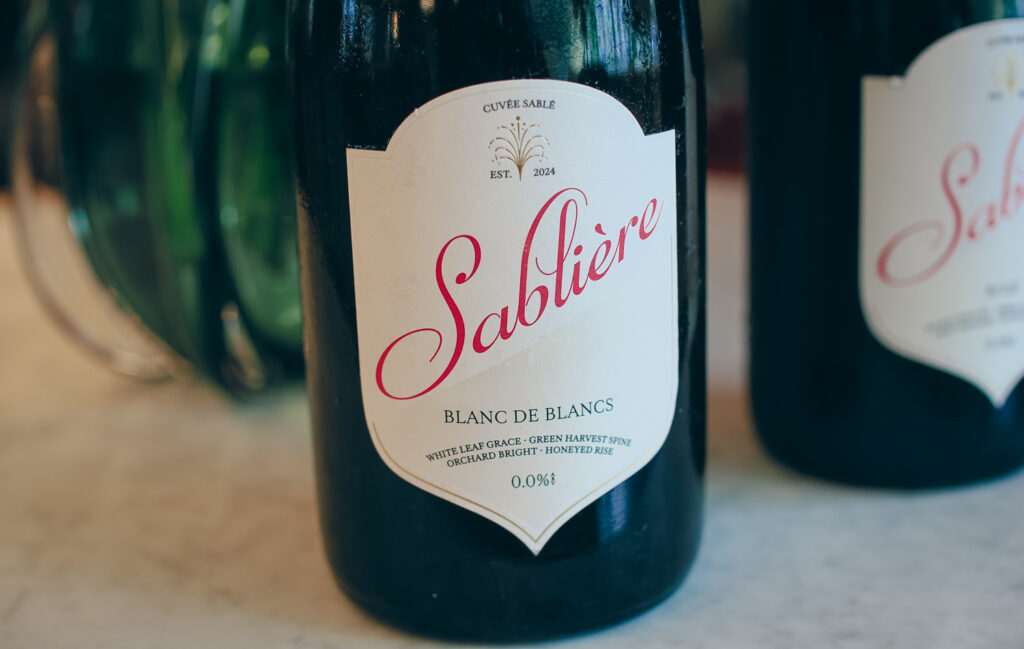
The Blanc is a blend of white teas, and they worked with tea sommelier Joyce Maina to select these. There are white curls from Nepal, and white peony from China. They extract the teas in house, using a different process for each. The verjus is from Sussex, which adds viscosity and acidity, and this is balanced with malic acid from cox apples. They use a range of yeasts from Lallemand to give some wine-like qualities, but this fermentation produces no alcohol.
One key decision was to go for 0.0% alcohol rather than 0.5% because of the Middle East market.
The final element is blossom honey distillate, adding sweetness but not sugary weight. Altogether the Blanc and Rosé have 37 g/l sugar. So they are sterile filtered. There are no added sulfites, but some sulfites are used by the verjus producer: they are looking to see whether they could eliminate these sulfites too.
What does it taste like? It has lovely aromas: fruity, herby and aromatic with some honeyed notes, floral elements and a touch of green. The palate is fresh and textured and you get the honey and tea notes, but also nice fruitiness and good acidity. Very stylish and fruit driven.
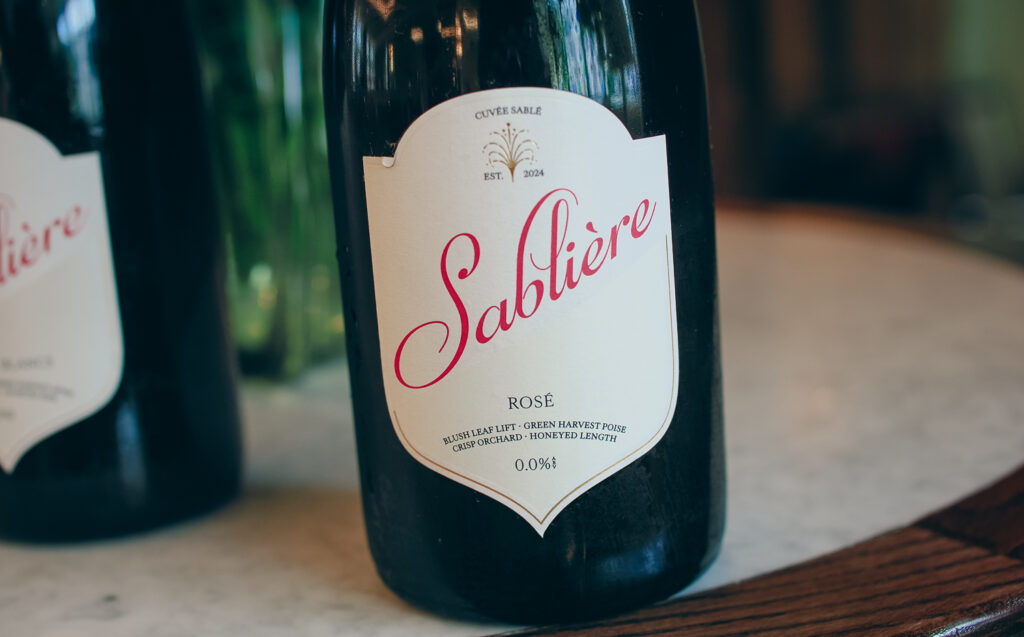
The rosé has Kentish kiss apples which give some pink notes. Four teas are used: mountain oolong (smoky, oxidized notes), gold curl, wild lapsang and da hong pao (delicate caramel).
It’s a golden colour with a slight pink hue. There’s a fruity, herby note on the nose with red apple, mandarin and dried herbs. In the mouth there’s nice bite with some structure and good acidity, and nice herby complexity. There’s even a slight caramel twist. This is really good.
I wouldn’t mistake either for Champagne, but these are high quality, intentional sparkling ‘wines’ that are quite friendly and offer a bit of complexity. Sablière are selling direct to customers at £32 for the Blanc and £35 for the Rosé. They launched quietly in January, their website was launched in April, and they already have 20 clients (restaurants and retail).