Exploring Vinho Verde: Aphros
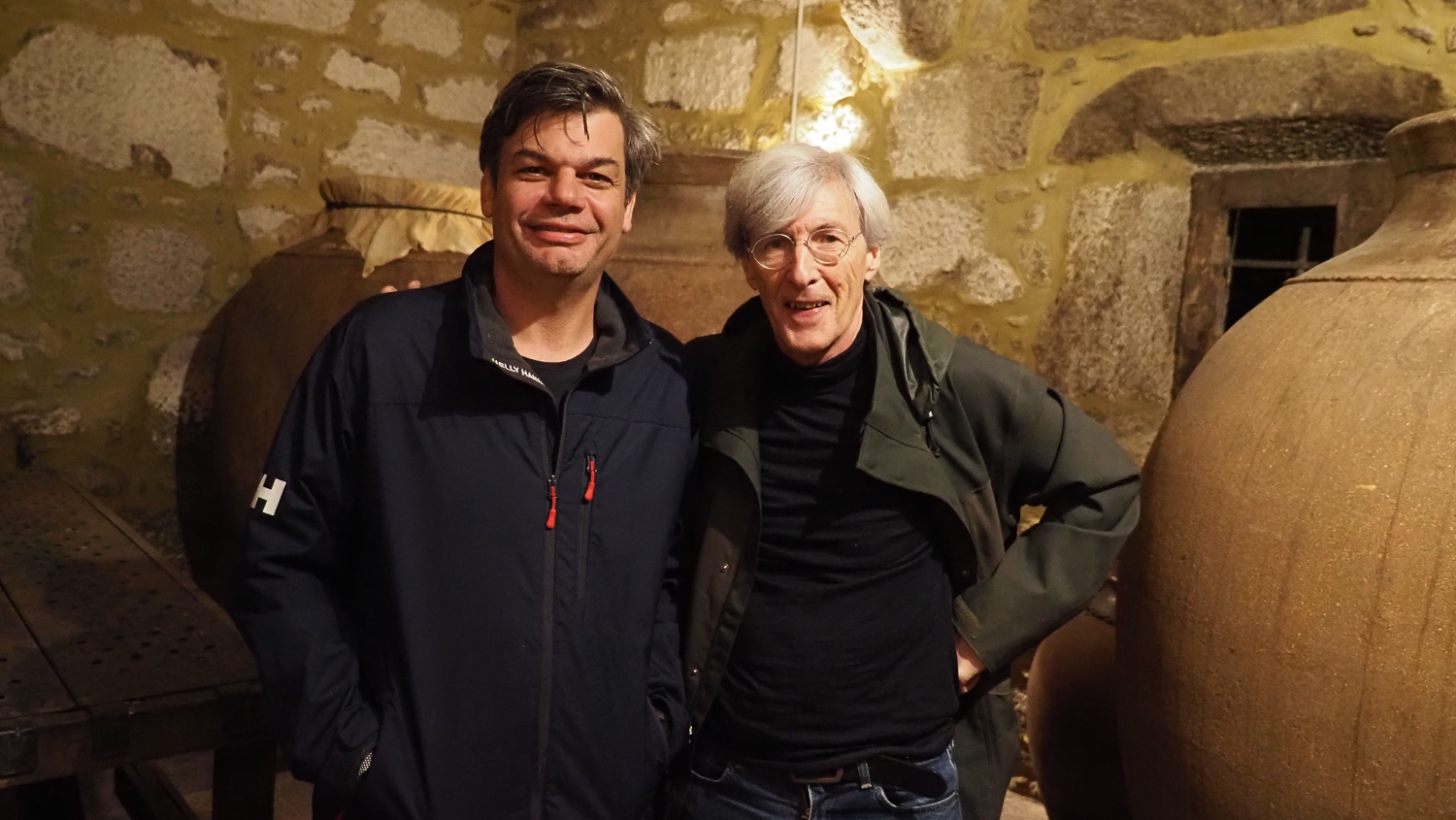
Vasco Croft (above right) is the man behind biodynamic, naturally inclined Aphros, in the Lima subregion of Vinho Verde. He began the project in 2009 and has always made distinctive wines, initially under the name of Afros, but more latterly Aphros (with the American market in mind).
I met with Vasco and his winemaker Miguel Viseu (pictured left, who also has his own project called Sarava).
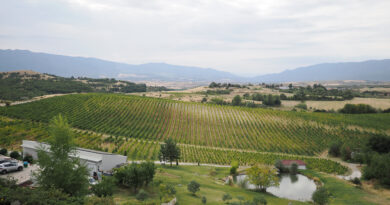
The original Aphros property was 5 hectares of vines, but he’s recently bought a new property, where he’s preparing the soils to supplement 3 hectares of old vines with another 5 hectares of Loureiro and 3 hectares of red grapes (Vinhão and Alvarelhão), and they are also leasing another property with 6 hectares of Loureiro.
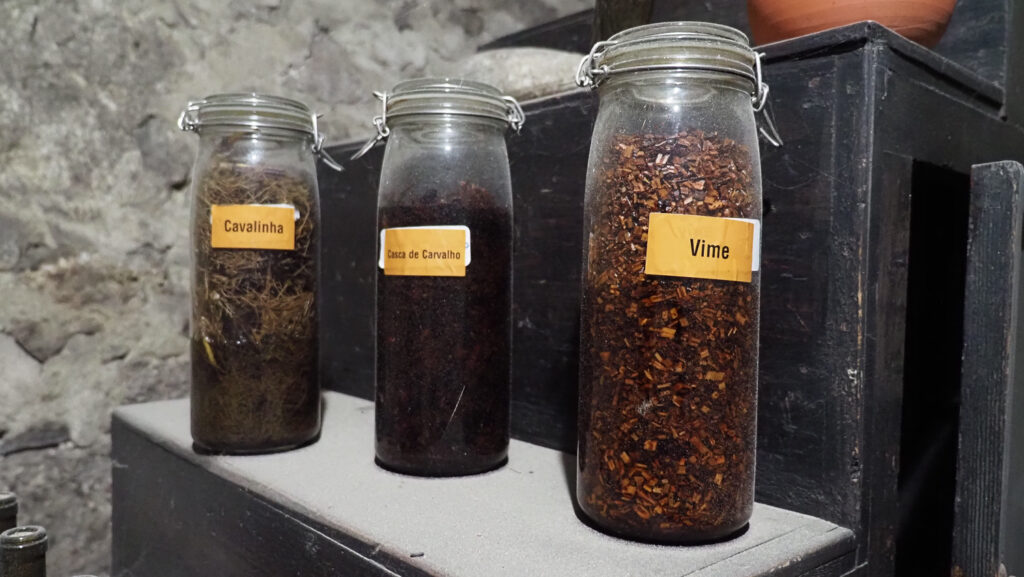
Aphros has been Biodyvin certified since 2016; prior to this was Vasco certified with Demeter. We take a look at his preparation room. There’s some willow bark, which is rich in salicylic acid and helps reinforce the immune system of the plant. Then there’s some horsetail, called cavalinha here. This also helps with plant defence. And there’s also some oak bark (casca de Carvalho). Vasco uses orange oil and milk serum to treat against mildew, which is frequently a problem in this region with its growing season rain. Finding a window to spray can be tricky. 2023 was a particularly difficult mildew year.
2025 was also an outlier. They had 6 weeks over 30 C for the first time ever, but he says the wines aren’t showing this heat. Fortunately there was a bit of rain during harvest, and the fermentations went much better in the grapes picked after this bit of rainfall. ‘In the Douro plants are used to these temperatures,’ says Vasco. ‘Here the vines weren’t used to this stress and the plants were struggling to survive.’
‘Maybe this is the future,’ says Miguel.
Loureiro is their star white variety. According to Vasco, Loureiro changes a lot with depth of soil and granite versus schist, and proximity to the sea.
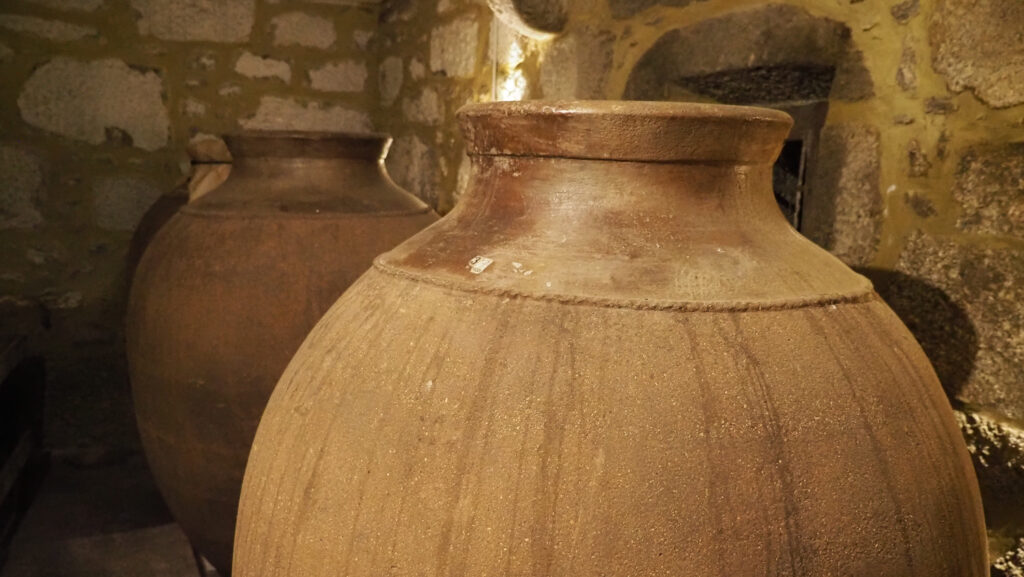
They have an amphora cellar, which they stocked with six 1300/1400 litre talhas from Vidugueira in the Alentejo, before talha wine became so trendy. These are lined with beeswax rather than the traditional pez (a mix of resin and wax; used because it was cheaper in the past). There’s no electricity in the cellar, and here they make the Phanus wines.
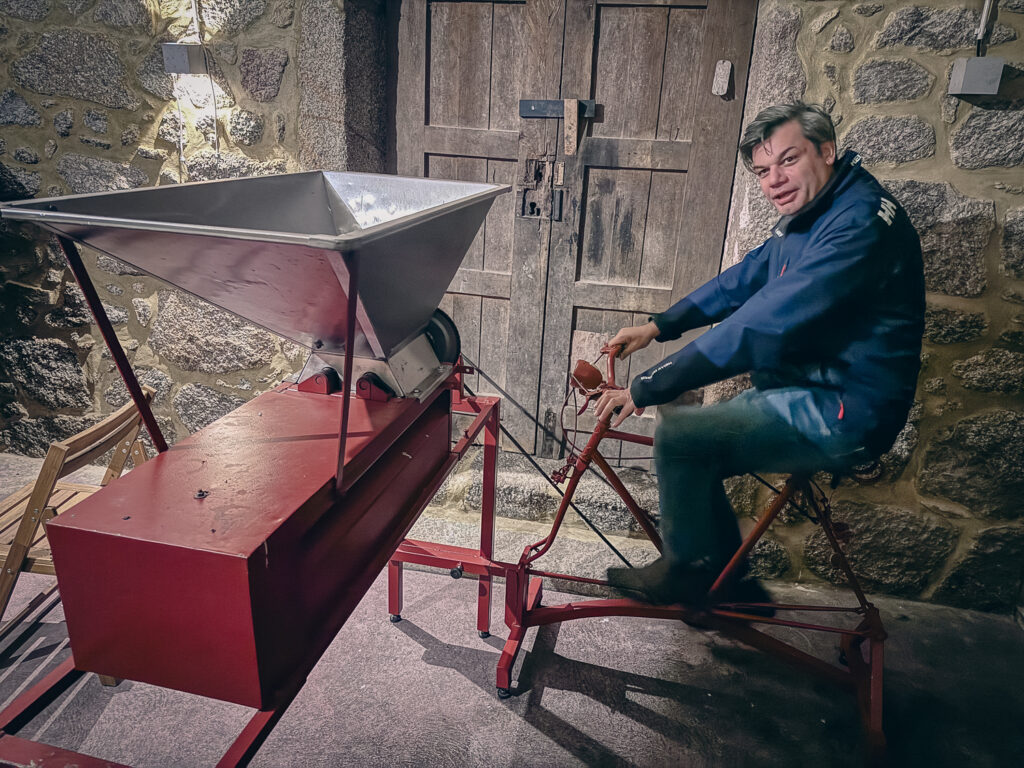
‘With electricity you have an infinite source of power,’ says Vasco. ‘Before electricity it as a slow process, and you worked in synchronicity with your body.’ He has purchased a manual destemmer for this cellar, which cost €250. ‘The work has the imprint of the soul of the person working,’ he says. ‘It is like cooking for people.’
There are also another 6 talhas in the old winery. They hired a person who restores chimneys to restore the talhas. The wines stay 7 months in these large clay vessels without any sulfites. The pH stays low, around 3.2, even after 7 months on skins.
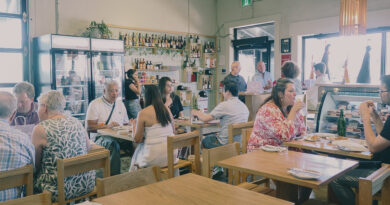
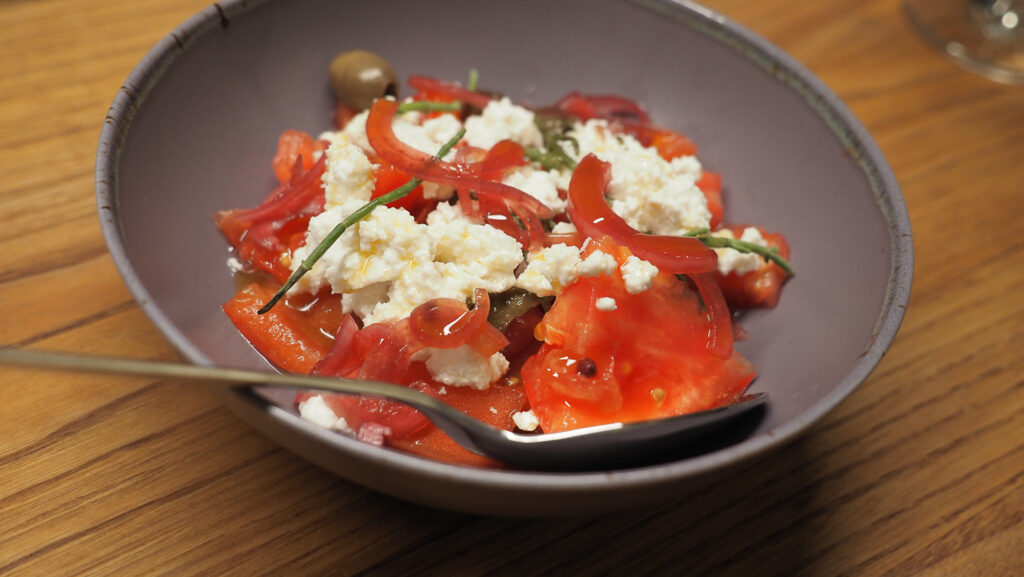
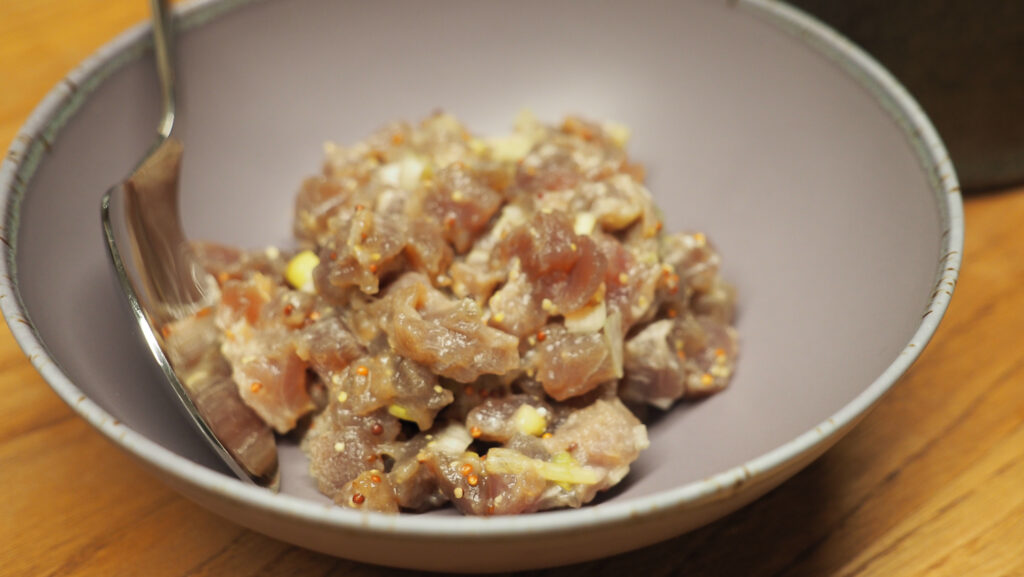
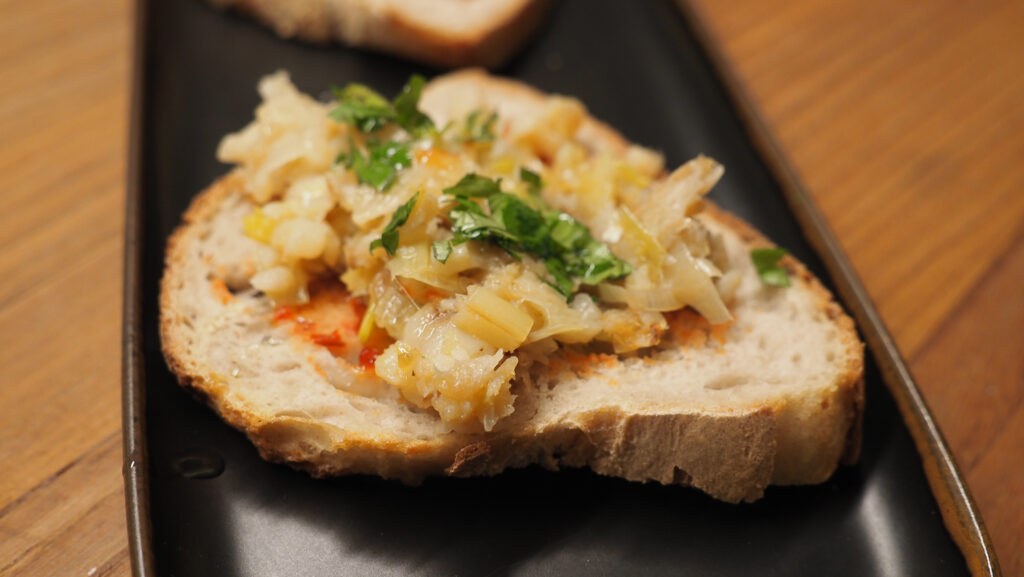
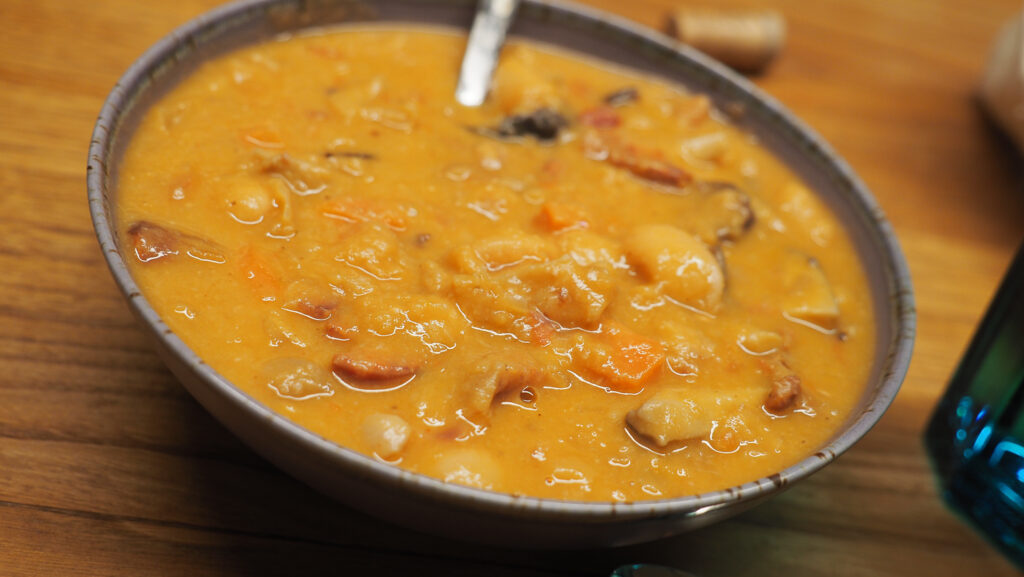
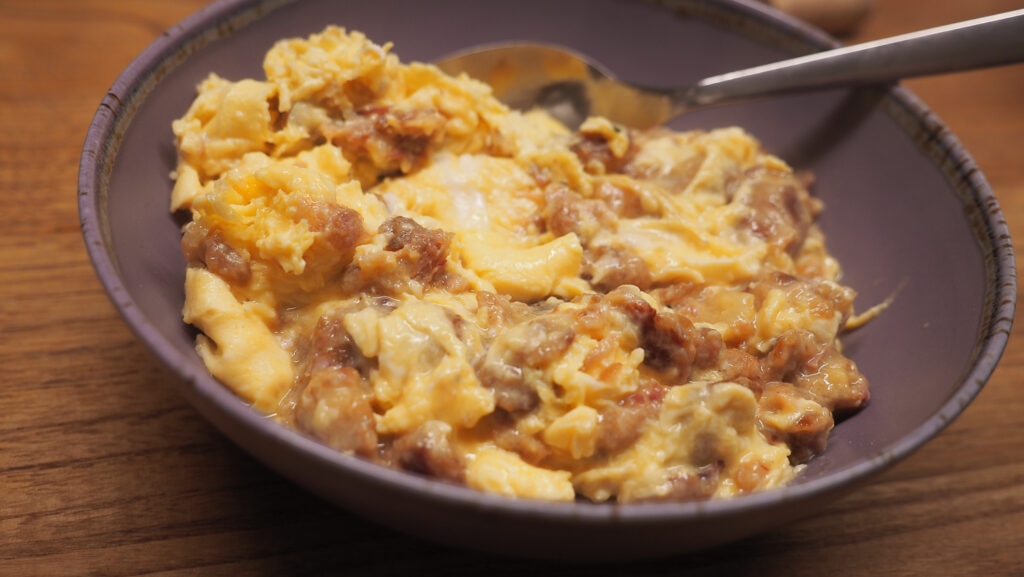
We taste and eat, with food cooked by chef André Antunes. We have torrieado, garlic and toasted bread. Then bacalhau and onions. Then feijoa (bean stew) with four kinds of smoked meat and four kinds of mushrooms. Then eggs and alheira. Delicious stuff.
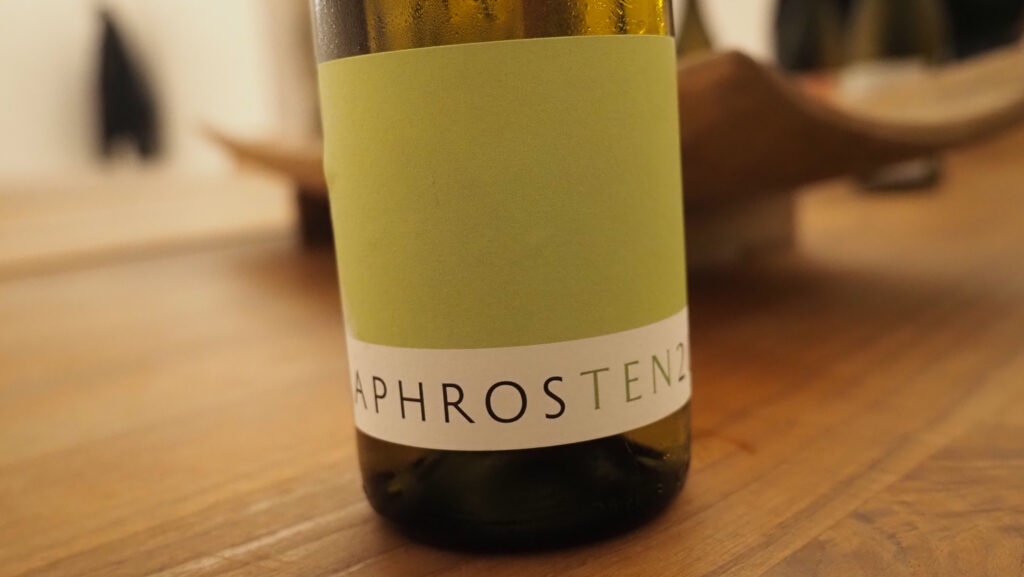
Aphros Ten 2024 Vinho Verde, Portugal
10% alcohol. Loureiro. 5 g/l sugar, 9 g/l acid. Stopped fermentation with cold and then sterile filter. This is the most technological wine that they make. This is bright, juicy and vivid with fresh citrus fruit showing nice acidity. So juicy and fresh with nice flavour richness, but also vivid acidity. 91/100
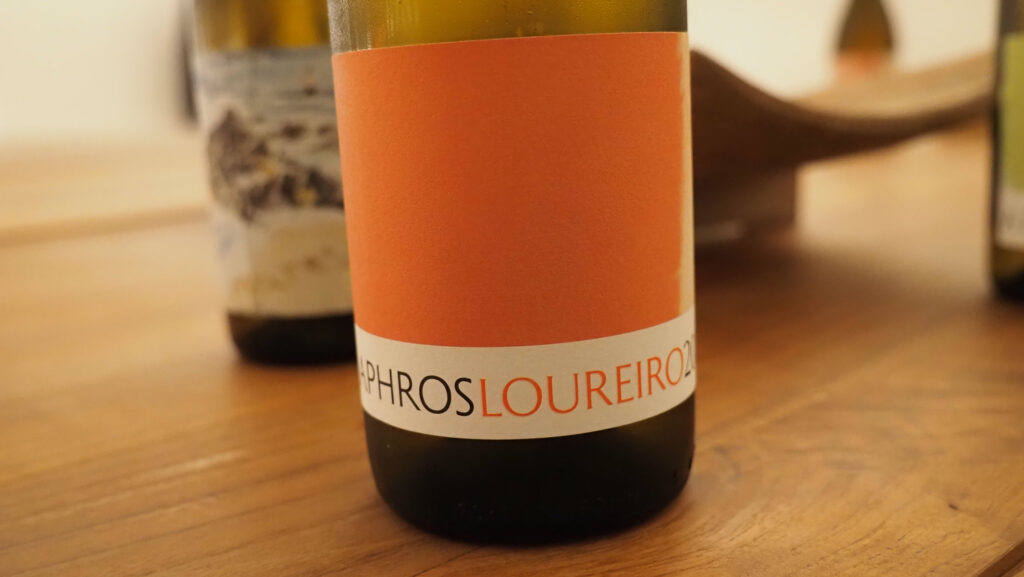
Aphros Loureiro 2024 Vinho Verde, Portugal
11% alcohol. Destemmed, direct pressed to stainless steel. Start warmer temperatures and then cool down. Block MLF. This is powerful and fresh with lovely intensity. Really mineral and incisive with lemon and lime fruit, and keen acidity. Such precision. 93/100
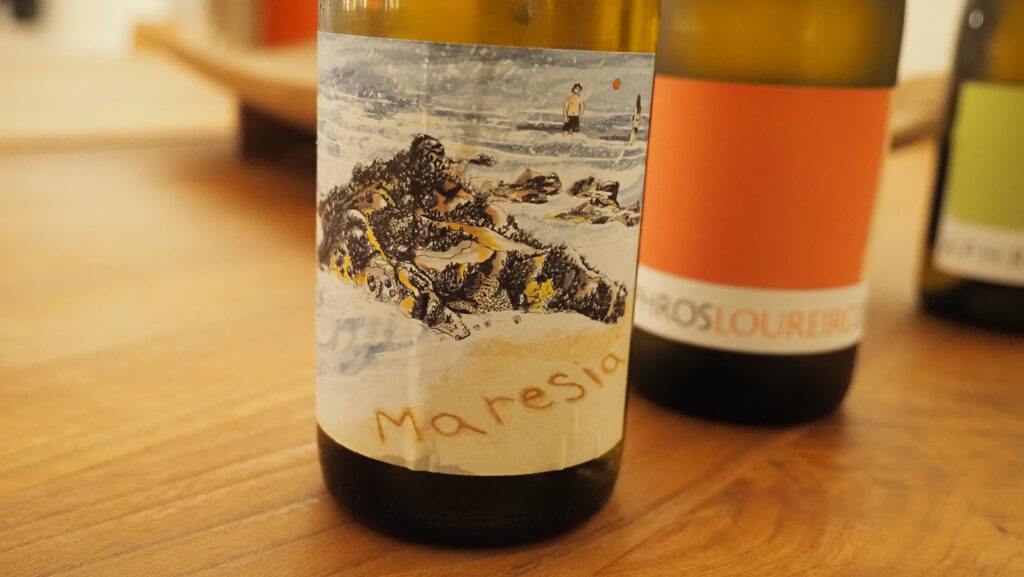
Maresia 2024 Vinho Verde, Portugal
10.5% alcohol. This is a private label wine for Les Caves de Pyrene, their UK importer. 100% Loureiro, but malolactic isn’t blocked. Powerful and intense with lovely structure and bold, pithy citrus fruit as well as some apple and melon richness. Real flavour intensity with a touch of sour cherry and some saltiness on the finish. This is really lovely. 94/100
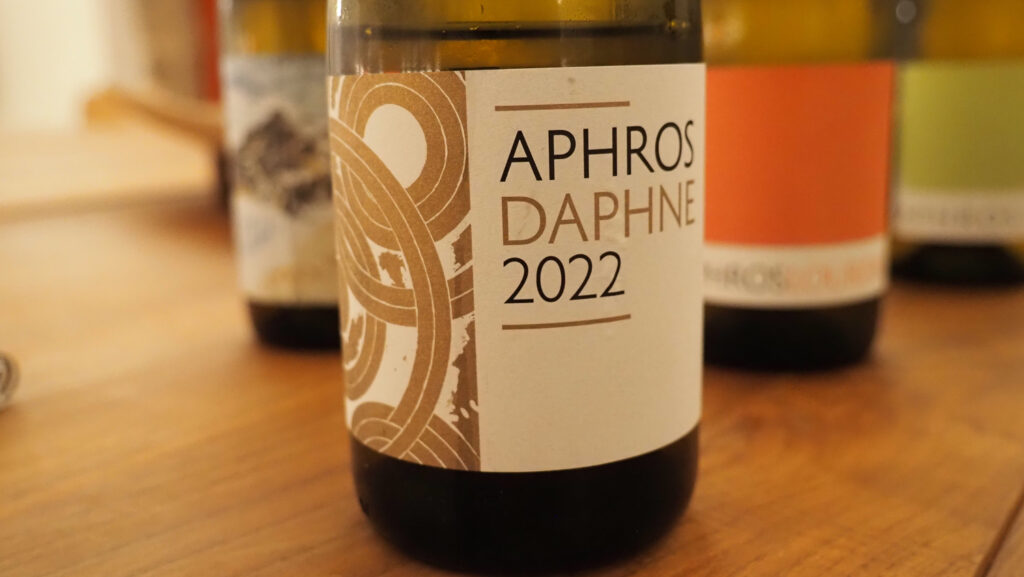
Aphros Daphne 2022 Vinho Verde, Portugal
11.5% alcohol. A single vineyard wine from a single plot, 100% Loureiro. 250 m high, shallow soils, harder granite, surrounded by forest. Low yields. A short skin contact before pressing, then stainless steel settling, then fermented and aged in concrete eggs. This is stony, mineral and nicely complex with powerful citrus fruit and nice energy in the mouth. Lovely weight and density. Finishes fresh. 94/100
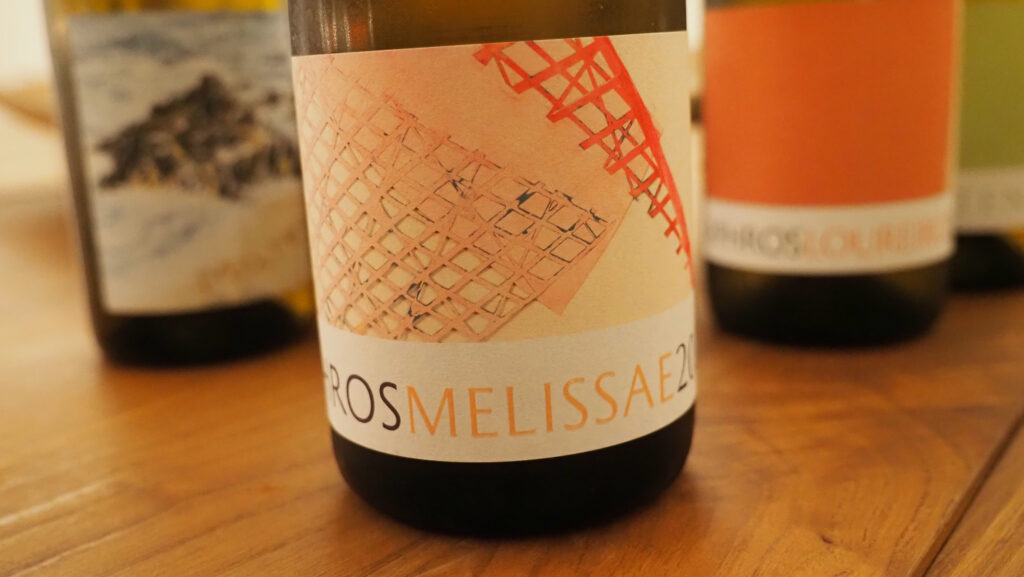
Aphros Melissae 2021 Vinho Verde, Portugal
11% alcohol. This is partial skin contact. The first harvest is the best clusters which are macerated (15-25%, whole bunch, stainless steel tank with must from the same plot). This ferments and then in spring they rack into concrete eggs, and press the whole bunch component. Very small additions of sulfites when it is moved and before bottling. This has a total SO2 of 22 mg/l, which is very low. Full golden colour. Lovely aromatics of peach, apricot and lime, with a hint of honey. The palate is intense and powerful with a spicy structure, some woody notes (it never sees wood though) with crystalline citrus fruit. Amazing intensity and precision here. Complex, mineral, precise and tangy with lots of personality. 95/100
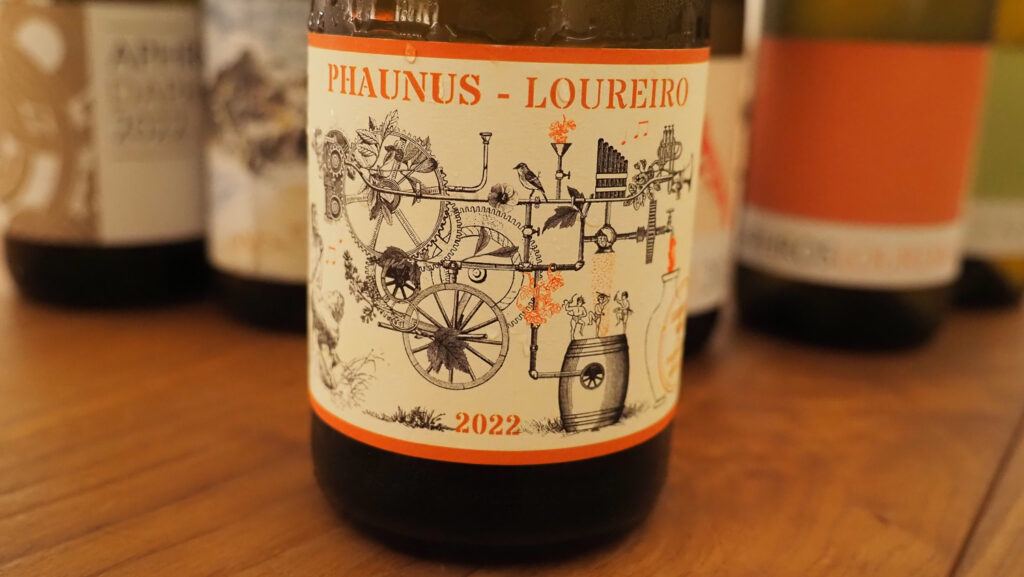
Aphros Phanus Loureiro 2022 Vinho Verde, Portugal
10.5% alcohol. Vines next to Vasco’s house and part of the vineyard used to be an orange tree orchard. Amphora for seven months on skins. Destemmed, into amphora, made without electricity or sulfites. Yellow/gold colour. Beautifully aromatic and rich despite the low alcohol. This has refined structure with lovely pear, peach and citrus fruit. There’s a bit of melony richness. Lively, complex and quite profound with nice acidity and some phenolic character. This is quite beautiful. 95/100
- Palhete – red and white
- Clarete – red grapes with little colour
- Rosette – skin contact before fermentation
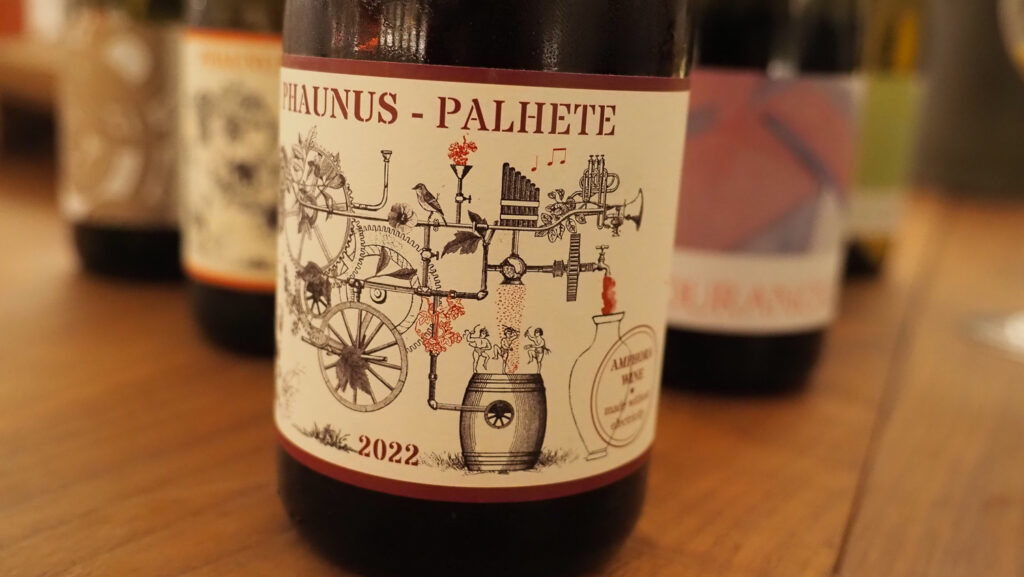
Aphros Phaunus Palhete 2022 Vinho Verde, Portugal
11% alcohol. Loureiro and Vinhão (20%) with a little bit of Alvarelhão. Made in amphora after manual destemming, with seven months on skins. They add olive oil when the malolactic finishes and the skins fall down. They then take the wine out with a pump, and drain rather than press the skins. Nicely structured, like a lighter red wine, with sour cherry and lime and some peppery hints, as well as some sappy detail. This is bright and energetic, and full of life, with some spicy acidity and wet stone minerality. Gastronomic. 94/100
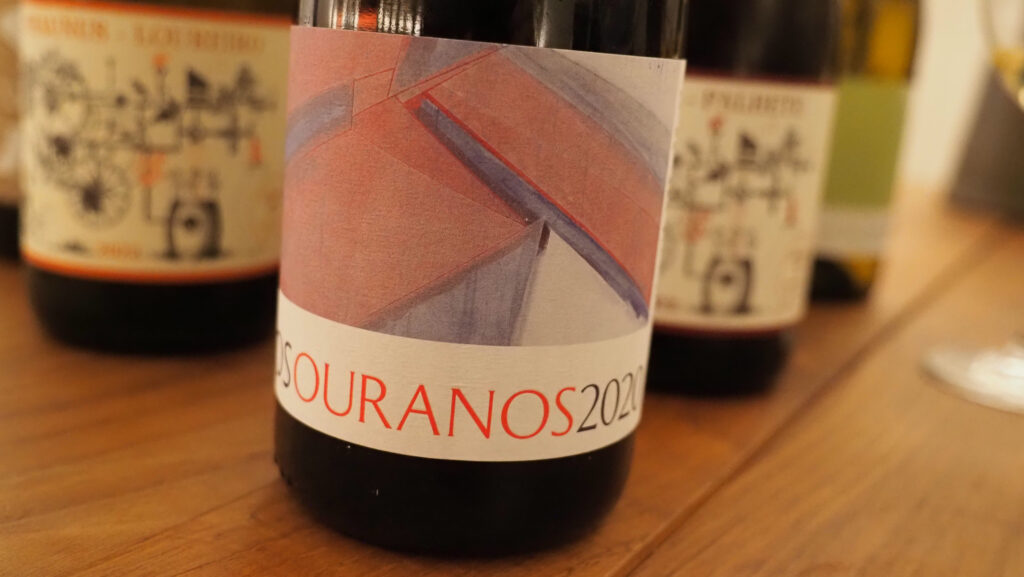
Aphros Ouranos 2020 Vinho Verde, Portugal
11.5% alcohol. Avarelhão, a variety used in the past to make the wines of the Lords, who didn’t drink the rustic wines of the peasants. In the 18th and 19th centuries this was an important variety here. Lighter-styled red wine. Stainless steel, 25% whole bunch, pre and post ferment maceration. This is juicy and fine with sweet red cherries and blackberry, with some nice sour notes on the finish. Juicy, bright and vivid with nice texture, and a touch of wild strawberry on the finish. So lovely. 94/100
Aphros Vinhão 2022 Vinho Verde, Portugal
11.5% alcohol. Destemmed, and foot trodden in lagares, then stainless steel. More fertile granitic soils, and more water. This is vivid, rich and fresh with nice bright acidity as well as powerful blackberry fruit with a twist of raspberry and sour cherry. So fresh and assertive with nice brightness. Gastronomic. 92/100
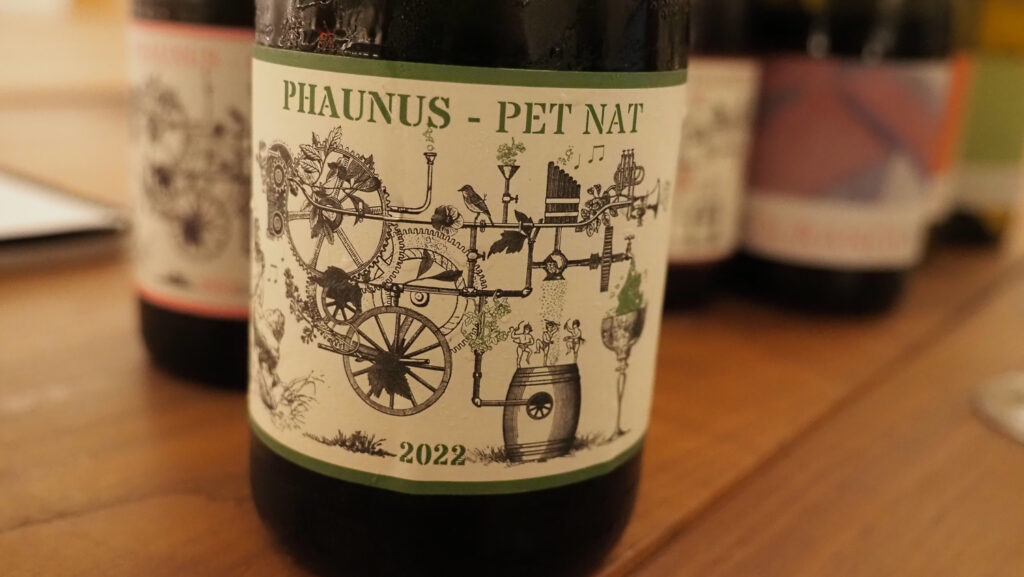
Aphros Phanus Pet Nat 2022 Vinho Verde, Portugal
10.5% alcohol. 50% Arinto, 50% Loureiro. Whole bunch pressed, 500 litres a ton juice yield. Disgorged. Lemon and lime with amazing finesse and purity. Linear and focused with some lovely fruit, real approachability, but also freshness and precision. So delicious. 93/100
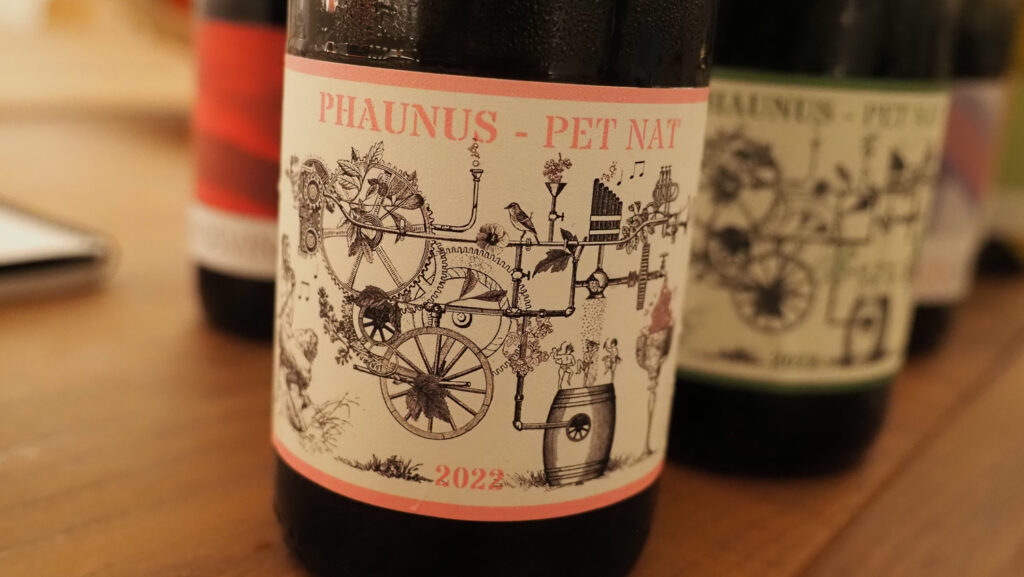
Aphros Phanus Pet Nat Rosé 2022 Vinho Verde, Portugal
11% alcohol. Vinhão and Alvarelhão. Very pale pink. Nice brightness and fruitiness with tart cherry fruit as well as some lemon and a touch of wild strawberry. Juicy and focused with nice tartness on the finish. Lovely fruit here, finishing juicy with a nice fine spicy twist on the finish. 93/100
Evoé Piquette (2023)
Skins that have been covered with water and pressed again the next day, so it’s called an aromatised wine-based drink at 5% alcohol. Fresh, tart and fruity with nice pear and cherry fruit, with good acidity. So fresh and assertive, and really drinkable. It’s a piquette. Delicious and pure, with lovely fruit.
UK agent: Les Caves de Pyrene