Champagne Perrier Jouët have implemented regenerative viticulture in half of their vineyard area, and they are already seeing differences in the base wines
Jamie Goode travels to Champagne to visit the vineyards of Perrier-Jouët. Five years ago they began trialling regenerative approaches and now 33 of their 65 hectares of vines are farmed this way, with a view to becoming 100% regenerative by 2030. Significantly, they are already finding that their base wines taste different.
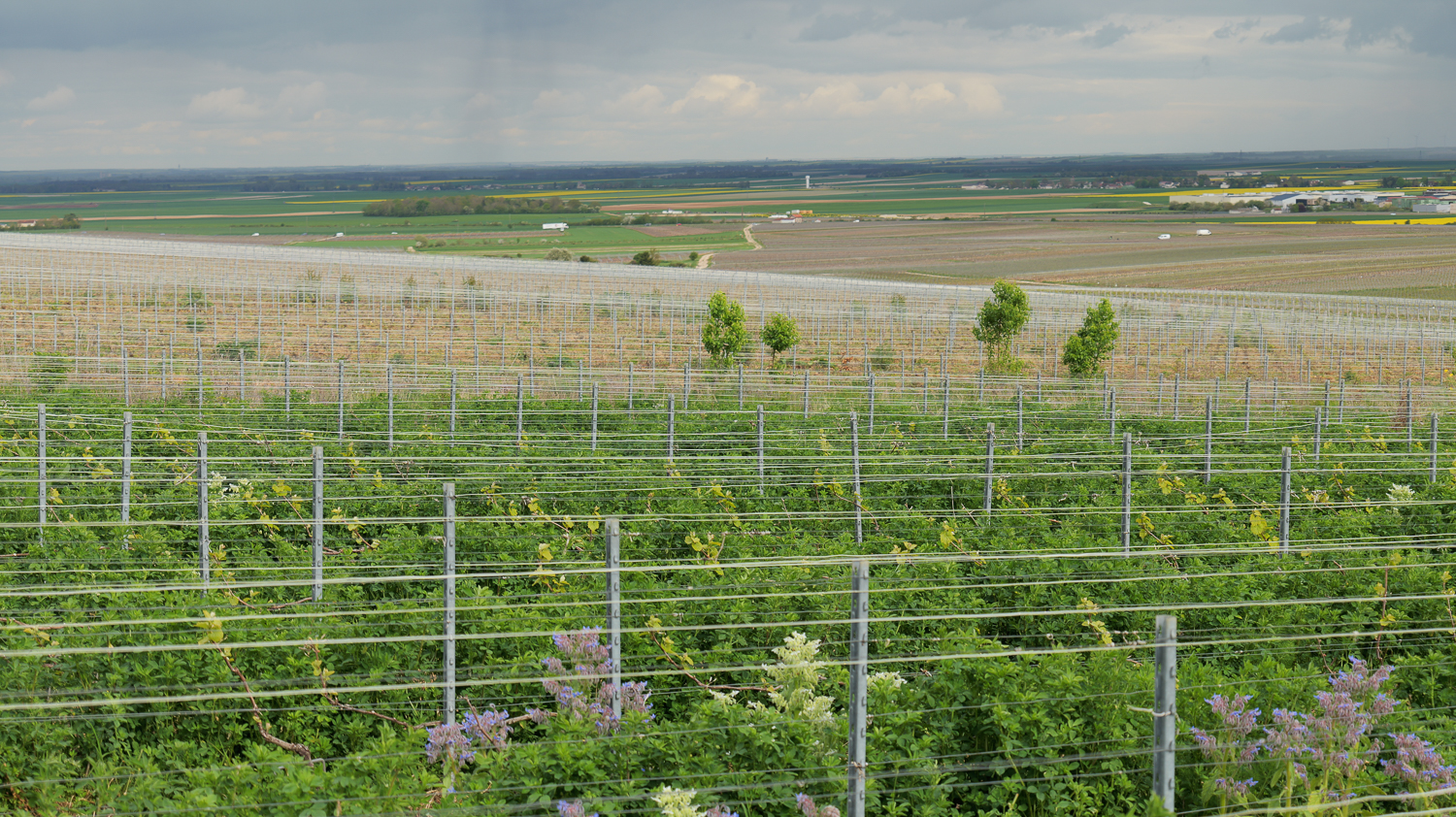
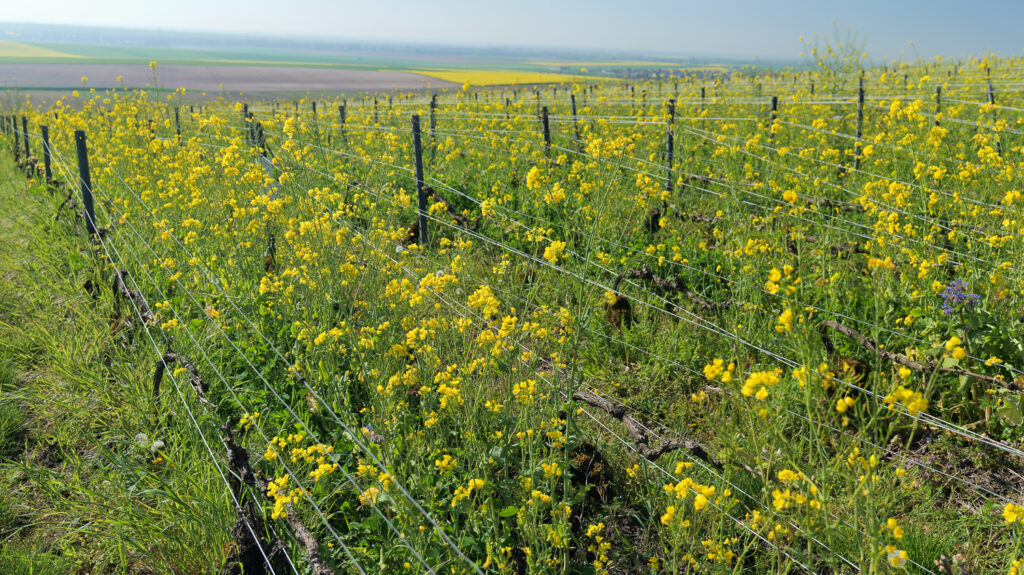
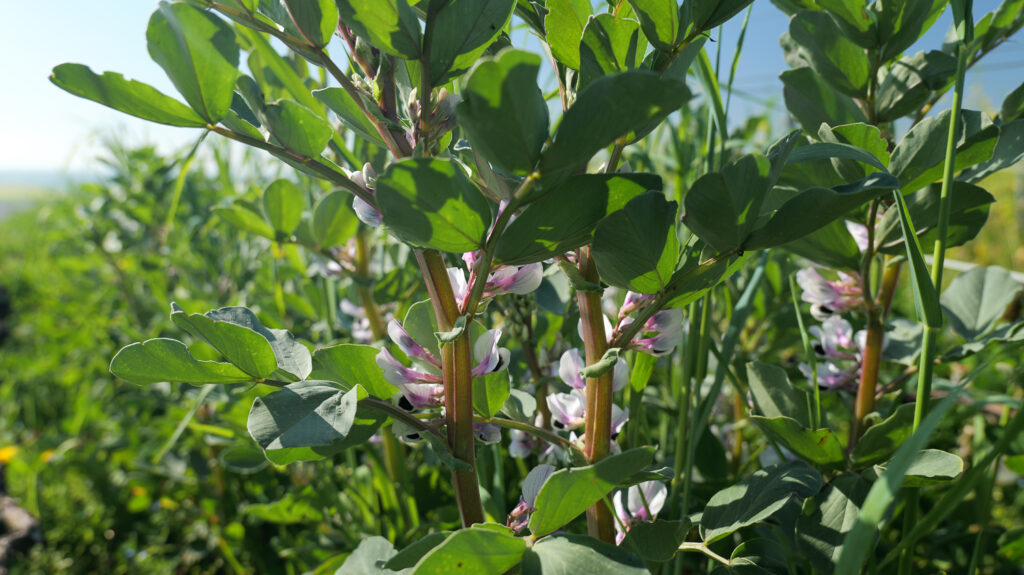
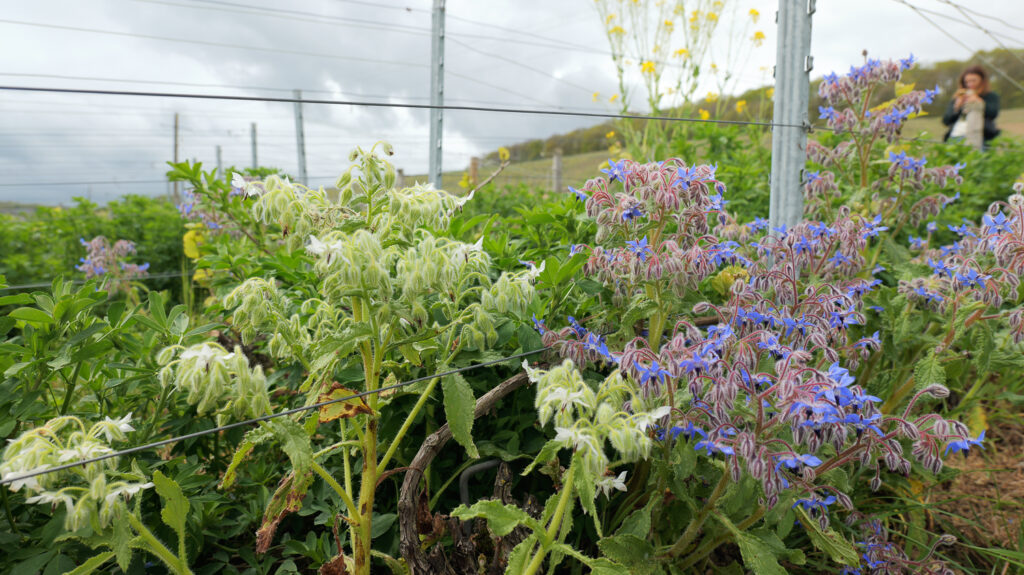
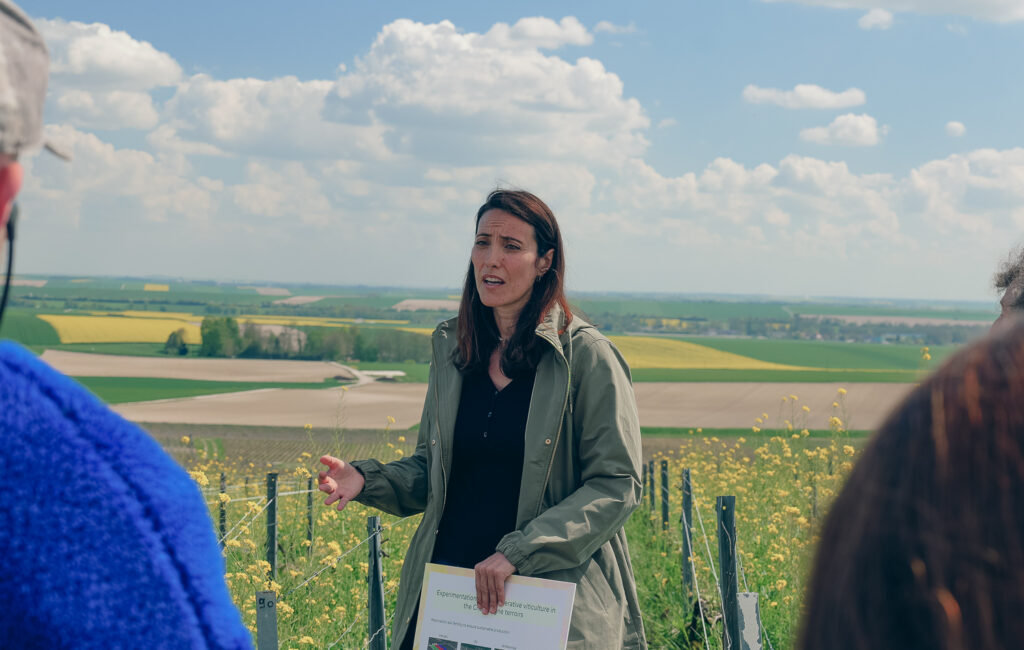
It’s mid-April, and I’m standing in one of the vineyard plots of Champagne Perrier-Jouët, in the Grand Cru village of Ambonnay. The buds on the vine are just bursting: these vineyards have dodged the spring frost that has afflicted some parts of the region this year, but there’s something very different about this plot, and the ones around it. While the rest of the surrounding vineyard area is bare and devoid of life, these are bursting with life and energy. The multispecies cover crops, sown in autumn, have been flourishing, and in particular the yellow of the mustard flower and the white flowers of the broad beans really catch the eye.
It was back in 2021 that they began with their regenerative farming project. The first year, 4 hectares of their 65 hectares of vines were farmed this way, and because of the ongoing success of these trials, they now have 33 hectares of their 65 hectares of vines farmed regeneratively.
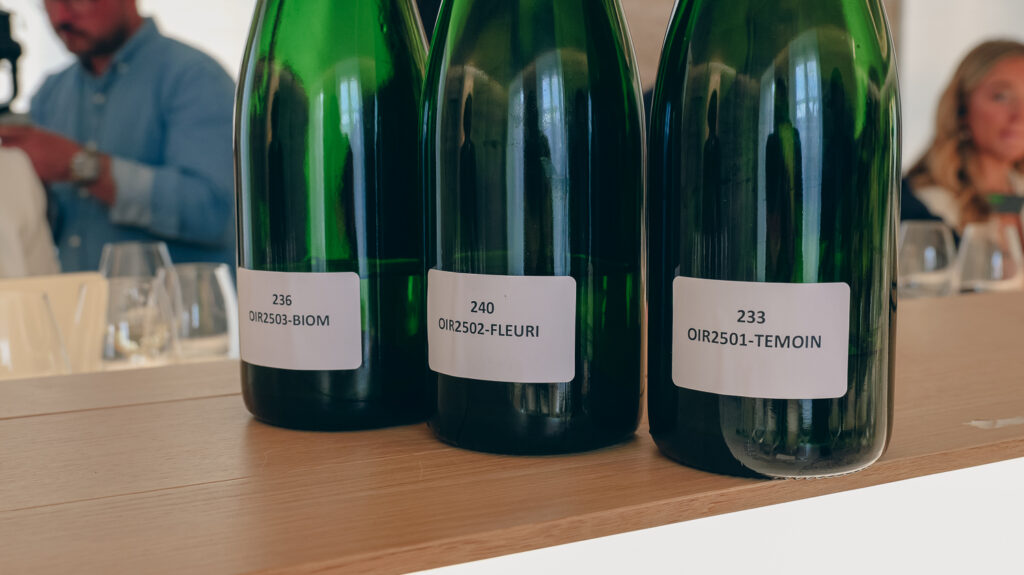
Importantly, the trials were established in such a way that they could measure everything: it’s a scientific trial. So the vineyards enrolled in the program are separated into repeated blocks of three different treatments.
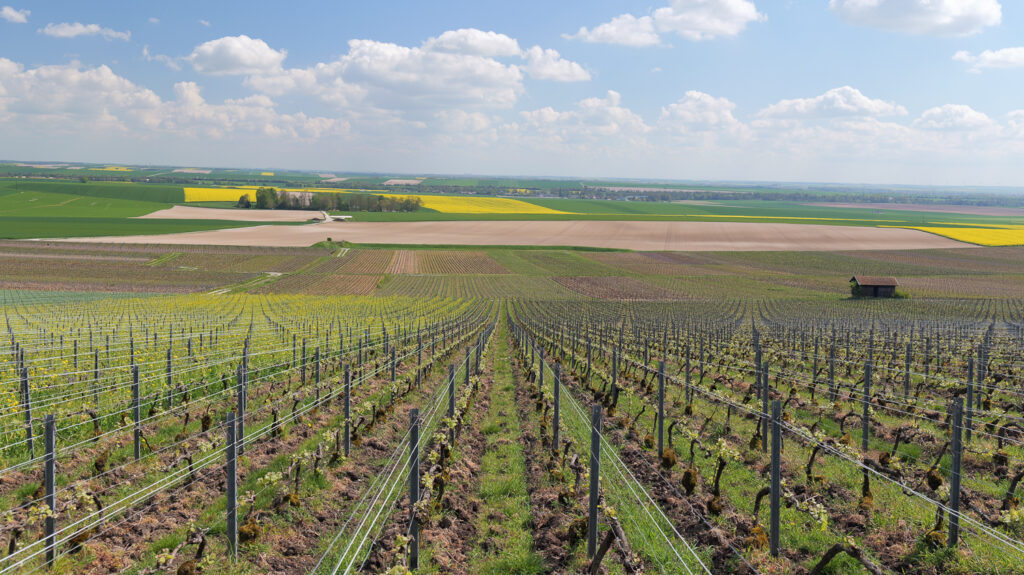
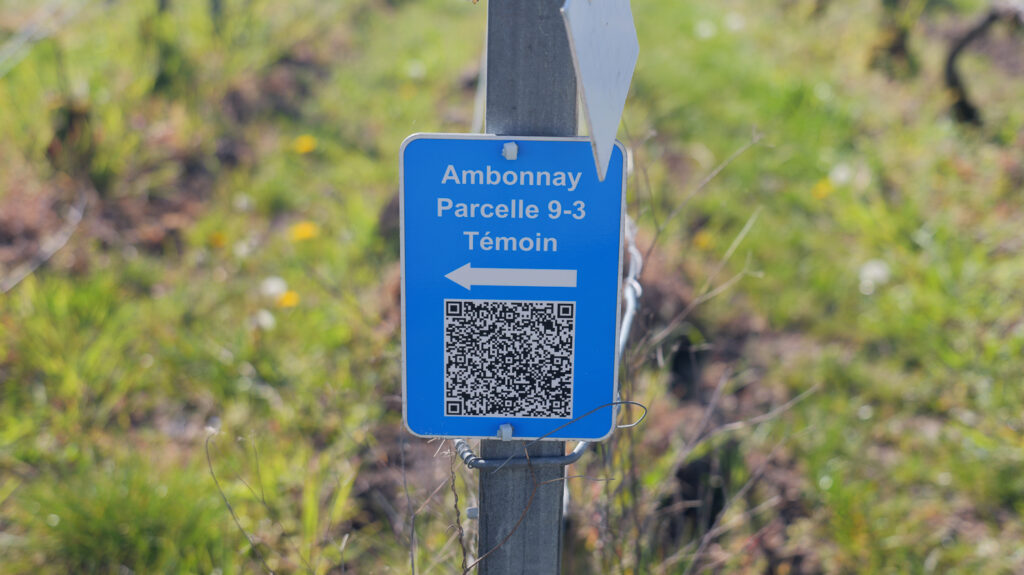
The first is the control, the témoin. This is the way that they have farmed up till now, and it’s certainly not a bad way of working. They haven’t used herbicides since 2000, so undervine weed control is done manually, by ploughing. Then the row itself is left grassed. This is a higher standard of viticulture than most of the region practices: in the Champagne vineyard of 33 000 hectares there are more than 16 000 growers, so many have small plots and this is not their main career. Herbicides are still widely used, because they are cheap and convenient.
Then we have two regenerative treatments. The structure of the vineyards in Champagne, with a high planting density of 10 000 vines per hectare, means that it’s hard to implement a full suite of regenerative practices because of the lack of space and the impact on an already close-planted vineyard of any extra competition. So their main approach has been to use multi-species cover cropping, with two different mixes.
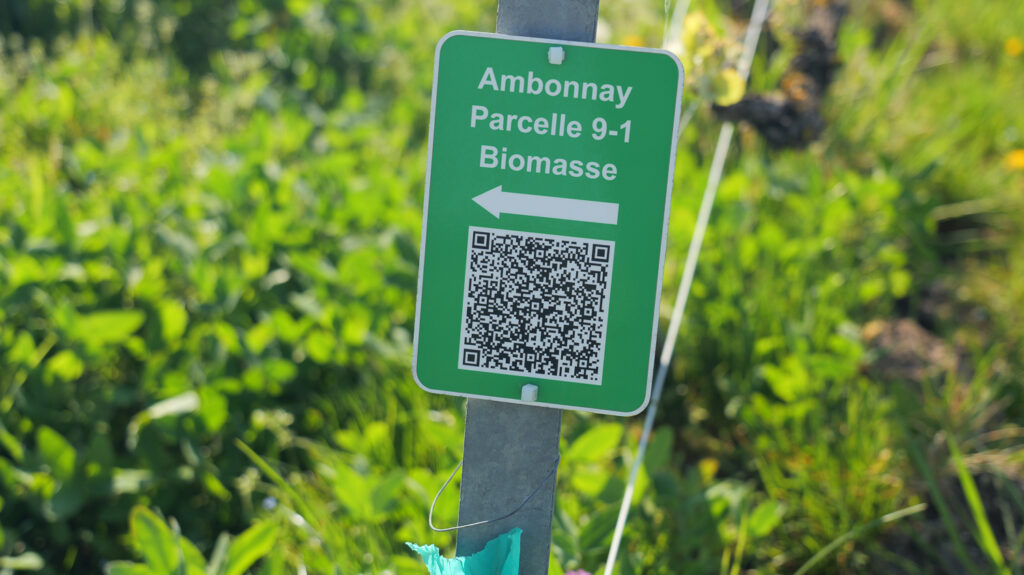
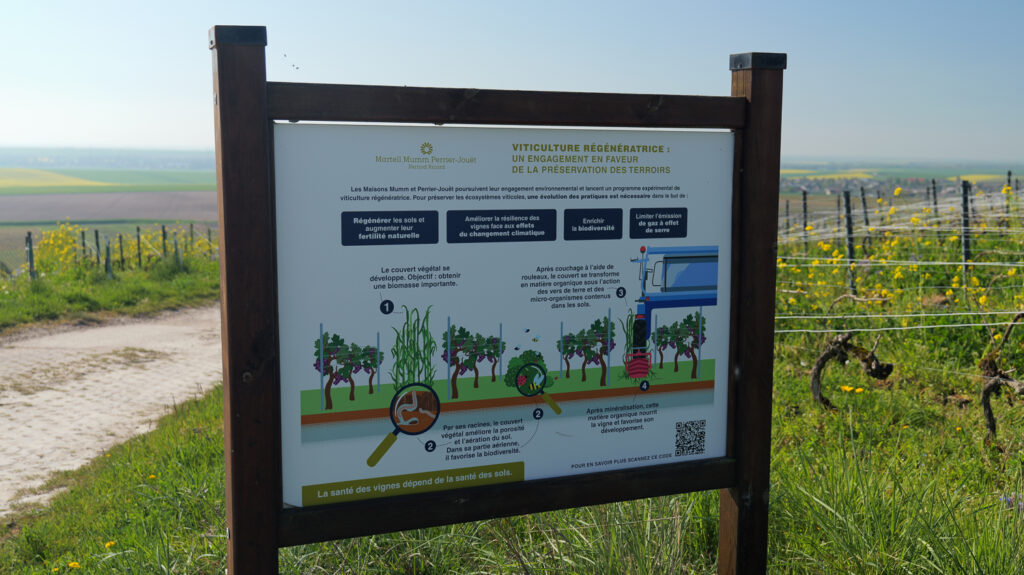
The first is a biomass cover crop. This consists of fava bean (Vicia faba), rye, clover and alfalfa, which is sowed in September. This is then flattened in late April using a roller crimper, or is incorporated into the soil using a light discing. The roller crimper breaks the stems and terminates the growth, which then lies on the soil and acts as a mulch. This protects the surface of the soil, lowering soil temperatures and reducing water loss. In the increasingly warm growing seasons the region is experiencing, this is a benefit.
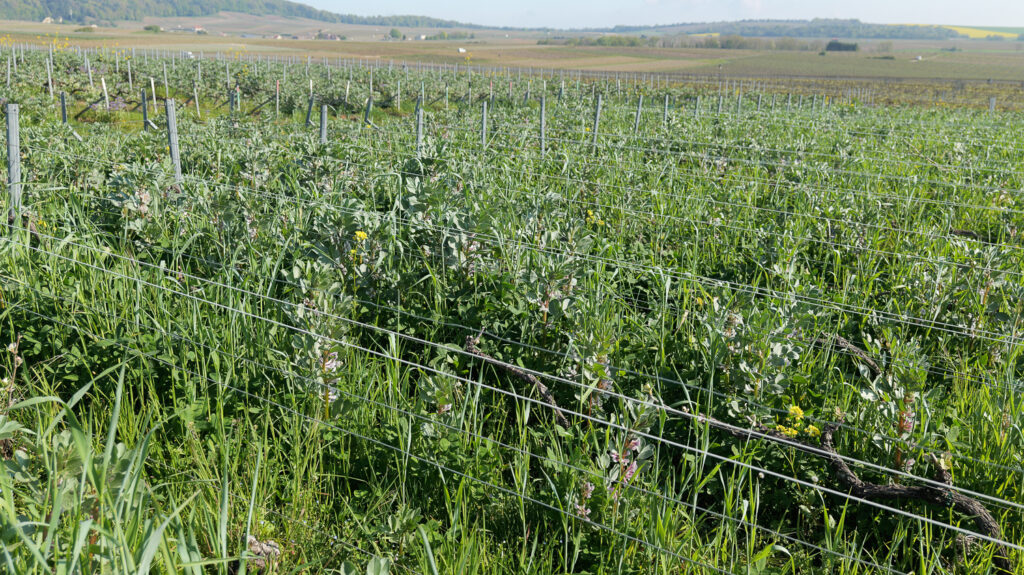
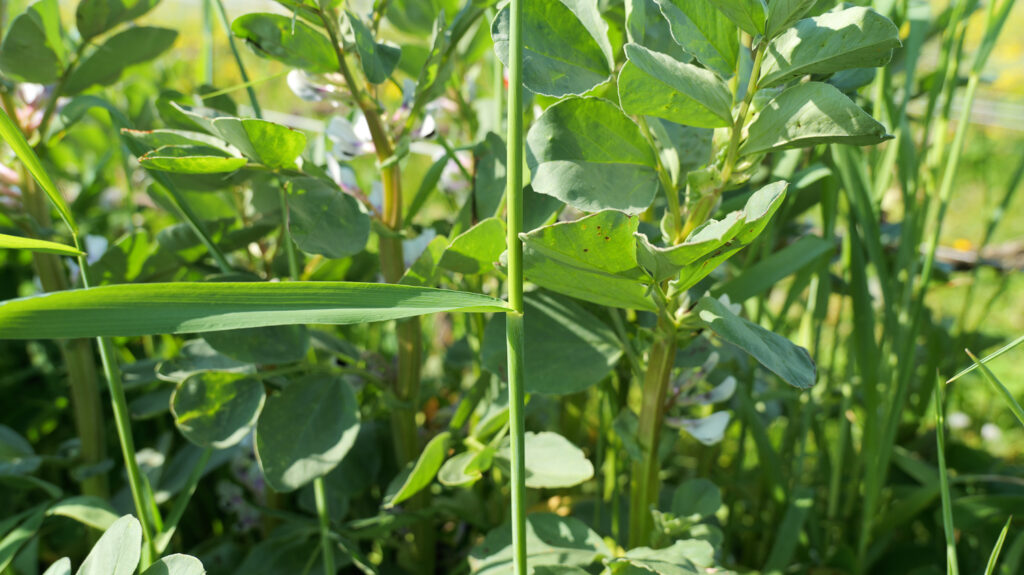
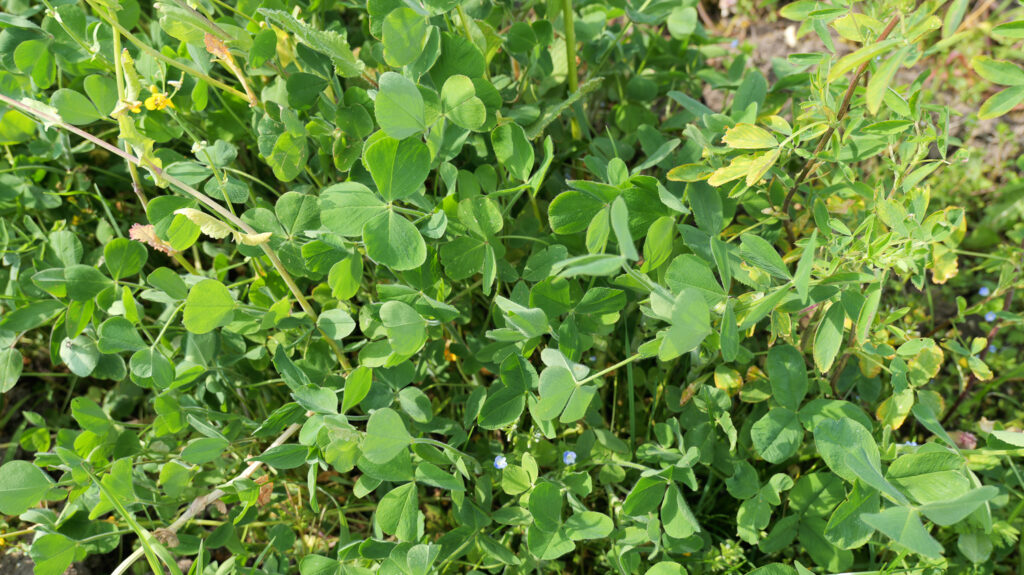
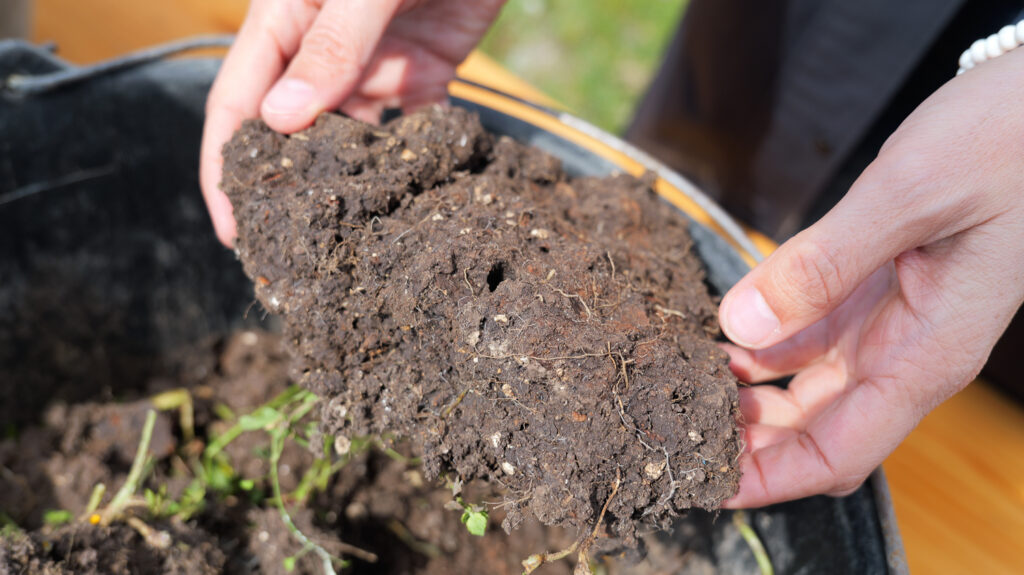
The idea behind the biomass crop is that as it decays it will release organic material into the soil. It also acts to fix atmospheric nitrogen. The crop has worked well, and Perrier-Jouët are seeing positive trends. Jessica Jazeron-Schneider, their vineyard transformation manager, points out some of the results. Compared with the control, the soil of both this and the second regenerative treatment (see below) has better porosity and structure. The cover can give up to 80 units of nitrogen, and they are seeing more pruning weight (an indicator of vigour), improved yields and also better quality grapes. They have also seen higher worm counts.
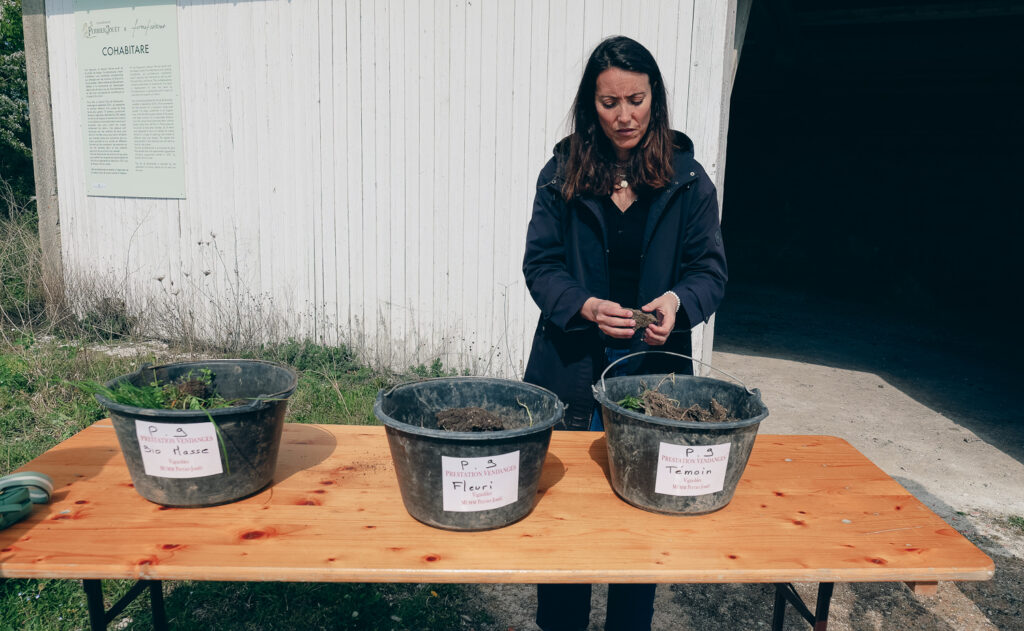
One of the concerns with having growth in the vineyard during the frost risk period is that cold air stays for longer, and they have seen this as a potential issue. But Ambonnay is not particularly frost-prone.
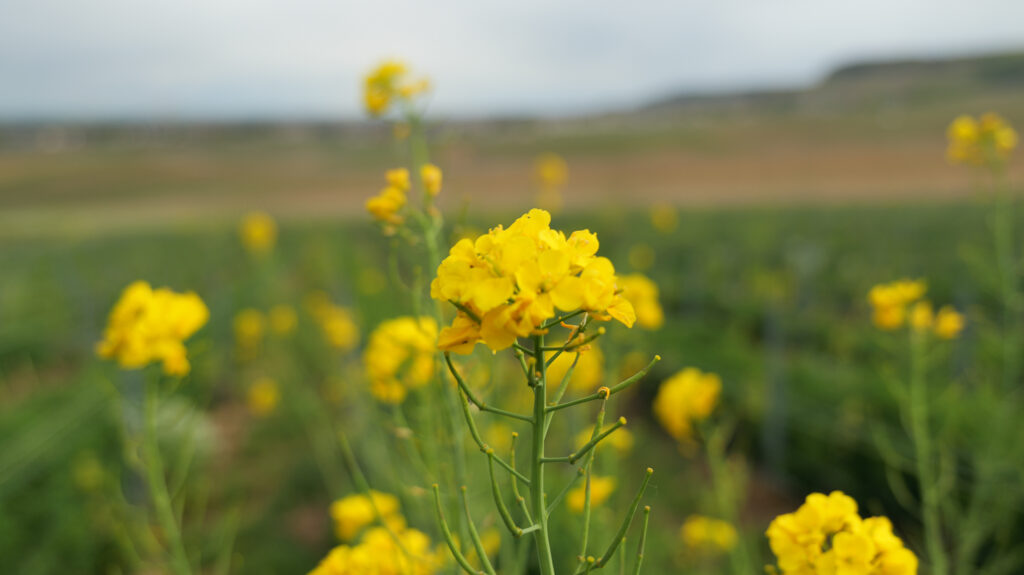
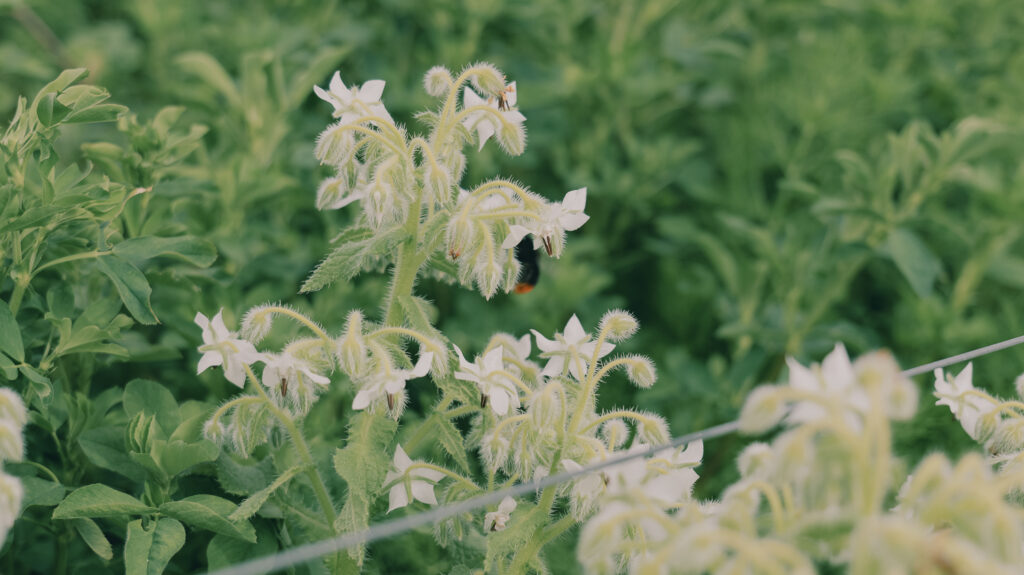
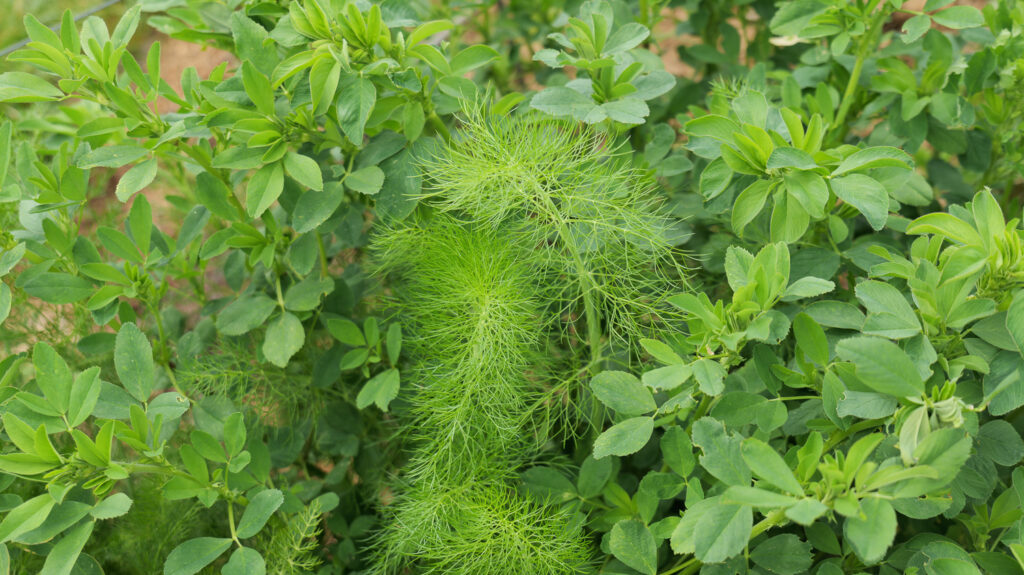
The second cover crop is the flower treatment. Here they have turnip, borage, fennel and mustard, as well as some alfalfa. The goal of this crop is to nourish the soil, as with biomass, but also to increase biodiversity. This crop is sown once every three years (the ones we are looking at are in their third year), and then it is flattened twice a year, once before vine treatment starts and then just before harvest. In the first mix alfalfa dominated everything, but they’ve now worked out the right ratios to sow.
They have two different sowing machines, because the floral cover requires the seeds to be just on the surface while the biomass crop is sown much more deeply. They will check the forecast before sowing in September an sow when rain is due shortly afterwards to help with germination.
The plan is to collect data for another three years, but already they have been impressed enough with the results that the plans are to include all their vineyards in the program by 2030.
Both of the cover crop treatments have seen an increase in yield of around 20%, while quality has improved.
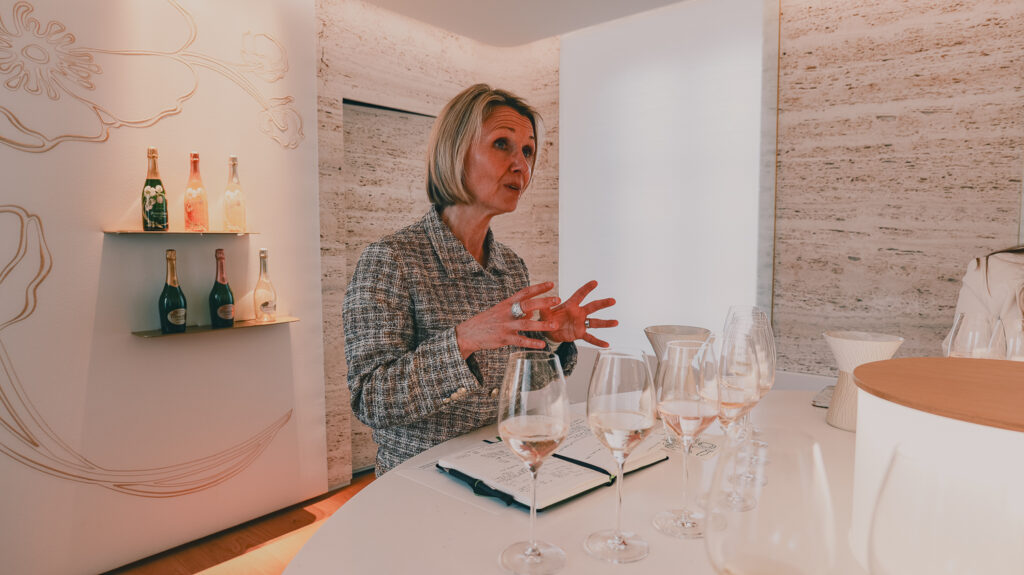
And the most remarkable aspect about these trials is that already there’s a difference in the wines. With chef du cave Séverine Frerson I tasted through base wines from 2025 on two separate occasions, and was surprised by how different wines from the three treatments tasted. ‘At the beginning I wanted to analyse what this gave to the wine, and what the profile of each modality is,’ says Frerson.
We began with Chardonnay. These wines are from a plot in Oiri that has been divided into three: control, biomass cover and flower cover. All harvested same date, 25 August. Pressed in a 4 ton Willmes press, just using cuvée (the best bit of the press). The wines are fermented and aged in 2000 litre tanks.
Control (témoin)
Fruity, bright and lively with keen acidity. Rich citrus fruit with lots of fruit and some fine spicy hints.
Flower Cover
Juicy, bright and linear with lovely precision. Keen acidity supports bright lemony fruit, showing nice taut fruit. Leaner than control.
Biomass cover
Juicy and linear with nice keen citrus fruit and good acidity. Focused and purposeful. Tightest and leanest.
I asked Frerson: what differences do they find with their regenerative plots? ‘In terms of yield, flower cover gives the best yield,’ she says. ‘For nitrogen, the levels are higher with flower and biomass than the control. They wines have more colour intensity with biomass cover.’ Frerson says that flower cover gives more complexity and finesse in the wine, and the biomass cover gives more freshness – ‘it’s a very straight wine’. The profile of the regenerative wines are in line with the style of Perrier Jouët. ‘Biomass is very straight and vertical with a lot of freshness. The floral cover is more delicate: the texture of this wine is different.’ They have seen these differences since 2021. The control is never the best wine.
Then we tried Pinot Noir from Aÿ.
Control
Focused, fruity, lemony, a touch of cherry and green apple. Juicy and vivid, slightly compressed.
Flower cover
Much more expressive with bright lemon and mandarin fruit, as well as some cherry. Very bright and with lovely layers of flavour.
Biomass cover
Juicy and vivid with bright redcurrant, cherry and lemon fruit. Supple and with lovely acid line. Very fine.
To me, the two regenerative wines are much finer and more interesting.
They started tasting since 2021, and the first conclusion was that biomass is very interesting for Pinot Noir, and flower cover for Chardonnay is promising, but Severine thinks it is too early to decide. ‘Regenerative viticulture is very interesting for the style of Perrier Jouët,’ she says. ‘There are more floral notes, more fruitiness and more freshness.’ They want all their vineyards to be farmed regeneratively by 2030.
The real importance of this work is that it is proof of principle, showing other growers that this approach works. The hope is that others will adopt these regenerative practices and that the bare soils of Champagne in spring will be a thing of the past. Along these lines, several of partner growers are now showing an interest in regenerative viticulture, and they have a special team to work with them. They have received 25 growers into their vineyard to look at their regenerative program. The idea is to have a special contract for those who are going to farm regeneratively. They want to push these people towards this way of farming with knowledge support and higher prices for the grapes. The goal is to convince people it is a good choice for the soil and also the wine.
On my first visit in December 2025 I saw another element to their regenerative approach. This was a vitiforestry project, which they began in winter 2023. In a two hectare plot they have avoided the normal Champagne monoculture, and as well as planting vines they have given over 10% of the plot to biodiversity. They enlisted the help of naturalists and drew up a list of different species that would be suitable, and have planted in three strata: herbs, shrubs and trees. Of the 1000 shrubs and trees they planted, they got a 90% survival rate. It’s too soon to see the benefits, but the landscape of Champagne could really use a biodiversity injection like this, and as well as providing ecosystem services that may result in less spraying, this could make the vineyards more resilient in the face of climate change.
A film of the regenerative viticulture plots in Ambonnay:
[Disclosure: I was paid for my work with Perrier-Jouët, which included hosting a masterclass at Wine Paris, and helping with a press trip to explain the project to journalists in April 2026. ]