Exploring speciality coffee and its parallels with fine wine: planning for the future, looking at new coffee varieties
Just as grapevines are sensitive to the climate, coffee varieties only thrive within narrow climatic bounds. And with climate change, coffee production is at risk. For this reason, Mió are busy trialling new varieties of coffee.
99% of the world’s coffee comes from two species. There’s Coffea arabica (referred to simply as arabica) and Coffea canephora (referred to as robusta). Arabica is descended from the original coffee trees in Ethiopia, and represents 62% of plantings. It comes in a range of varieties (Mió have Red and Yellow Catucaí; Mundo Novo; Red, Yellow and Pink Bourbon; Acaiá; Arara; Red and Pink Gesha). Arabica makes finer, milder, more aromatic coffees and the beans fetch higher prices. Robusta, which is 38% of coffee plantings, gives strong, bold flavours with some bitter undertones. It mainly goes to blends and instant coffees. It’s widely grown in central and western Africa, Indonesia, Vietnam and Brazil. It can stand hotter, more humid climates and is more resistant to climate change. Robusta has a higher level of 2-methylisoborneal, giving typical earthy notes.
At Mió, one of the research projects they have initiated is looking more carefully at a genetic variant of canephora called conilon. This isn’t a separate variety, as such, but a genetic variant with slightly shorter stature and ability to ripen in cooler climates than regular robusta. Mió haven’t been growing canephora before, because it is too cold and too high altitude. ‘Ideally, canephora wants to be above 26 °C, says Ana, ‘and at an altitude of about 200 m. Here were are at about 800 m and it gets cold in winter.’
Mió have hired Dr Lucas Louzado who was formerly at the University of Epsírito Santo, a state in Brazil where a lot of canephora is grown. He has worked hard on improving the quality of conilon, bringing it into the speciality coffee realm. Louzada wanted to try canephora in Minas Gerais where Mió are based. Canephora might be a solution to climate change, as arabica suffers as the climate gets warmer. Mio don’t think this is the main solution, but they were willing to try it and test it. ‘We selected 150 different clones of canephora,’ says Ana. ‘Arabica is a self-pollinating tree so you can plant the same variety over one plot and it will grow well. With canephora, you need multiple types, because they are not self-pollinating. When you plant canephora you plant different clones of the same type. For Arabica you can plant the beans as seeds and they will grow into a plant. Canephora doesn’t grow like this: if you plant a seed, it will grow, but it will be a new clone that’s a blend of the two parents. If you want to maintain the same clone type across a plot, you need to use the plant itself. You bend them over and cut a piece off the bottom a side trunk, and then plant that.’ It will be interesting to see what results they get from these canephora plantings.

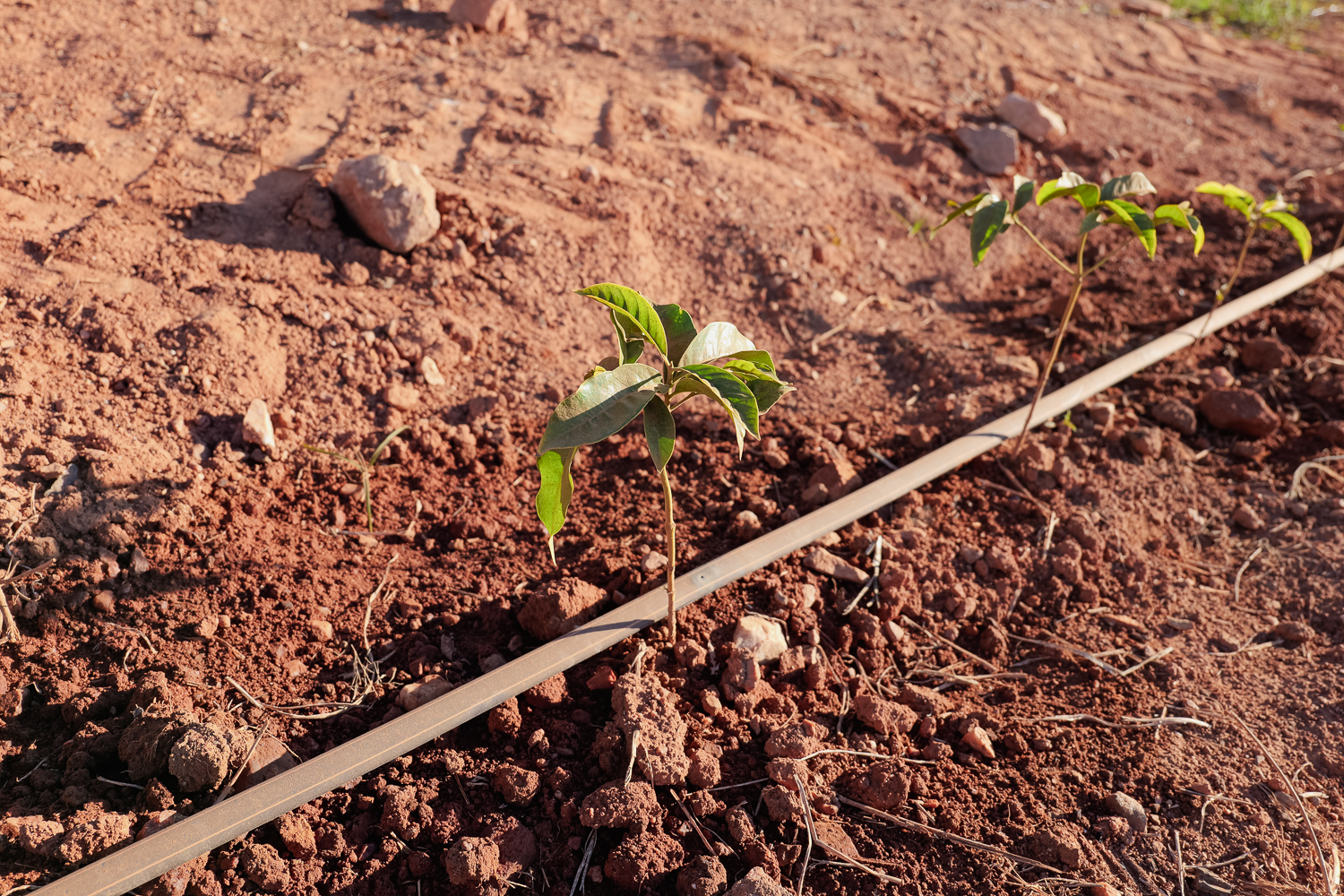
Mió are also experimenting with different arabica varieties, and we saw a plot where Lucas Louzada is assessing new varieties and even new species of coffee that could prove promising in the future. This is part of a large collaborative project, and they have planted lots of different varieties, managing the plants just the way they would manage their other plots. The partner scientists have more than 300 plots around Brazil where they are doing the same thing.
In the experimental plot, he showed us a new species that shows a lot of promise.
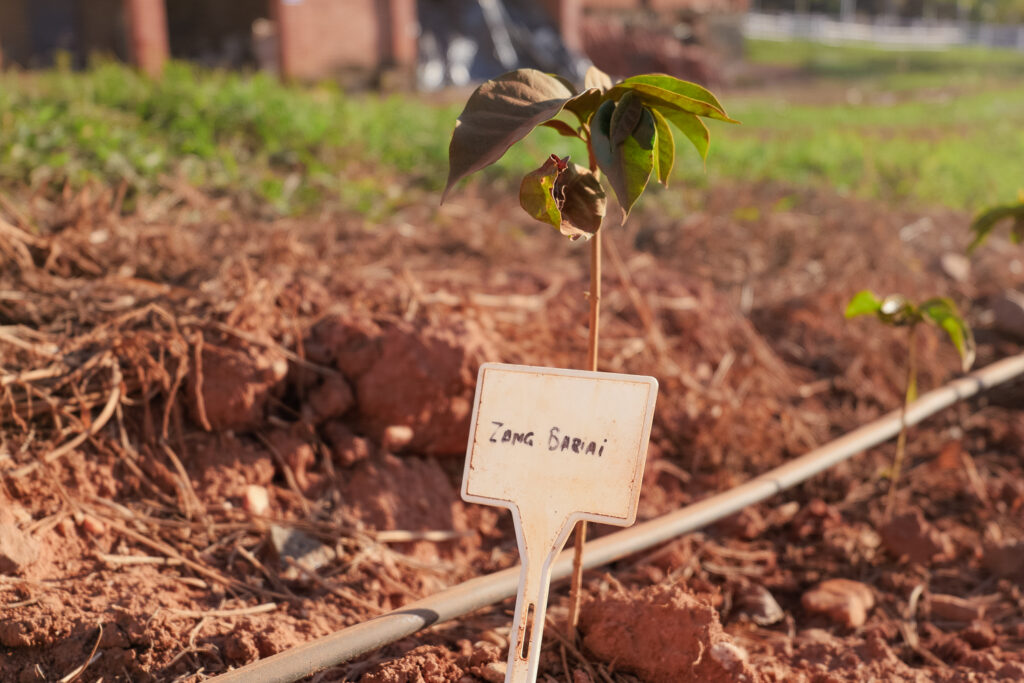
They have planted Coffea zanguebariae which they obtained from Mozambique. It is s indigenous to southern Tanzania, northern Zimbabwe and northern Mozambique including Ibo and Quirimba islands, where it grows in dry deciduous forests and riverine and coastal thickets.
It is resistant to heat and disease, and the flavour is completely different, he says. In two or three years it will be possible to make coffee from these plants. ‘The idea is to have more wild species in this plot to study, to see their adaptation, and to assess their sensory profile.’ Zanguebariae is completely new,’ he says.
SPECIALITY COFFEE AND ITS PARALLELS WITH WINE
- A visit to Fazenda Mió in Brazil to catch the harvest
- Regenerative farming in coffee production at the Sombra agroforestry project at Fazenda Mió in Brazil
- Planning for the future: looking at new coffee varieties
- Sensory assessment of coffee, with parallels to wine tasting: cupping, grading and describing, with Dr Fabiana Carvalho