Sensory assessment of coffee, with parallels to wine tasting: cupping, grading and describing, with Dr Fabiana Carvalho
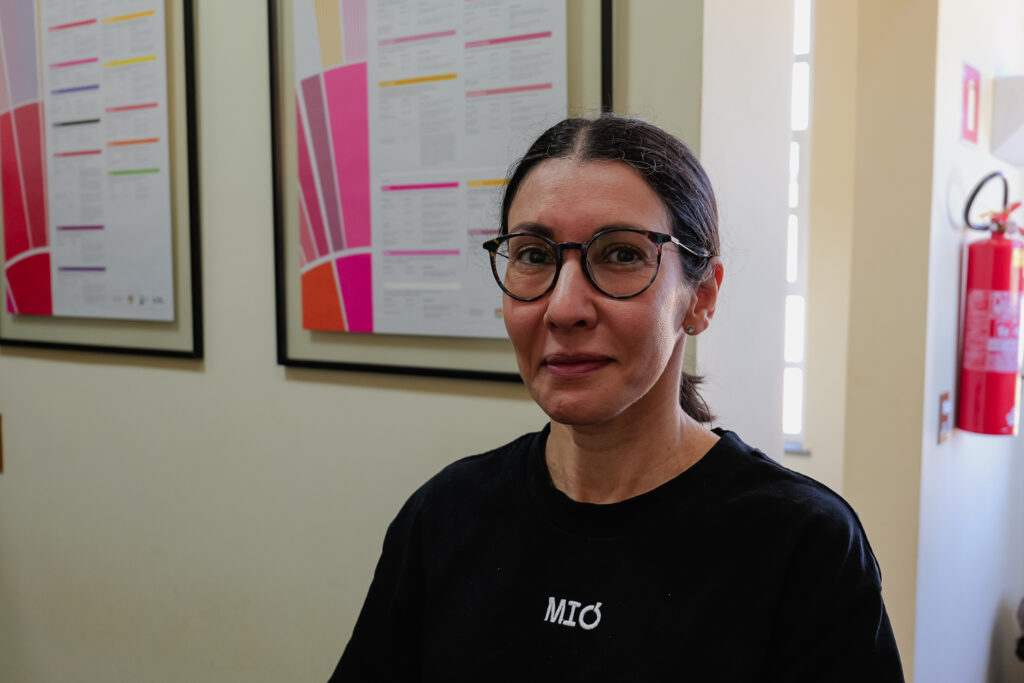
Dr Fabiana Carvalho, a neuroscientist, is a researcher from the University of Campinas who also works with Mió coffee. She took us through a demonstration of her work on the sensory side of coffee.
Key to quality assessment is cupping, which is very similar to wine tasting. The difference here is that before we assess beans, they need to be roasted and ground, and then the coffee must be brewed. Each of these stages has a lot of potential to alter quality, so these steps must be standardised.
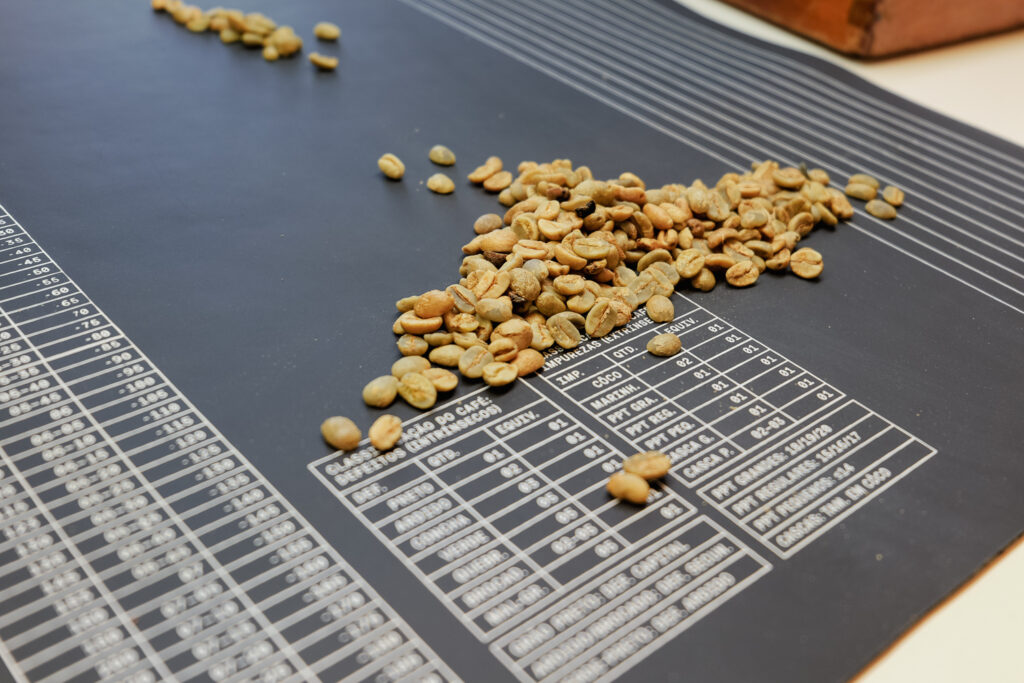
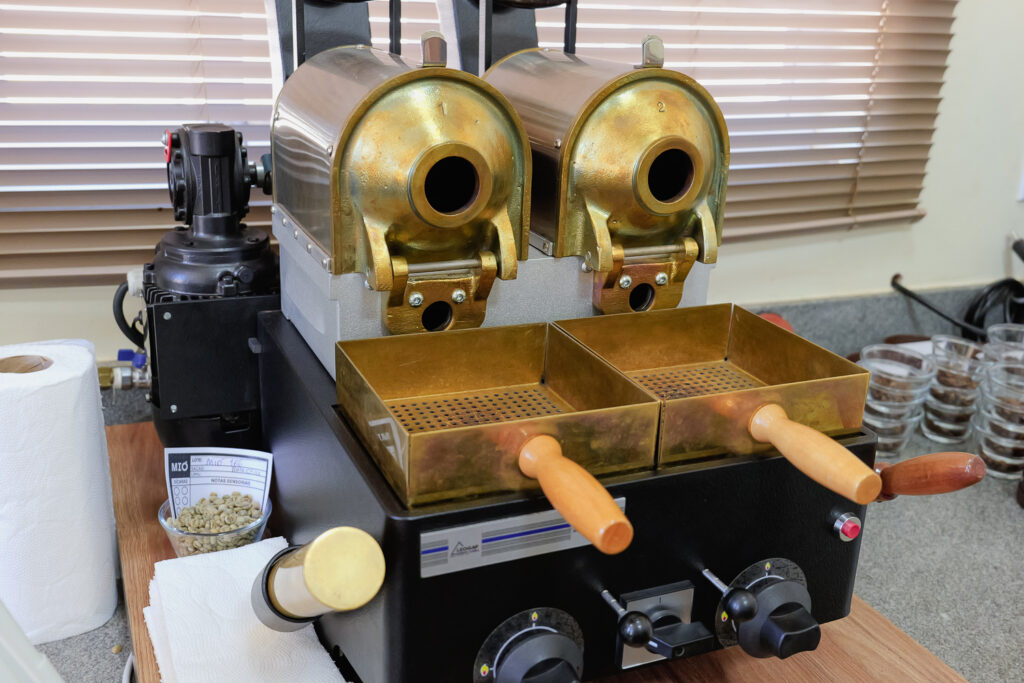
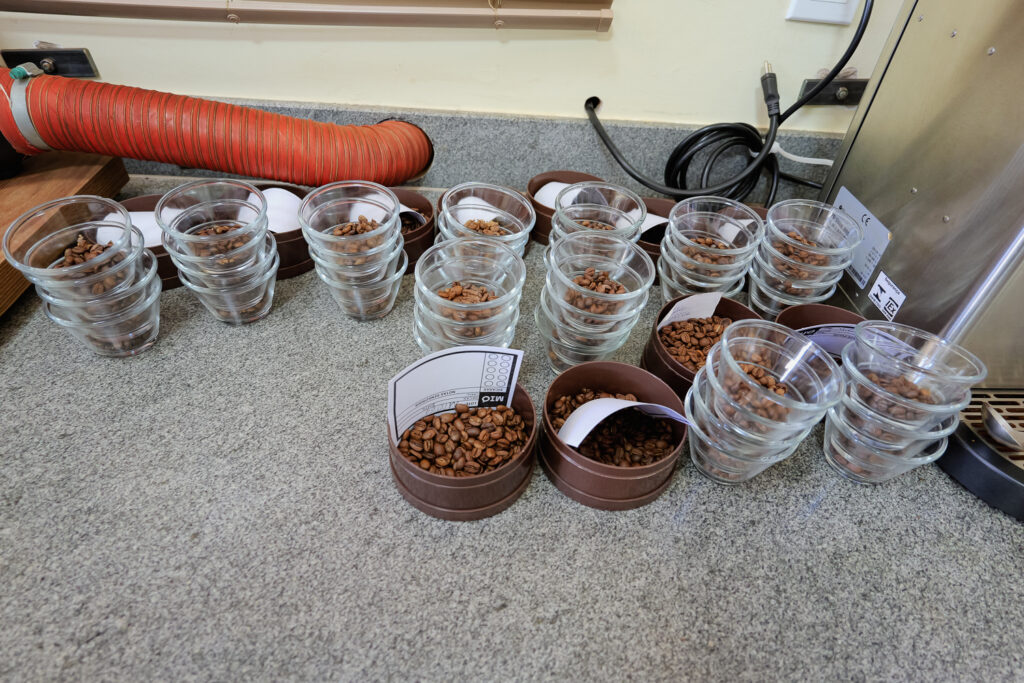
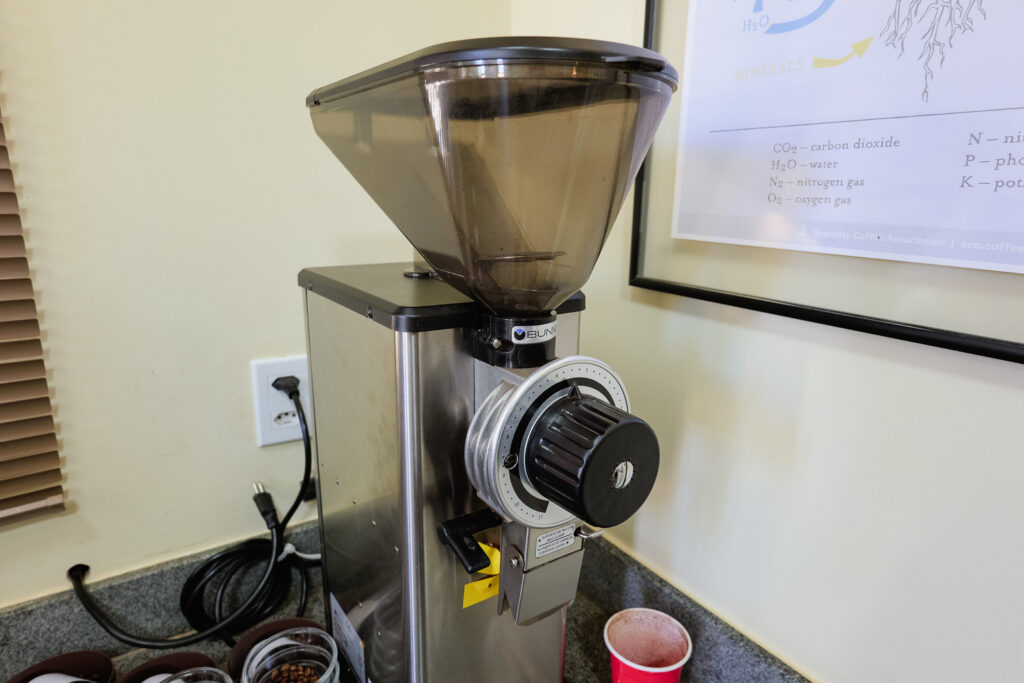
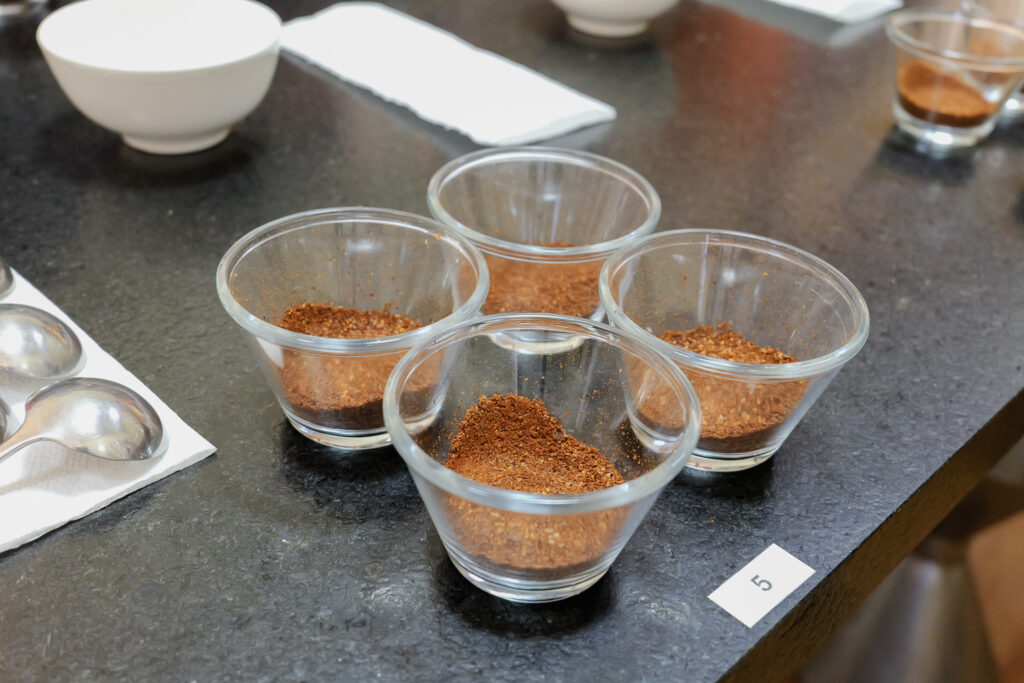

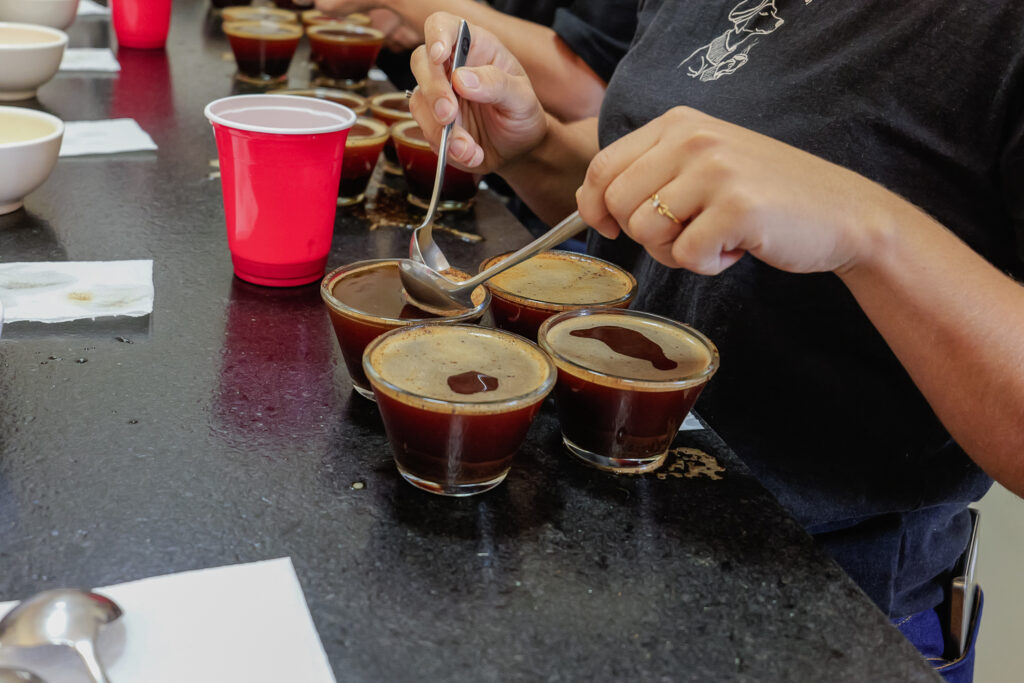
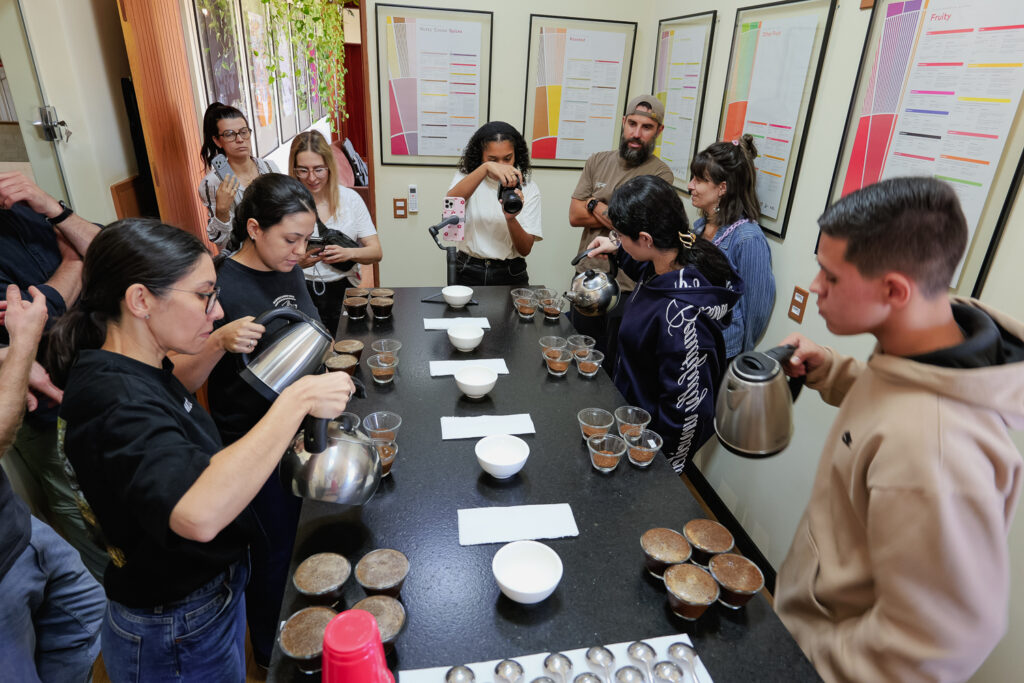
The beans are roasted to the same level and then ground. They are measured out into cups, and then hot water is added for them to brew. After a short period, the cups are ‘broken’ by moving any solids at the surface to the bottom with a spoon. Then it’s time to cup: you take a spoonful and then sip it with air, making a noise, you let it stay in your mouth for a while, and then you spit after you have made your assessment.
Coffee is routinely graded by licensed professional coffee graders called Q Graders who score each coffee out of 100 based on a range of sensory categories including acidity, aroma and body. Any coffee rated above 80 is classed as speciality.
This is an interesting comparison point to wine. With wine it is normal to score out of 100 in professional assessments, but there’s no effort or desire to make this consistent. In coffee it seems there is much more consensus among professionals to converge on the same score, and there is much less debate. It’s also an internal conversation in the coffee business, and speciality coffee isn’t sold with a score on the packet from a famous critic. There is no 100 point coffee, for example. Once you get to the higher scores, it’s much more about the style differences than it is to absolute quality.
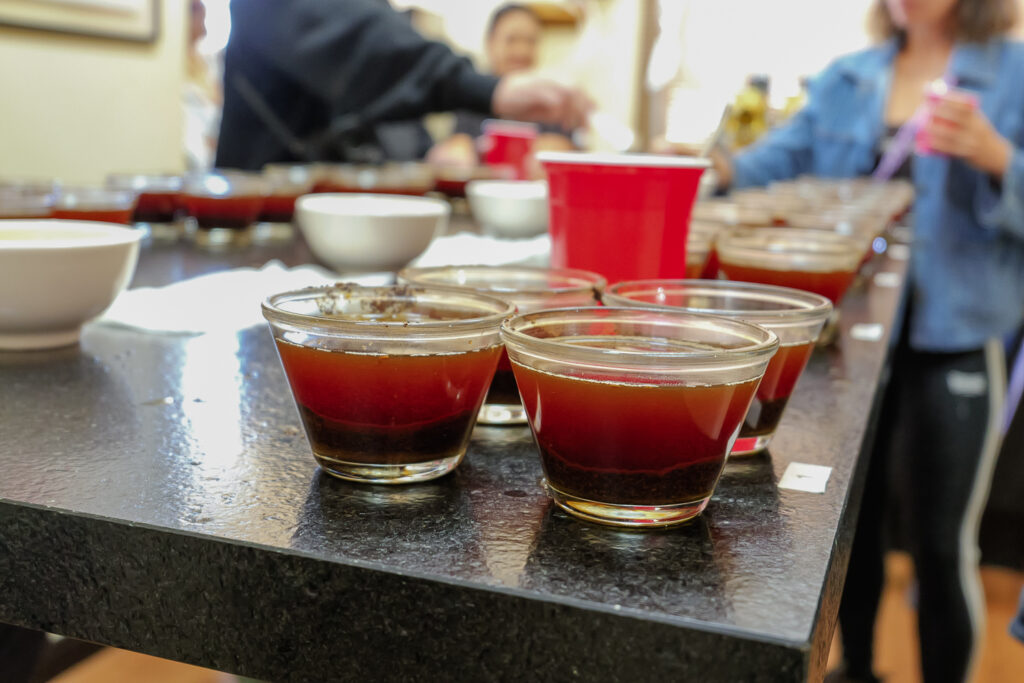
We had two cupping sessions: the first with some coffees scoring 78-84, and then a second session with coffees scoring over 85. This was the first time I’d taken part in a cupping session, and it was really interesting. I could see differences between the coffees, but I was clearly coming at this from an amateur point of view where I knew what I liked, but couldn’t reliably assess the score of each coffee.
‘Cupping is a way of tasting coffee for business to business,’ says Fabiana. But she adds that in communication about coffee, ‘everything that is B2B is being dragged down to B2C, and the consumer is lost.’ So what matters in communication with the consumer? She reckons origin first, and then roast level: these both communicate about the flavour of the coffee. Fabiana suggests that it’s important for the consumer to get the coffee they like, and so the key information should be origin and roast level, and then everything else can be in smaller font or on the back of the bag. She also suggests that the coffee should indicate what it’s best for or good for.
‘We overcomplicate it,’ says Nick Mabey of Volcano Coffee Works. Fabiano adds, ‘We get excited about it.’ And this can mean that communication with consumers can just have too much information content!
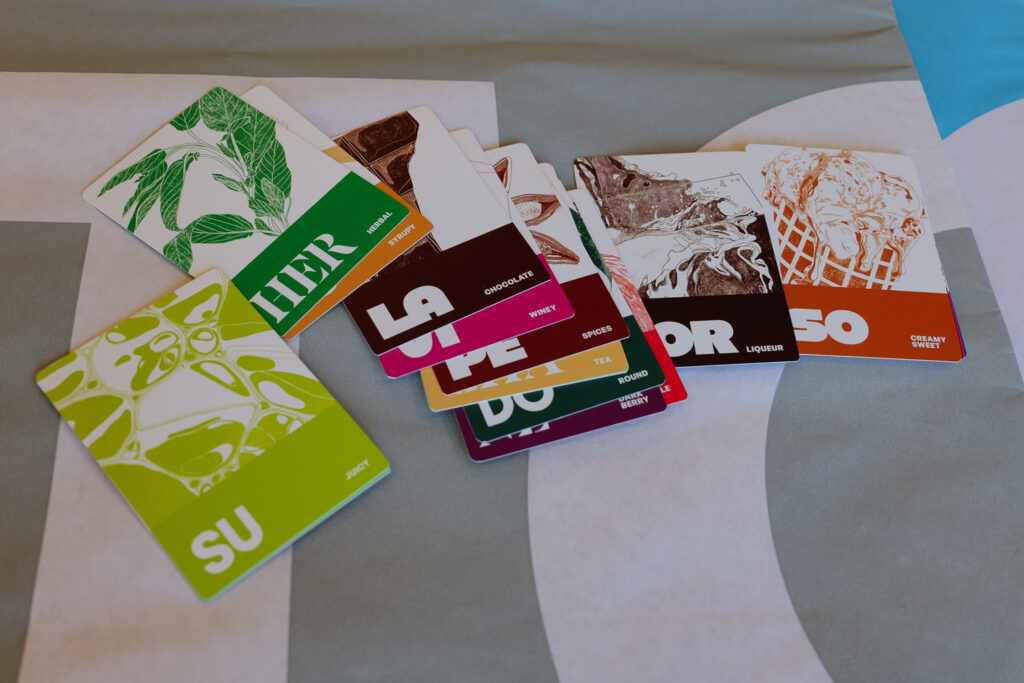
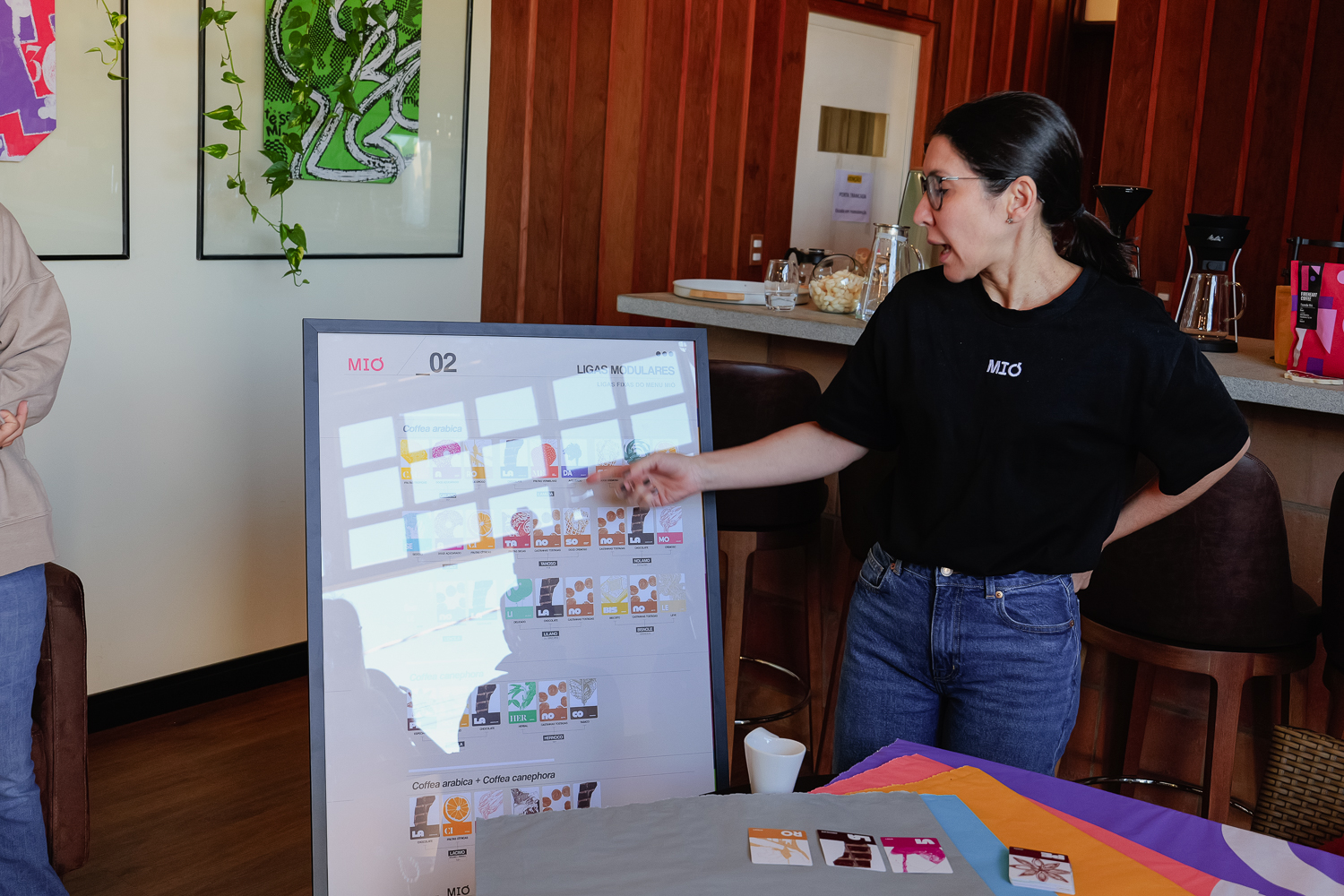
Fabiana then demonstrated a sensory tool that they’ve developed that looks like a set of playing cards. It’s called the Coffee Garden of Forking Paths, which is a card game that helps in sensory profiling and naming of coffee lots. These cards are separated into three sensory categories (Full, Body, Bright) each of which is then broken into individual descriptors.
This was named after a short story by Luis Borges. ‘If you are on a route, you have choices,’ says Fabiana. ‘For flavour it is exactly the same. You face a yellow fruit note: so are you going to citrus or tropical fruit? We aren’t necessarily all going to choose the same path. To me it might be more yellowish on the mango or pineapple side, and to you it might be peach. That’s fine, because we don’t come from the same place. We can disagree.’
‘We brought the common attributes that we find in Mió coffees, listed all them, and separated them into Bright, Full and Body.’
Fabiana also mentioned the Kiki/Bouba effect, which I’d not heard of before. ‘100 years ago a German psychologist showed to people two shapes. A very pointy star shape, and more of a blob. He asked people to name them: which one is Kiki and which one is Boubar. People said the blobby one is Boubar and the pointy one is Kiki. It doesn’t make sense because shapes don’t have names, but this is an example of cross-modality. It is a cross-talk between the senses.’
‘For the brain it does make sense: some shapes are associated with certain sounds. The sharpy one is Kiki because the sound is sharp, and the blobby one is Boubar because the sound is blobby.’
‘Even a floral note can be Kiki, more on the bright side.’
The idea is that you taste the coffee and then use the cards to come up with three words that describe the coffee best.
This sort of multimodal sensory approach really helps them in their grading and blending work. ‘The perception is more stable when you use the cards,’ says Fabiana. ‘But it only works when the names are representing what is actually there.’ The grading and blending allows Mió to deliver a consistent blend to their customers each year, with their desired characteristics. But Fabiana says that each year they find a few lots of coffee that are complex and balanced on their own. ‘These will become the micro or nano lots,’ she says.
SPECIALITY COFFEE AND ITS PARALLELS WITH WINE
- A visit to Fazenda Mió in Brazil to catch the harvest
- Regenerative farming in coffee production at the Sombra agroforestry project at Fazenda Mió in Brazil
- Planning for the future: looking at new coffee varieties
- Sensory assessment of coffee, with parallels to wine tasting: cupping, grading and describing, with Dr Fabiana Carvalho