Beaumes-de-Venise exploration: Xavier Vignon
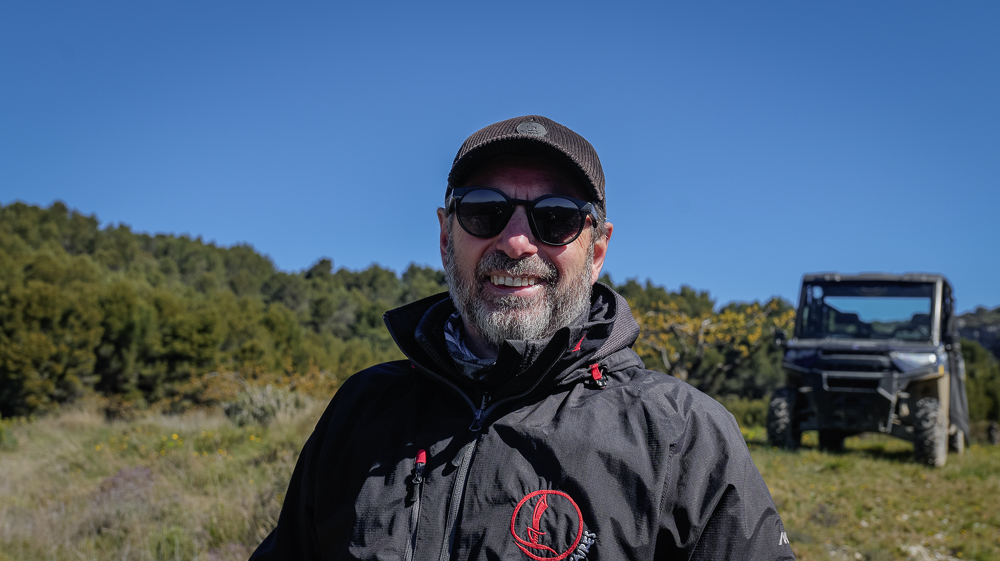
Xavier Vignon arrived in the region in 1996, and started to make wines here in 1998. He was an outsider, but it was standing above the village of Suzette, looking across to the Dentelles, where he decided he wanted to be a consultant winemaker focusing on the Rhône.
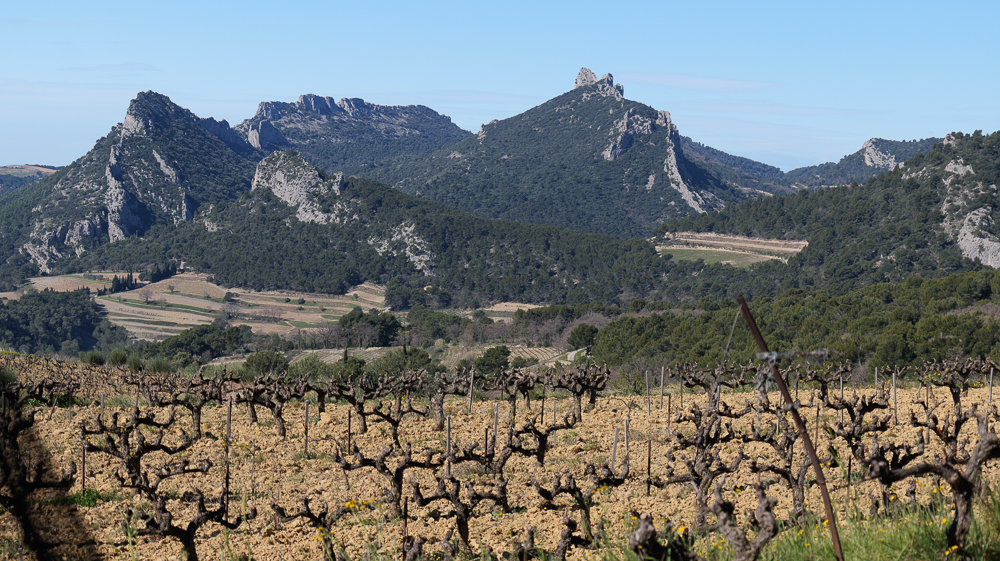
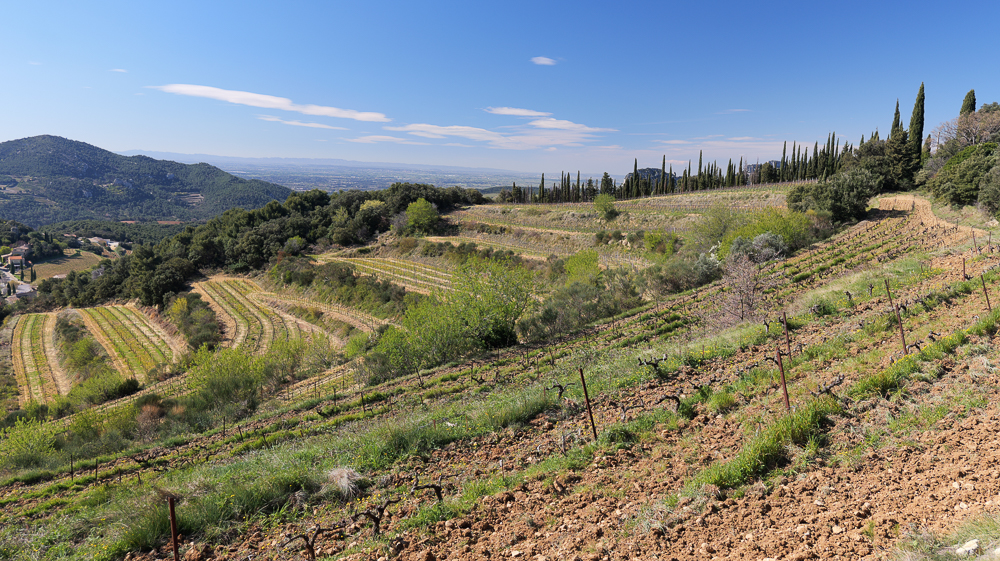
He is also one of the co-presidents of the Beaumes de Venise Cru. He took me to the spot high up in the cru where he looked over the vineyards back in 1996 and decided that this was the place for him.
Xavier made his name as a consultant, and his own wine project was born more-or-less by accident. During his consulting work, he took a little wine from each cru, just enough to make a small bottling (5000 litres = 1 pallet = 50 cases of 12). ‘This was my unit,’ he says. The idea was to demonstrate how good southern Rhône wines could be: back then, their quality wasn’t appreciated as much as it is now. He didn’t want to sell the wines, but rather he aimed to give them away.
But some friends of his submitted two bottles of each to the 2000 edition of the Guide Hachette, some 6 wines or so from each of 20 producers. They all ended up in the guide, and one from Ventoux got a coup du Coeur. His personal address in Barroux and his phone number was published in the guide, and it said that he was open 7 days a week (mistakenly; he wasn’t even selling wine). And people started turning up. ‘It became a nightmare!’ he says. But he registered as a negociant and began selling bottle by bottle.
Now he’s begun buying vineyards, too. This began when he sold his analysis laboratory in 2012. His focus is on Beaumes-de-Venise with 16 hectares, but he also has vineyards in Vaqueyras, Ventoux and Châteauneuf, with 37 hectares overall.
Xavier has some really interesting ideas, one of which is the Vinarium.
This is a large tank of 7000 litre capacity that acts like a sort of wine womb. Inside it, Xavier fits five 200 litre barrels, with stainless steel hoops and fittings (so they don’t corrode). He now has 10 Vinariums. Interestingly, there are two different sorts of Vinarium wine: the wine inside the barrels, and then the wine around the barrels – the amniotic fluid, if you like. I tried one white wine that was this latter category: it finishes fermentation in the tank (it goes to the Vinarium at 1030 density).
He’s also tried this with amphorae. He has one wine, a Châteauneuf-du-Pape, that he has aged for 6 years using this immersion process.
The story of how he devised the concept for the Vinarium is convoluted but interesting.
When he was running the analysis laboratory in conjunction with his consultancy work, he noticed that a lot of the tannins from the 2003 vintage reds were very dry. This was the very hot year, a couple of decades before almost all years were very hot. What could be done about these dry tannins?
In 2007 when he was consulting for Château La Nerthe, they tasted the 2003 and compared it with the new 2007 wine. The 2003 was tasting very dry, but the 2007 was tasting beautiful. The analysis was the same. He was trying to find a way to make the 2003 better: was there a way to soften those dry tannins?
Then, one night, he remembered an experience from 1988 when he was working in Saint-Emilion. He’d fined 400 barrels with albumin, but when he came back two weeks later and sampled the barrels, the tannins were still very dry. He didn’t understand why.
Then the old cellarmaster came in, drunk. He says that wines with hard tannins like these had happened many times, and the problem was caused by forgetting to add salt to the albumin. He added a gram of salt per hectolitre, and it was like a miracle.
So Xavier got up and went to the winery at 3 am in the morning, added 1 g salt/hectolitre in a bench trial. It was too much. But 0.2 g/hl worked like a treat. The hard tannins in the 2003 resolved, but salt isn’t a legal addition to wine, so he couldn’t say how he had turned the wines around.
He found a work around that was legal. The 2007 had much higher levels of mineral salts. Fives times as much. Adding 2007 to 2003 resolved the tannins. He published some studies on minerals and saltiness and their effect on tannins.
Xavier also did an examination of ageing barrels of wine in the sea. If there’s any exchange between the wine and the sea, then the wine is undrinkable. With wine in the sea, though, the oxidation process turned out to be much slower.
His sea immersion experiments were ended when he got in trouble with the customs, who fined him. His next trial was bringing the sea into the winery: he immersed barrels of wine in concrete tanks, but the concrete didn’t like the salt water.
This is where Xavier realised that it’s just liquid, and wine is a liquid. So this is where he began ageing barrels in wine, after changing the hoops to stainless steel from iron.
Xavier Vignon Extra Côtes du Rhône Blanc NV France
12.5% alcohol. This is a blend of three vintages of wine aged in the Vinarium, bottled in 2025. Grenache Blanc, Clairette, Piquepoul Blanc and Marsanne. 18 months on lees with low SO2, 24 months in Vinarium. This is really fresh and linear with lovely texture and good acidity. Pear, citrus fruit, pure and linear with great precision. Really interesting. 94/100
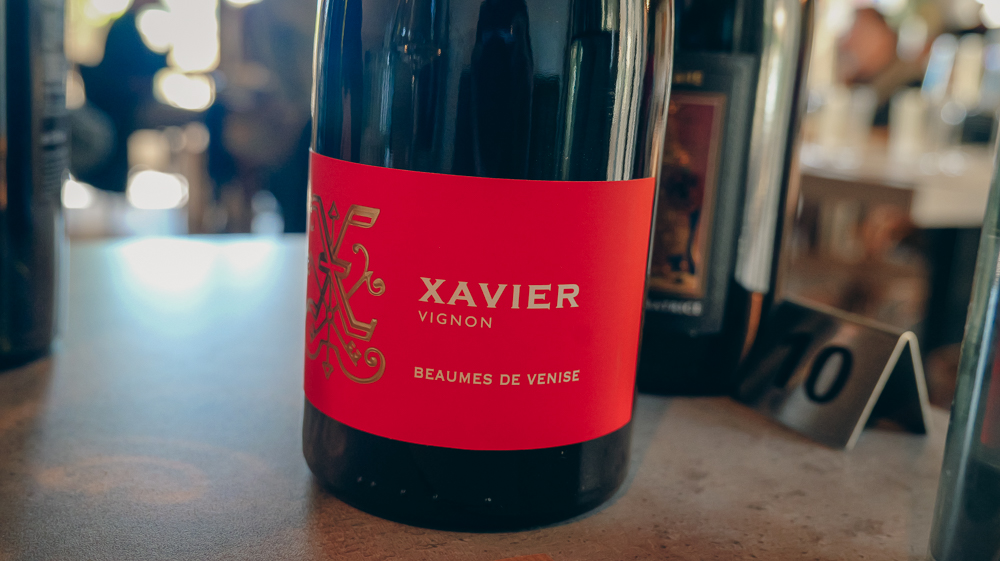
Xavier Vignon Beaumes-de-Venise 2022 France
15% alcohol. Aromatic, fine and pure with juicy red cherry and redcurrant fruit as well as fine spices. This is really elegant, wearing its alcohol well. Has real finesse, tending to elegance. 93/100
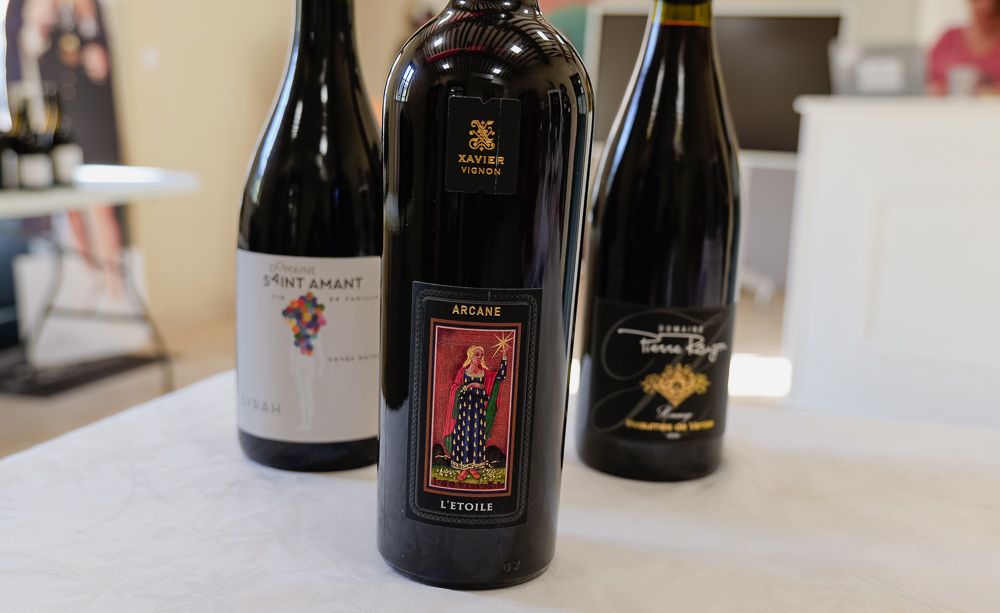
Xavier Vignon Arcane L’Etoile Beaumes de Venise NV France
15% alcohol. No vintage declared on this wine. Elegant and slightly peppery with layered cherry, strawberry and plum fruit. Rounded, with a bit of spicy framing and some silkiness, but also a bit of structure on the finish. Very stylish and quite intriguing. 93/100
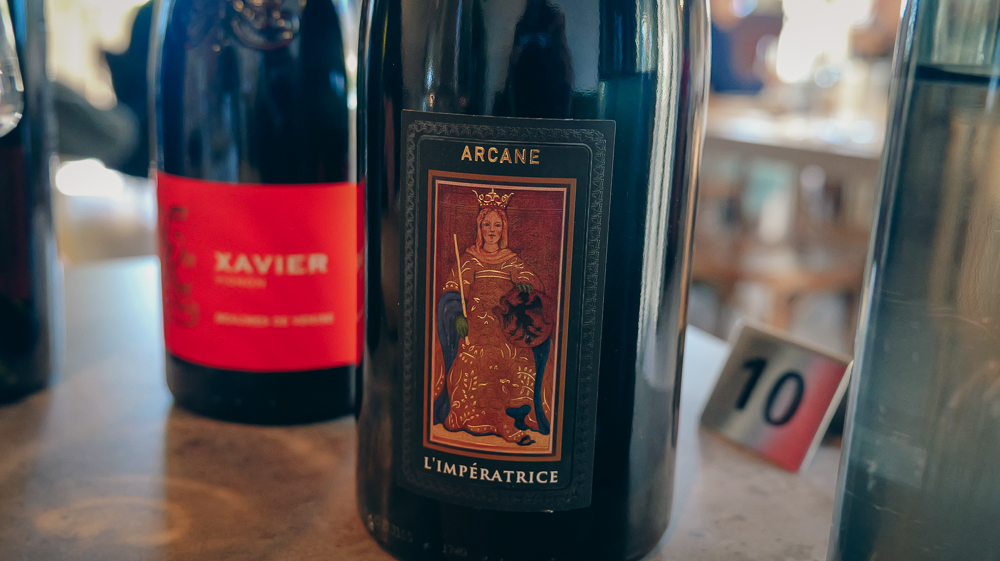
Xavier Vignon Arcane L’Impératrice 2023 Gigondas, France
Warm, spicy, textural and elegant with strawberries and cherries, as well as some red fruit. Such precision and purity. 94/100
Xavier Vignon Muscat de Beaumes de Venise 2024
15% alcohol. Nice depth here with some layers of spice interweaving with the textured pear and grape notes. Rich but in balance, finishing sweet. 92/100
Video: touring around the cru with Xavier Vignon
BEAUMES-DE-VENISE
- Introduction
- Petitjean family: Domaine de Cassan and Château Les Croix des Pins
- Xavier Vignon
- Domaine La Ligière
- Domaine Saint Amant
- Domaine de la Ferme Saint-Martin
- Domaine Raboly
- Rhonea
- Domaine de Durban
- Domaine De Fenouillet
- Domaine Saint Roch
- Domaine Les Bernardins
- A big tasting of Beaumes-de-Venise wines