Hazendal, a Stellenbosch wine estate transformed
Website: https://www.hazendal.co.za/
Hazendal is a historic wine farm in the Bottelary Hills subregion of Stellenbosch that has been transformed. It began as a wheat and livestock farm in 1699, supplying the Dutch East India Company. Then, in the 1700s Hazendal began with vineyards, primarily planting Muscat and Groendruif (Semillon), two of the key grapes of the time.
Fast forward to 2016, and all the vineyards were ripped out and replanted. The problem was virus, and they weren’t producing well. They planted 12 different varieties in 11.8 hectares, and then more recently planted a 2.7 hectare vineyard as a field blend with 13 white varieties. This is a very interesting approach: the different varieties arrived in bundles of 50 from the nursery, and then a few days before planting they were all shuffled, making this a proper old-school field blend.
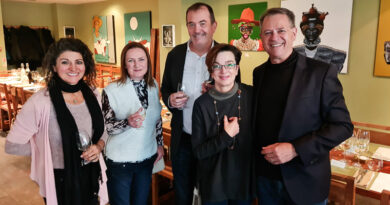
Most importantly, a new winemaking talent arrived in 2024, Kiara Scott Farmer. The 2025 vintage thus signalled the beginning of this new era, and I caught up with her (along with some other wine folk) to taste through this new vintage.

Hazendal is an estate winery, making wines solely from their own vineyards. And the Bottelary Hills is a special place in Stellenbosch, although it hasn’t got the accolades that some of the other subregion get, largely because many of the best grapes end up in wines without Bottelary on the label. There’s an influence from the ocean, some 15 km away, and every afternoon a breeze comes through. Soils are weathered granite, almost beach-sandy in places, with some quartz, and then pockets of schist and sandstone. This helps make wines with tension and salinity. The rolling hills top out at about 290 m on the farm. Neighbours include Dubois, Bellevue, Hartenberg, Avalon and Kaapzicht.
Kiara has a style that I really like. These aren’t wines made in a crowd-pleasing way. ‘It’s important for me to be proud of everything I present,’ she says.
She takes a lot of interest in the vineyard, and has Jaco Engelbrecht as a consultant: he’s one of the best. They are converting to organics. And one of the most important aspects of the work is that at harvest time, Kiara targets specific small parcels, even within the same vineyard, doing multiple picks. ‘I’m not a queen of anything,’ she says, ‘but if I was, I’d be the queen of batch picking.’ She adds that this can drive the vineyard team crazy, when she is very directive about which specific ‘vokkers’ (the vines between one trellising pole and the next) need to be picked on a particular day. ‘I can see peoples’ eyes roll. What is Kiara going to do now? Why can’t we just pick the whole row?’ The grapes are picked into 18 kg lug boxes and then chilled overnight in the cold room before processing the next day.
In the winery, the stage of maturity of each pick determines how it is treated. For the reds, this might include whole bunch, whole berry, destemmed and crushed, and destemmed and crushed with the stems added back in. For the whites, it might determine the choice of fermentation vessel.
Kiara is impressive. Everything is intentional, and thought out. These are my notes on the 2025, an impressive set of wines. Bear in mind that because of the style, some of these will develop nicely over time: we are catching them early in their journey. And this is just vintage one of the new regime. There will be fine-tuning and changes based on learning in subsequent vintages. Hazendal is one to watch.
Hazendal Pinot Noir Rosé 2025 Bottelary Hills, Stellenbosch, South Africa
Quite full pink in colour. Juicy, supple and fresh with lovely cherry and spice notes. This is really appealing, with brightness and juiciness. 92/100 (UK retail £19.99)
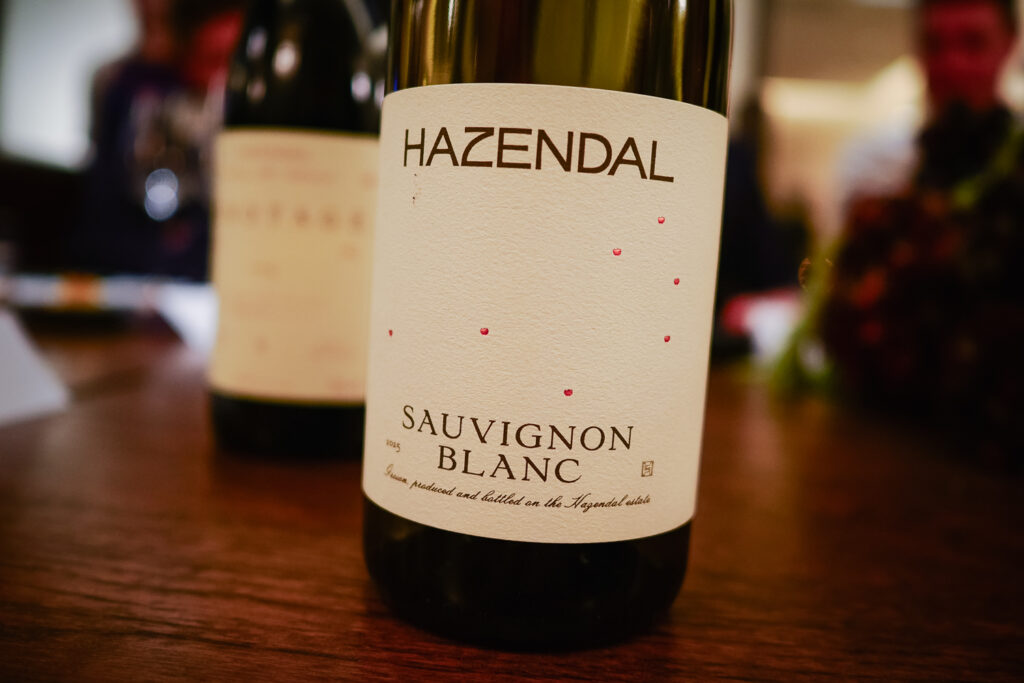
Hazendal Sauvignon Blanc 2025 Bottelary Hills, Stellenbosch, South Africa
Kiara says she is not a fan of Sauvignon Blanc, and does a lot of work with this wine to get rid of green characters, even though she picks early, at what she describes as Cap Classique levels of ripeness. She picks multiple times, from 19-22.5 Balling. The early picks go to concrete because there’s a natural deacidification, and she also does a 22% portion with whole berry ferment on skins. As well as concrete, she uses older 500 litre barrels and some ceramics. Juicy, bright and fresh with a lovely citrus drive, showing nice acidity. Juicy, but still textured, with a touch of mineral. Crystalline and delicious with real tension. 93/100 (UK retail £19.99)
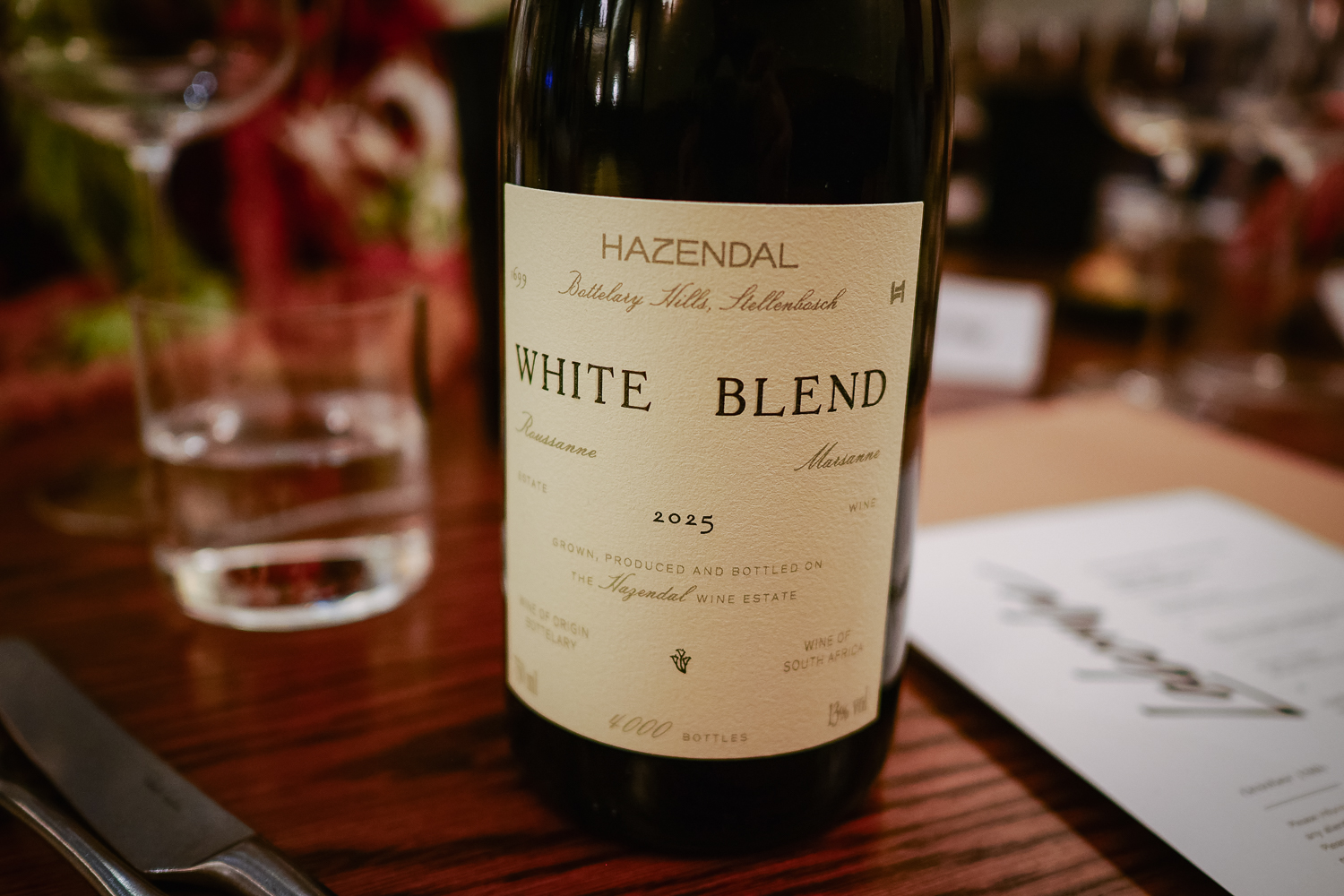
Hazendal White Blend 2025 Bottelary Hills, Stellenbosch, South Africa
This is 0.2 ha of Marsanne and 0.2 ha of Roussanne, from plots with some iron content in the weathered granite. It is picked four times. Nice ripe aromatics with pear and peach as well as some citrus. Lovely texture here, with crystalline citrus, a touch of green apple and some ripe pear. Real precsion, with purity and focus, and a nice mineral streak. 94/100 (UK retail £42.99)
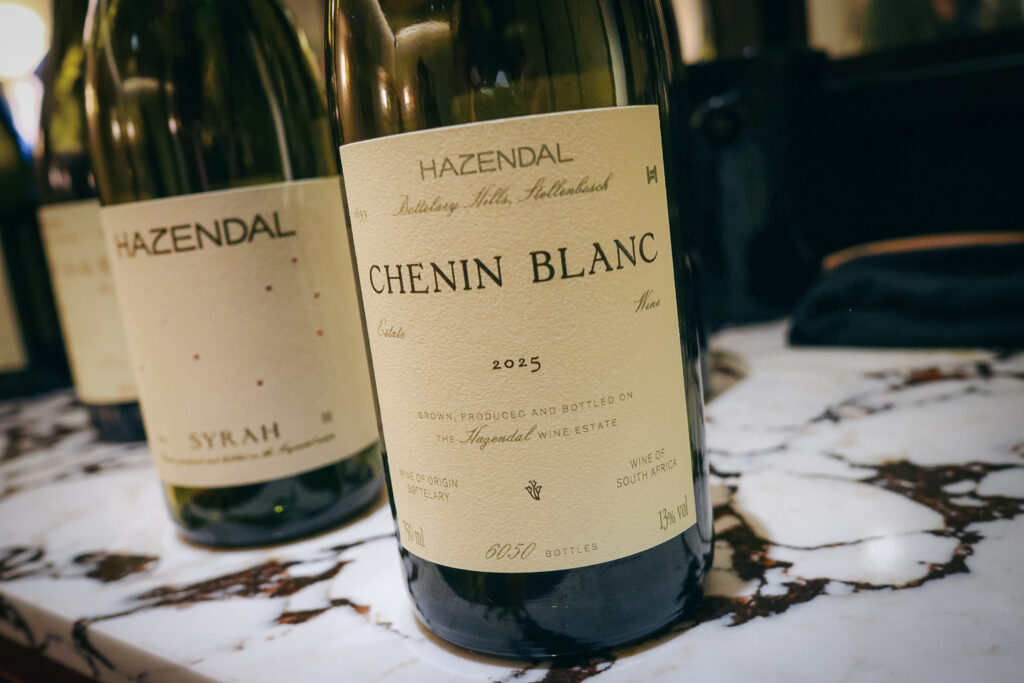
Hazendal Chenin Blanc 2025 Bottelary Hills, Stellenbosch, South Africa
This is from a 2 hectare block, and Kiara does 8 different picks. Weathered granite with quartz soils, and the vines are planted treinspoor, with two rows very close to each other, and then a normal row, like train tracks. Fermented and aged in 500 litreFrenach oak, wild ferment, malolactic goes if it goes. Lovely texture here with white peach and pear fruit, showing freshness and good acidity. Lovely focus and tension, but also some freshness. Really expressive and crystalline. 95/100 (UK retail £42.99)
Hazendal Syrah 2025 Bottelary Hills, Stellenbosch, South Africa
A 1.7 hectare block at 280 m that gets hammered by the wind. 8 picks, four winemaking styles (whole bunch, destemmed whole berries, destemmed and crushed, and destemmed and crushed with stems added back). Raised in 500 litre oak and concrete. Floral and expressive with a bloody, peppery edge. Fresh and expressive with nice texture to the black cherry fruit with a touch of saltiness, as well as some olive tapenade. It’s ripe but fresh and a bit crunchy. 94/100 (UK retail £19.99)
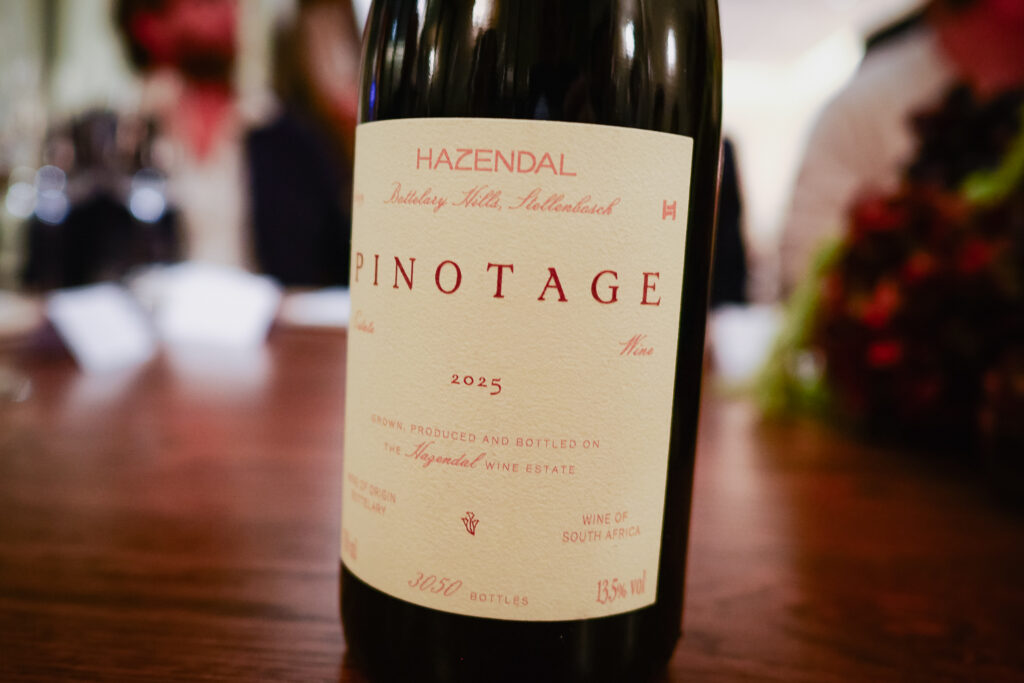
Hazendal Pinotage 2025 Bottelary Hills, Stellenbosch, South Africa
‘A fickle variety,’ says Kiara. This ripens fast on sandstone and shale rich blocks, producing small berries. The thing about Pinotage (and this is shared by Cinsault) is that left to its own devices, it ferments very fast and hot. And this is what can cause it to taste bitter and weird. So Kiara slows the ferment down by chilling, and even adds dry ice, keeping temperatures at 26-28 C, when left alone it can easily get to 36. The result is a concentrated, structured wine with lovely purity and finesse, showing vivid berry fruits with nice balance and poise. 94/100 (UK retail £42.99)
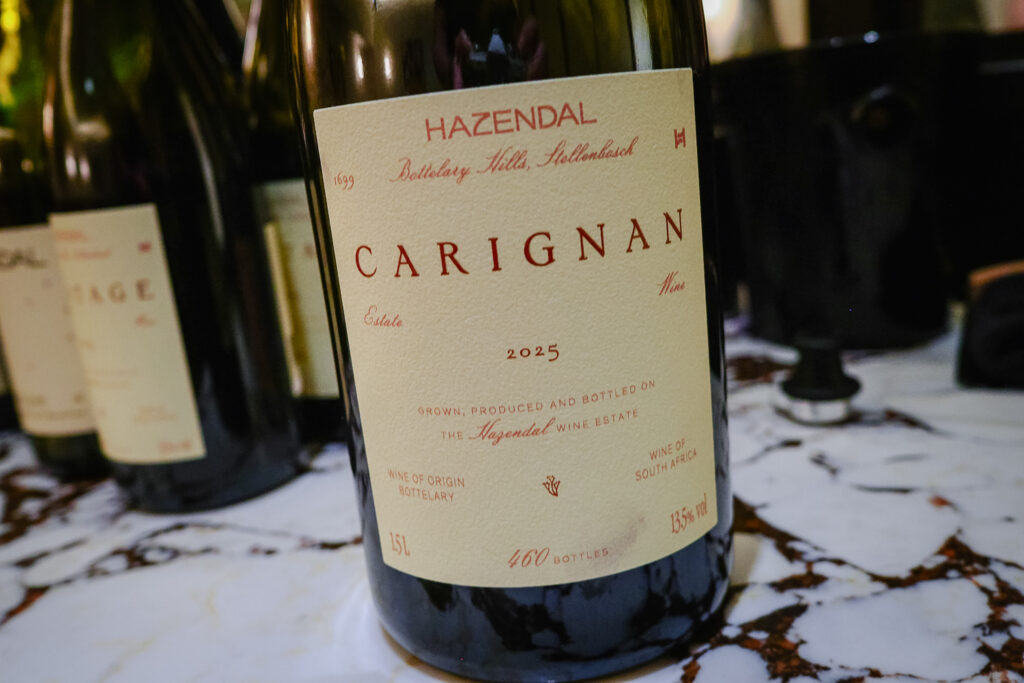
Hazendal Carignan 2025 Bottelary Hills, Stellenbosch, South Africa (magnum)
Just four rows. A variety with high natural acidity. 30% whole bunch, raised in one 500 litre barrel. Supple with nice elegance showing sweet red fruits. Expressive with lovely cherry and plum fruit, nice sweetness, and some real elegance on the finish. 94/100
UK agent: https://www.museumwines.co.uk/